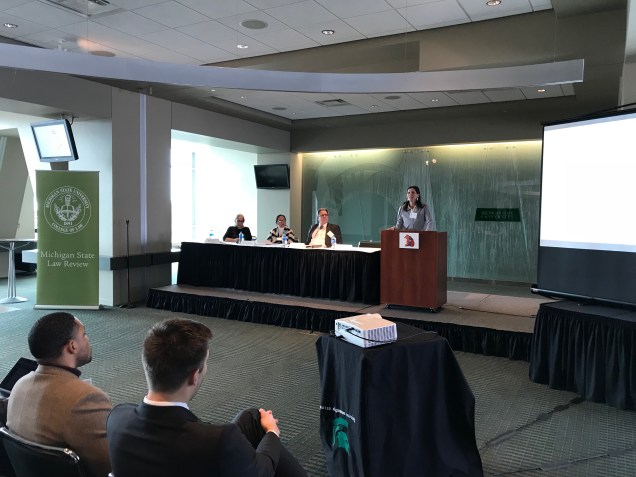
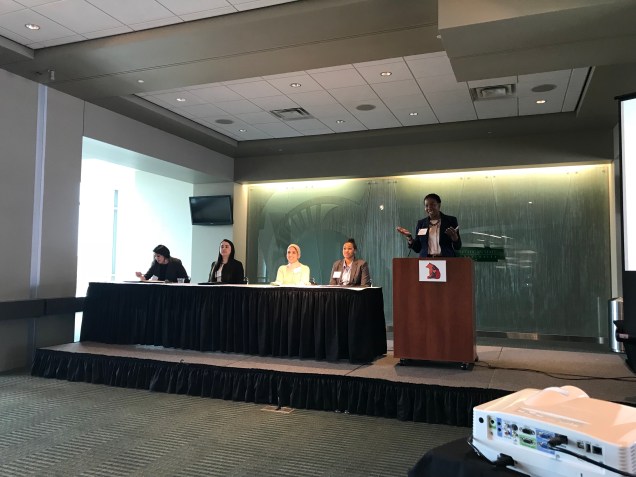
MSU Truth and Reconciliation Conference Panel on Indigenous Peoples (Sandy White Hawk, Valarie Waboose, Tim Connors, and Ester Anne Attean)
Here:
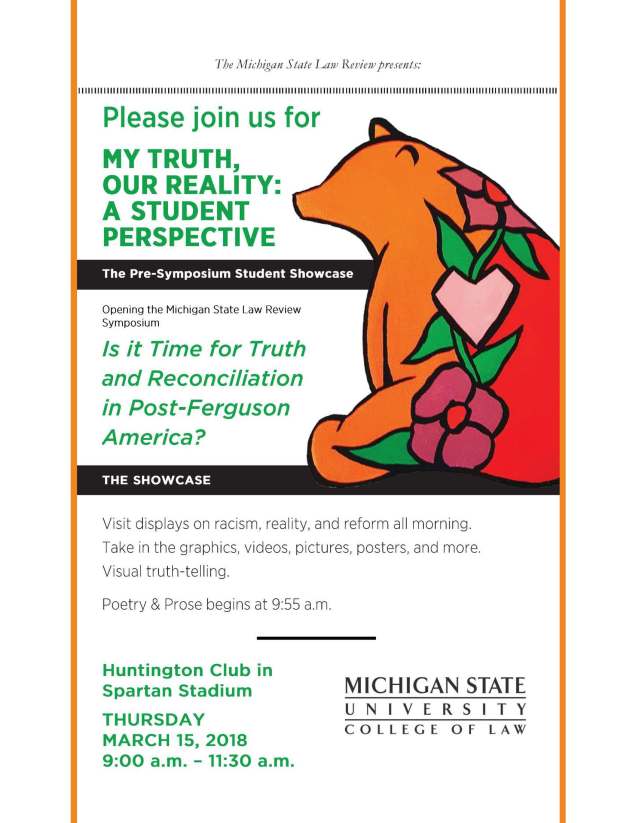
Here:
Question presented:
Can Congress’s delegation to the Department of the Interior of withdrawal authority over large tracts of land survive without the legislative veto right that Congress included as a check on the exercise of that authority?
Lower court materials here.
Update:
Here.
The 2016 Guidelines recommend that if only the tribal ancestral group is indicated, then the Department should notify each of the tribes in that ancestral group to identify whether the parent or child is a member of any such tribe. 2016 Guidelines at 18. Thus, because ICWA’s intent is to provide notice to tribes so that the tribes themselves can decide whether children are tribal members, see B.H., 138 P.3d at 303-04, when a parent is unable to provide detailed information on potential tribal affiliations, the Department should provide notice to all identified tribes and the tribes that have been historically affiliated with those identified tribes, see Tribal Agents by Affiliation, https://perma.cc/K3DDKQR5.
Here.
Parents appeal from a superior court’s order that the Office of Children’s Services (OCS) had satisfied the Indian Child Welfare Act’s (ICWA) requirements authorizing the removal of their daughter, an Indian child, from their custody. Because
the court relied on information that was not in evidence to make the required ICWA removal findings, we vacate the order authorizing removal.
Judge Gregory Bigler has posted “Traditional Jurisprudence and Protection of Our Society: A Jurisgenerative Tail” on SSRN. Here is the abstract:
This paper is an exercise in self-discipline organizing thoughts from a long period of work and life that explores some of what uniquely guides traditional Euchee and Muscogee society. I use my participation in traditional Euchee ceremonial life as a lens with which to view tribal, federal and human rights law and processes. By so doing I hope to begin articulating a modern traditional Indian jurisprudence and find some source(s) to aid in preservation of native society. In order to truly reform federal Indian law not only must traditional tribal jurisprudence be acknowledged, but the processes used by ceremonial people must be understood, and utilized, in a transformative effort. While I am informed by discussions with friends from other tribes who hold similar beliefs to my Euchee people, however, I write from the perspective of a Polecat Euchee ceremonial stomp ground member. I believe the validity of my observations depends on the discussions being tribal specific, meaning I do not simply refer to “Indian” traditions but rather to Euchee, Muscogee, Shawnee, etc., traditions. Such traditional jurisprudence must be a foundation of the current international indigenous rights efforts regarding sacred sites and artifacts, religious practices and culture if those efforts are to have meaning. If Indian advocates are unable to articulate what we believe and the nature of the society being destroyed it is more difficult to argue for its’ continuity. Perhaps more importantly, we must be able to explain to ourselves what we believe, teaching our own people and incorporating those beliefs into our own tribal institutions thus continuing (or creating) a social-legal system that can carry us into the future. I hope the process I explore herein will also be of interest to my friends and colleagues exploring federal Indian law and international human rights.
HIGHLY RECOMMENDED!
Here are the materials in Munoz v. Barona Band of Mission Indians (S.D. Cal.):
 Turtle Talk
You must be logged in to post a comment.