Ninth Circuit Allows Bishop Paiute Law Enforcement Case to Proceed

Here is the opinion in Bishop Paiute Tribe v. Inyo County.

An excerpt:

The Bishop Paiute Tribe (the “Tribe”) seeks a declaration that they have the right to “investigate violations of tribal, state, and federal law, detain, and transport or deliver a non-Indian violator [encountered on the reservation] to the proper authorities.” Before reaching this issue, the district court dismissed the case on jurisdictional grounds, concluding that the case presents no actual case or controversy. On appeal, we are also asked to assess whether the district court had subject matter jurisdiction over this case. Because questions of federal common law can serve as the basis of federal subject matter jurisdiction pursuant to 28 U.S.C. § 1331, and because this case presents a definite and concrete dispute that is ripe and not moot, we reverse and remand for further proceedings.

Briefs and lower court materials here.
(Split) Tenth Circuit Rules against Pojoaque Pueblo in Gaming Dispute with State of New Mexico

Here is the opinion in Pueblo of Pojoaque v. State of New Mexico.

An excerpt:

Plaintiffs-Appellants Pueblo of Pojoaque and its governor, Joseph M. Talachy, (collectively “the Pueblo”) appeal from the district court’s dismissal of its claim for declaratory and injunctive relief based on the State of New Mexico’s alleged unlawful interference with Class III gaming operations on the Pueblo’s lands. Pueblo of Pojoaque v. New Mexico, 214 F. Supp. 3d 1028 (D.N.M. 2016). Exercising jurisdiction under 28 U.S.C. § 1291, we affirm.

From the dissent:

This appeal turns on what constitutes regulation of tribal gaming.
The majority answers narrowly, stating that New Mexico is regulating Indian gaming only when the regulation is directly applied to Indian gaming on tribal land. In my view, this approach is unsupportable and unrealistic. Under the allegations in the Pueblo’s complaint, New Mexico is trying—with considerable success—to disrupt the Pueblo’s gaming operations by targeting the Pueblo’s vendors. This disruption is not
softened by the state’s strategy of targeting vendors.

Briefs here.

Ninth Circuit Briefs in Citizens for a Better Way v. Zinke

Here:

Opening Brief

Federal Response Brief

Estom Yumeka Maidu Tribe Answer Brief

Reply

Related posts.

Ninth Circuit Briefs in Pakootas v. Teck Caminco Metals

Here:

Teck Caminco Opening Brief

State of Washington Answer Brief

Colville Answer Brief

Reply

Ninth Circuit Briefs in United States v. King Mountain Tobacco Co. (No. 16-35956)

Here:

King Mountain Opening Brief

US Brief

Reply Brief

Ninth Circuit Briefs in Chippewa Cree Tribe of the Rocky Boy Reservation v. Dept. of Interior

Here:

Chippewa Cree Petition for Review

Chippewa Cree Opening Brief

St. Marks Brief

Reply

Oral argument video here.

Prior post here.

Federal Court Dismisses Slip and Fall Action against Fort Mojave Indian Tribe’s Casino Operations

Here are the materials in Ireson v. AVI Casino Enterprises (D. Nev.):

8 Motion to Dismiss

11 Response

16 Reply

21 DCT Order

Ninth Circuit Briefs in United States v. Cooley

Here:

US Brief

Cooley Brief

Reply

An excerpt:

tribal law enforcement officer conducted a welfare check on Cooley, who had pulled over on a public highway where it crosses the Crow Reservation. It appeared to the officer that he was dealing with a non-Indian person. Soon thereafter, the encounter raised suspicion that Cooley was impaired and trafficking drugs and guns. He was detained and transferred to state custody. The district court suppressed the evidence from the stop based on a new Fourth Amendment test it derived from a tribal roadblock case. The district court held that the detention of Cooley and search of his vehicle violated the Fourth Amendment because, at the time the tribal officer realized Cooley was a non-Indian, it was not obvious that a state or federal crime had occurred. This new obviousness standard, the court held, is “notably higher” than probable cause.

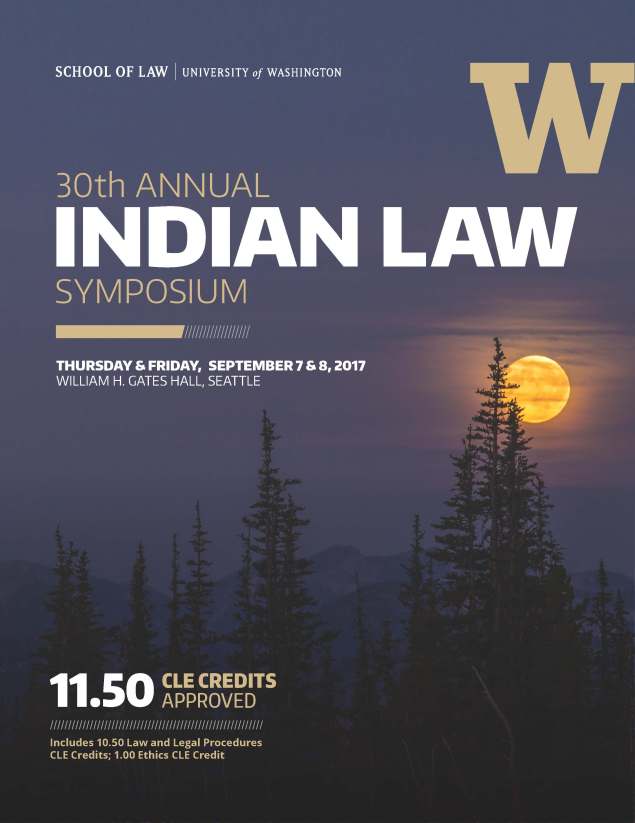
UW Indian Law Symposium Sept. 7-8, 2017

Register here. Brochure here (PDF):

30th Annual Indian Law Symposium Brochure - final_Page_1

Continue reading

Federal Magistrate Recommends Section 1983 Suit against NY Oneida Police Proceed

Here are the materials so far in Alexander v. New York (N.D. N.Y):

1 Complaint

4 Magistrate Order