Here is the complaint in Navajo Nation Human Rights Commission v. San Juan County (D. Utah):
Draft Model Indian Juvenile Code Posted in the Federal Register Today
Here.
The Bureau of Indian Affairs is announcing availability of a draft Model Indian Juvenile Code for comment. The draft Model Indian Juvenile Code is intended as a tool to assist Indian Tribes in creating or revising their juvenile codes. DATES: Comments are due by midnight ET on May 27, 2016. See the SUPPLEMENTARY INFORMATION section of this notice for dates of Tribal consultation sessions.
Ninth Circuit Affirms Federal Critical Habitat Rules for Polar Bears
Here is the opinion in Alaska Oil and Gas Assn. v. Jewell.
Justice Thomas Asked Questions in Oral Argument Today
Here.
Doe v. Jesson, now Piper, Partially Survives Motion to Dismiss
Here. This is the federal case challenging the Minnesota Indian Family Preservation Act.
The Court finds that it has jurisdiction to hear the Does’ complaint, but only against the government defendants. The Court will dismiss Commissioner Moose from the case because he is a tribal officer and not a state officer; does not enforce MIFPA; and is not restricted by the constitutional clauses at issue here. But even though the Court may proceed to the merits of the Does’ complaint against the government defendants, the Court will not decide the merits now. The parties necessarily and understandably devoted nearly all of the briefs to the numerous preliminary issues. Although the jurisdictional questions were well briefed, the Does’ equal protection and due process claims received less attention than they deserved. Accordingly, in deciding these motions the Court will express no opinion on the merits – only on the preliminary matters. It may be that Defendants’ positions on the merits are correct – or incorrect – but those questions will be decided another day.
Child Welfare Article in the Lansing State Journal
Here.
While not ICWA-specific, the concerns raised in this article regarding representation, admitting at adjudication, and the lack of independent experts are also reasons for ICWA non-compliance.
Parent advocates say Michigan erects a wall between kids and their families because DHHS is the only agency helping parents overcome their struggles and at the same time is their courtroom opponent, logging those struggles as possible evidence against them. In child welfare cases, judges can issue lifelong penalties based on far less evidence than is required in criminal court. Most parents’ only defense is an overworked, underpaid court-appointed attorney.
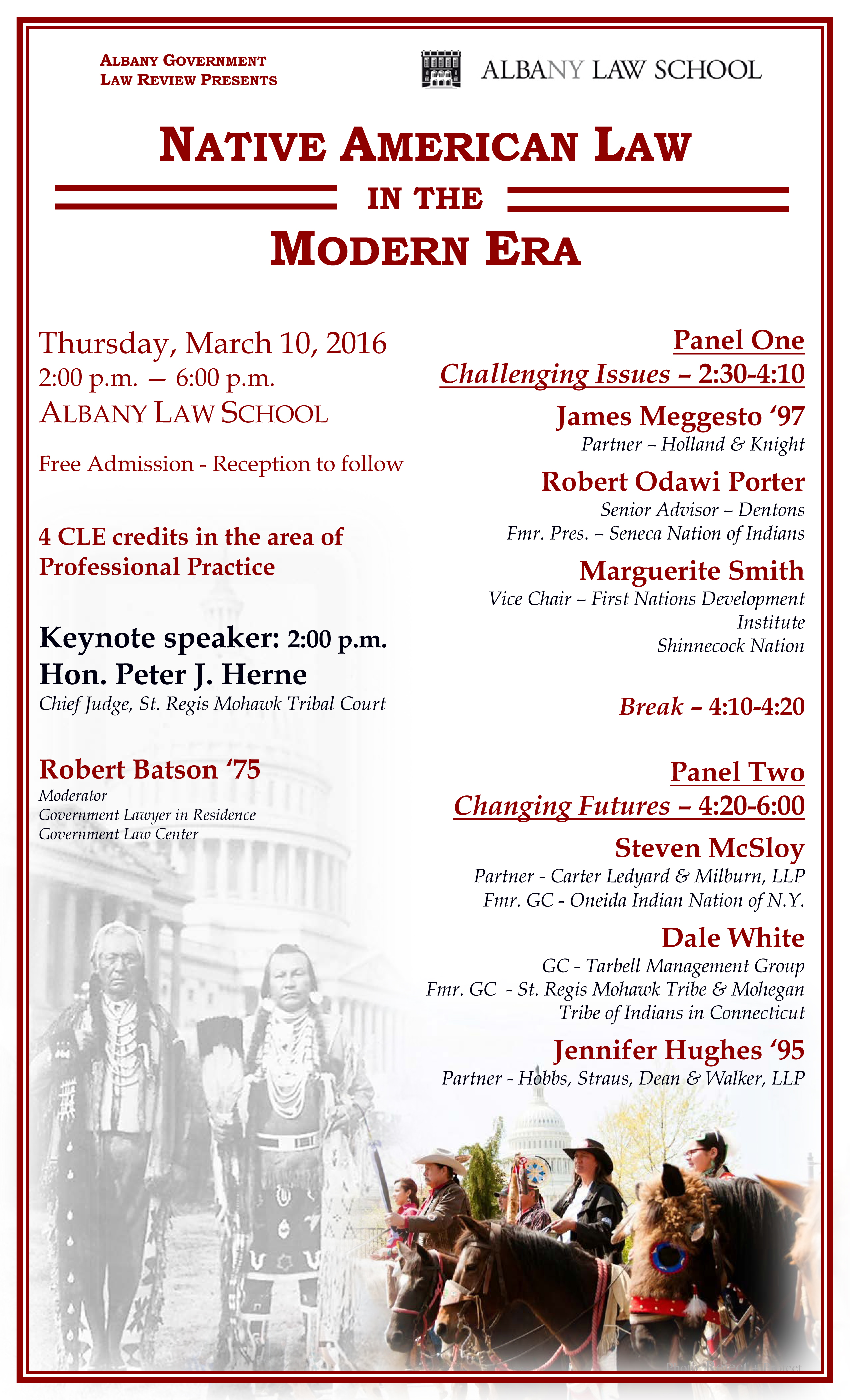
Albany Law School Symposium on Native American Law
NYU Law Review Seeking Submissions from Indian Law Scholars
A message from NYU Law Review editor Raymond Fadel…
NYU Law Review is seeking submissions from Indian law scholars.
- Online Series on Dollar General.
Our Online Department has voted to publish an online feature series spotlighting the Dollar General case, and its legal and policy implications. Amongst other things, we are currently looking for pieces that discuss the case itself, its legal background and importance, and its implications for Indian and non-Indian country alike—particularly Indigenous women’s issues and its insights into women’s issues in general.
To facilitate timely debate, we plan on publishing the spotlight series shortly after the Dollar General case is decided. We encourage you to submit your Essays and Comments within two weeks after the Supreme Court’s decision, but of course, you are welcome to send your pieces for consideration as soon as you have them.
Online submissions have a maximum word limit of 10,000 words and may be submitted directly to our Senior Online Editor, Agne Jomantaite, at aj785@nyu.edu or via Scholastica. More information on our submission policy can be found on our website, www.nyulawreview.org.
- Print Articles.
As always, our Articles Department is seeking submissions covering diverse subject-matters, especially including general issues in Indian law that would be accessible to a generalist audience. Article submissions must have a minimum of 10,000 words and be submitted on Scholastica. In addition to submission on Scholastica, you may also forward any submission directly to our Senior Articles Editor, Tyler Domino, at tjd266@nyu.edu. The Department is accepting unsolicited articles through the end of March, 2016.
Ninth Circuit Briefs in Akini v. State of Hawai’i
Indian Trust Breach Claim over Estate in Probate Deferred until Conclusion of Admin. Proceedings
Here are the materials in Fredericks v. United States (Fed. Cl.):
 Turtle Talk
You must be logged in to post a comment.