Tribal and U.S. Response Briefs in Alaska Land into Trust Case

Response briefs filed in State of Alaska v. Akiachak Native Community;

Tribal Appellees Response Brief

USA Response Brief

Previous coverage here.
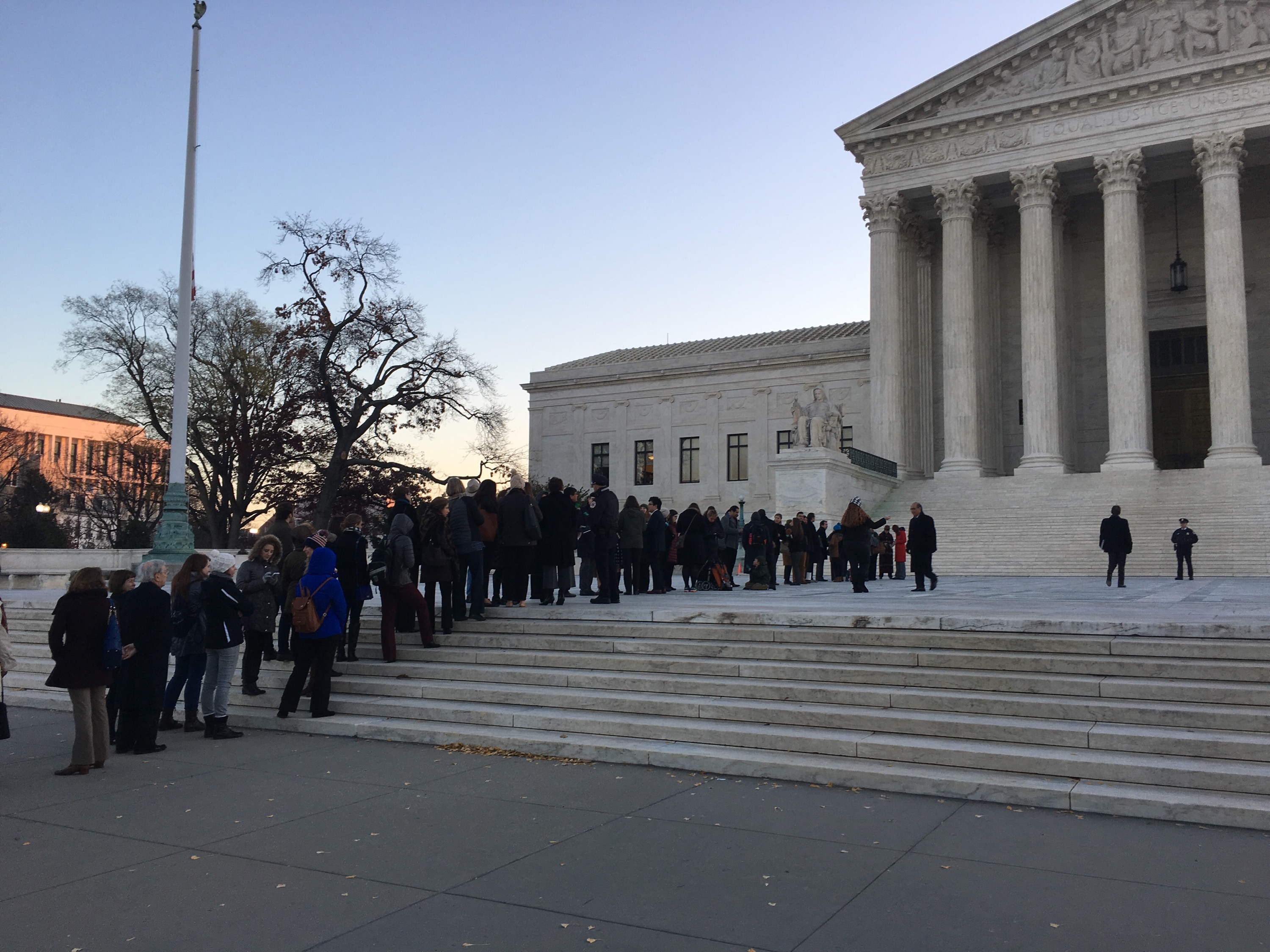
More SCOTUS Pics


Eighth Circuit Briefs in Wolfchild v. Redwood County/Kaardal Sanctions Appeal

Here:

Counties Brief

Kaardal Sanctions Brief

Landowners Brief

Landowners Sanctions Brief

Lower Sioux Indian Community Brief

Pro Se Amicus Brief

Wolfchild Opening Brief

Wolfchild Sanctions Brief

Lower court materials here, here, and here.

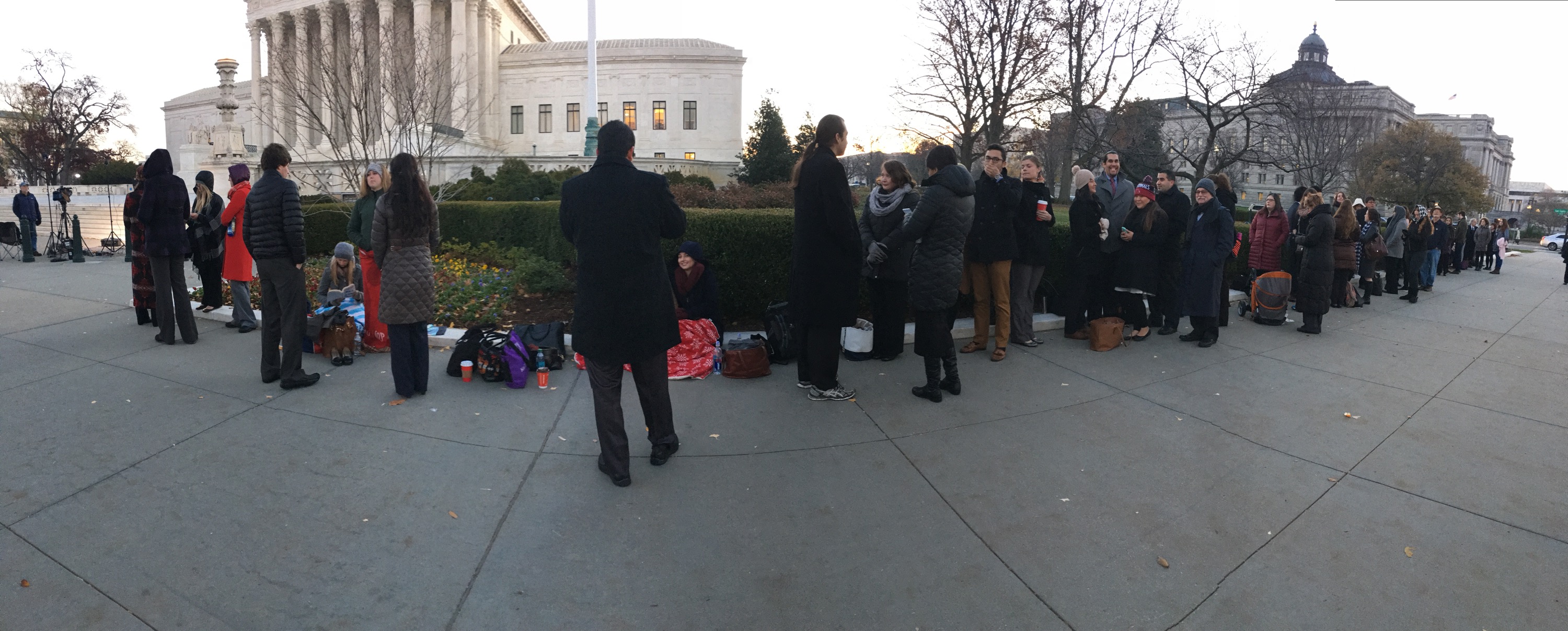
The Line for the Dollar General Argument


Update on Goldwater (ICWA Challenge) Filings

DOJ filed their reply to Plaintiffs response on Defendants’ motions to dismiss. Arizona also filed a strong reply. Filing is completed in this matter, and a hearing on the motion to dismiss will be held on December 18th.

Plaintiffs filed a response to the amicus briefs from Casey Family Programs et al and NCAI et al. In addition, Citizens Equal Rights Alliance also filed an amicus brief in support of the Plaintiffs’ motion to certify the class.

The ICWA Legal Defense Memo has been updated and is available here.

D.C. Circuit Briefs in City of Duluth v. National Indian Gaming Commission

Here:

2015 07 06 Statement of Issues

2015 07 06 Underlying Decision in Case–Memorandum Opinion

2015 09 11 Appellant Brief

2015 11 18 Appellee Brief

2015 12 03 Fond du Lac Band Amicus for Appellee Brief

Duluth Reply

Lower court briefs:

25 Duluth Motion for Summary J

26 US Cross Motion for Summary J

27-1 Fond du Lac Proposed Amicus Brief

DCT order Denying NIGC Motion to Dismiss

Federal Motion to Dismiss

Duluth Opposition

Federal Reply

Complaint here.


More Dollar General Coverage — Tulalip Tribes

Here is “Supreme Court case draws Tulalip’s attention.”

Tort Suit against Rocky Boys’ Business Committee Dismissed

Here are the materials in Eagleman v. Rocky Boys’ Chippewa-Cree Tribal Business Committee (D. Mont.):

16 Motion to Dismiss

16-3 Eagleman Trial Court Opposition to Motion to Dismiss

16-4 Tribal Trial Court Order

16-5 Eagleman Tribal Appellate Brief

16-6 Tribal Appellate Court Opinion

33 Opposition

37 Reply

42 DCT Order

Indian Country Investigation & Prosecutions Report to Congress

Link to DOJ report for 2014 here.

Highlights:

  • FBI’s CY 2014 statistics are similar to 2013. The majority of Indian country criminal investigations opened by the FBI were referred for prosecution.
  • The majority of Indian country criminal cases opened by the USAOs were
    prosecuted.
  • The most common reason FBI Indian country investigations were closed administratively without referral for prosecution was that the investigation concluded that no federal crime had occurred. Analysis of CY 2014 data indicates that 657 FBI Indian country investigations were closed administratively without referral to a prosecuting authority — approximately 32% of the investigations that were opened. Reasons for non-referral include deaths determined to be the result of natural causes, accident, or suicide (i.e., non-homicides; 20% in CY 2014 of all investigations not referred), and insufficient evidence of criminal activity (21% in CY 2014).
  • All but 37 of the 148 death investigations that the FBI closed administratively in CY 2014 were closed because the FBI established that the death was due to causes other than homicide; i.e., accidents, suicide, or death due to natural causes.
  • In 2014, the USAOs resolved more cases than in 2013. In 2014, the USAOs resolved 535 more cases than in 2013. A total of 3,930 Indian country matters were resolved in CY 2014, as compared to 3,395 cases in 2013.
  • The USAO declination rate remained steady. USAO data for CY 2014 show that 34% (989) of all Indian country submissions for prosecution (2,941) were declined. In CY 2013, USAOs declined approximately 34% (853) of all (2,542) Indian country submissions for prosecution. USAO data for CY 2012 indicate that just under 31% (954) of all Indian country submissions for prosecution (2,542) were declined.
  • The most common reason for declination by USAOs was insufficient evidence (59.6% in CY 2014, 56% in CY 2013, and 52% in CY 2012). The next most common reason for declination by USAOs was referral to another prosecuting authority (16.3% in CY 2014, 21% in CY 2013, and 24% in CY 2012).

Tribal In-House Counsel Assn. & MSU ILPC Announce 2016 Conference — Call for Proposals and Save and Date — November 3-4, 2016

tica_logo_comp2

TICA Call for Papers 2016

***

13th ANNUAL MICHIGAN STATE UNIVERSITY INDIGENOUS LAW CONFERENCE

&

TRIBAL IN-HOUSE COUNSEL ASSOCIATION LAW CONFERENCE

@

MICHIGAN STATE UNIVERSITY COLLEGE OF LAW

INDIGENOUS LAW AND POLICY CENTER

NOVEMBER 3-4, 2016

EAST LANSING, MICHIGAN

***

TICA members interested in presenting on the following topics focusing on the tribal in-house practice of law are invited to submit proposals:

  • Tribal regulatory structures.
  • Federal-tribal relations.
  • State-tribal relations.
  • Indian child welfare.
  • Internal conflicts of interest.
  • Working with outside counsel.
  • Internal control systems.
  • Professional responsibility and ethical obligations.

Deadline for formal proposals is February 1, 2016. Please keep proposals to 300 words or less.

Want to present but arent a member? Become a TICA member at www.tribalinhousecounsel.com.

MSU will cover reasonable travel expenses for speakers selected for the conference. We will be applying for CLE credits for the conference and so speakers must prepare written materials. MSU can provide research support for speakers in preparing materials, if requested.

Primary contacts:

Doreen N. McPaul, TICA President (Doreen.McPaul@tonation-nsn.gov)

Matthew L.M. Fletcher (matthew.fletcher@law.msu.edu)

Kathryn E. Fort (fort@law.msu.edu)

Sarah Donnelly (donnel93@law.msu.edu)

MSU LAW ILPC LOGO