Kristen Carpenter on Human Rights and Cultural Property

Kristen A. Carpenter has posted “A Human Rights Approach to Cultural Property: Repatriating the Yaqui Maaso Kova,” forthcoming in the Cardozo Arts & Entertainment Law Journal, on SSRN. Here is the abstract:

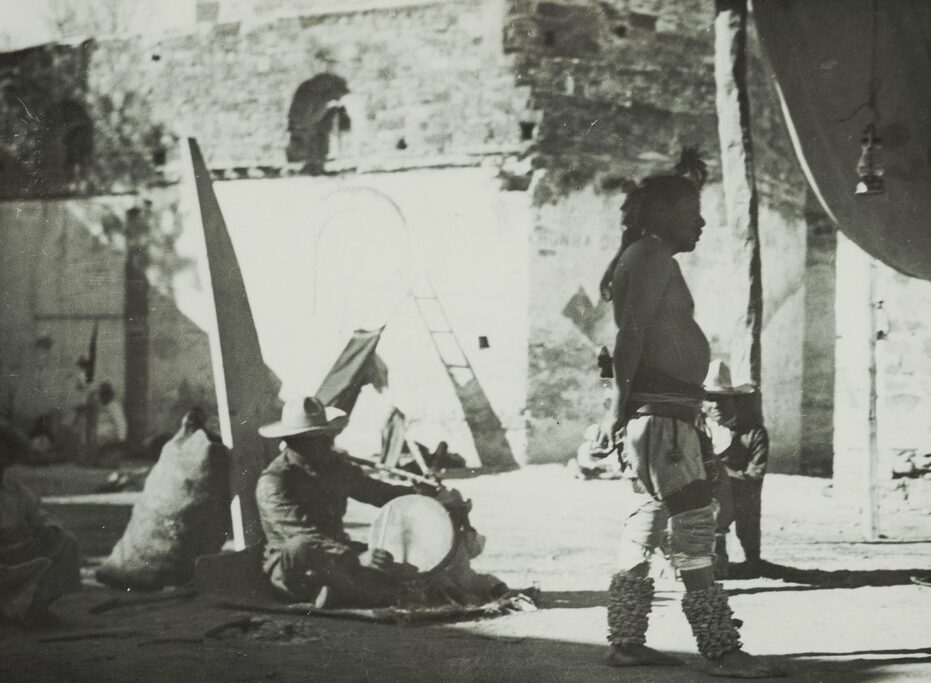
Claims for repatriation of cultural property are emerging across the international community, with increasing attention to the inequities of acquisitions made during colonial periods. Yet the State-centric nature of legal instruments, such as the Convention on the Means of Prohibiting and Preventing the Illicit Import, Export and Transfer of Ownership of Cultural Property of 1970, remains a stumbling block to advancing meaningful remedies for past harms, especially in the Indigenous Peoples’ context. States often pursue repatriation to advance national identity or replenish museum collections, but for Indigenous Peoples, repatriation often has to do with restoring dignity to ancestors through reburial, returning ceremonial objects to religious use, and healing the community from cultural assimilation and oppression. Against this backdrop, the essay reviews the recent case of the Yaqui People, an Indigenous nation spanning the U.S.-Mexico border, who negotiated a pathbreaking agreement to repatriate a sacred deer head, the Maaso Kova, from the national museums of Sweden. Working with the United Nations Expert Mechanism on the Rights of Indigenous Peoples, the parties expressly invoked the United Nations Declaration on the Rights of Indigenous Peoples, along with Yaqui and Swedish law, as bases for repatriation. The Yaqui-Sweden matter advances a human rights approach to repatriation that begins to transcend the hegemony of States in cultural property claims, while recognizing Indigenous Peoples’ equality and self-determination, along with religious and cultural freedoms.
Update in Cherokee Trust Accounting Suit against Interior

Here are new materials in Cherokee Nation v. Dept. of the Interior (D.D.C.):

Prior post here.

Greg Ablavsky and Tanner Allread on How Indigenous Peoples Debated the U.S. Constitution

Gregory Ablavsky and W. Tanner Allread have posted “We the (Native) People?: How Indigenous Peoples Debated the U.S. Constitution,” forthcoming in the Columbia Law Review, on SSRN.

Here is the abstract:

The Constitution was written in the name of the “People of the United States.” And yet, many of the nation’s actual people were excluded from the document’s drafting and ratification based on race, gender, and class. But these groups were far from silent. A more inclusive constitutional history might capture marginalized communities’ roles as actors, not just subjects, in constitutional debates.

This Article uses the tools of legal and Native history to examine how one such group, Indigenous peoples, argued about and with the U.S. Constitution. It analogizes Native engagement to some of the foundational frames of the “Founding” to underscore its significance for current constitutional discourse. Like their Anglo-American neighbors, Native peoples, too, had a prerevolutionary constitutional order—what we here dub the “diplomatic constitution”—that experienced a crisis during and after the Revolution. After the Constitution’s drafting, Native peoples engaged in their own version of the ratification debates. And then, in the early republic, Native peoples both invoked and critiqued the document as they faced Removal.

This Article’s most important contribution is proof of concept, illustrating what a more inclusive constitutional history might look like. Still, some of the payoffs are doctrinal: broadening the “public” in original public meaning, for instance. But the more significant stakes are theoretical. As this Article contends, by recognizing Indigenous law and constitutional interpretations as part of “our law”—in other words, the pre- and post-constitutional legal heritage of the United States—Native peoples can claim their role as co-creators of constitutional law.

Massachusetts Federal Court Decides Littlefield v. Dept. of the Interior [Mashpee Wampanoag]

Here are the materials in Littlefield v. Dept. of the Interior (D. Mass.):

45 Littlefield Motion for Summary J

47 Interior Cross-Motion

49 Tribe Cross-Motion

50 Littlefield Reply

51 Interior Reply

52 Tribe Reply

55 DCT Order

California Federal Court Dismisses Tribal Member Property Dispute after Failure to Exhaust Tribal Appellate Remedies [Round Valley Indian Tribe]

Here are the materials in Pacino v. Oliver (N.D. Cal.):

27 Second Amended Complaint

71 Tribal President Motion to Dismiss

73 Interior Motion to Dismiss

76 Pacino Opposition to 71

77 Pacino Opposition to 73

83 Reply in Support of 71

86 Oliver Motion to Dismiss

88 Pacino Opposition to 86

89 Reply in Support of 86

90 DCT Stay Order

98 DCT Order to Show Cause re Tribal Exhaustion

100 Oliver Supplemental Brief

102 Pacino Supplemental Brief

103 Round Valley Amicus Suppemental Brief

112 DCT Order

Student Note on Native Voting Rights

Noelle N. Wyman has published “Native Voting Power: Enhancing Tribal Sovereignty in Federal Elections” (PDF) in the Yale Law Journal. Here is the abstract:

Members of tribal nations are disproportionately burdened by barriers to voting, from strict voter identification and registration requirements to inadequate language assistance and inaccessible polling locations. Restrictive voting laws are on the rise, while the avenues for challenging them under the prevailing model of voting rights are narrowing. This Note advocates for a different approach to conceptualizing and combatting Native American voter suppression.

First, it advances a new jurisprudential theory centered on tribal sovereignty: suppressing the Native vote not only denies rights to individual citizens but also denies sovereign power to tribes. Historically, states required Native American people to renounce tribal membership, culture, and lands to vote. Today, states and localities continue to denigrate tribal sovereignty in the administration of elections, such as by rejecting tribal-issued IDs and interfering with tribes’ organization of their own political communities. Apart from securing the fundamental rights of individual Native citizens, Congress has a substantive duty to secure tribal sovereignty in federal election administration that is rooted in its trust obligation to tribes.

Second, this Note proposes a new legal framework for enhancing Native voting power: Congress should require states and local election officials to negotiate with federally recognized tribes toward the formation of tribal-state compacts governing federal election administration in Indian Country. This framework would relieve tribes of the burdens that they currently carry to initiate collaboration with local election officials, fill gaps in voter assistance, and challenge unlawful voting restrictions in court. Meanwhile, it would involve tribes in the process of lawmaking and regulation, enabling them to exert a measure of sovereign power over federal elections in Indian Country.

Interview with Fletcher and Rebecca Tsosie on Indian Law

Here, on Prism, is “Supreme Court Rulings Undermine Indian Law.”

An excerpt:

Levy Uyeda: What is sovereignty, and how has its definition changed over time?

Fletcher: Sovereignty, I suspect, is not really an Indigenous principle. It comes from the notion that there is an all powerful sovereign entity like a king that has an absolute monopoly on violence, over lands, and over the people on those lands, who typically are called subjects. By offering individual rights to people in the U.S. we’ve papered over some of the difficult aspects of that understanding of sovereignty. On one hand, when tribes assert sovereignty, it means tribes are saying that there is a hierarchical group of people and an elite that makes decisions for all others beneath them. 

Tsosie: I do agree that the terminology of “sovereignty” is problematic because Anglo-American law and jurisprudence does give that hierarchical meaning that comes out of English tradition. 

I tell my students that the term “property,” which also has that Western meaning, along with “sovereignty,” are both modes of discourse. If you think about these terms in the context of a treaty, the treaty is designed to be a contract between sovereigns.

Tribe and State Offer Additional Evidence in Line 5 Matter before Michigan Public Service Commission

Here are the new materials:

SCOTUS Sets Oral Argument Dates for Navajo and LDF Cases

Arizona v. Navajo will be argued on March 20, 2023.

LDF v. Coughlin will be argued on April 24, 2023.