
Indigenous Women at the United Nations 2025
Starting July 18, 2025, the Yale Law Journal submission portal for Articles & Essays will open. The submission guidelines and portal can be found here. Any questions about the submission process can be referred to YLJ‘s Managing Editors, Ako Ndefo-Haven (ako.ndefo-haven@yale.edu) and Matt Beattie-Callahan (matthew.beattie-callahan@yale.edu).
Katie Kroft, Executive Editor of Articles & Essays for the Yale Law Journal.

Here is the opinion in Tohono O’Odham Nation v. Dept. of the Interior.
Briefs:
Lower court materials here.
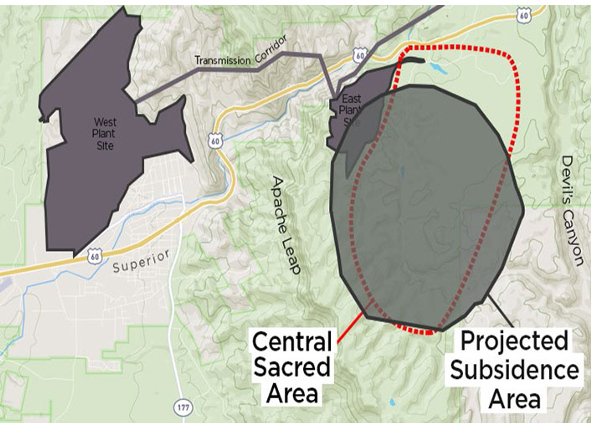
Here is today’s order list, with the dissent beginning on page 6.
An excerpt:
While this Court enjoys the power to choose which cases it will hear, its decision to shuffle this case off our docket without a full airing is a grievous mistake—one with consequences that threaten to reverberate for generations. Just imagine if the government sought to demolish a historic cathedral on so questionable a chain of legal reasoning. I have no doubt that we would find that case worth our time. Faced with the government’s plan to destroy an ancient site of tribal worship, we owe the Apaches no less. They may live far from Washington, D. C., and their history and religious practices may be unfamiliar to many. But that should make no difference. “Popular religious views are easy enough to defend. It is in protecting unpopular religious beliefs that we prove this country’s commitment to . . . religious freedom.” Masterpiece Cakeshop, Ltd. v. Colorado Civil Rights Comm’n, 584 U. S. 617, 649 (2018) (GORSUCH, J., concurring).
Prior posts here,
Jason Robison has published “Relational River: Arizona v. Navajo Nation & the Colorado” in the UCLA Law Review.
Here is the abstract:
It is not every day the U.S. Supreme Court adjudicates a case about the water needs and rights of one of the Colorado River Basin’s thirty tribal nations and the trust relationship shared by that sovereign with the United States. Yet just that happened in Arizona v. Navajo Nation in June 2023. As explored in this Article, the Colorado is a relational river relied upon by roughly forty million people, reeling from climate change for nearly a quarter century, and subject to management rules expiring and requiring extensive, politically charged renegotiation by 2027. Along this relational river, Arizona v. Navajo Nation was a milestone, illuminating water colonialism and environmental injustice on the country’s largest Native American reservation, and posing pressing questions about what exactly the trust relationship entails vis-à-vis the essence of life. Placing Arizona v. Navajo Nation in historical context, the Article synthesizes the case with an eye toward the future. Moving forward along the relational river, the trust relationship should be understood and honored for what it is, a sovereign trust, and fulfilled within the policy sphere through a host of measures tied, directly and indirectly, to the post-2026 management rules. Further, if judicial enforcement of the trust relationship is necessary, tribal sovereigns in the basin (and elsewhere) should not view the Court’s 5–4 decision as the death knell for water-related breach of trust claims, but rather as a guide for bringing cognizable future claims and reorienting breach of trust analysis.

Kevin K. Washburn has published “Landback as Federal Policy” in the UCLA Law Review.
Here is the abstract:
Demands for the return of land to tribal nations have become much louder and more compelling in recent years. While “landback” has been part of federal policy for nearly a century, lawmakers and presidents from both parties have embraced landback initiatives more firmly in the last half century. But the quantity of lands returned is almost insignificant in comparison to the vast lands taken. Landback efforts are based in compelling moral claims. This Article summarizes the moral claims for landback by briefly recounting the widespread loss of land by Indian tribes through the nineteenth and twentieth centuries and highlighting the unique role of the federal government in this tragedy. It also showcases some of the tribal and federal counterefforts to the loss of land, including existing federal landback efforts that have returned millions of acres to tribes. The federal government has many tools available, and it should deploy them more effectively. Advocates must also be more strategic. Landback can be viewed in context with related federal initiatives, including renaming, comanagement, and costewardship, as well reservation expansion, retrocession, and other federal efforts to restore and expand tribal selfgovernance. These numerous related federal and tribal initiatives can support tribal landback and restorative justice efforts.

Here is the complaint in Wichita and Affiliated Tribes v. Burgum (M.D. Pa.):

Danielle DiGrazia & Ann Juliano have published “Addressing the Gender Wage Gap for Native American Women” in the University of Maryland Law Journal of Race, Religion, Gender & Class.
An excerpt:
Native American women experience one of the largest wage gaps. Failure to remedy the wage gap for Native American women could lead to catastrophic consequences for generations of Native people. As it stands, the wage gap could amount to a financial loss of over $1.1 million over a 40-year career for a Native American woman starting her career today. This loss would disproportionately impact Native families over time, due to the prominent financial role played by women in Native households. Specifically, 64 percent of Native American mothers are the breadwinners for their families, meaning their families rely heavily on their income. Further, “[n]early one in four Native . . . households . . . are headed by women, and 30 percent of those households live below the poverty level.” Without equal pay, Native American women will continue to struggle to pay for “basic family necessities like rent, groceries, and school supplies” and to “invest in savings, higher education, or property.” However, if the wage gap were eliminated, the average Native American woman would be able to afford “[m]ore than 34 months of food; more than 29 more months of child care; their entire student loan debt in 16 months; almost 15 months of mortgage and utilities payments; or more than 17 additional months of premiums for employer-based health insurance.” The lack of sufficient funds today could also have ripple effects for future generations–for example, Native American women may struggle to put their children through school, then those children may have a more difficult time getting higher-paying jobs, and the cycle of economic disenfranchisement will continue.


 Turtle Talk
You must be logged in to post a comment.