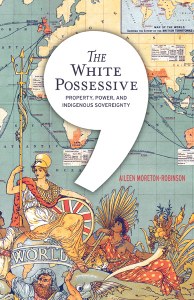
New in the Turtle Talk Mailbox: Aileen Moreton-Robinson’s “The White Possessive”

White Possessive

University of Minnesota Press website here. Here is the blurb:

The White Possessive explores the links between race, sovereignty, and possession through themes of property: owning property, being property, and becoming propertyless. Focusing on the Australian Aboriginal context, Aileen Moreton-Robinson questions current race theory in the first world and its preoccupation with foregrounding slavery and migration. The nation, she argues, is socially and culturally constructed as a white possession.

Moreton-Robinson reveals how the core values of Australian national identity continue to have their roots in Britishness and colonization, built on the disavowal of Indigenous sovereignty. Whiteness studies literature is central to Moreton-Robinson’s reasoning, and she shows how blackness works as a white epistemological tool that bolsters the social production of whiteness—displacing Indigenous sovereignties and rendering them invisible in a civil rights discourse, thereby sidestepping thorny issues of settler colonialism.

Throughout this critical examination Moreton-Robinson proposes a bold new agenda for critical Indigenous studies, one that involves deeper analysis of how the prerogatives of white possession function within the role of disciplines.

Tribal Immunity Does Not Foreclose Deposition of Attorney in Grand Canyon Skywalk Dispute

Here are the materials in Grand Canyon Skywalk Development LLC v. Cieslak (D. Nev.) (No. 15-1189):

1 Motion to Quash

23 Reply in Support of Motion to Quash

[Response sealed]

28 DCT Order Denying Motion to Quash

Paskenta Band v. Crosby (Either an Internal Political Dispute or RICO Suit) Dismissed

Here are the materials in Paskenta Band of Nomlaki Indians v. Crosby (E.D. Cal.):

45 Quicken Loans Motion to Dismiss

46 Umpqua Bank Motion to Dismiss

50-1 Cornerstone Motion to Dismiss

51-1 Haness Motion to Dismiss

52-1 Crosby Motion to Dismiss

53-1 Associated Pension Motion to Dismiss

54-1 Garth Moore Insurance Motion to Dismiss

55-1 Crosby Motion to Stay

67 Plaintiffs Opposition to Motion to Stay

72-10 Plaintiffs Motion for PI

73 Plaintiffs Opposition to Motions to Dismiss

87 Crosby Opposition to Motion for PI

88 Crosby Reply

91 Plaintiffs Reply in Support of Motion for PI

101 DCT Order

Complaint here.

Split Eighth Circuit Affirms Drug Conviction of Lower Brule Sioux Tribe Member

Here is the opinion in United States v. Long.

Tenth Circuit Dismisses Appeal in Harvey v. Ute Indian Tribe

Here is the opinion.

We posted briefs here.

Potawatomi Indian Country

Doesn’t get much better. 


and smores are also good
   

NYTs Profile of Benefits of Lower Elwha Dam Removal

Here is “When Dams Come Down, Salmon and Sand Can Prosper.”

New Scholarship on the Economic Impact of IGRA

Randall K. Q. Akee, Katherine A. Spilde, and Jonathan B. Taylor have published “The Indian Gaming Regulatory Act and Its Effects on American Indian Economic Development” in the Journal of Economic Perspectives.

Here is the abstract:

The Indian Gaming Regulatory Act (IGRA), passed by the US Congress in 1988, was a watershed in the history of policymaking directed toward reservation-resident American Indians. IGRA set the stage for tribal government-owned gaming facilities. It also shaped how this new industry would develop and how tribal governments would invest gaming revenues. Since then, Indian gaming has approached commercial, state-licensed gaming in total revenues. Gaming operations have had a far-reaching and transformative effect on American Indian reservations and their economies. Specifically, Indian gaming has allowed marked improvements in several important dimensions of reservation life. For the first time, some tribal governments have moved to fiscal independence. Native nations have invested gaming revenues in their economies and societies, often with dramatic effect.

PDF.

First GTB Chair Walks On

Here is “Ardith ‘Dodie’ Harris Died Aug. 1, 2015.”

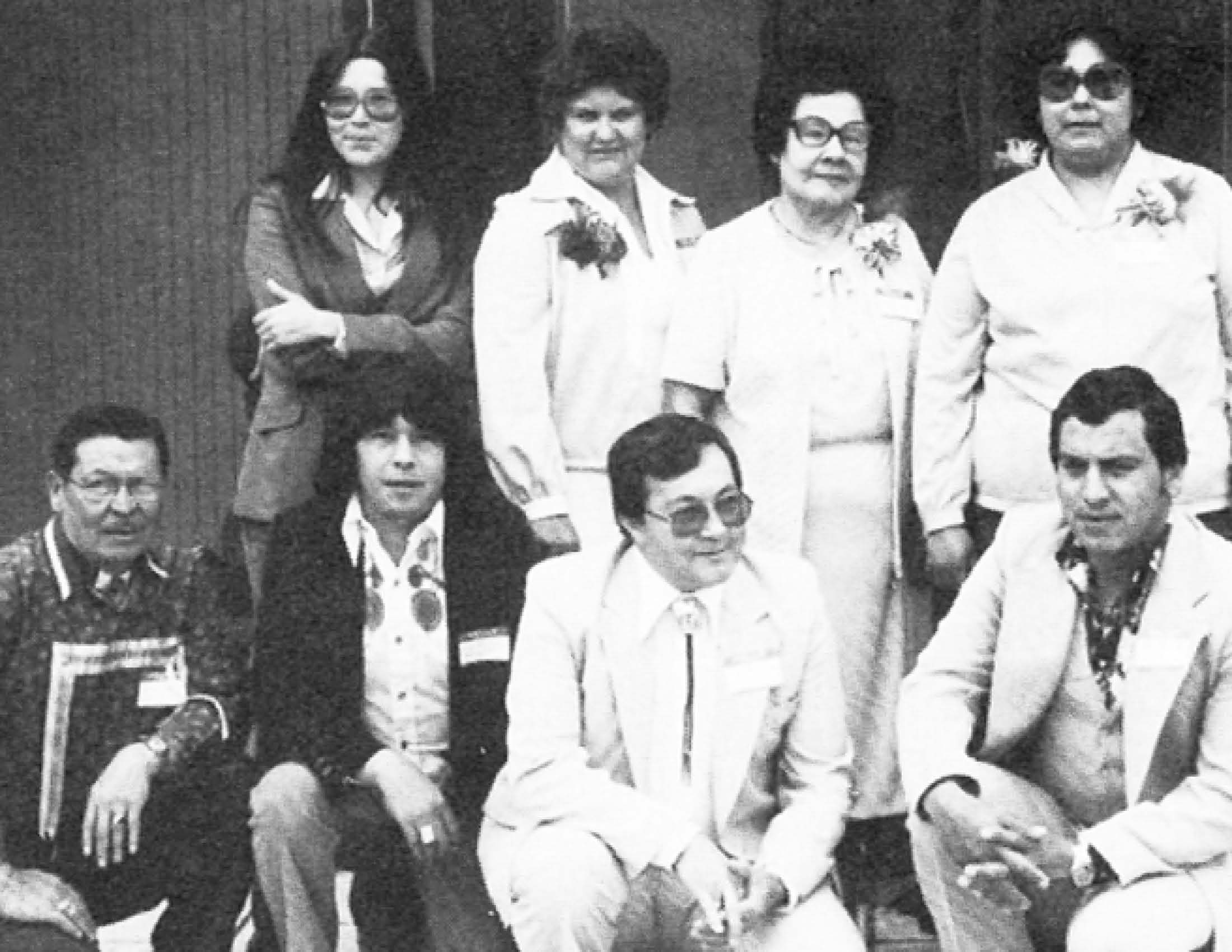
Dodie lived an incredible life, leading the charge to federal recognition, leading the tribe as chair and as councilor, testifying before Congress and in federal court. Sad time.

She’s in the upper right — The First Council after Recognition:

First Council

DOJ ENRD Indian Resources Section Attorney Job Posting

Here.

The description:

The Indian Resources Section, U.S. Department of Justice, Environment and Natural Resources Division (ENRD) is seeking an experienced attorney for the position of Trial Attorney in Washington, DC. ENRD seeks to attract, retain, and promote individuals of exceptional ability and talent from all walks of life. The work environment and atmosphere are open, diverse, collegial and inclusive. ENRD places a high value on and fosters a work environment where people of all backgrounds, physical abilities, sexual orientations and experiences may reach their full potential.

The Indian Resources Section represents the United States in its trust capacity in litigation pending in federal and state courts for the benefit of Indian tribes and individual Indians. These suits include seeking to establish tribal water rights, protecting treaty hunting and fishing rights, remedying trespasses on tribal lands, and establishing reservation boundaries and rights to land. The Indian Resources Section also defends the United States in legal challenges to agency programs designed to further tribal sovereignty, such as the Department of the Interior’s program for acquisition of trust land for tribes. The litigation handled by the Indian Resources Section is of vital interest to Indian tribes and often addresses issues of first impression.