Peacemaking Training October 6-7, 2014

Traditional Peacemaking: Exploring the Intersections Between Tribal Courts And Peacemaking, Including Alternatives To Detention

Peacemaking Draft Agenda Oct 2014

Travel Logistics Peacemaking Training 2014

Date: October 6-7, 2014

Time: 8:30AM-5:00PM

Place: Hard Rock Hotel – Catoosa, OK (Tulsa area).  Owned by the Cherokee Nation of OK

Continue reading

Federal Court Grants Summary Judgment in Gaming Management Contract Matter

Here are the materials in Bettor Racing Inc. v. National Indian Gaming Commission (D. S.D.):

53 Bettor Motion for Summary J

57-1 NIGC Cross Motion

59 Flandreau Cross Motion

62 Bettor Response to Flandreau

64 Bettor Response to NIGC

67 Flandreau Reply

68 NIGC Reply

71 DCT Order

Prior posts with materials here and here.

Gabriel Galanda Receives WSBA Excellence in Diversity Award

Here is the press release:

Tribal lawyer honored for his work in ensuring religious freedoms for Native American prisoners and indigenous peoples

SEATTLE, WA [Sept. 19, 2014] — The Washington State Bar Association (WSBA) presented Seattle attorney Gabriel Galanda with its 2014 Excellence in Diversity Award, in recognition of his leadership in advocating for religious rights for Native American prisoners and indigenous peoples. WSBA President Patrick Palace presented the award at the WSBA Annual Awards Dinner on Sept. 18, 2014, at the Sheraton Seattle.

Continue reading

Report on Washington Plan to Change Its Water Pollution Levels

Here’s the press release:

New Report Documents Threat to Tribal Treaty Rights and Environmental Justice

(Seattle) – The Washington State Department of Ecology is soon expected to propose new, higher, default fish consumption rates (FCRs) used to calculate allowable levels of contaminants dumped into state waters by industrial polluters. A new report from Borderlands Research and Education documents how big business and conservative and far right groups are opposing increased FCRs, threatening tribal treaty rights, environmental justice and ecological health in the state.

The report, No Justice on the Plate: Transnational Companies and the Right Oppose Fish Consumption Justice and Tribal Treaty Rights, explains how major companies and business associations are opposing higher FCRs by attacking the environmental justice principle that public policy should end disproportionate environmental impacts on communities of color. In Washington State, this includes Indian Nations and Asian and Pacific Islander communities that consume large quantities of fish. Low FCRs also affect recreational fishers in the state more than the general public.

“This effort by big business and the right poses a threat to tribal treaty rights, community health, and environmental justice,” said Borderlands Research and Education co-coordinator Chuck Tanner. “It affects us all by threatening to keep water quality in the state degraded.”

No Justice on the Plate describes how conservatives, libertarians and the far right have joined big business in opposing higher FCRs and environmental justice. The report details troubling actions of opponents of higher FCRs, including former Attorney General Rob McKenna’s alliance with far right anti-Indian leaders; the Washington Policy Center and Freedom Foundation’s opposition to tribal sovereignty; the Enumclaw-based Citizens Alliance for Property Rights’ promotion of far right conspiracy theories and outright rejection of environmental justice.

“This report addresses a critical issue for treaty and civil rights in Washington State,” said Devin Burghart, Vice-President of the Institute for Research and Education on Human Rights. “And it looks at how environmental issues, and a narrow vision of property rights, can foster a convergence between big business, conservatives and the far right.”

The report is available from the Institute for Research and Education on Human Rights at http://www.irehr.org/news/special-reports/580-no-justice-on-the-plate.

News Coverage of Justice Sotomoyor’s Visit to Oklahoma Indian Country

Here is Tony Mauro’s “Arm in a Cast, Sotomayor Tours Oklahoma and Meets Tribal Leaders.”

An excerpt:

At an appearance on Sept. 11, Oklahoma City University president Robert Henry—formerly chief judge of the Tenth Circuit—asked Sotomayor to discuss her meeting earlier that day with “some of our native people.” Henry said, “I so much appreciated” that she met with tribal members. Neither Henry nor Sotomayor gave details about where the meeting took place or how it was arranged.

Sotomayor heard about broken agreements between tribes and the U.S. government. “There are so many misunderstandings about Native Americans,” she said, producing resentments that “run deep… It still stings.” She added, “There is a basis for that feeling.”

The Oklahoma tribes, she said, are “all displaced tribes—all wrenched from their homes in different states” and sent to Oklahoma in the “Trail of Tears,” an exodus in the 1830s in which Supreme Court rulings played a part.

Sotomayor also said the public has a misperception that tribes are rich because of the advent of casinos at many reservations. That is not the case, she said. “They have problems like the larger society,” she asserted, including obesity and diabetes. Sotomayor noted she has diabetes herself.

Voting Rights Act Complaint Filed by Natives in South Dakota

Here is the complaint in Poor Bear v. County of Jackson (D. S.D.):

1 Complaint

An excerpt:

This case arises from Defendants’ refusal to establish a satellite office for voter registration and in-person absentee voting in the Town of Wanblee on the Pine Ridge Reservation, thereby making voting less available to Native Americans in Jackson County in violation of Section 2 of the Voting Rights Act of 1965 and the Fourteenth Amendment to the United States Constitution. Specifically, because in-person voter registration and in-person absentee voting are limited to the county seat of Kadok, Native American residents of Jackson County are required to travel, on average, approximately twice as far (and such travel takes approximately twice as much time) to take advantage of in-person registration and in-person absentee voting in comparison to white residents of Jackson County. Establishing a satellite office in Wanblee, on the other hand, would substantially reduce the distance and travel time for both groups, would essentially equalize the average travel time and distance for the two groups, and would thereby provide Native Americans an equivalent level of access to in-person registration and in-person absentee voting.

Big Lagoon En Banc Oral Argument Materials

Here is “Small Native American Tribe and U.S. Duke It Out at the 9th Circuit.”

This seems like a misleading headline since the tribe and Feds were on the same side. In short, argument seemed to go well for tribal interests.

You can access the argument here.

Materials here.

Public Land and Resources Law Review Call for Papers

The Public Land and Resource Law Review is interested in receiving articles for possible submission in the law review. They have expressed a particular interest in articles dealing with Indian law issues. Please consider submitting articles! See the information about the law review below.
The Public Land and Resources Law Review, published by the University of Montana School of Law, is currently accepting submissions for potential publication in the spring issue. The Public Land and Resources Law Review serves as a vital resource providing high quality articles on issues relevant to public land, natural resources, environmental, and federal Indian law practitioners and scholars across the country. The deadline for submissions for the spring issue is December 15, 2014. The editing process for publication begins soon after this date.

The Public Land and Resources Law Review accepts articles and abstracts for consideration from students, practitioners, and law school faculty members. For more information or to submit an article, please contact Dave Bell, Publication Editor, at david2.bell@umconnect.umt.edu.

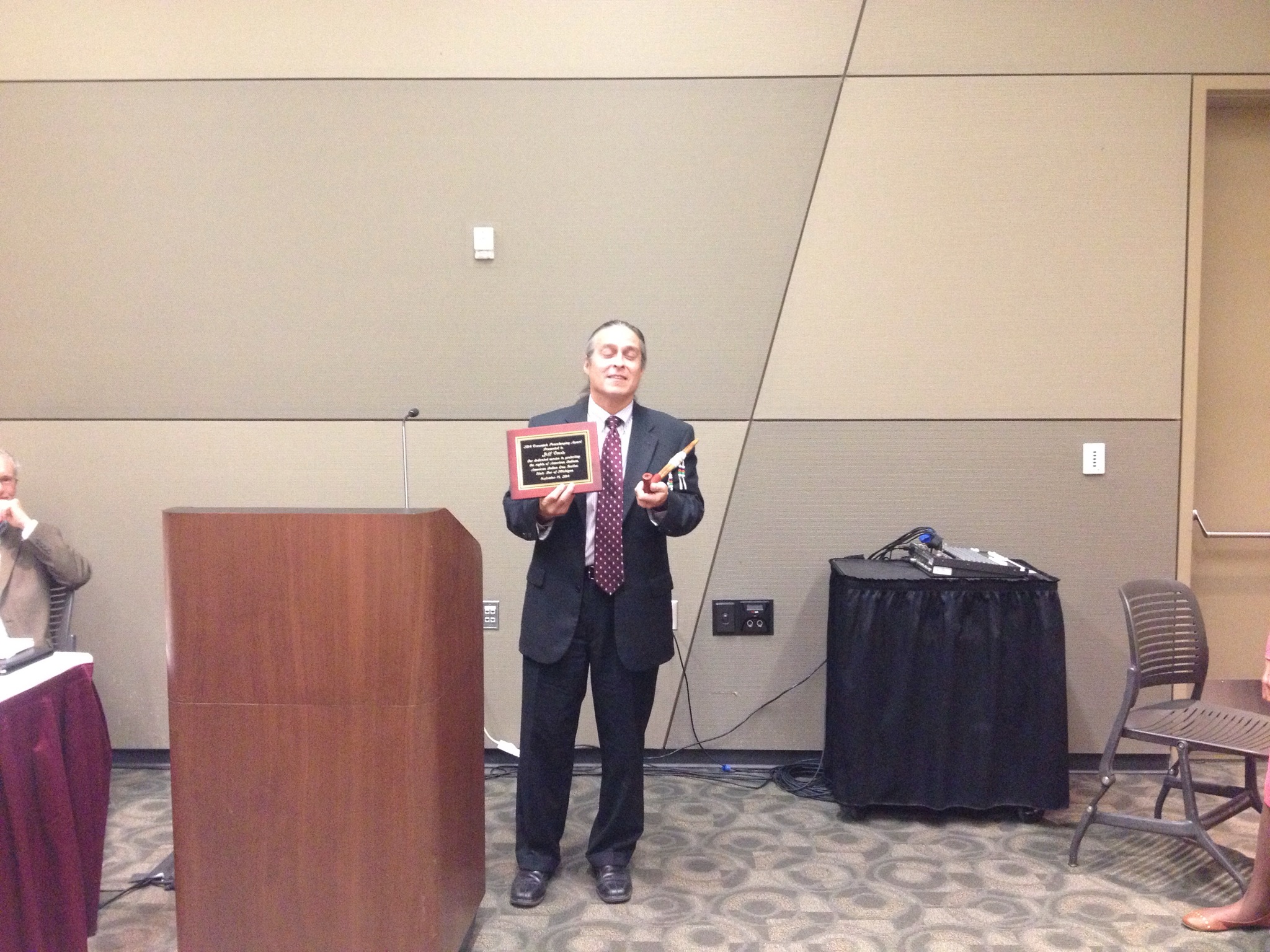
Jeff Davis Accepting Tecumseh Award from Michigan State Bar Indian Law Section

Jeff Davis, Lynn Marie Johnson, and Bill Gregory

IMG_0844.JPG

The ever-humble Jeff Davis

IMG_0843.JPG

And the accompanying program on Michigan v. Bay Mills, featuring Riyaz Kanji, Kathryn Tierney, Louis Reinwasser, and Doug McIntyre

IMG_0828.JPG

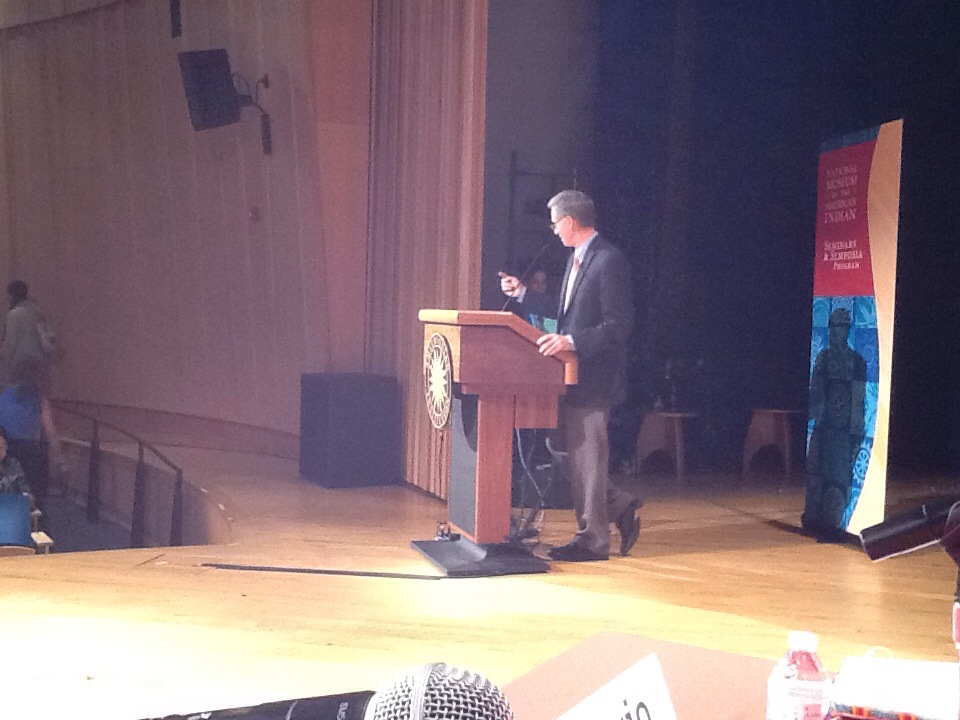
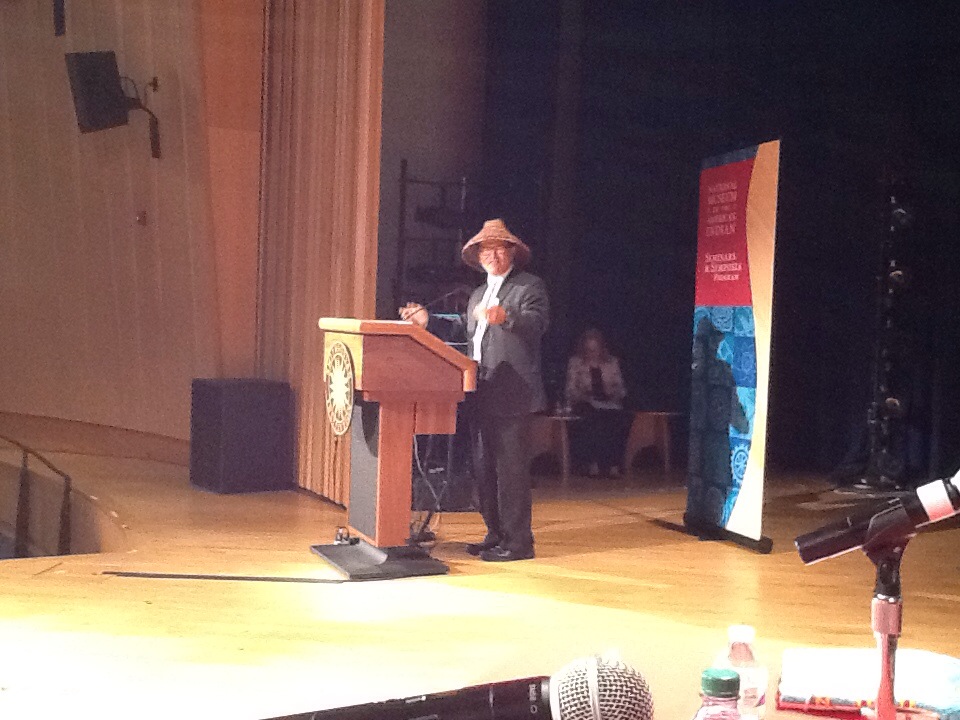
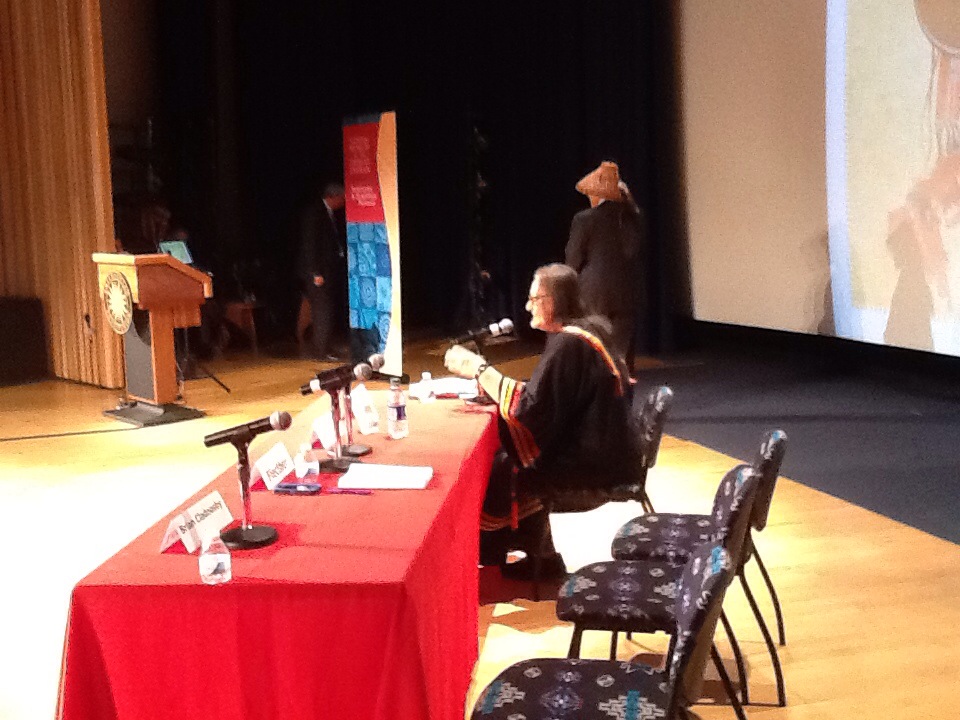
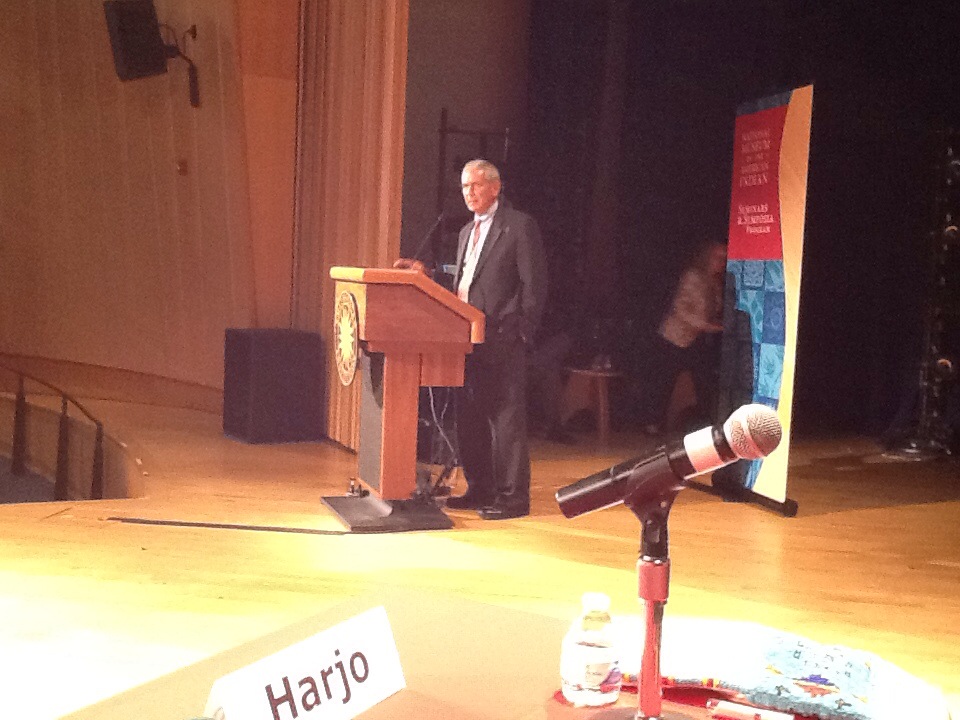
NMAI Treaties Symposium Final Panel

Phil Deloria

IMG_0833.JPG

Hon. Brian Cladoosby

IMG_0834.JPG

Suzan Shown Harjo

IMG_0841.JPG

Kevin Gover

IMG_0840.JPG

Audience shots

IMG_0836.JPG

IMG_0837.JPG

IMG_0838.JPG