News Coverage of Alaska Legislative Hearing on ILOC Report

Here. Quotes from tribal judge David Voluck:

“One of the courts I work for issues something as controversial as child support orders, for children in need,” Voluck said, a touch of sarcasm in his voice. “We’re not locking up white people, I don’t have an electric chair, I’m not doing anything that’s frightening. I’m not taxing, I’m not zoning, it has nothing to do with land and everything to do with Native children.”

“Your state is battling us tooth and nail and we are now in the Supreme Court over whether it’s kosher for me to issue a child support order for a tribal child. This, ladies and gentlemen of this committee, I posit is a grave waste of your resources.”

Northern Arapaho Tribe Response to Wind River Reservation Termination Bill

Here:

BUSINESS COUNCIL LETTER

NEWS RELEASE

TRIBAL ATTORNEY LETTER

Federal Court Challenge to Oglala Sioux Tribal Government Dismissed

Here are the materials in Lee v. Cleve Her Many Horses (D.S.D.):

29 Motion to Dismiss Individual Defendants

32 Opposition to Motion to Dismiss Individual Defendants

34 Motion to Dismiss for Lack of Jurisdiction

36 Reply in Support of Motion to Dismiss Individual Defendants

46 Opposition to Motion to Dismiss for Lack of Jurisdiction

49 DCT Order

Federal Court Orders Exhaustion in Heldt v. Payday Financial

Here are the updated materials in Heldt v. Payday Financial LLC (D.S.D.):

36 Opposition to Motion to Compel Arbitration

46 Opposition to Motion to Stay

51 Opposition to Motion to Dismiss

56 Reply Brief in Support of Motion to Dismiss

58 DCT Order on Exhaustion

An excerpt:

ORDERED that Defendants, as the parties asserting that there is tribal court jurisdiction and that there ought to be tribal court exhaustion, must file within thirty (30) days of the date of this Order a declaratory judgment action in the Cheyenne River Sioux Tribal Court naming the Plaintiffs herein to address to that court the issue of tribal court jurisdiction and if that court concludes it has jurisdiction, and the availability of an arbitration forum as specified in the loan agreements in this case. In such a tribal court action, Plaintiffs of course may contest tribal court jurisdiction and assert their arguments as the unavailability of an arbitration forum as specified in the agreements without waiving their assertion that there is no tribal court jurisdiction. It is finally

ORDERED that the parties keep this Court advised of proceedings in the Cheyenne River Sioux Tribal Court by filing upon the conclusion of any tribal court proceedings and/or appeals, all pleadings filed by any party and all rulings by the tribal court as an attachment to an affidavit or stipulation.

Prior materials are here, here, and here.
Supreme Court Declines to Review Old Section 81 Appeal

The Court declined to review Quantum Entertainment Ltd. v. Dept. of Interior. Order list here.

Lower court materials here.

Cert stage briefs:

Quantum Entertainment Cert Petition

USA Cert Opp

Quantum Reply


Supreme Court Declines to Review Appeal Involving Eagle Mine

Here is today’s order list. The case is captioned Huron Mountain Club v. Army Corps of Engineers.

News coverage here. H/t How Appealing.

Lower court materials here.


Eighth Circuit Decides Tribal Court Exhaustion Appeal — Colombe v. Rosebud Sioux

Here is the opinion.

Briefs and lower court materials here.

D.C. Circuit Rules against Navajo Trust Breach Claims in Uranium Mining Contamination Case

Here is the opinion in El Paso Natural Gas Co. v. United States:

CADC Opinion

Briefs are here.

New Scholarship on Tribal Membership and Race by Sarah Krakoff

Sarah Krakoff posted “Constitutional Concern, Membership, and Race” on SSRN. It is forthcoming in the Florida International Law Review.

The abstract:

American Indian Tribes in the United States have a unique legal and political status shaped by fluctuating federal policies and the over-arching history of this country’s brand of settler-colonialism. One of the several legacies of this history is that federally recognized tribes have membership rules that diverge significantly from typical state or national citizenship criteria. These rules and their history are poorly understood by judges and members of the public, leading to misunderstandings about the “racial” status of tribes and Indian people, and on occasion to incoherent and damaging decisions on a range of Indian law issues. This article, which is part of a larger project on tribes, sovereignty, and race, will discuss the history of Florida’s tribes, their road from pre-contact independent peoples to federally recognized tribes, and their contemporary membership criteria in order to shed light on the inextricably political nature of race, membership and sovereignty in the American Indian context.


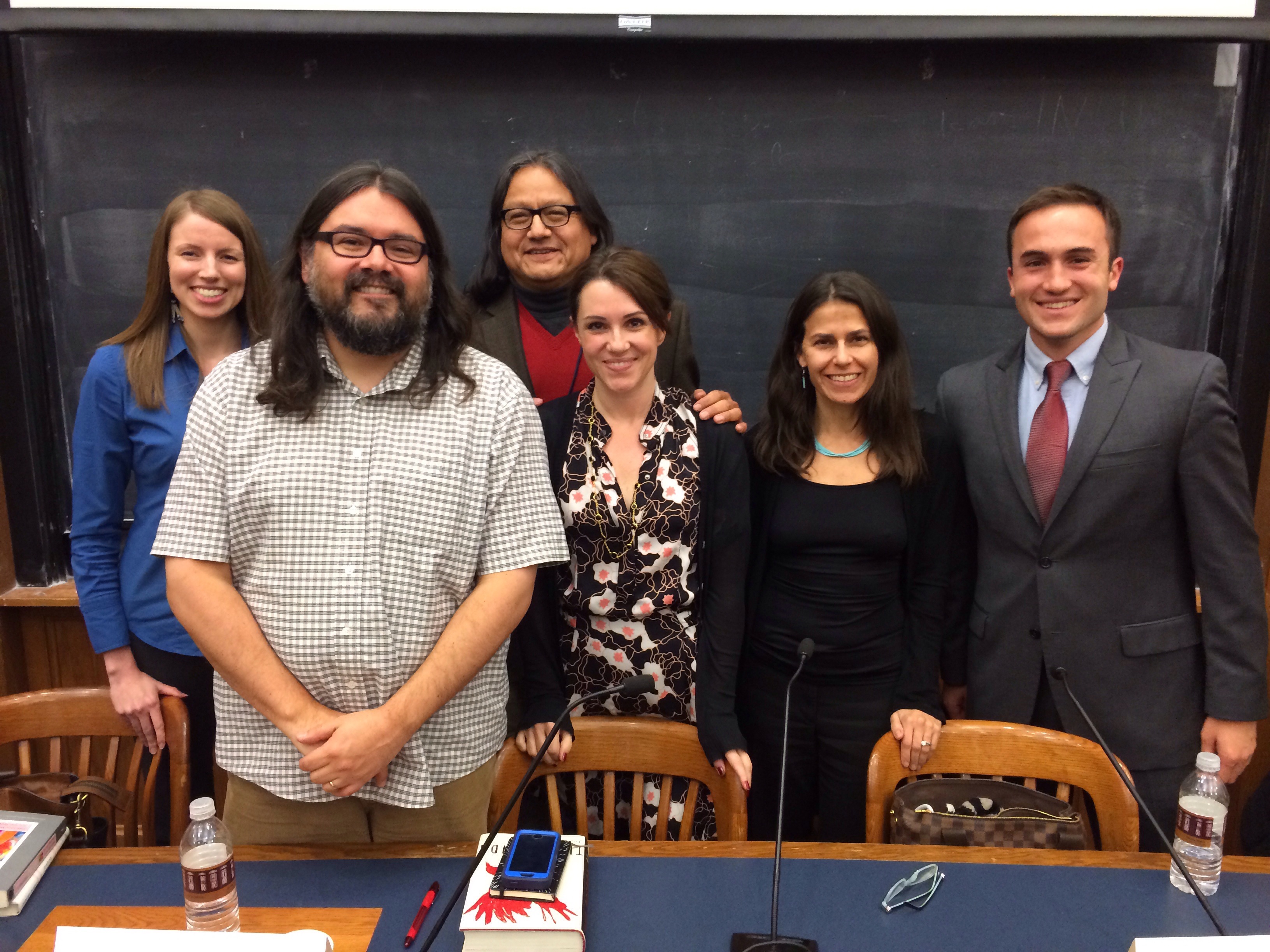
Indian Law Panel at Yale CRT

Katie Jones, Matthew Fletcher, Gerald Torres, Angela Riley, Kristen Carpenter, Sparky Abramson

20140406-115754.jpg