Here are the materials in Tavares v. Whitehouse (E.D. Cal.):
Author: Matthew L.M. Fletcher
Critical Issues Conference Presentation on Indian Law Careers
With our own Wenona Singel

More Pics from Critical Issues
Estrella Torrez prepares for her workshop, Establishing an Urban Indigenous Curriculum

Ogemakwewaag Sharon Kota and June Mamagona Fletcher

Emily Procter and Brandon Stevens

Federal Court Denies Motion to Recover Cobell Litigation Expenses
Here are the materials:
An excerpt:
Pending before the Court is Plaintiffs’ Motion for Reconsideration of Class Representatives’ Expense Application [ECF No. 3839]. The motion seeks to have this Court reconsider its June 20, 2011 decision declining to further diminish the common fund benefitting class plaintiffs by granting the Class Representatives’ request to recover expenses related to recoverable grants third-party organizations made to the Blackfeet Reservation Development Fund (“BRDF”) to finance this lawsuit. Because the pending motion advances arguments and evidence that could have been raised by the plaintiffs before the Court ruled and entered judgment, the motion will be denied.
Michigan Critical Issues Conference 2014
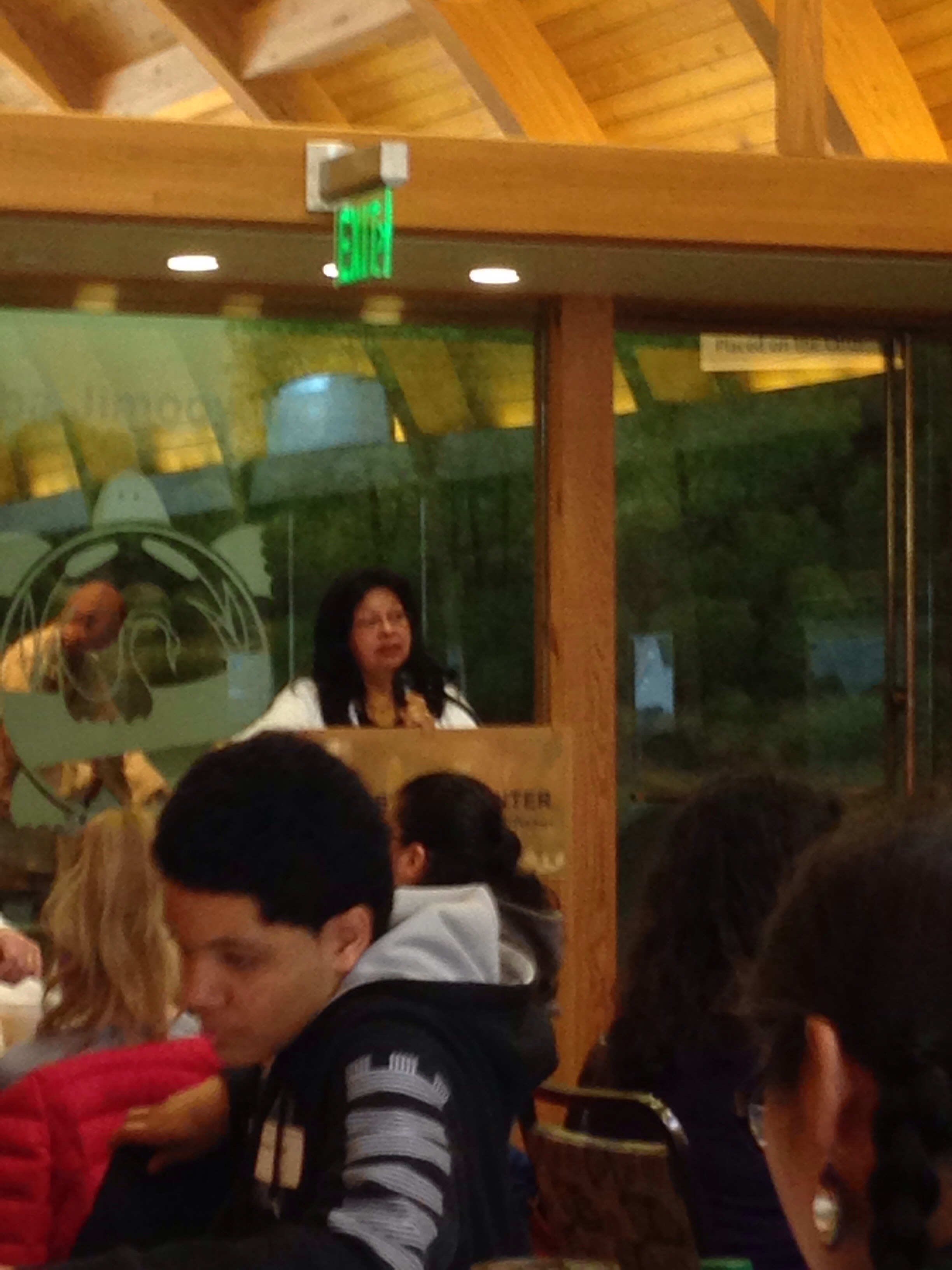
Opening keynote speaker Brandon Stevens
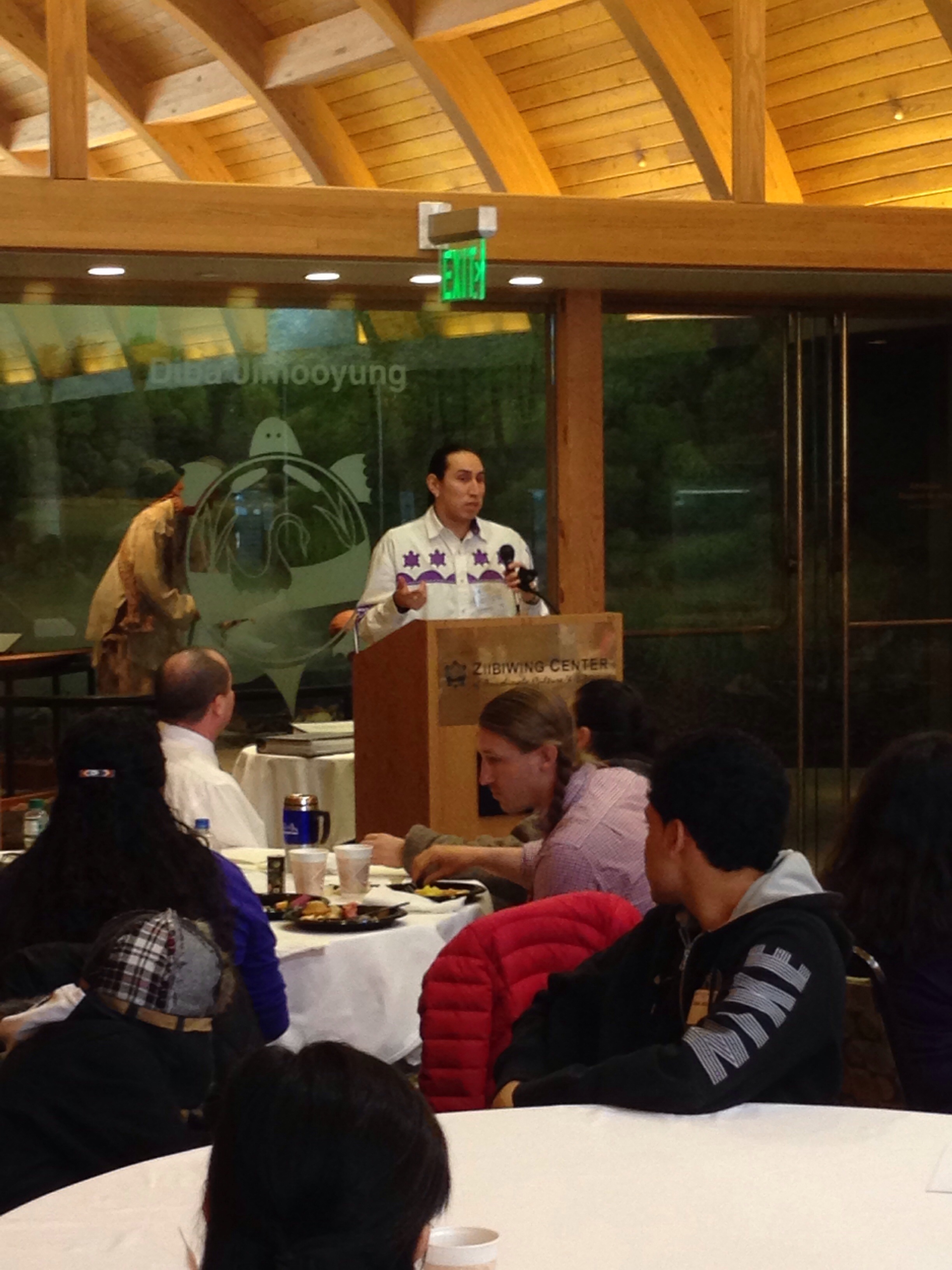
MIEC board member Rochelle Ettawageshik
Harvard Law Review Profile of the VAWA Tribal Jurisdiction Provisions
The Harvard Law Review has published “Congress Recognizes and Affirms Tribal Courts’ Special Domestic Violence Jurisdiction over Non-Indian Defendants. — The Violence Against Women Reauthorization Act of 2013, Pub. L. No. 113-4, tit. IX, 127 Stat. 54, 118–26 (to be codified in scattered sections of the U.S. Code)” (PDF).
From the conclusion:
From a practical standpoint, section 904 does not release a substantial amount of power back to the tribes; it is a cautious experiment, not a revolution. Indeed, section 904 is primarily a statement about values — the value of tribal sovereignty, the value of liberal ideals, the proper balance between them, and above all, Congress’s role in fixing that balance. By aligning section 904 so closely with the Court’s previously expressed concerns, Congress leaves the Court with no choice but to accept its calibration of these important values, and consequently, its privileged role in setting federal Indian policy.
Federal Court Orders S.D. Judges to Show Cause Why Will They Not Comply with Federal Orders in ICWA Class Action
N. Carolina COA Affirms Conviction Obtained under State-Tribal Cross-Deputization Agreement
Here are the materials in State v. Kostick (N.C. App.):
An excerpt:
Pursuant to the Tribal Code of the Eastern Band of the Cherokee Indians and mutual compact agreements between the Tribe and other law enforcement agencies, the North Carolina Highway Patrol has authority to patrol and enforce the motor vehicle laws of North Carolina within the Qualla boundary of the Tribe, including authority to arrest non-Indians who commit criminal offenses on the Cherokee reservation. Our State courts have jurisdiction over the criminal offense of driving while impaired committed by a non-Indian, even where the offense and subsequent arrest occur within the Qualla boundary of the Cherokee reservation.
NYTs Coverage of FTC v. AMG Decision (Tribal Payday Lending)
FCC Seeks Nominations for Native Nations Broadband Task Force
Here.


You must be logged in to post a comment.