Tenth Circuit Rejects Tribal Membership Claim by Alleged Choctaw Freedman Descendant

Here is the opinion in Greene v. Impson.

An excerpt:

The question in this appeal is whether officials from the Bureau of Indian Affairs (BIA) violated Charles Greene’s constitutional rights by failing to provide him an application form to allow descendants of Choctaw Indian Freedman to apply for federal recognition as an Indian.

Briefs:

Greene Appellant Brief

Federal Appellee Brief

Greene Reply Brief

Update in Omaha Tribal Liquor Jurisdiction Case

The parties have filed cross-motions for summary judgment:

Village of Pender Brief

Omaha Tribe Brief

The United States and the State of Nebraska have each filed briefs on the question of whether the Omaha Tribe’s 1854 reservation has been diminished/disestablished, with the federal government supporting the tribe and the state opposing:

Federal Brief

Nebraska Brief

Prior posts here, here, and here.

Update in Baby Veronica

From SCOTUSblog.

An excerpt:

The adoption of the little girl known in a child custody saga as “Baby Veronica” has been approved by a family court in Charleston, South Carolina, the child’s biological father notified the Supreme Court on Thursday.   Attorneys for Dusten Brown, a member of the Cherokee Nation, disclosed the family court’s action in the final filing in the Court in his attempt to postpone the child’s adoption by anyone other than him or his family.The action by the state court, giving full legal custody to the child to Matt and Melanie Capobianco, a non-Indian couple living near Charleston, came yesterday at a closed hearing.  All of the materials of that proceeding, including the final adoption and custody order, are under seal, by state law.  The family court also approved a “transition plan,” the details of which are also secret, that will mean the child — living with her father in Oklahoma for about nineteen months — will not be transferred immediately to her new home.  A counseling arrangement apparently is part of the transition plan.  “Baby Veronica” will be four years old next month.

***

All of the legal filings that appear to be reaching the Court in this round of the dispute have now been logged in, including a brief opposing the father’s efforts, by a South Carolina woman, Jo M. Prowell, who was appointed by the family court as the guardian of “Baby Veronica” during the legal proceedings — including the review of the case by the Supreme Court, leading to a decision against the father’s adoption prospects on June 25.

Ninth Circuit Decides Pyramid Lake Paiute v. Nevada — Water for Wetlands Appeal

Here are the materials in Pyramid Lake Paiute Tribe of Indians v. Nevada Dept. of Wildlife:

CA9 Opinion

Nevada Dept. of Wildlife Opening Brief

Nevada State Engineer Opening Brief

Nevada Water Fowl Assn Opening Brief

Federal Answer Brief

Pyramid Lake Paiute Answer Brief

The court’s syllabus:

Affirming the district court’s judgment, the panel held that the district court correctly  concluded that diversion of water for waterfowl habitat is not “irrigation” within the meaning of the federal court Alpine decree governing water rights in the Newlands Reclamation Project.

This appeal concerns applications filed by the Nevada Department of Wildlife and the Nevada Waterfowl Association to transfer water rights from agricultural  land in the Newlands Project to the Carson Lake and Pasture, a wildlife refuge located within the Lahontan Valley wetlands at the terminus of the Carson River. Because the  applicants proposed to use the transferred water to support the growth of plants used by wildlife, they argued that the intended use of water at Carson Lake and Pasture  constituted irrigation. The Pyramid Lake Paiute Tribe and the United States protested the applications.

Determining that the Tribe had standing, the panel held that both the Alpine Decree and the Nevada water code speak of irrigation solely in the context of agriculture and distinguish such use from the application of water for recreational, aesthetic, and wildlife purposes. Therefore, the panel agreed with the district court that the State Engineer’s approval of the applications to transfer the non-consumptive use portion of the applicants’ water rights violated Administrative Provision VII of the Alpine Decree because the applications sought a change in the manner of use to a non-irrigation purpose.

Opening Eleventh Circuit Brief in Miccosukee v. Morgan Stanley

Here:

Miccosukee Opening Brief

Lower court materials here.

Civil Rights Complaint Filed in Baby Veronica Dispute

Complaint here.

NCAI press release:

Federal Civil Rights Lawsuit Filed on Behalf of Veronica Brown
Statement of Support Issued by Tribal Governments and Leading Native American, Civil Rights, Child Welfare and Legal Advocates along with Arizona and New Mexico State Attorneys General to Stop Violation of “Baby Veronica’s” Civil Rights by South Carolina Courts

Washington, DC (July 31, 2013) – Today, the Native American Rights Fund filed a complaint in the United States District Court in South Carolina to protect the civil rights of Veronica Brown, a citizen of the Cherokee Nation who has been denied due process in the South Carolina courts. The filing comes after the South Carolina Supreme Court issued two controversial orders to the state’s family court on July 17 and 24, calling for the removal of Veronica from her father and a transfer her to the adoptive couple without a hearing of best interest.

The lawsuit was supported in a national statement released today by a broad coalition of civil rights, child welfare, adoption advocates, legal authorities, tribal governments, and Native American advocacy groups. These groups and individuals joined with the National Congress of American Indians, Native American Rights Fund, and National Indian Child Welfare Association in releasing the national statement of support for Veronica’s civil rights, and the rights of all children, to a hearing of best interest.

The litigation was filed on behalf of Veronica, by Angel Smith, an attorney appointed as counsel for the child by the courts of the Cherokee Nation, in U.S. District Court in South Carolina, and asks the Court to determine whether Veronica has a constitutionally protected right to a meaningful hearing in the state courts to determine what is in her best interests. Furthermore, the litigation asserts that Veronica, as an “Indian child” under the Indian Child Welfare Act, has a federally protected right to have the state courts fully consider and appropriately weigh her best interests as an Indian child. Daniel E. Martin, Jr., the judge for the family court system of South Carolina, is named as the defendant in the suit.

According to the filing, Veronica “doubtless has a liberty interest in remaining with her father and such an interest justifies at a minimum a plenary hearing on her current status, her relationships with others and her genuine need for stability… Despite the finding of the family court and the implicit assumption by the Supreme Court of South Carolina that [Veronica’s] best interest would be served by being with her father, two years later the court now determines, despite the passage of time and [Veronica’s] stage of development at age four, that her ‘best’ interests will now be served by being removed from him and given back to the adoptive couple. Again, this order is without any consideration to the present circumstances, psychological and emotional well-being, and future impact on [Veronica]. This is an arbitrary result, depriving [Veronica] of any opportunity to be heard on her own behalf, irrespective of the competing interests of the adult litigants in her young life.”

Click to download the Complaint.

Broad National Support for the Litigation

Also today, on behalf of broad coalition of civil rights, child welfare, legal authorities, tribal governments and Native American advocacy groups, the National Congress of American Indians, along with the Native American Rights Fund and the National Indian Child Welfare Association released a national statement of support for Veronica’s civil rights to be upheld. The statement of support has been endorsed by a broad coalition of tribal governments, state and federal legal authorities including two state attorneys general – Arizona and New Mexico – civil rights institutions such as the Leadership Conference on Civil and Human Rights, child welfare and adoption organizations including the Child Welfare League of America, and leading national and regional Native advocacy organizations representing the interests of almost every tribe located within the United States (see full list below).

According to the letter:

[T]he rights promised to our children are being compromised in the courts of the State of South Carolina … The recent [South Carolina Supreme Court] ruling in the case denies the basic fundamental right of an almost four-year-old Indian child to a hearing of her ‘best interests’ before removing her from her biological father after almost two years of child-rearing, bonding and establishing a loving home environment. Plainly stated, this is a denial of Veronica’s human rights and constitutional rights to due process as a citizen of the United States.

The following organizations and individuals have signed on to the letter of support for the civil rights lawsuit being filed on behalf of Veronica:

Continue reading →
Federal Court Issues Decision in Challenge to Suquamish Usual and Accustomed Fishing Areas

Here are the materials in United States v. Washington subproceeding 05-4 (W.D. Wash.):

193 Swinomish Motion for Partial Summary J

195 Suquamish Motion

199 Tulalip Motion

Subp 05-4 Dkt 242 Order Suquamish-1

Materials on subproceeding 05-3 are here.

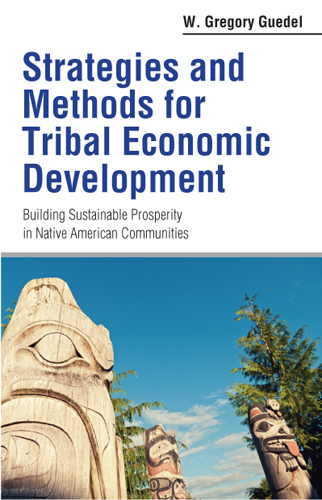
Book Announcement: “Strategies and Methods for Tribal Economic Development”

Guedel Book Cover

Blurb here:

Each year, billions of dollars of funding and technical assistance are available to native governments, businesses, and individuals for a wide variety of economic and community development activities. From multi-million dollar tax-exempt bonds to microloans, tribal governments and businesses can access capital from public and private sources to create companies, construct housing, produce energy, build infrastructure—essentially any element of an economic development program. Written by an internationally recognized legal expert and educator, Strategies and Methods for Tribal Economic Development provides strategic-level guidance for tribal economic development planning, along with connections to available funding and resources for implementing the selected strategies. Each chapter includes website addresses for the specific programs being discussed, allowing the reader to go directly from the program description to the online link for the program in one step. The book also offers practical advice for combining multiple funding sources and support services into a comprehensive development approach. For tribal leaders and businesses interested in pursuing opportunities in native communities, Strategies and Methods for Tribal Economic Development is an invaluable resource for planning and implementing programs for sustainable economic growth.

Text here:

Strategies_and_Methods_for_Tribal_Economic_Development_Text

NCAI Statement on Nomination of Michael Connor as Interior Deputy Director

NCAI Statement on the Nomination of Michael L. Connor as
Deputy Secretary for the Department of the Interior

The National Congress of American Indians (NCAI) has released the following statement regarding President Obama’s nomination of Michael L. Connor as Deputy Secretary for the Department of Interior:

“We applaud the nomination of Michael Connor for Deputy Secretary of the Department of the Interior. Throughout Mr. Connor’s career he has proven his commitment to positive working relationships with tribal nations.  Mr. Connor’s work with tribes in his role at the Senate Energy Committee demonstrates he is well prepared for the important duties of the Deputy Secretary to uphold the federal trust responsibility. We are confident that Mr. Connor will be a strong partner for Indian Country and we look forward to working with him to advance our nation-to-nation relationship.”

White House Nomination Information:

Michael L. Connor is the Commissioner of the U.S. Bureau of Reclamation at the U.S. Department of the Interior (DOI), a position he has held since 2009.  Previously, Mr. Connor served as Counsel on the U.S. Senate Energy and Natural Resources Committee from 2001 to 2009.  He served in the Secretary’s Indian Water Rights Office at DOI as Director from 1999 to 2001 and Deputy Director from 1998 to 1999.  Mr. Connor has worked as an attorney in a number of offices at DOI from 1993 to 1997, including the Southwestern Regional Solicitor’s Office, the Division of Indian Affairs, and the Solicitor’s Honors Program.  He was a research assistant in the Natural Resources Law Center at the University of Colorado from 1991 to 1993.  From 1984 to 1990, Mr. Connor worked as a professional engineer in a variety of roles.  He received a B.S. in Chemical Engineering from New Mexico State University and a J.D. from the University of Colorado School of Law.

LCO Treaty Rights Camp Update

Iron County is going to postpone its prosecution of treaty rights campers, article here. An excerpt:

People at the Lac Courte Orielles harvest camp in northern Wisconsin will not face eviction any time soon as Iron County Board members decided Tuesday night to postpone any directives to its district attorney to seek civil and criminal charges.

The board referred the matter to the county forestry committee, the group that originally approved a year-long stay for the camp. It next meets Aug. 13.

The Lac Courte Orielles Band of Lake Superior Chippewa camp of two dozen wigwams sits near the area where Gogebic Taconite is exploring a proposed mine site. Clashes in the past few months with mining officials and those opposed to the practice have elevated the public knowledge of the camp. The band is using the camp to highlight the natural resources it says are at risk due to the proposed mining.