Ariana Kravetz has published “Rectifying Historical Wrongs: The Case for the Indigenous’ Inherent Right to Self–Govern Child Welfare in Canada” in the University of Miami Inter-American Law Review.

Ariana Kravetz has published “Rectifying Historical Wrongs: The Case for the Indigenous’ Inherent Right to Self–Govern Child Welfare in Canada” in the University of Miami Inter-American Law Review.
Here is the opinion in In re Dependency of C.J.J.I.:
Briefs (links to state court website):
Here is the opinion in In re Ja.O.

The Native American Rights Fund has provided legal assistance to Tribes in Alaska since NARF’s founding in the early 1970s. In 1984, NARF opened an Alaska office so it could better serve Alaska Native Tribes and individuals. In the 40 years since NARF Alaska opened its doors, the office has litigated some of the most influential cases in the development of federal Indian law in Alaska. Below is an overview of the foundational work that NARF has done with and on behalf of Alaska Native Tribal governments and people.
Neoshia Roemer has published “Equity for American Indian Families” in the Minnesota Law Review. PDF
Here is the abstract:
For the better part of two centuries, the cornerstone of federal Indian policy was destabilizing and eradicating tribal governments. In the process, federal Indian policy also dismantled American Indian families via child removal. Attempting to equalize American Indians through the practice of assimilation, decades of Indian child removal policies destroyed Indian families. In 1978, Congress responded to these horrors by passing the Indian Child Welfare Act (ICWA), a revolutionary law that was responsive to its trust responsibility to American Indian Tribes. By providing for the best interests of Indian children, heightened protections for parents of Indian children in certain child custody proceedings, and vesting Tribes with a legally recognizable interest in their children’s futures, Congress issued a referendum on equality for American Indians and the very nature of colonialism.
For nearly fifty years, ICWA has governed certain child custody proceedings involving Indian children in state courts. In 2018, a group of state and private actors decided to challenge ICWA’s constitutionality in Haaland v. Brackeen. Among their claims, these parties alleged that ICWA violated the equal protection rights of potential adoptive parents who are non-Indian and that ICWA placed Indian children at a disadvantage. However, just beneath the surface of these claims lies the real allegation: American Indian children should be available for the “good families” or for the “right kind of families” to adopt them. By claiming American Indians had special rights via ICWA, these plaintiffs hoped to re-introduce a version of equality that allowed generations of federal, state, and individual actors to enact assimilationist policies. Ultimately, the goal of equality in this area remains to ensure that “good families” maintain access to Indian children. Contrary to congressional goals, Indian children remain a commodity in demand for “good families” looking to save Indian children.
Blending family law, federal Indian law, and constitutional law, this Article evaluates the fallacy in applying the Equal Protection Clause to claims about ICWA. In doing so, this Article demonstrates that ICWA contains an anti-colonial equity principle that is contrary to the equal protection doctrine—a doctrine that Congress knew could never apply when the matter came to accessing the rights of American Indian families against those of the settlers, primarily because the rights of American Indian individuals are intricately linked to the federal trust responsibility. This Article argues that given ICWA’s character as an anti-colonial statute, applying the Equal Protection Clause to it will only stand to yield absurd results in furtherance of a colonial project that Congress has abandoned. Instead of the equality the Supreme Court promises through its equal protection doctrine, ICWA’s mandate requires equity.

From MSU Today, here is “Faculty voice: Intergenerational trauma to indigenous families is real.”
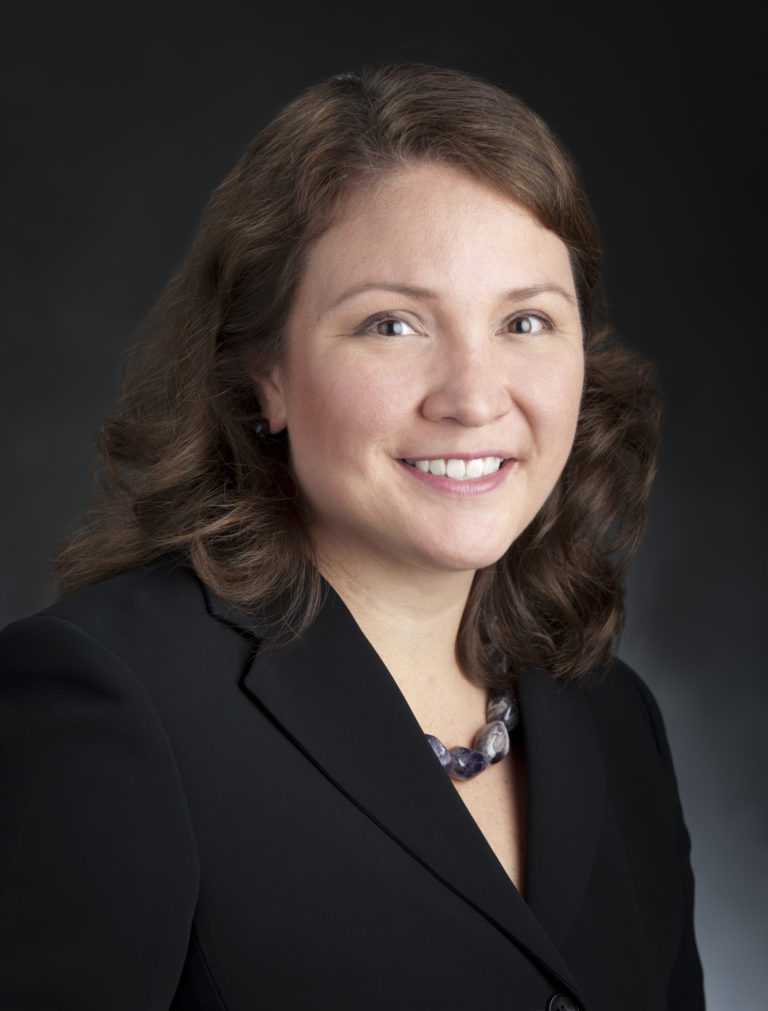
Wenona Singel
Professor of Law and Director of Indigenous Law and Policy Center Wenona Singel is currently researching and writing a book on her family’s multi-generational experience with forcible removal of Indian children in U.S. history. Below is an excerpt.
Five generations of my family experienced and responded to U.S. policies of forced displacement and assimilation. In 1840, my third-great-grandfather lost his Native family around the time of the U.S. military’s forcible mass detention and removal of Native people in southern Michigan.
He was raised by a Native family that moved from southern Michigan to the northern part of the Lower Peninsula. My ancestors lived in northern Michigan settled in a Native village at Burt Lake, where they purchased multiple lots of land. Later, they transferred title to that land to the Governor of Michigan to be held in trust for their benefit.
On October 15, 1900, Sheriff Fred Ming of Cheboygan County and a lumber speculator named John McGinn poured kerosene on the entire Native village at Burt Lake, destroying everything but the church and one small shack. Following that event, which is now referred to as the Burt Lake Burnout by Michigan Native communities, children of Burt Lake village, including my great-grandfather’s generation, were sent to the federally operated Mount Pleasant Indian Industrial School.
Indian boarding schools throughout the U.S. were well-documented sites of forcible assimilation, abuse, and neglect. Native children, who were frequently removed from their homes against their parents’ wishes, arrived at the schools, where they were stripped of their traditional clothing. Their hair was cut short, they were forbidden from speaking their Indigenous languages, they were taught menial skills, and they suffered from numerous forms of physical and sexual abuse as well as malnutrition, rampant spread of disease, and other forms of neglect.
Many Native children died during their institutionalization at Indian boarding schools, and the U.S. has only identified a portion of the grave sites of these children. Those who survived Indian boarding schools speak of persistent feelings of unworthiness and shame for being Indian.
My grandfather was among the children born to the generation that attended the Mount Pleasant Indian Industrial School. He attended Holy Childhood School of Jesus, an Indian boarding school operated by the Catholic Church in Harbor Springs, Michigan.
At Holy Childhood, my grandfather met my grandmother, who also lived at the school. They later married and had five children, all of whom were taken from them by social services.
One of the lasting legacies of Indian boarding schools is that children who attended these schools grew up without exposure to their own families’ parenting skills. Instead, survivors grew up learning cooking and cleaning over academics and were subjected to institutional abuse.
These experiences deeply traumatized many survivors of the schools and left them unprepared for gainful employment and economic prosperity in adulthood. Furthermore, social services agencies in the twentieth century treated Native families as incapable of raising their own children.
By 1978, 25% to 35% of all Native children in the U.S. were removed from their homes and placed in foster care, adoptive homes, or institutions. In nearly all cases, Native children were placed with families who were not Native, leading to the widespread loss of children’s cultural identity and connection with their tribal communities.
Like so many of the Native children born in the 1950s, my mother was removed from her family as an infant and lived in multiple foster care homes until she was adopted by a white Catholic family with one of her biological sisters at the age of five.
My mother and aunt experienced loss of their Anishinaabe cultural identity. They also confronted cruel negative stereotypes about Native Americans in their schools, church, and family.
As an 18-year-old girl, my mother became pregnant with me and left her adoptive family. For three years, my mother and I “couch-surfed” in temporary housing until my sister was born and we found an income-pooling commune founded by a church in Detroit. The following year, when I was four, my baby sister was taken from us and adopted by a white family.
Today, I am a parent to two children. I am committed to documenting the impact of federal and state Indian law and policy on Native families and the intergenerational trauma it produces. I want my own children to be the first generation in my family since at least 1840 not to experience separation from their parents. (However, my sister lost custody of her son following life in the adoptive home that she fled during adolescence.)
I became extremely self-reliant as a child to compensate for the challenges my family had as a result of abuse and neglect. However, many negative impacts of the toxic stress of my early years continue to affect me today, such as constant hyper-vigilance and the sensation of being in survival mode, even though I’ve long established the security I lacked in my youth.
My story is not exceptional; rather, it’s representative of and part of a pattern common to Native families throughout the country. Themes of substance abuse, thoughts of suicide, domestic violence, lack of secure housing, and financial issues plagued the adults in my family, contributing to toxic stress.
On the Adverse Childhood Experiences scale, which measures children’s exposure to various forms of abuse, neglect, dysfunction, and chaos, I score an 8 out of 10. Scores of 8 through 10 are shared by an estimated 1% to 3% of the U.S. population.
I know many Native community members who score a 10 out of 10. Studies have shown that people with an ACE score of 4 or more have a greater likelihood of developing chronic health conditions, they are four times more likely to experience depression, anxiety, and substance use disorders than the general population, and they have a lower life expectancy.
They are also 12 times more likely to attempt suicide.
My work is intended to help other Native families understand how federal and state Indian policies have contributed to multiple generations of profound harm that continue to cause reverberating impacts in the present.
I am exploring how evidence-based strategies for surviving and thriving despite high ACE scores can be scaled and tailored to address historic trauma using culture, traditional teachings, and education.
I am also examining how our justice and political system might respond and provide remedies for the intergenerational harm.
I am an advocate of a multi-pronged approach that includes components such as an acknowledgement of the full effect of the harms experienced by Native families; formal and meaningful apologies; accountability for individuals, organizations, and governments; restitution; rehabilitation; and healing as defined and prescribed by Indigenous communities.
Try as they did, the federal and state governments did not succeed at whitewashing our people. It came close. And now they must take action on each of these prongs to help Indigenous people heal.
From California Tribal Families Coalition (supported by Casey Family Programs), but not limited to California practice. This is a much-needed practice publication–a small part of which will be presented tomorrow at the federal ICWA training. Next week there is a full training using these standards at the TICA conference in Santa Barbara.
2023.7.6 Perf Standards For Attorneys Representing Tribes -FINAL
Figuring out where the California Court of Appeal courts are on the initial inquiry duty when a child is removed from their home is about as easy as detangling a ball of Christmas lights. The Samantha F. case does a nice job of going through where everything is, and what courts have held. This issue is fairly specific to California, which has certain ICWA inquiry requirements in state law and court rules for the removal of any child from their home. The question at issue seems particularly frustrating, because certain California courts have held there is no duty for contacting a child’s extended family re. tribal citizenship if the child was removed from the home with a warrant. However, there is such a duty if they were removed from the home without a warrant. In reading the cases, it feels like there was an oversight in drafting the state laws rather than some kind of legislative intent to suss out. Regardless, this has been the top litigated issue in California ICWA cases for almost a year now. In fact, it was nearly a year ago I posted about this at length. Apparently filing is finally underway in the In re Ja. O. case now. Briefing in the other set of cases appears to be complete but oral argument has not yet been set.
As a reminder, comments for the ICWA AFCARS are due April 23. The Indian Law Clinic has developed a model comment for tribes to edit and use if they so wish. For a copy of the comment, please contact Cody Fowler, who has done the heavy lifting on this work, is an MSU grad and is helping out the Clinic for a few weeks! He can be contacted at:
fowler48@msu.edu
The proposed rule is here, as well as the link to submit comments:
https://www.federalregister.gov/documents/2024/02/23/2024-03373/adoption-and-foster-care-analysis-and-reporting-system
As a reminder, this is a proposed rule to require nationwide data collection about ICWA children in foster care. We have never had nationwide data on ICWA cases, despite nearly ten years of active litigation to try to get the 2016 rule back, and many years of activism before that to get the 2016 rule.
 Turtle Talk
You must be logged in to post a comment.