Here:
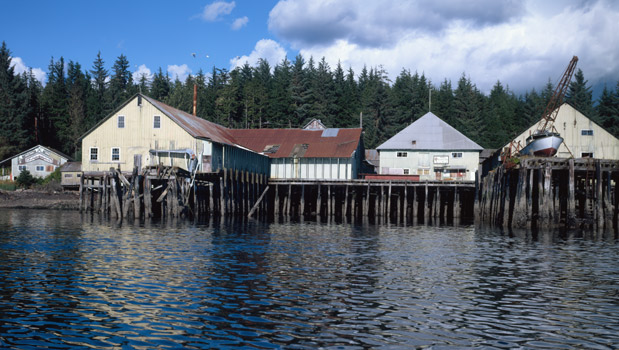
H/t Property Profs Blog.
The Three Affiliated Tribes plans to dedicate a yacht next month that eventually will be used for a riverboat gambling operation on the Missouri River in North Dakota.
The tribe earlier this year reached an agreement with the state to allow for the expansion of gambling on the Fort Berthold Reservation, which straddles the Lake Sakakawea reservoir on the Missouri. A yacht currently is being assembled at the tribally owned 4 Bears Casino and Lodge west of New Town, the Minot Daily News reported.
Here.
Here is the opinion in Sue/Perior Concrete and Paving Co. v. Lewiston Golf Course Corp.:
An excerpt:
Other factors, however, including what the Court of Appeals has characterized as the “[m]ore important[]” financial factors, weigh in favor of a determination that LGCC does not share in the Nation’s sovereign immunity (id.). With respect to whether LGCC’s “purposes are similar to or serve those of the tribal government” (id.), we conclude that this factor supports the denial of sovereign immunity to LGCC. In minutes from its August 2002 meeting approving the creation of SGC, the Council declared that “it is . . . the policy of the Nation to promote the welfare and prosperity of its members and to actively promote, attract, encourage and develop economically sound commerce and industry through governmental action for the purpose of preventing unemployment and economic stagnation,” and that “the Gaming industry is vitally important to the economy of the Nation and the general welfare of its members.” To that end, the Council created SNFGC for the purpose of “developing, financing, operating and conducting the Nation’s gaming operations on its Niagara Falls Territory at the Niagara Falls Gaming Facility.” In creating the LGCC, the Council declared that, “in furtherance of the economic success of the Nation’s gaming operations, [SNFGC] has commenced development of a . . . golf course located in the Town of Lewiston, New York[, which] will be developed and operated as an amenity to . . . SNFGC’s casino operations, . . . the purpose of which amenities is to enhance the overall success and profitability of the casino’s operations” (emphasis added). In that manner, the Council believed that the golf course project “may reasonably be expected to benefit, directly or indirectly, the Nation” (emphasis added). Thus, the Council’s own statements reflect that the purpose of LGCC – to develop a golf course as an “amenity” to the Nation’s gaming operations – is several steps removed from the purposes of tribal government, e.g., “promoting tribal welfare, alleviating unemployment, [and] providing money for tribal programs” (Gristede’s Foods, Inc., 660 F Supp 2d at 477; cf. Ransom, 86 NY2d at 560).
These common law tests to decide whether a tribal enterprise is under the cloak of tribal immunity are baffling, generating far too many unpredictable results like this one. It’s fairly clear to me that the wide majority of courts would conclude a tribally-owned enterprise chartered under tribal law is immune without looking toward subjective factors such as what the purpose of the corporation is — tribes just aren’t for-profit entities. They’re governments.
The Department of the Interior is finalizing regulations guiding implementation of the Buy Indian Act, which provides Indian Affairs (IA) with authority to set aside procurement contracts for Indian-owned and controlled businesses. This rule supplements the Federal Acquisition Regulation (FAR) and the Department of the Interior Acquisition Regulation (DIAR).
Federal Register here.
Press Coverage here.
The Shakopee Mdewakanton Sioux Community announced Tuesday that it would be donating more than $10 million to 18 American Indian tribes across 18 states.
The Shakopee Mdewakanton have donated more than $270 million since 1992 and made more than $500 million in loans to other tribes for economic development projects.
Here.
Here is the opinion in Quantum Entertainment Limited v. Department of the Interior:
Quantum Entertainment v Dept of Interior
Briefs are here.
Lower court materials are here.
INDIAN COUNTRY COMPLETELY SHUT OUT OF NEW MARKETS TAX CREDITS
Not a single Native Community Development Enterprise (NCDE) was selected for an award in the most recent round of New Markets Tax Credit (NMTC) allocations (just announced by the CDFI Fund of the US Department of the Treasury) despite at least one Native-sponsored applicant and one non-Native applicant totally dedicated to Indian Country deployment. These two CDEs’ allocation requests were peer reviewed and ranked ‘highly qualified’ to be eligible for an allocation.
The NMTC program, which annually allocates about $3 Billion in Federal Tax credits that are sold to private investors for investing in low income communities’ economic development projects, has allocated over a $100 Billion in tax credit authority since the program’s inception in 2003. Indian Country NCDEs have only just started to receive a small portion of the annual allocations, in recent years. In total, Native CDEs have received about $250 Million in tax credit authority, or about 0.25% of total investment authority. While small in proportion to total NMTC allocation, this amount has made the NMTC program a significant source of Indian Country investment capital in only a few short years. Until this year, that is.
The failure to allocate ANY NMTC to Native CDEs in the most recent competition puts hundreds of millions of dollars of Indian Country pipeline projects at risk and highlights the need for the Federal Government to more directly address Indian Country’s rapidly expanding capacity to utilize NMTC. There is precedence at the CDFI Fund to solve this problem: Carve Out a portion of each NMTC allocation for competitive allocation just among Native CDEs similar to the already existing carve out that exists in the Native American CDFI Assistance (NACA) program, which reserves other elements of the CDFI Fund’s programs just for Indian Country. Without such a carve out, Indian Country will continue, in any given year, to be at risk of being crowded out of the intense competition for NMTC by other low income communities, whose larger populations support the formation of more CDEs that can enter, and potentially, win in the annual NMTC competition.
I happened across this libertarian-oriented article advocating (among other things) that tribes allow less-regulated medicine within their borders. I don’t tend to agree–personally I think the medical profession should be regulated, but I wanted to pass this along anyway.
SSRN-id1726074[1]
Here.
From the court’s syllabus:
Affirming the district court’s judgment in an action concerning a dispute over a revenue-sharing contract between a Nevada corporation and a tribally chartered corporation of the Hualapai Indian Tribe for the building and operation of the Grand Canyon Skywalk, the panel held that the Nevada corporation must exhaust tribal court remedies before proceeding in federal court on its claims challenging the Tribe’s authority to condemn its intangible property rights in the contract.
The panel concluded that the bad faith and futility exceptions to the exhaustion requirement did not apply. It held that where a tribal court has asserted jurisdiction and is entertaining a suit, the tribal court must have acted in bad faith for exhaustion to be excused; bad faith by a litigant instituting the tribal court action will not suffice. The panel held that the submitted evidence did not establish that the tribal court operated in bad faith or was controlled by the tribal council in its decision making. The panel also affirmed the district court’s conclusion that the evidence did not meet the narrow futility exception, which applies where exhaustion would be futile because of the lack of adequate opportunity to challenge the tribal court’s jurisdiction.
The panel held inapplicable the exhaustion exception for cases in which the tribal court plainly lacks jurisdiction. The panel stated that the main rule of Montana v. United States, 450 U.S. 544 (1981), that generally Indian tribes lack civil authority over the conduct of nonmembers on non-Indian land within a reservation, was unlikely to apply to the facts of this case. The panel held that the district court correctly relied upon Water Wheel Camp Recreation Area, Inc. v. LaRance, 642 F.3d 802 (9th Cir. 2011), which recognizes that a tribe’s inherent authority over tribal land may provide for regulatory authority over non-Indians on that land without the need to consider Montana. Moreover, even if the tribal court were to apply Montana’s main rule, the Nevada corporation’s consensual relationship with the tribal corporation, or the financial implications of their agreement, likely would place the case squarely within one of Montana’s exceptions and allow for tribal jurisdiction.
Briefs are here.
The arbitration decision can be found here. The Respondent has filed a complaint in federal court to stay the arbitration decision, which we will try to obtain. A snippet of the arbitration decision:
The Complainant is an Indian Tribe (termed a “Native Sovereign Nation” in more recent governmental documents) that is recognized by the Federal Government of the United States of America. The Complainant occupies a tribal reservation in and around the Grand Canyon of the Colorado River in the State of Arizona. It is undisputed that the Complainant is a legal entity that is competent, among other things, to engage in commerce and to own and use trademarks in commerce.
Since the 1950s, tourism has been the Complainant’s principal economic activity, commercialized through tribally owned enterprises. Despite the fact that there are no roads leading to the portion of the tribal reservation where world-famous waterfalls are located, some 20,000 tourists arrive annually on foot or on horseback, or by helicopter. The Complainant’s “Havasupai Tourism Enterprise” provides tourism services such as food, lodging, and guided horseback excursions and operates the “Havasupai Lodge”, the “Havasupai Tribal Café”, the “Havasupai Trading Post”, and campgrounds. The Complainant’s official website is found at “www.havasupai-nsn.gov”. . . .
The Respondent has since used the Domain Name for commercial gain, for paid advertising relating to Grand Canyon tours and lodging and other services, some of which compete with those offered by the Complainant. The Respondent has fostered a likelihood of confusion with the Complainant’s marks, by using the same Domain Name incorporating those marks that was formerly used by the Complainant itself, misleadingly displaying the Complainant’s name on the associated website and the Complainant’s contact information on the “Contact” page of that website, and providing no identification of the Respondent or disclaimer of affiliation with the Complainant. The Panel concludes that these facts fit the paradigm of bad faith described in the Policy, paragraph 4(b)(iv), as an attempt to mislead Internet users for commercial gain.
 Turtle Talk
You must be logged in to post a comment.