Here are the materials in Lower Brule Sioux Tribe v. Haaland (now Burgum) (D.S.D.):
63 Federal Motion for Summary J
Prior post here.

Here are the materials in Lower Brule Sioux Tribe v. Haaland (now Burgum) (D.S.D.):
63 Federal Motion for Summary J
Prior post here.
The Headwaters Report – is a new digital blog site, bulletin, and source for Tribal water law information and resources. The Headwaters Report presents accessible information on foundational Tribal water law concepts and practices as well as current and emerging water-related issues.
The first article focuses on the Clean Water Act, a 50-year-old law that, among other things, allows Tribes to assert regulatory jurisdiction over water quality and activities that impact water quality within reservation boundaries. In our next Report update, we plan to address the changes the Trump Administration is attempting to make to the Clean Water Act and how that may affect Tribal Nations.
In the Report you will also find several slide decks on Tribal water rights information, including one on the basics of Tribal water rights, general stream adjudications, and Indian water rights settlements. We intend The Headwaters Report to act not only as a clearinghouse for Tribal water law and policy information, but as a place to bring questions and to get guidance.

The rest of the issue is here.
EO 14191, titled “Expanding Educational Freedom and Opportunity for Families” and signed on January 29, 2025, includes a section that seeks the implementation of schools of choice using federal BIE funds for families with children eligible to attend BIE schools.
Section 7 of the Order provides:
Helping Children Eligible for Bureau of Indian Education (BIE) Schools. Within 90 days of the date of this order, the Secretary of the Interior shall review any available mechanisms under which families of students eligible to attend BIE schools may use their Federal funding for educational options of their choice, including private, faith-based, or public charter schools, and submit a plan to the President describing such mechanisms and the steps that would be necessary to implement them for the 2025-26 school year. The Secretary shall report on the current performance of BIE schools and identify educational options in nearby areas.
On February 28, 2025, the BIE issued a Dear Tribal Leader Letter announcing two expedited tribal consultation webinars for Tribal leaders and the public scheduled for this Friday, March 14, 2025. The links to register for either of Friday’s consultations are in the letter. Written comments can also be submitted by email to consultationcomments@bie.edu.
The National Indian Education Association (NIEA) has shared its concerns about BIE School Choice here.

The complaint, available below, was filed on March 7 in the U.S. District Court for the District of Columbia. The Tribal plaintiffs include the Pueblo of Isleta, Prairie Band Potawatomi Nation, and Cheyenne and Arapaho Tribes, and the complaint names the Secretary of Interior Doug Burgum, Assistant Secretary – Indian Affairs Bryan Mercier, and Director of BIE Tony Dearman as defendants.


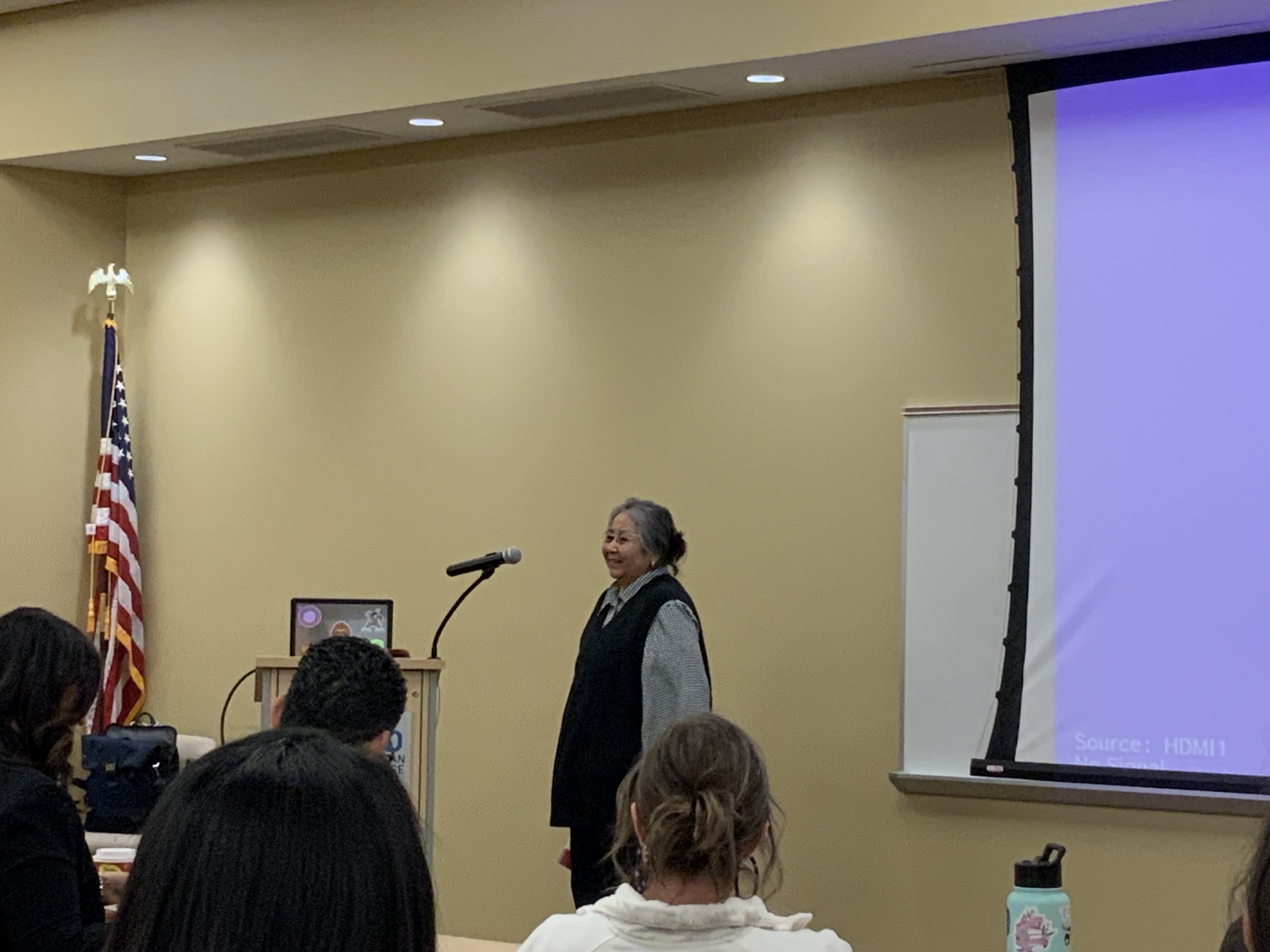
From Kekek Stark, Montana’s intrepid Anishinaabe law professor:
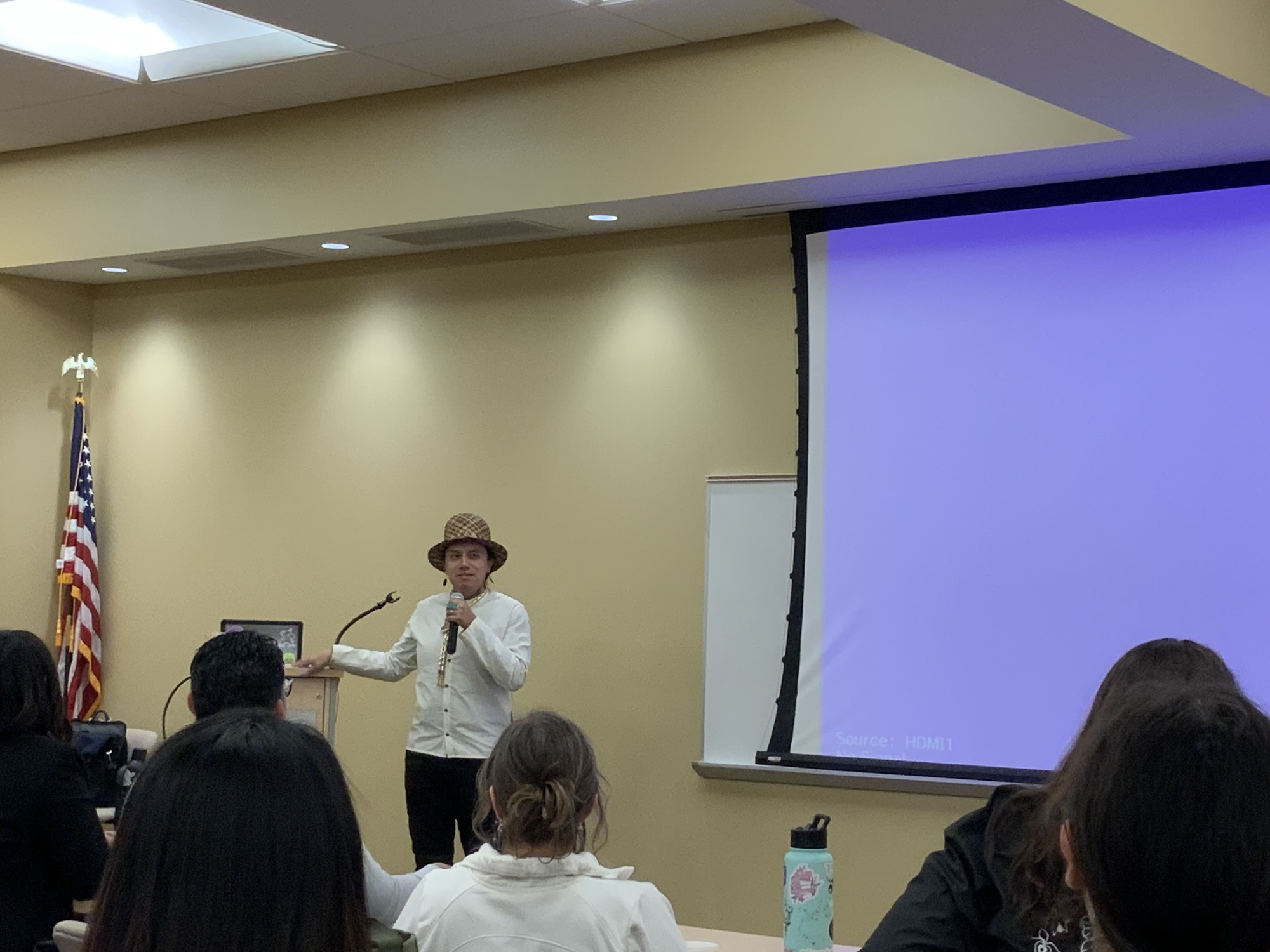
We would love for you and your students to join us at Montana’s Law School on Monday April 14th for our annual Indian Law Preview day.
Indian Law preview day is a great way to give students an overview of our Indian Law Certificate program, an overview of what types of jobs Indian Law specialists can have, and insights into the law school application process in general. The program is open to anyone interested in Indian Law as a subject matter, and students who are anywhere from application-ready to several years out from law school.
If you would like to continue to receive updates, please use the form below to register for the event, and please feel free to circulate this save the date to your interested students. Even if a student is unsure if they’ll be able to attend, please have them “register” using the form below to be sure to get updates.
Register for Indian Law Preview Day
Our tentative schedule is as follows- students should plan to be in Missoula In-Person:
8:00- Check in and Welcome from Dean Gagliardi
8:30- Law School Admissions Basics
9:00- Strategizing for the Law School Admissions Test
10:30- Attend Indian Law Class
12:00- Lunch with panel of Indian Law specialists, including a presentation from the American Indian Law Center and Pre-Law Summer Institute
1:00- close.
This preview day is the kickoff to our full Indian Law week that will include interesting lectures and events.

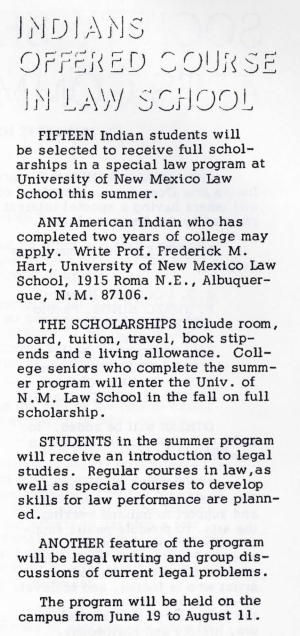
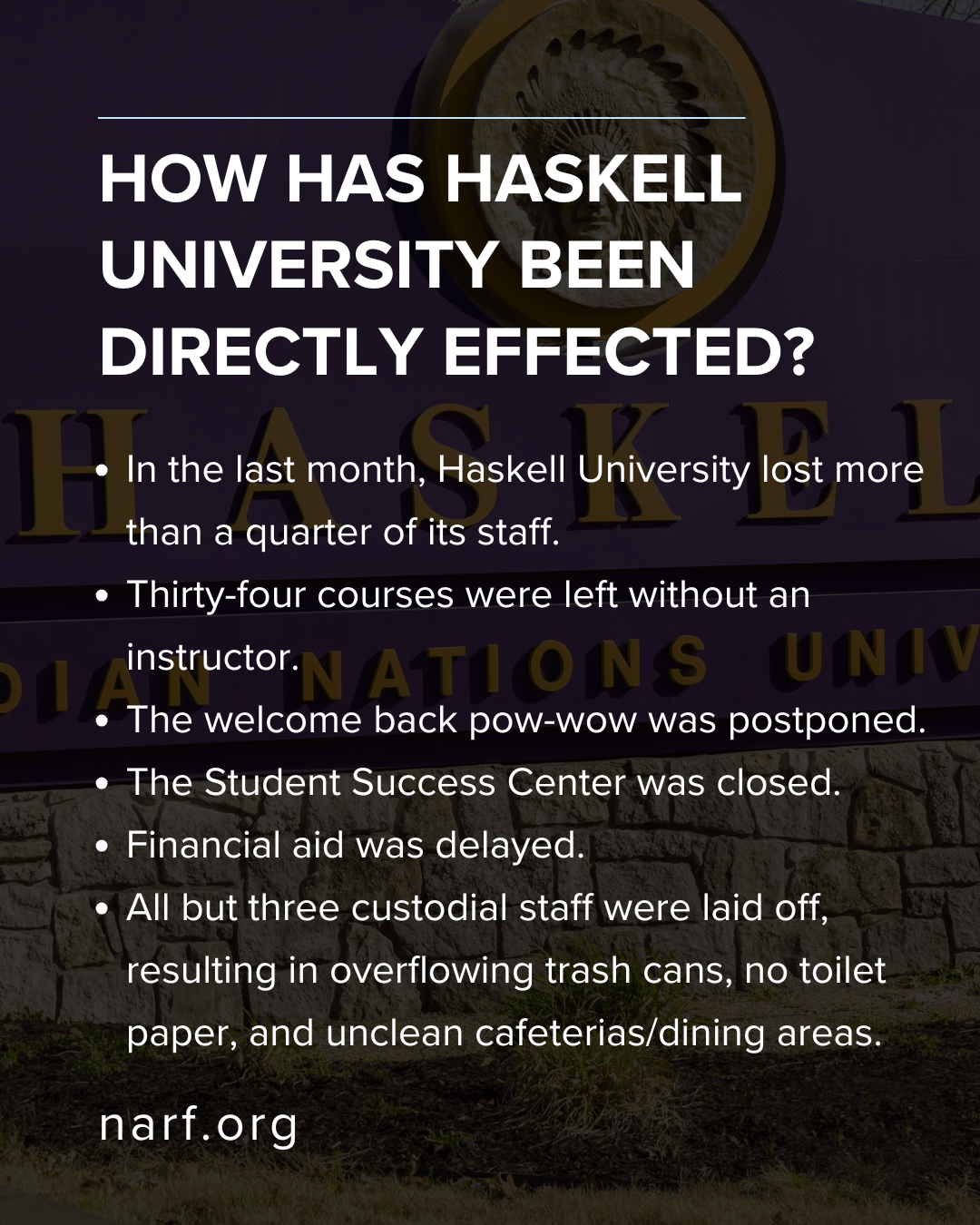
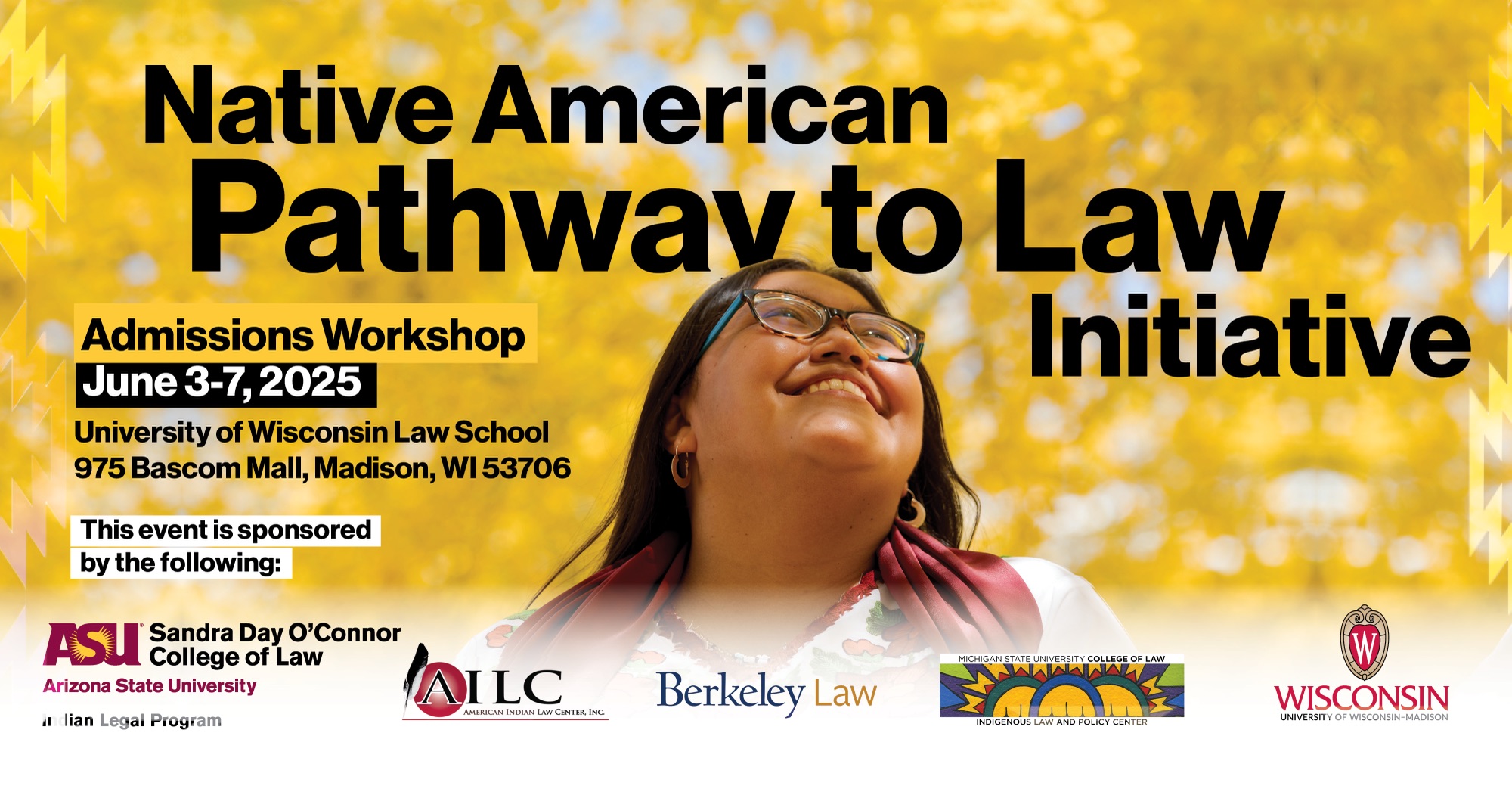
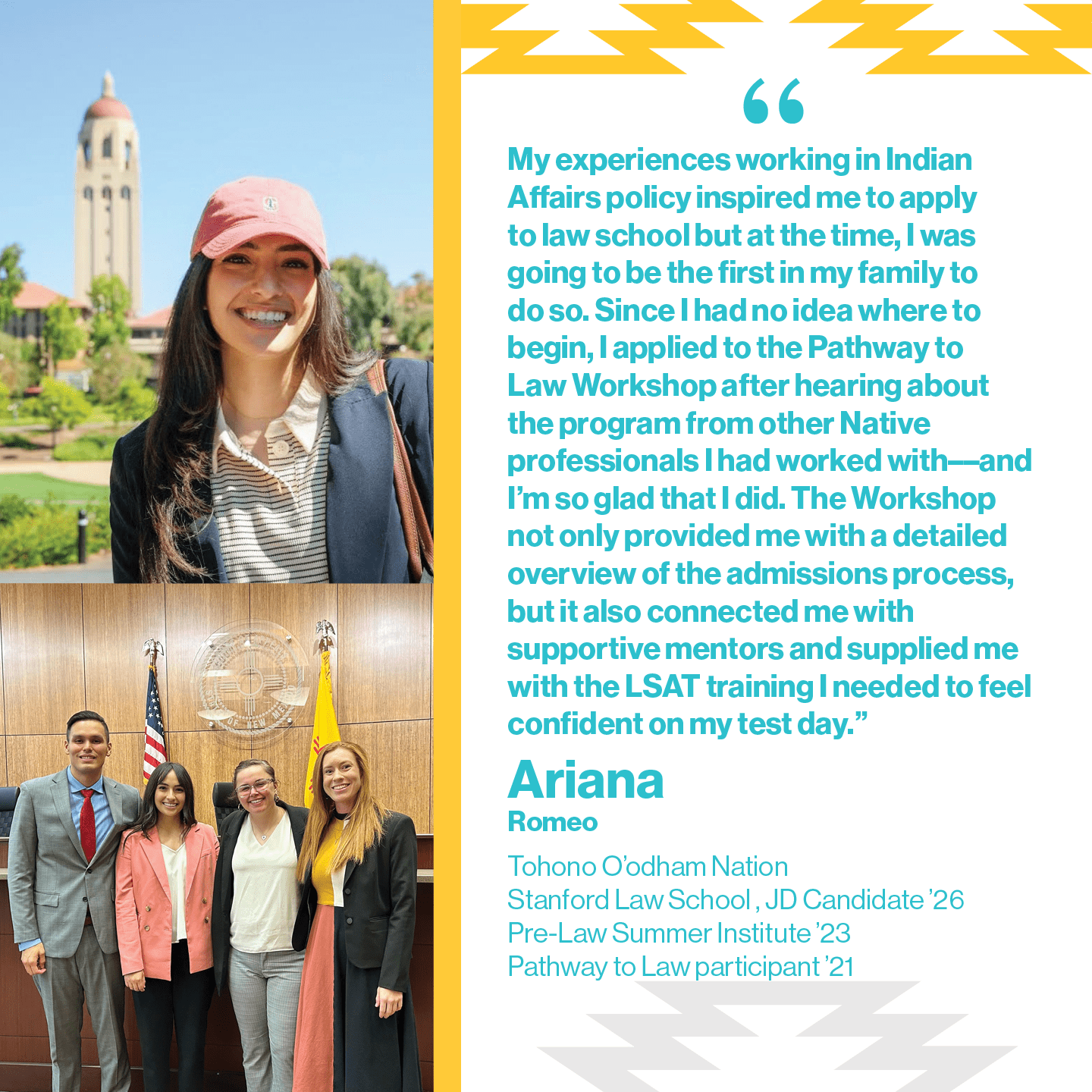
We’re thrilled to co-host this year’s Native American Pathway to Law Workshop at the University of Wisconsin Law School, which will be held on June 3–7, 2025. This immersive, five-day program offers invaluable guidance for Native American students looking to successfully navigate the law school application process—an essential step toward addressing the profound underrepresentation of Native Americans in the legal field.
What you’ll gain at the Pathway to Law Workshop:
Who should attend?
College sophomores, juniors, seniors, master’s students and graduates preparing for law school are all encouraged to apply. This workshop is free and designed to help motivated, aspiring law students achieve their goals.
Don’t miss out! Submit your application by March 16 to secure your spot in this empowering program. Join us for a transformative experience that will help pave the way for a more inclusive and representative legal profession.
Apply today: law.asu.edu/pathwaytolaw
The Pathway to Law program is sponsored by the National Team: J.D. Admissions Office at the University of California, Berkeley School of Law, the Indigenous Law & Policy Center at Michigan State University College of Law, the American Indian Law Center, Inc. and the Indian Legal Program at ASU’s Sandra Day O’Connor College of Law.
Wiring the Rez: Building Tribal Economies through Digital Sovereignty
February 20-21
Wild Horse Pass and Casino
Chandler, AZ
The Indian Legal Program and the Rosette, LLP American Indian Economic Development Program at ASU Law are proud to partner with the ASU American Indian Policy Institute, the National Congress of American Indians’ Center for Tribal Digital Sovereignty and the Self-Governance Communication and Education Tribal Consortium to bring you an impactful event.
Register today: law.asu.edu/wiringtherez


 Turtle Talk
You must be logged in to post a comment.