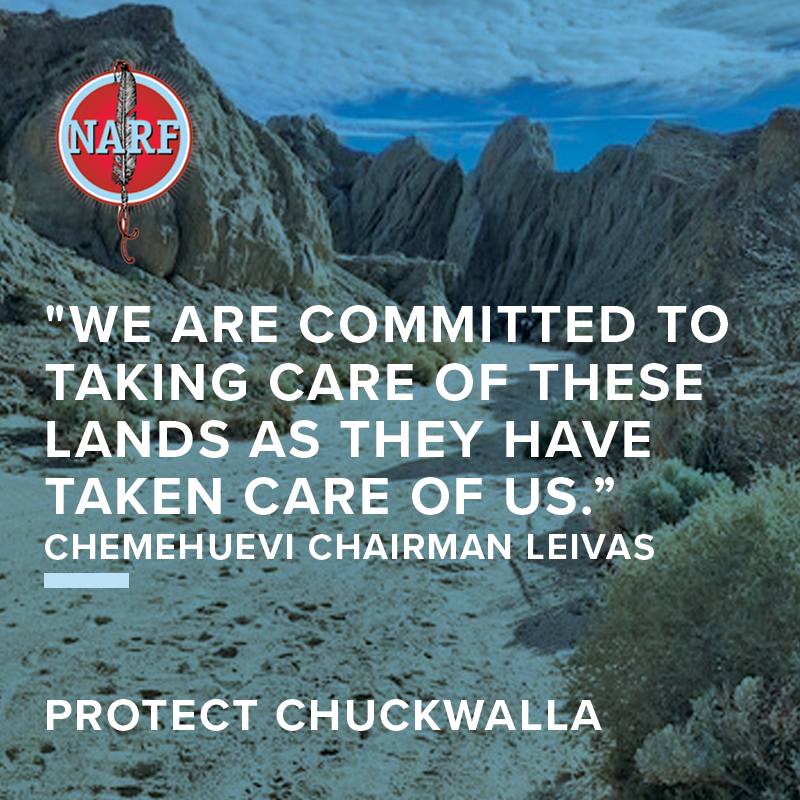
On August 11, 2025, the Torres Martinez Desert Cahuilla Indians, Fort Yuma Quechan Indian Tribe, Chemeheuvi Indian Tribe, Colorado River Indian Tribes, and Morongo Band of Mission Indians, moved to intervene in Torongo v. Burgum, a case that threatens the long-sought designation of the Chuckwalla National Monument. Tribal Nations led the effort to establish Chuckwalla National Monument. The challenge to the monument is brought in federal court by a Michigan resident who purportedly has mining claims within the monument boundaries and a national off-road vehicle special interest group.
The Native American Rights Fund has provided legal assistance to Tribes in Alaska since NARF’s founding in the early 1970s. In 1984, NARF opened an Alaska office so it could better serve Alaska Native Tribes and individuals. In the 40 years since NARF Alaska opened its doors, the office has litigated some of the most influential cases in the development of federal Indian law in Alaska. Below is an overview of the foundational work that NARF has done with and on behalf of Alaska Native Tribal governments and people.
Planning is a critical part of the federal government’s management of the nation’s public lands. Over the last halfcentury, Congress has mandated that each of the four major public land management agencies; the U.S. Forest Service, the Bureau of Land Management, the U.S. Fish and Wildlife Service, and the National Park Service, develop and rely on plans to guide their oversight of public lands and resources. Virtually every activity or decision affecting these public lands can be traced back to language in—or missing from—a plan. But, despite the importance of planning, the process by which each agency develops and implements plans presents complex challenges for both the agencies and those interested in participating in or influencing both planning and resultant management decisions. These challenges can frustrate, if not derail, the incorporation of meaningful changes in planning documents that, given the often decades-long lifespan of a plan, could have long-term impact. The federal Departments of Interior and Agriculture—home to the four major land management agencies—are enhancing their engagement with Native Nations in the co-stewardship of public lands and resources. Given its importance to the management of public lands and resources, planning is key to these efforts, especially because most plans now, in effect, do little to consider the interests of Native Nations. Thus, although federal and tribal co-stewardship covers a range of activities, the relationship between co-stewardship and planning offers one of the most powerful avenues for reshaping the future of federal-tribal relations in the management of public lands and resources. This Article provides the first comprehensive effort to align federal public land planning with tribal co-stewardship through an analysis of the statutory, regulatory, and procedural planning requirements relevant to each of the four major federal public land management agencies. The Article also analyzes various plans and planning efforts to offer a roadmap for how Native Nations and their federal partners can use planning to spark and sustain a new era of tribal co-stewardship of federal lands and resources.






 Turtle Talk
You must be logged in to post a comment.