Tiffani Darden, Eric Hemenway, and Treena Metallic
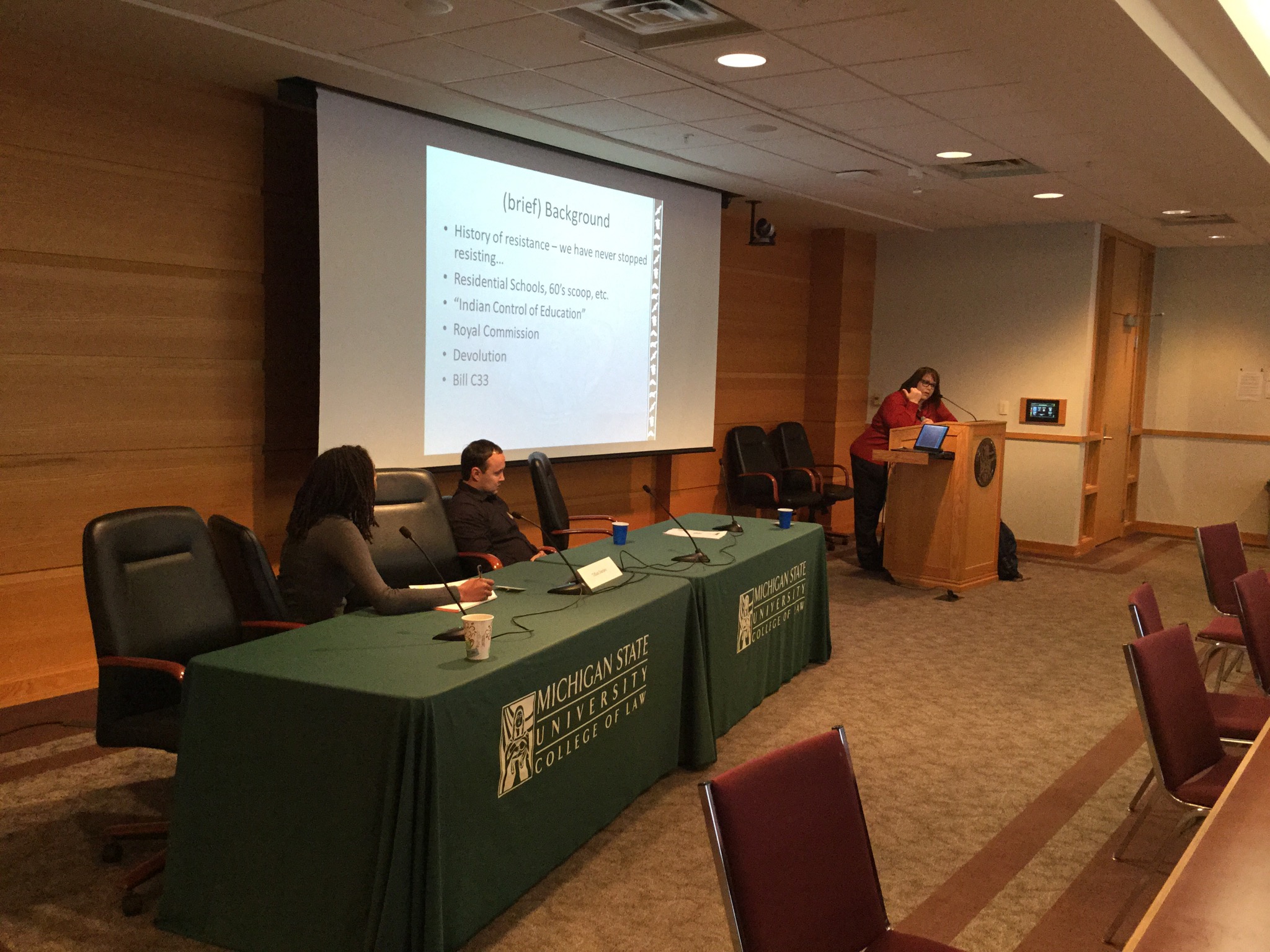
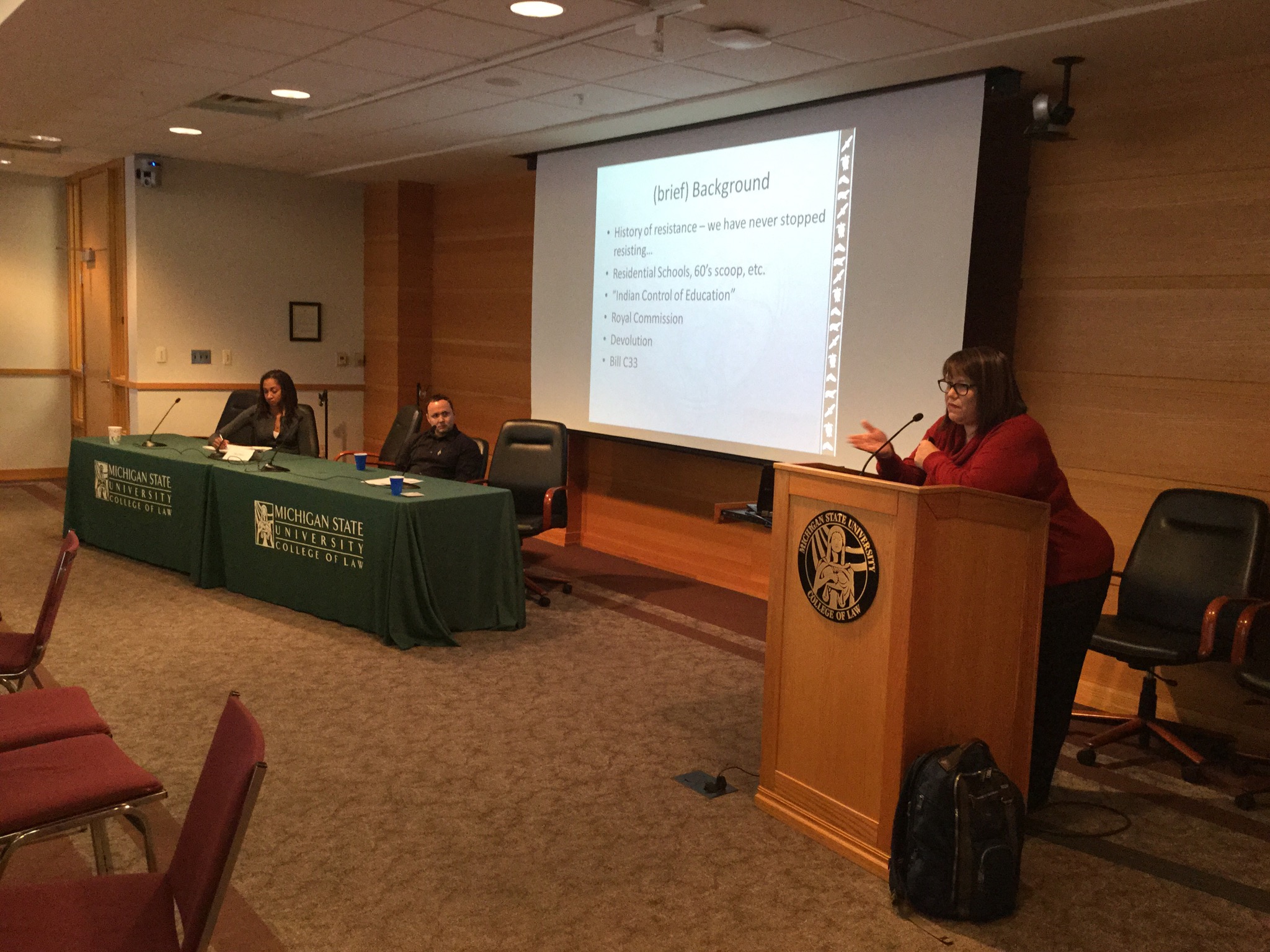
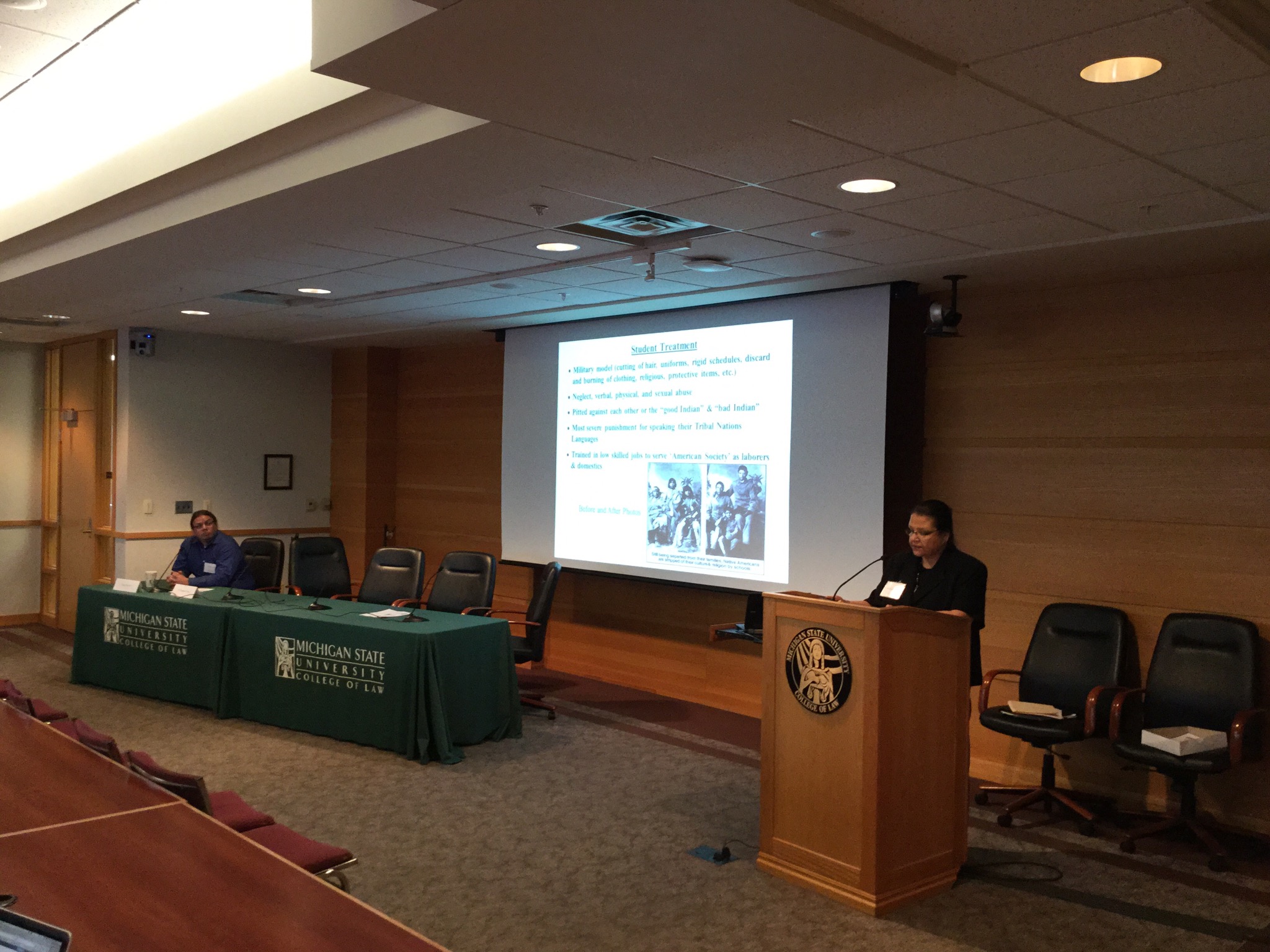
Tiffani Darden, Eric Hemenway, and Treena Metallic

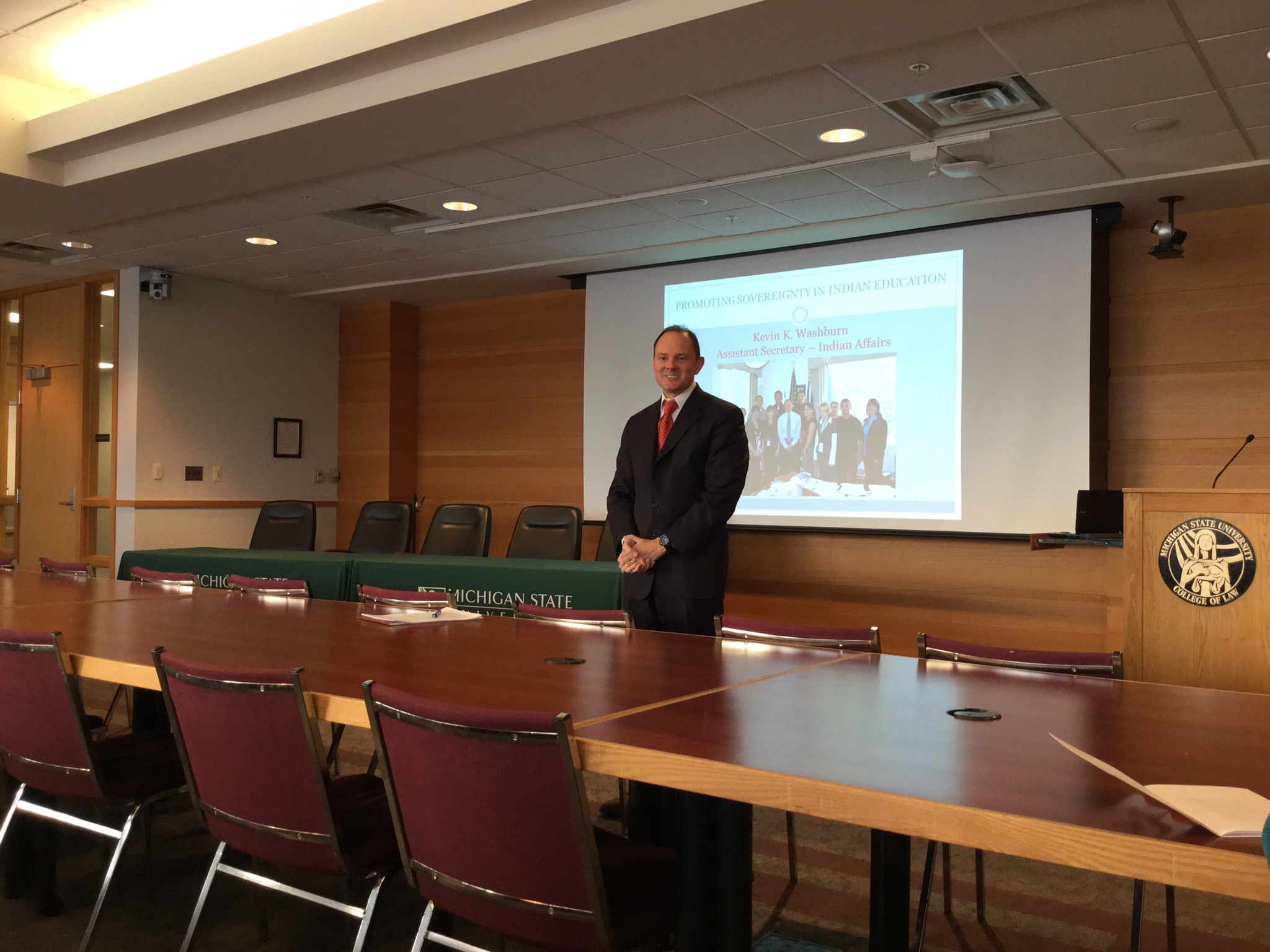
Keynote speaker Kevin Washburn
Dean Howarth and Assistant Secretary Washburn

NALSA Representing

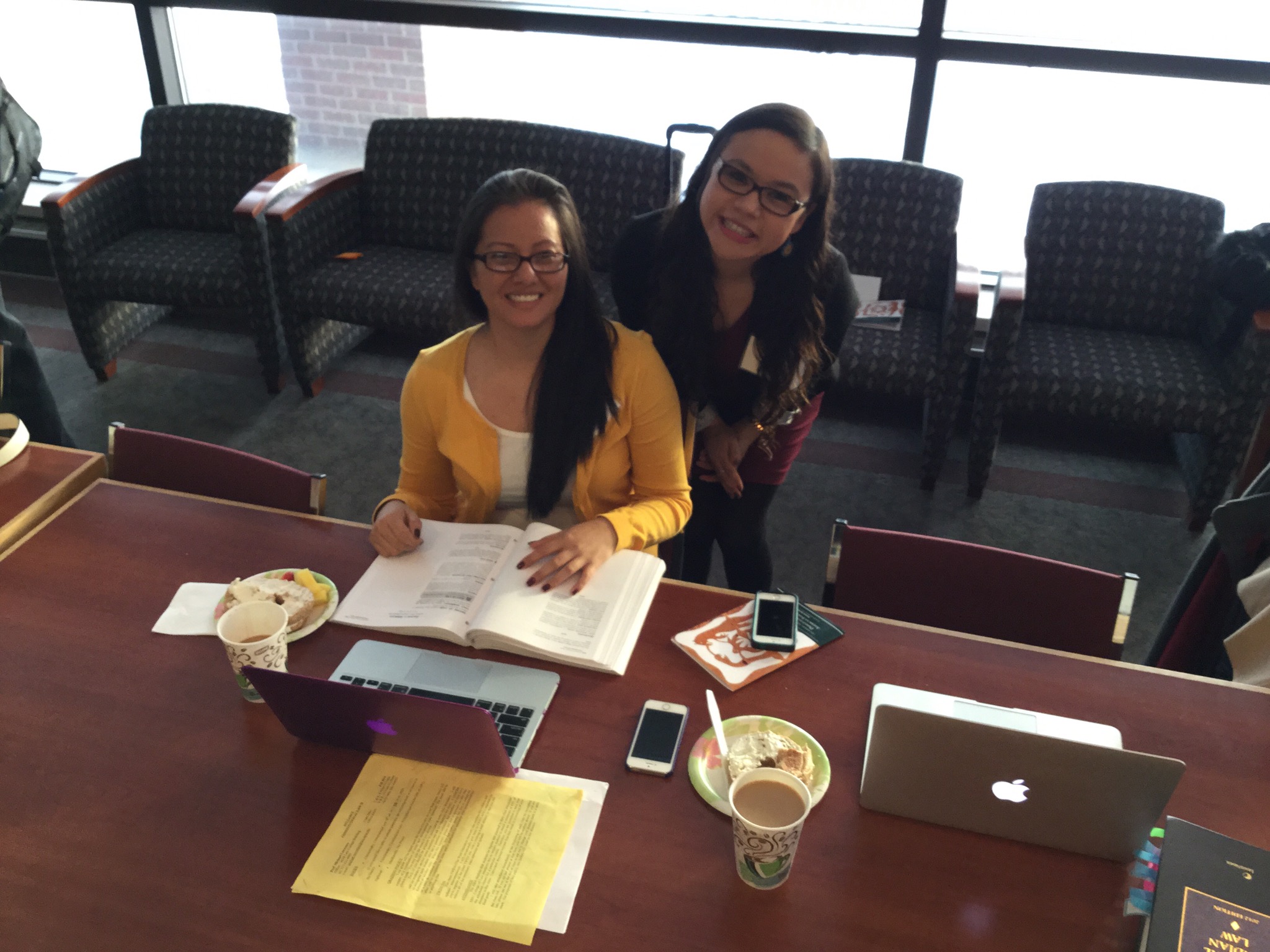
Tribal In House Counsel Reps — Doreen and Liz

Hungry Indians


Zaagi’idiwaag
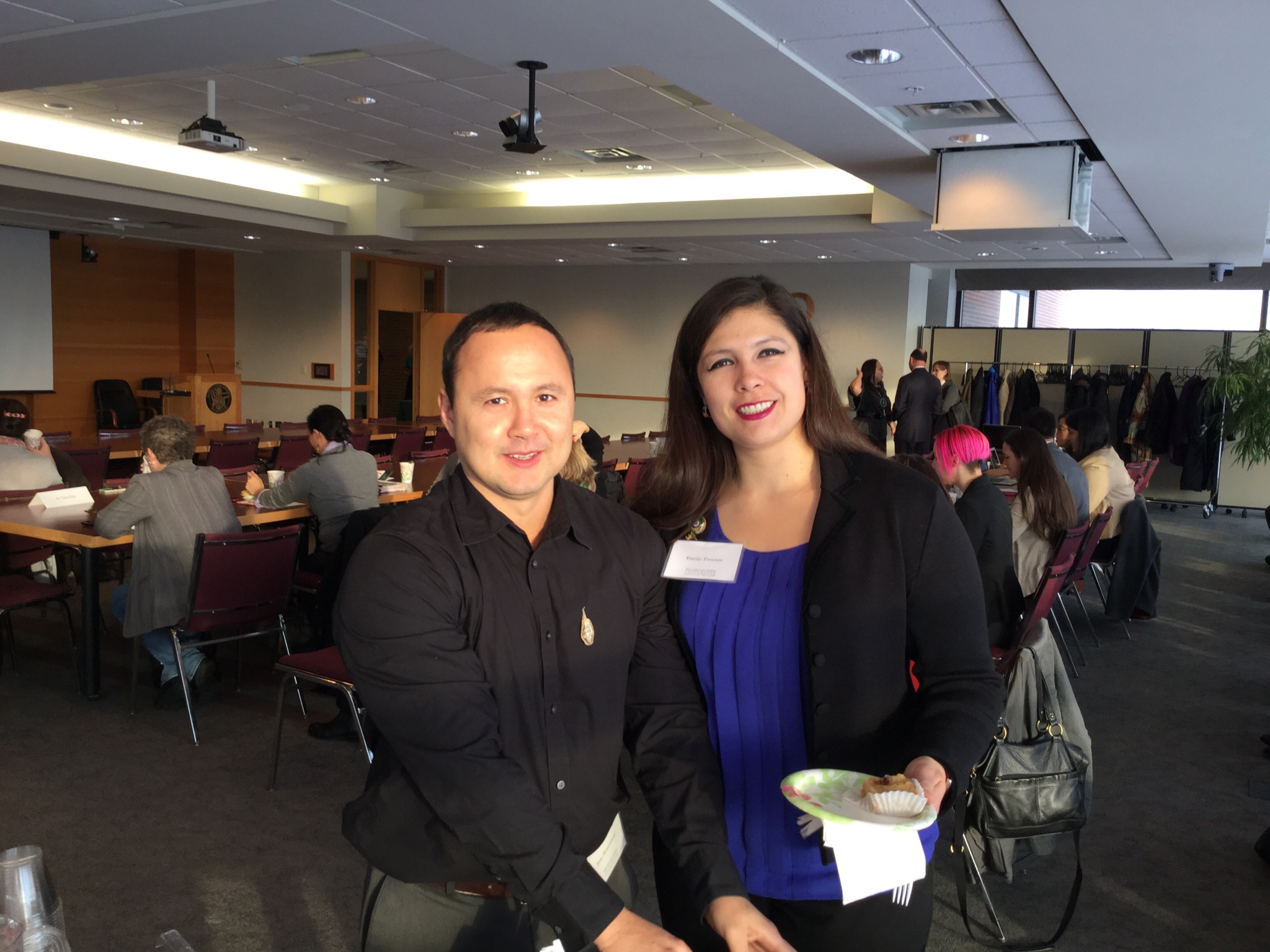
The keynote

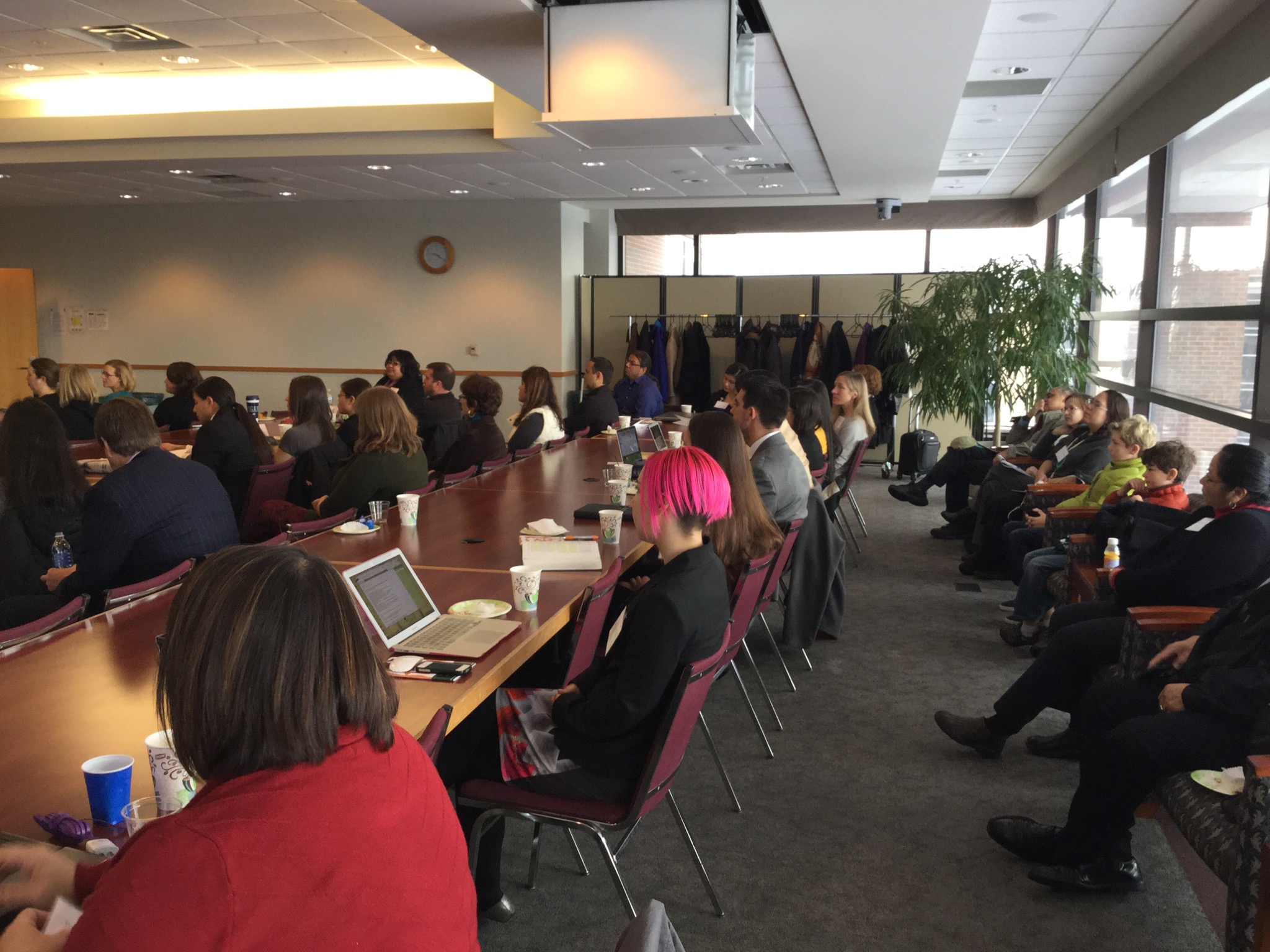

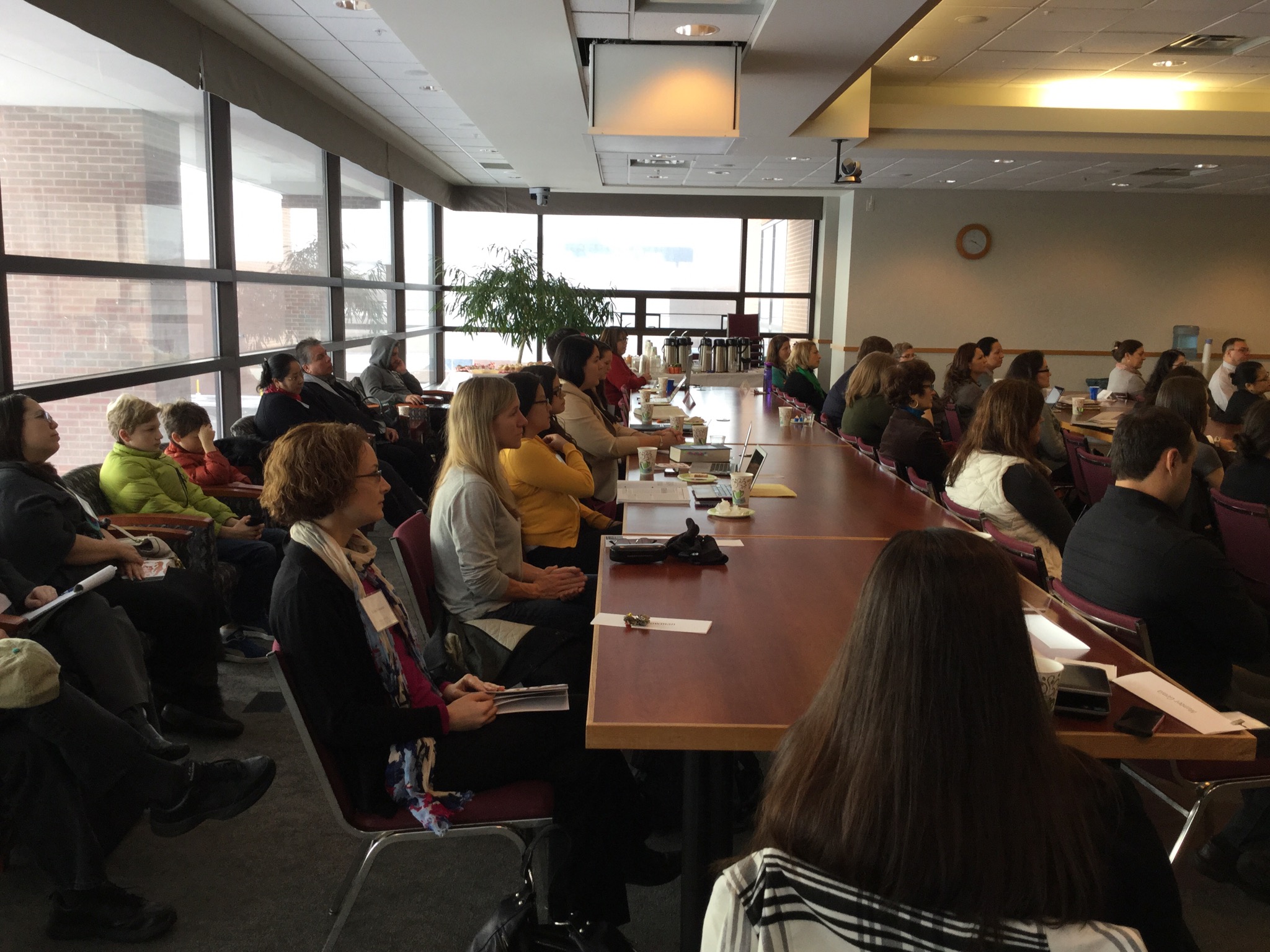
Here:
Buena Vista Rancheria Opposition
Question presented:
Whether, in an action by a third party against the Secretary of the Interior under the Administrative Procedure Act, 5 U.S.C. 551 et seq., a putative Indian tribe may invoke its sovereign immunity to prevent a court from reviewing the lawfulness of the Secretary’s decision to recognize it as a tribe.
Lower court materials here.
Here is Leading Case: Michigan v. Bay Mills Indian Community, 134 S. Ct. 2024 (2014).
An excerpt:
While the Court’s decision is a victory for those who feared the abrogation of tribal immunity, its suggestion that states seek remedies in state law signals approval of leaving the resolution of legal questions central to state-tribe disputes to the states, even when the question concerns the extent of Indian land. Such a view would be inconsistent with recent trends generally favoring greater federal control and congressional support for tribal self-determination, and could result in actions that are detrimental to tribes.
Here (PDF):
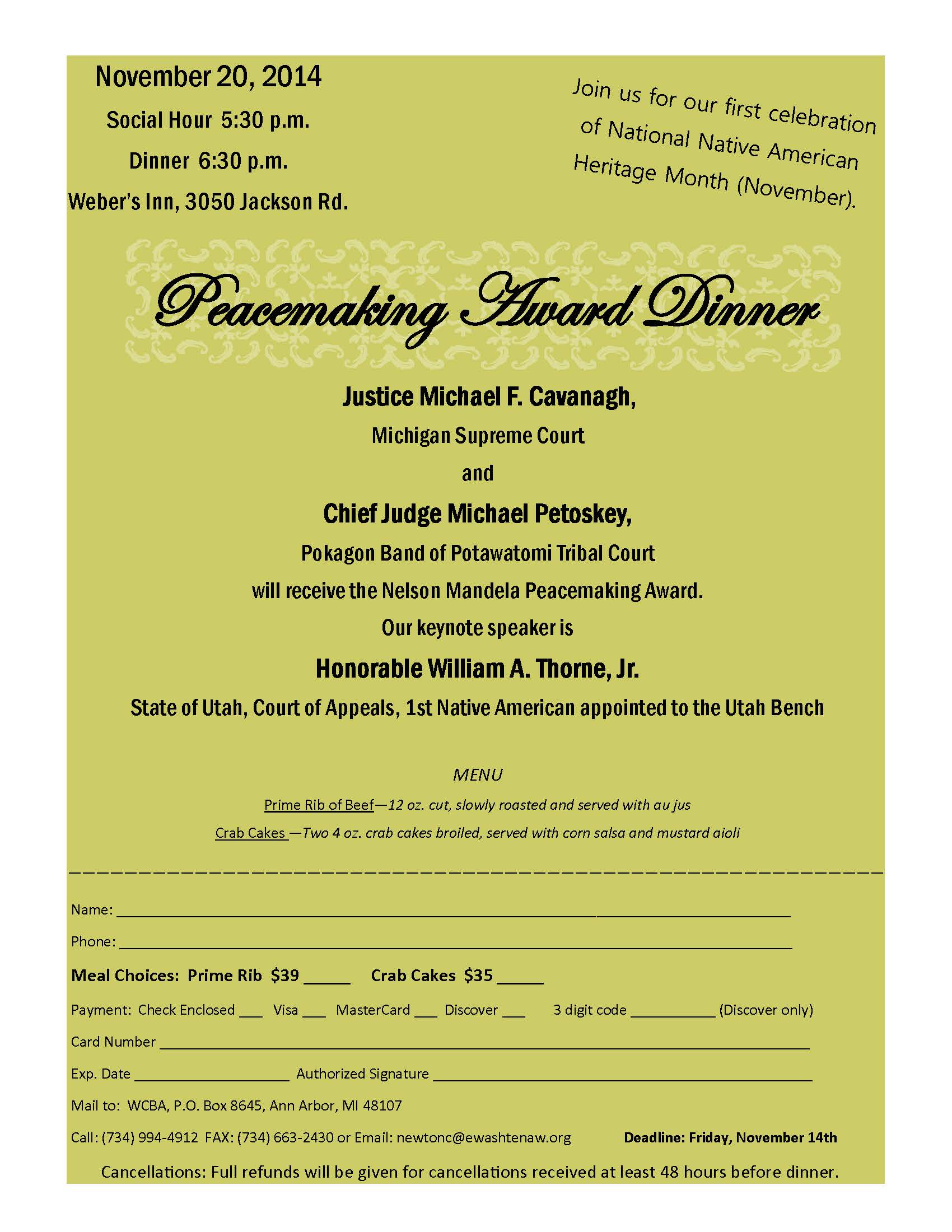
Here are the materials in State of Michigan v. Sault Ste. Marie Tribe of Chippewa Indians (W.D. Mich.):
55 State Response to Motion to Dismiss
58 Soo Tribe Response to Motion for Relief
63 DCT Order to Adjourn and Reschedule Oral Argument
Sixth Circuit materials are here.
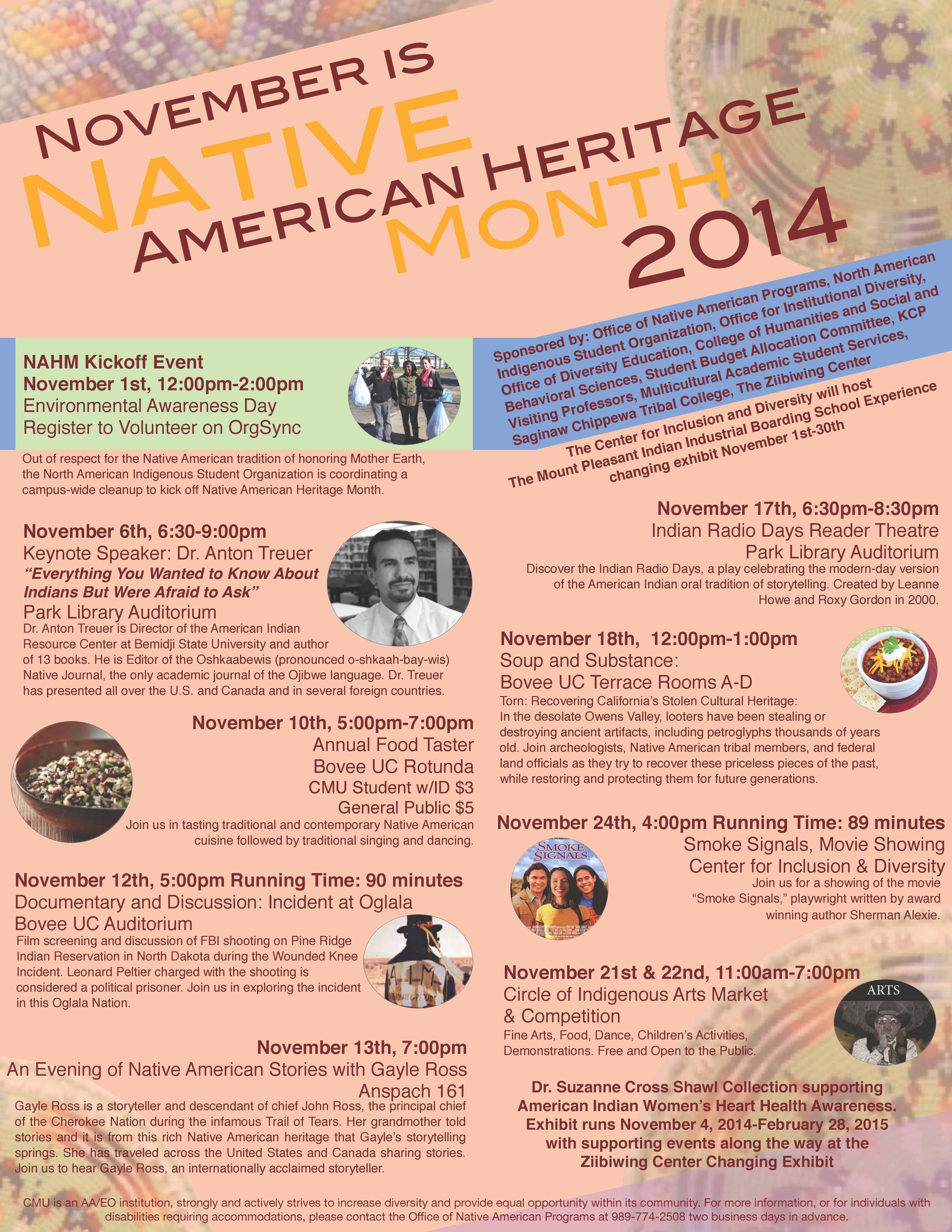
Justice Cavanagh’s op/ed is available here.
An excerpt:
Our inaugural Tribal State Federal Judicial Forum meeting this week focused on issues of Indian child welfare, on outlining the scope of the Forum’s work, and on organizing our leadership. We examined what forums in other states are doing to find examples of best practices and innovations. Also, we delved into the ICWA as the “gold standard,” as well as the importance of judicial leadership and collaboration.
Because we can’t know where we should be headed if we don’t know where we are now, the Forum also received updates on Michigan Indian child welfare data, and child welfare services and resources from the State Court Administrative Office.
Most importantly, the Forum finalized our Naakonigewin, or Charter, which defines our make-up, appointment process, and governance. The Charter will not only solidify and formalize a valuable, long-standing relationship, but it also will lay the groundwork for future collaborations among the courts. The Charter will guarantee that while the names may change, the mission will continue.
As we opened our meeting with a traditional tribal pipe ceremony and drums, I had the honor of sharing some reflections on my lifelong commitment to improving relations between our sovereign governments and our people. I am also excited to hand over my role as Supreme Court Tribal Liaison Justice to the Forum to Justice Bridget McCormack. I have no doubt she will bring even more passion and dedication to the task.
I am positive that the Forum, under the guidance of Justice McCormack, its tribal and state judge co-chairs, and the participation of many of the state’s and tribes’ most dedicated jurists, will continue to find common ground to accomplish wonderful things for all our children. The measure of our success will be reflected in strong relationships, linking our peoples, learning from the lessons of the past and leading our children to a better future.
 Turtle Talk
You must be logged in to post a comment.