Sault Tribe Motion to Dismiss Michigan Gaming Suit

Here are the new materials in the case captioned State of Michigan v. Payment (W.D. Mich.):

2015-03-20 Brief in Support of Defendant’s Motion to Dismiss Amended Complaint

2015-03-20 Defendant’s Motion to Dismiss Amended Complaint

71 Michigan Response to Motion to Dismiss

72 Sault Tribe Reply

The state’s amended complaint is here.

Traverse City to Decide What to Do with 7000 Native Artifacts

Here is “What’s Next For The Con Foster Collection?”

According to the article, “The city is likely in violation of the Native American Graves Protection and Repatriation Act (NAGPRA) of 1990, which outlines a process for returning certain Native American cultural items to lineal descendants.”

Pro Se Effort Challenging Michigan DNR Land Sale to Mining Company Fails

Here are the materials in Bellfy v. Creagh (W.D. Mich.):

1 Complaint

1-1 CORA Resolution

2 Motion for TRO

4 DCT Order Denying TRO

An excerpt:

This matter is before the Court on Plaintiffs’ ex parte Motion for Temporary Restraining Order (docket # 2), filed today. Plaintiffs seek to “enjoin Defendant, or other State of Michigan officers, employees, agencies, subdivisions, successors, or assigns” from approving a proposed sale of State land in the Upper Peninsula. (docket # 2.) Plaintiffs contend that the sale would impair their rights under the 1836 Treaty of Washington and in a 2007 Consent Decree reaffirming those rights. The Consent Decree is the subject of another case in this District, United States of America v. State of Michigan, et al., No. 2:73-CV-26 (W.D. Mich. November 2, 2007) (consent decree, docket # 1799), currently assigned to Chief Judge Paul Maloney. The Consent Decree not only addresses substantive rights of the parties, but also describes detailed alternative dispute resolution procedures. (docket # 1799, pp. 62-67.) The nature of the claim Plaintiffs are attempting to assert pro se appear to touch on both procedural and substantive provisions of the Consent Decree.

Michigan Indian Education Critical Issues Conference

Frank and Rochelle Ettawageshik


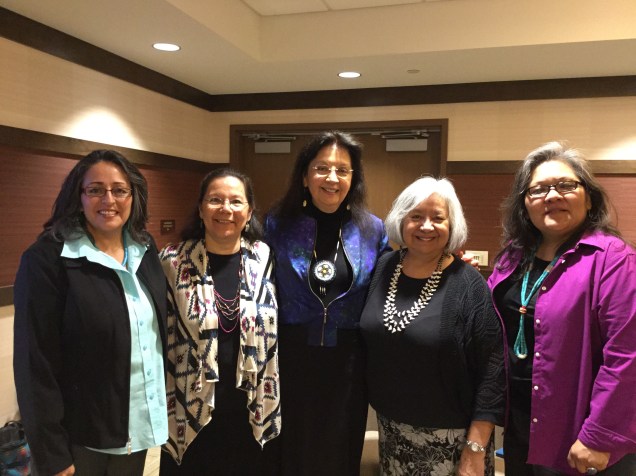
The “Indigi-Sisters”, including Eva Petoskey, Linda Woods, and Arlene Kashata


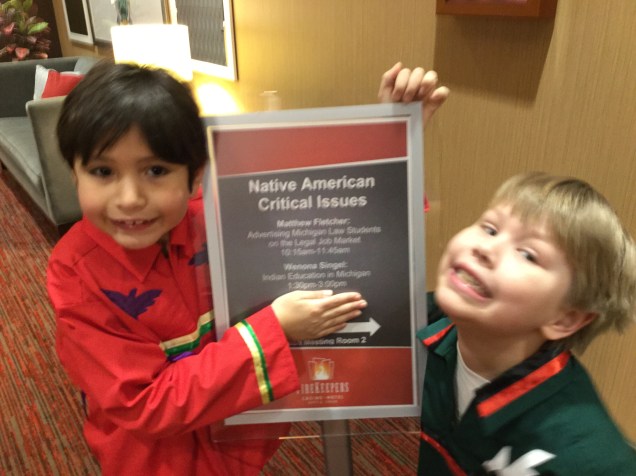
Owen and Emmett advertising for their mom and dad’s talks


Reposting for Nottawaseppi Huron Band Potawatomi Associate Judge

POSTING FOR THE

ASSOCIATE JUDGE OF THE NOTTAWASEPPI HURON BAND OF THE POTAWATOMI TRIBAL COURT


SUMMARY:

The Nottawaseppi Huron Band of the Potawatomi seeks an Associate Judge of the Tribal Court to be appointed for an initial term of two (2) years.  This is a part-time position (estimated 25 hours per month) and will be compensated on an hourly basis.


The NHBP Constitution requires that the Chief Judge, Supreme Court Justices and Associate Judges must: have attained the age of thirty (30); be a licensed attorney in good standing; cannot be a Member of Tribal Council or running for a Tribal Council position or a Tribal employee; and never been convicted of, or entered a plea of guilty or no contest to, a violent crime, felony, or a crime of fraud.  Candidates must have experience in the practice of Indian law, whether in tribal, state or federal court(s).  Judicial experience and 5 or more years experience as a licensed attorney and/or judge is preferred.


Applicants must submit a letter of interest, resume/curriculum vitae and complete the Affirmation(s) that the applicant meets the requirements for appointment under NHBP Constitution.  Documents must be submitted to the Legal Department no later than 5:00 P.M. on March 18, 2015.  Applications may be submitted via mail or e-mail to: William Brooks, NHBP Chief Legal Counsel at: 1485 Mno-Bmadzewen Way, Fulton, MI 49052 or bbrooks@nhbpi.com.  Applicants will also be required to submit to a background investigation and drug screen before confirmation of appointment.


For more information, including copy of the Affirmation form(s) to be completed as part of the application process, please visit the NHBP Legal Department website at: http://nhbpi.com/support/legal/

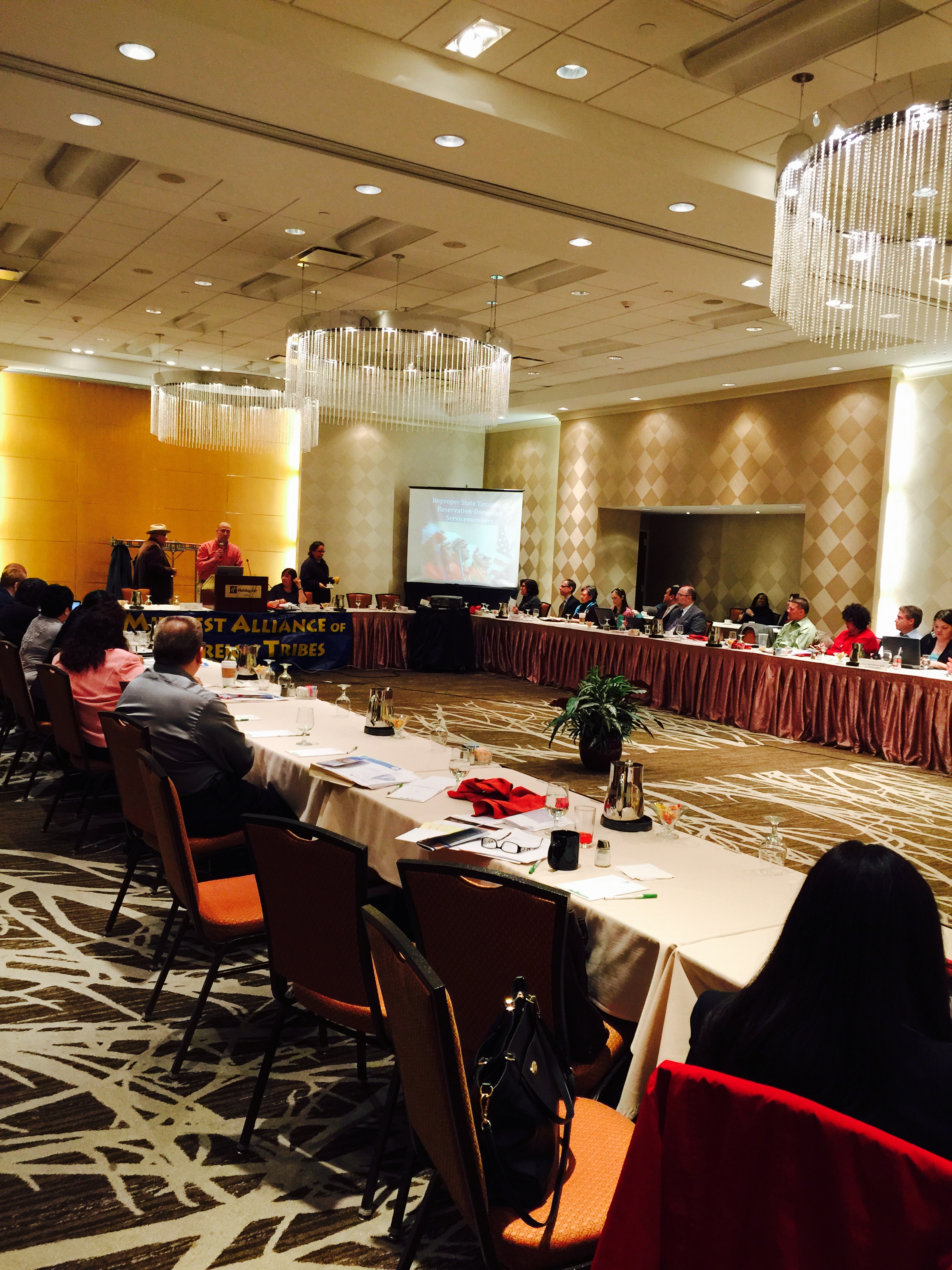
Midwest Alliance of Tribes, Impact Week in Washington D.C.

Multiple MSU ILPC alums in attendance, taking pictures of each other–Peter Vicaire, Veterans Affairs, speaking; photo by Karrie Wichtman, Rosette.

FullSizeRender

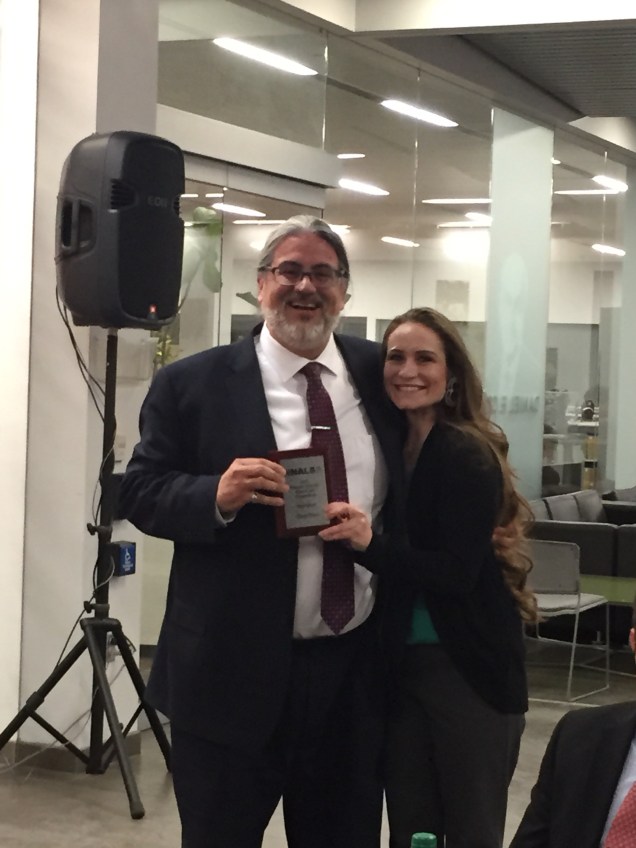
Congrats to Steve and Amy!

Best brief, third place


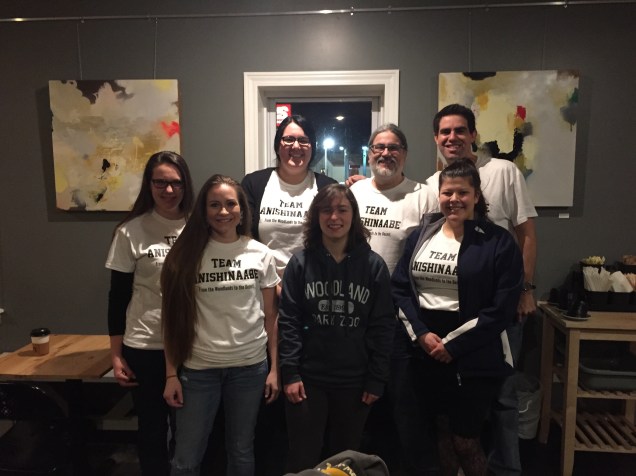
Congrats to Team Anishinaabe at the NNALSA Moot Court!


News Coverage of Drug-Related Banishments by Saginaw Chippewa

Here is “Traffic stop leads to heroin arrest.”

And:”Two banished from Isabella Reservation before their day in court.”

The tribe’s press release is here. The text:

The Saginaw Chippewa Indian Tribal Council has taken a bold and proactive position today to assert Tribal sovereignty on their War on Drugs.  Unanimous votes were cast today during a work session of the Tribal Council for the Saginaw Chippewa Indian Tribe to exclude or banish two non-member Native American’s for their involvement in drug trafficking within the boundaries of the Isabella Federal Reservation.


“Today our people have shown that we are no longer going to tolerate people who peddle unhealthy and life destroying substances onto the reservation. Today we took necessary steps to protect and uphold our members and their families against this plague called addiction”, stated Tribal Chief Steve Pego. 


A routine traffic stop in Mt. Pleasant late Tuesday night, February 17, 2015, ended in a drug bust and the arrest of one woman on charges of possession of heroin and intent to deliver and another woman for carrying concealed weapons.  “These are not the type of people we want in our community”, stated Tribal Sub Chief, Lorna Kahgegab Call. 


Tribal Council under Ordinance No.3 of the Tribal Code can exclude individuals from their territories for specific reasons.  “The choice to exclude these individuals before conviction is our way of sending the message that this will not be tolerated in our community”, stated Tribal Police Captain Jim Cates.   

Guest Post: Bill Rastetter on Judge Enslen

From long-time Grand Traverse Band counsel Bill Rastetter on the passing of Judge Enslen:

Writing this helps me to reflect upon not just Richard Enslen but also the two other Western District judges appointed by Jimmy Carter — all of whom made major rulings for Grand Traverse Band.  (There’s a story there, if I ever could find the time; I’d start the story by talking with Dean Robb who was in the group of lawyers picked by the two Democratic Senators who came up with a list of possible nominees, including “progressives” who never would be considered in the present climate.)  Those three were Richard Enslen, Douglas Hillman, and Benjamin Gibson.  In retrospect, each individual evidenced concern for the plight of the less advantaged, the powerless within our society; and GTB’s victories might not have occurred if they had not been on the bench.

Gibson left Michigan long before retirement age, but not before he granted GTB its first victory in the modern (restored) era: Leelanau Indians, Inc. and Grand Traverse Band of Ottawa and Chippewa Indians v. U.S. Department of Housing and Urban Development (W.D. Mich. File No. G 80-526): 502 F.Supp. 741 (W.D. Mich. 1980).

Hillman?  Well, there’s the major case [Grand Traverse Band of Ottawa and Chippewa Indians v. U.S. Attorney for the Western District of Michigan, et al. (W.D. Mich. File No. 1:96-CV-466): 198 F.Supp.2d 920 (W.D. Mich. 2002), and 46 F.Supp.2d 689 (W.D. Mich. 1999), aff’d. 369 F.3d 960 (6th Cir. 2004)] which easily could have been resolved differently if another judge had been assigned that case.*

And Enslen.  Even before the “treaty-fishing” cases, he granted the judgment declaring that GTB controlled the Peshawbestown lands. [Grand Traverse Band of Ottawa and Chippewa Indians v. Leelanau County and Leelanau Indians, Inc. (W.D. Mich. File No. G 83-834)]  Attached is his unpublished opinion; it’s the only time my proposed findings and conclusions have been adopted verbatim (without even being retyped).  And he was assigned the GTB v. BIA case [Grand Traverse Band of Ottawa and Chippewa Indians v. Bureau of Indian Affairs, et al. (W.D. Mich. File No. G 85-382)], by which we (with his help/not so subtle messages to DOJ that he’d grant preliminary injunction for us if …) held them (the Reagan administration DOI political operatives) at bay until Buddy Raphael negotiated the “compromise” membership provisions.  Both the 1985 and 2000 consent decrees were the result of his commitment to ADR (and at various times he forcefully let lawyers for state/”sports” groups know that they really didn’t want to give him a chance to rule for the Tribes); likewise, he allowed the Tribes plenty of maneuvering room leading up to the 2007 “inland” consent decree.  Also his July 15, 1986 opinion/order in which he fashioned a remedy in GTB’s favor when the other COTFMA Tribes (BMIC & SSM) decided they could distribute 1985 CD funds by majority vote (subsequently there have been equal 1/3 and then 1/5 distributions of appropriated funds above each Tribe’s base).  Finally, of course, is GTB’s “access” case now in the textbooks: Grand Traverse Band of Ottawa and Chippewa Indians v. Director, Michigan Department of Natural Resources, et al. (W.D. Mich. File No. 1:94-CV-707): 971 F.Supp. 282 (1995), aff’d. 141 F.3d 635 (6th Cir. 1998), cert. denied 454 U.S. 1124, 102 S.Ct. 971 (1998).

____________________

* Here is an article that appeared later in the New Yorker, written by his niece about his mother.  I was struck by the passage on the last page.  Here was a man who rose to the top of a prestigious G.R. law firm, probably relatively conservative albeit a Democrat in conservative G.R. and (I think) a labor lawyer, but I’m not aware of any indication that he was champion of the downtrodden.  Perhaps his mother instilled a sense of (in)justice, and when the opportunity presented itself he saved the day for the Indian Tribes. [United States v. Bay Mills Indian Community, et al. (W.D. Mich. File No. M 85-335): 692 F. Supp. 777 (W.D. Mich. 1988), vacated 727 F. Supp. 1110 (W.D. Mich. 1989)]  GTB gets no credit for Judge Hillman’s decision not to enjoin the Tribes’ casino gaming, yet it was our separate brief (and affidavits of Buddy Raphael and Barry Burtt) that argued Rule 65 equitable considerations weighed against the injunction requested by DOJ.