EPA Accepting Comments on Revised Interpretation of CWA Tribal Provisions
Link to Request for Comments here.
EPA proposes to conclude definitively that section 518 includes an express delegation of authority by Congress to eligible Indian tribes to administer regulatory programs over their entire reservations. This reinterpretation would eliminate the need for applicant tribes to demonstrate inherent authority to regulate under the Act, thus allowing tribes to implement the congressional delegation of authority unhindered by requirements not specified in the statute. The reinterpretation would also bring EPA’s treatment of tribes under the Clean Water Act in line with EPA’s treatment of tribes under the Clean Air Act, which has similar statutory language addressing tribal regulation of Indian reservation areas.
Comments must be submitted by October 6, 2015.
Federal Court Grants Voluntary Dismissal in Nooksack Case After BIA Waives FOIA Fees
Here are the materials in St. Germain v. Dept. of Interior (W.D. Wash.):
doc. 56 – Plaintiffs’ Motion for Voluntary Dismissal
Additional Findings from NNI/NICWA on Tribal Child Welfare Codes
Here.
Researchers reviewed 107 publicly available, tribal child welfare codes for U.S.-based tribes with populations ranging from 50 to 18,000 citizens. Researchers sought out the most up-to-date tribal child welfare codes available for each tribe, reporting that approximately 45% of the 107 codes were amended after 2000. The research team analyzed over 100 variables on the topics of culture, jurisdiction, tribal-state relationships, child abuse reporting, paternity, foster care, termination of parental rights, and adoption. A more detailed report on this study will be released later this fall. For more information about this project and its findings please contact the Native Nations Institute: Mary Beth Jäger (Citizen Potawatomi) jager@email.arizona.edu.
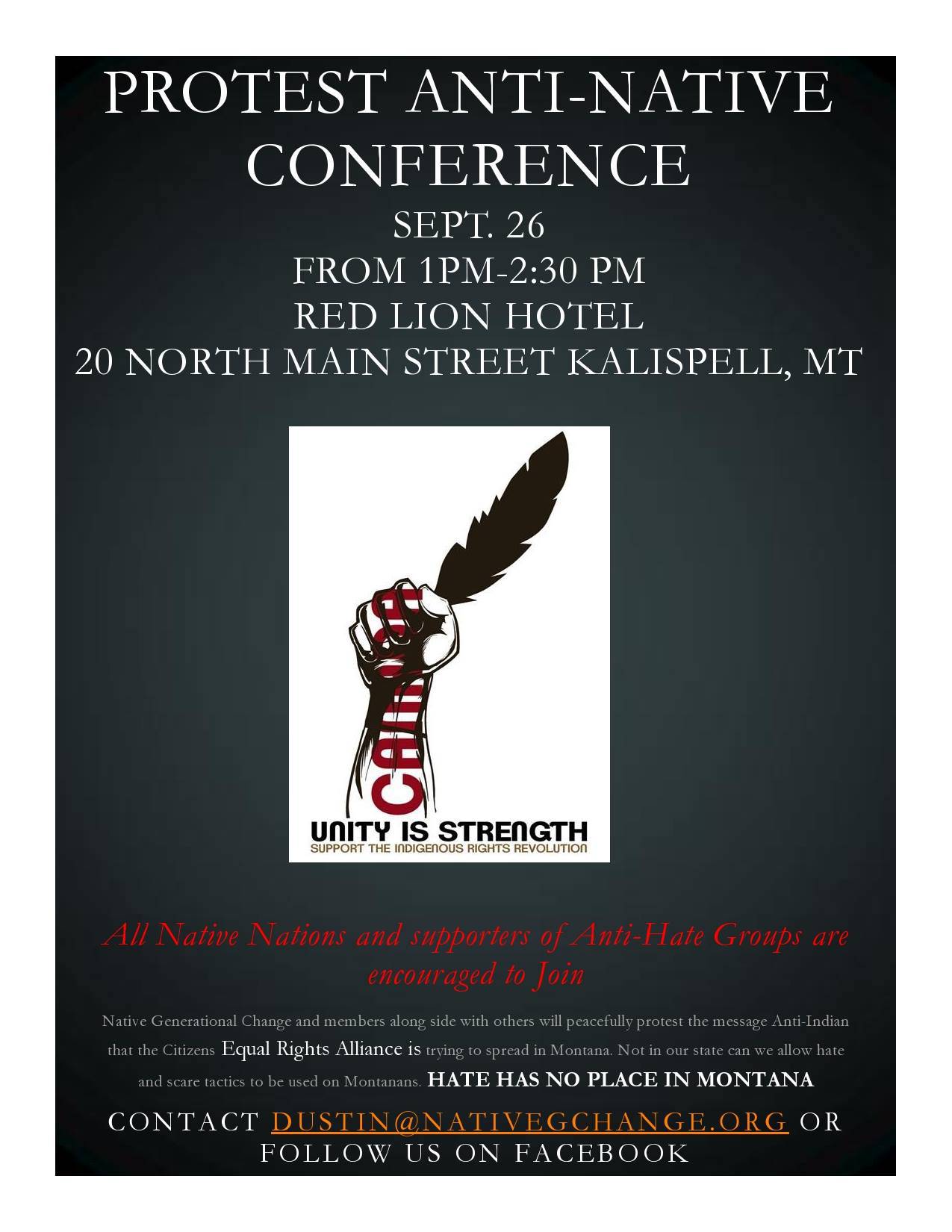
Protest Planned for CERA Event in Montana
Link to response from Native educators here.
Link to protest announcement here.
Citizens Equal Rights Alliance is holding a regional conference in Kalispell, Montana, on September 26, 2015, to kindle local antagonism towards the Federal Government and Tribes. Speakers include the attorney for two politicians who are suing the federal government for transfer of the, now named, Salish Kootenai Dam to the Tribes. Protesters will meet at the Red Lion Hotel in Kalispell at 1PM.
Saginaw Chippewa Disenrollments News
NCAI, Huy, NARF En Banc Petition Amicus Briefing in 11th Circuit RLUIPA Appeal
California Court of Appeals Orders Depublication of Cosentino Opinion
Article On Trafficking at MHA Nation (Three Affiliated Tribes)
Here.
With no anti-trafficking law of their own to deal with the crime and all signs pointing to a crisis, a group of tribal women snapped into action to work on a legislative solution. “No one said, ‘Here is the course on dealing with trafficking, and this is how you’re going to execute it,’ ” Young Bird says. “We’ve had to teach ourselves.”
“We all came together,” adds Cummings, “pulled what we could to the table, rolled up our sleeves, and got down and dirty with the whole situation.”
As an aside–there should be a collection of all the times someone writes something along the lines of “a small group of Native women made a massive difference in the face of collective indifference and ignorance.”
HT to a lot of Facebook friends who shared this.
“Why Treaties Matter: Self-Government in the Dakota and Ojibwe Nations” Exhibit at UMD
University of Minnesota Duluth is hosting the Why Treaties Matter: Self-Government in the Dakota and Ojibwe Nations exhibit. The exhibit is free and open from Sept. 29-Oct. 4 at UMD’s Tweed Museum of Art.
Learn more here.
“This exhibition is part of a statewide tour throughout the Minnesota State Colleges and Universities System. In 2010, a resolution creating a unique partnership between the Minnesota Indian Affairs Council, the Minnesota Humanities Center, and the Smithsonian’s National Museum of the American Indian in Washington, D.C. was approved by tribes in Minnesota, making it possible for the exhibition to be developed as an educational tool for Minnesota audiences.”
View educator guides here.
 Turtle Talk
You must be logged in to post a comment.