Here are the materials in Gilham v. United States (Fed. Cl.):
Author: Matthew L.M. Fletcher
Smith v. United States: SCT Challenge to ACA Jurisdiction on Warm Springs Reservation
Here is the cert petition:
Question presented:
Whether the Assimilative Crimes Act, 18 U.S.C. § 13, applies to Indian country-either on its own or through the General Crimes Act, 18 U.S.C. § 1152-such that the federal government may prosecute Indians for virtually any state-law offense committed in Indian country, including on lands promised by treaty for the “exclusive use” of Indian tribes.
Lower court materials here.

Arizona State Law Journal Call for Papers for Issue on Arizona Indian Law Issues

California COA Briefs in Greenville Rancheria v. Austin [yet another faction-on-faction suit]
Jacob Jurss on ICWA and Brackeen
Here is “Counterpoint: Tribal rights, futures must not be plundered again” in the Minnesapolis Star-Tribune.

Prevailing Tribes Seek More than One Million in Attorney Fees against California
Montana Federal Court Dismisses RICO Suit against Crow Nation Nursing Home, For Now
Here are the new materials in Wilhite v. Littlelight (D. Mont.):
78 DCT Order Adopting Magistrate Report
Prior post here.

Washington Federal Court Dismisses Constitutional Challenge to Washington Class III Compacts Allowing Tribal Sports Betting

Here is the order in Maverick Gaming LLC v. United States (W.D. Wash.):
Briefs here.
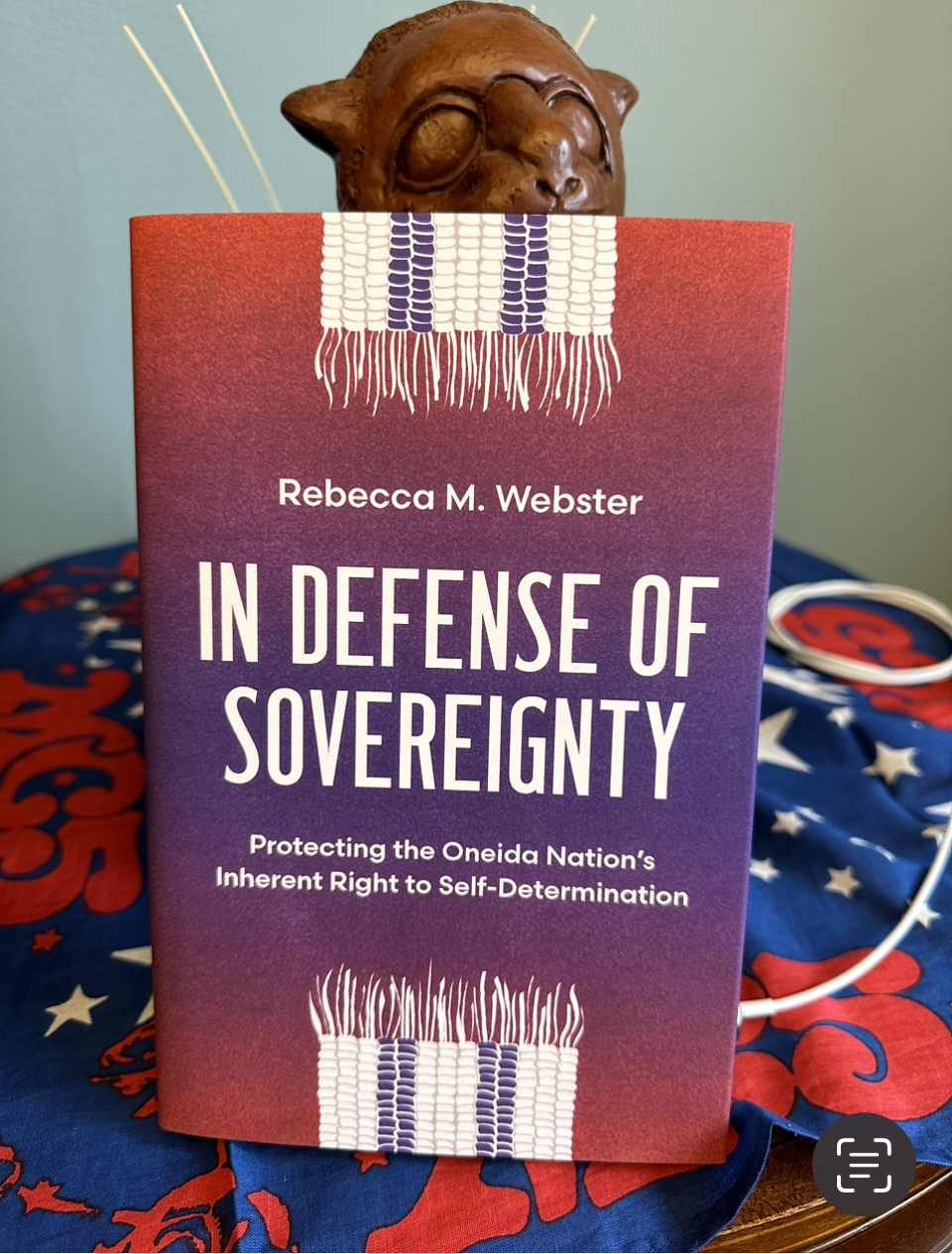
New Book by Rebecca Webster: “In Defense of Sovereignty”
You can buy it here.
| In Defense of Sovereignty Protecting the Oneida Nation’s Inherent Right to Self-Determination Rebecca M. Webster Foreword by Richard Monette With contributions by James R. Bittorf, William Gollnick, Frederick E. Hoxie, Arlinda F. Locklear, and James W. Oberly “This valuable book lays out the features of a legal and political strategy to defend a reservation boundaries case. This material is thrilling where tribal citizens detail their ongoing, real-world struggles with the Village of Hobart. Successful and compelling.” —Matthew L. M. Fletcher, author of Ghost Road: Anishinaabe Responses to Indian-Hating A nuanced history by an Oneida Nation citizen directly involved in the litigation The Oneida Nation has been engaged in legal conflicts to retain its sovereignty and its lands since forced removals in the 1820s from New York to what would become the state of Wisconsin. Legal scholar Rebecca M. Webster examines this history, including the nation’s treaties with the US and focusing especially on its relationship with the village of Hobart, Wisconsin. Since 2003, six disputes have led to litigation—the result of attempts by the local government to regulate the nation, repudiate its sovereignty, and relegate its government to the position of a common landowner, subject to municipal authority. In Defense of Sovereignty shares the perspective of a nation citizen directly involved in the litigation, augmented by contributions from historians, attorneys, and a retired nation employee. It is an intimate and unflinching account of the impact of these jurisdictional battles and what is at stake for the future. Its lucid analysis is an invaluable contribution to public debates about the inherent right of Indigenous nations to continue to exist and exercise self-governance within their territories without being challenged at every turn.  Rebecca M. Webster, an assistant professor in the American Indian studies department at the University of Minnesota, Duluth, is a former senior staff attorney for the Oneida Nation. Rebecca M. Webster, an assistant professor in the American Indian studies department at the University of Minnesota, Duluth, is a former senior staff attorney for the Oneida Nation. |
New Student Scholarship on Tribal Courts and Environmental Tort Litigation
Helia Bidad has published “The Power of Tribal Courts in Ongoing Environmental-Tort Litigation” in the Yale Law Journal. Here is the abstract:
Cities, counties, and states across the country are bringing environmental and climate tort suits to hold environmental tortfeasors accountable. These cases are commonly brought in state and federal court, but the possibility of bringing these suits in tribal courts has largely been left out of the discussion. In the wake of attacks on tribal sovereignty in the form of tribal jurisdiction stripping, this Essay uses an original empirical analysis of 308 cases to understand the circumstances in which tribal-court jurisdiction currently exists for tribal members to sue nonmembers for environmental torts in tribal court. This Essay makes recommendations for how to strategically bring these suits and highlights important considerations for tribal sovereignty.
 Turtle Talk
You must be logged in to post a comment.