Grant Christensen on Using Consent to Expand Tribal Criminal Jurisdiction

Grand Christensen has posted “Using Consent to Expand Tribal Court Criminal Jurisdiction,” forthcoming in the California Law Review, on SSRN.

Navajo police officer photographed by Edward Curtis

Here is the abstract:

In June of 2022 the Supreme Court reversed two-hundred years of precedent and held in a 5-4 opinion that states have concurrent criminal jurisdiction over crimes committed by non-Indians against Indians in Indian country. Oklahoma v. Castro-Huerta. In conducting the preemption analysis Justice Kavanaugh’s majority opinion reasoned that while states have a strong interest in prosecuting crimes in Indian country in order to keep the community safe, tribes had functionally no interest because they generally lack criminal jurisdiction over non-Indians. The court then reasoned that the lack of a tribal interest could not preempt the state interest. This article suggests, despite the general prohibition on tribes asserting criminal jurisdiction over non-Indians that was discovered by the Supreme Court in 1978’s Oliphant opinion, tribes can assert criminal jurisdiction over non-Indians who consent to the jurisdiction in tribal court. The argument extends to both affirmative and implied consent and draws its authority from both pre-Oliphant scholarship and precedent as well as from recent development by the Court, Congress, and dicta from the Ninth Circuit. If tribes are able to regularly assert some criminal jurisdiction over non-Indians, then when lower courts apply Castro-Huerta in the future there will be a strong tribal interest to preempt state criminal jurisdiction in Indian country.

Highly recommended.

Lac Du Flambeau Ojibwe Cert Petition in Bankruptcy Act/Sovereign Immunity Case

Here is the petition in Lac du Flambeau Band of Lake Superior Chippewa Indians v. Coughlin:

Question presented:

Whether the Bankruptcy Code expresses unequivocally Congress’s intent to abrogate the sovereign immunity of Indian tribes.

Lower court materials here.

Update:

South Dakota Federal Court Dismisses Lower Brule Tribal School Overspending Case

Here are the materials in Lower Brule Sioux Tribe v. Haaland (D.S.D.):

1 Complaint

10 Motion to Dismiss

17 Opposition

23 Reply

27 DCT Order

American Constitution Society 2022 Supreme Court Preview — Thursday, 9/15 @ 12:30 EST [featuring Singel]

Register here.

Description:

Join ACS for our Annual Supreme Court Preview, part of our observation of this year’s Constitution Day. After the seismic decisions handed down last Term, all eyes will be on the Court this fall to see what may come next. The Preview will feature a diverse group of constitutional and legal experts offering their insights into the upcoming Supreme Court Term that begins on October 3rd.

Welcome Remarks

Russ Feingold, ACS President

Speakers

Adam Liptak, Supreme Court Correspondent, The New York Times (moderator)

Deborah Archer, President, ACLU; Professor of Clinical Law and Co-Faculty Director of the Center on Race, Inequality, and the Law, NYU School of Law

Jonathan Diaz, Senior Legal Counsel, Campaign Legal Center

Kent Greenfield, Professor and Dean’s Distinguished Scholar, Boston College Law School

Wenona Singel, Associate Professor of Law and Director of the Indigenous Law & Policy Center, Michigan State University College of Law

Shoba Sivaprasad Wadhia, Associate Dean for Diversity, Equity, and Inclusion; Samuel Weiss Faculty Scholar; and Clinical Professor of Law, Penn State Law

American Constitution Society 2022 Supreme Court Preview [featuring Singel]

Register here.

Description:

Join ACS for our Annual Supreme Court Preview, part of our observation of this year’s Constitution Day. After the seismic decisions handed down last Term, all eyes will be on the Court this fall to see what may come next. The Preview will feature a diverse group of constitutional and legal experts offering their insights into the upcoming Supreme Court Term that begins on October 3rd.

Welcome Remarks

Russ Feingold, ACS President

Speakers

Adam Liptak, Supreme Court Correspondent, The New York Times (moderator)

Deborah Archer, President, ACLU; Professor of Clinical Law and Co-Faculty Director of the Center on Race, Inequality, and the Law, NYU School of Law

Jonathan Diaz, Senior Legal Counsel, Campaign Legal Center

Kent Greenfield, Professor and Dean’s Distinguished Scholar, Boston College Law School

Wenona Singel, Associate Professor of Law and Director of the Indigenous Law & Policy Center, Michigan State University College of Law

Shoba Sivaprasad Wadhia, Associate Dean for Diversity, Equity, and Inclusion; Samuel Weiss Faculty Scholar; and Clinical Professor of Law, Penn State Law

Split Oklahoma SCT Rules against Cherokee Nation’s Claims for COVID Business Losses Coverage

Here are (many of) the materials in Cherokee Nation v. Lexington Insurance Co.:

Ninth Circuit Rejects Effort to Challenge Tribal-State Cross-Dep Agreement [Fort Peck]

Here is the opinion in United States v. Fowler.

Briefs:

Washington Federal Court Rules in Favor of Suquamish over Insurance Company in Tribal Court Jurisdiction Dispute

Here are the materials in Suquamish Tribe v. Smith (W.D. Wash.):

Puget Sound and Seattle from Suquamish

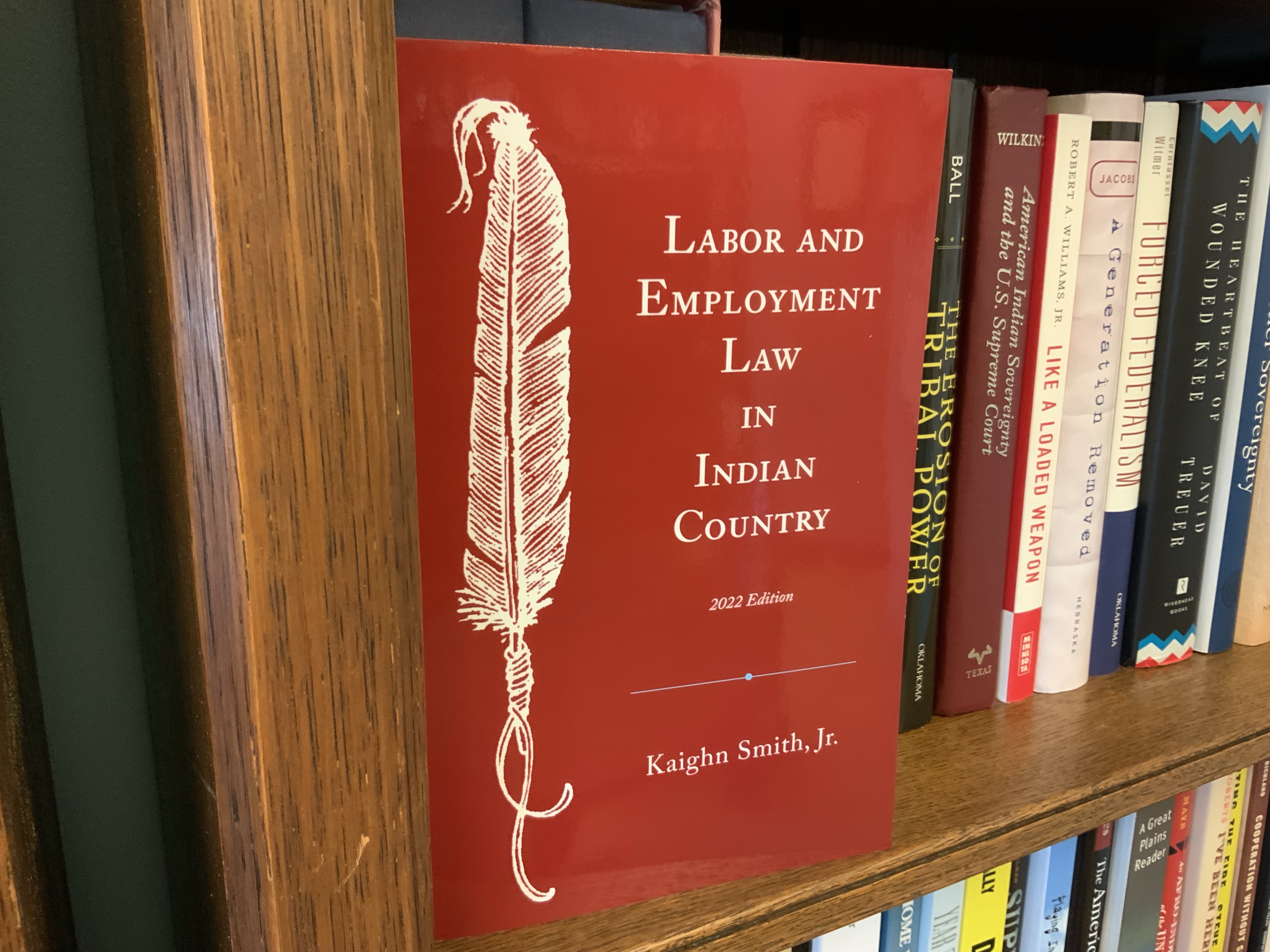
Congrats to Kaighn Smith! Second Edition of “Labor and Employment Law in Indian Country”

On my desk after I returned from a meeting! Like at dinner when you run off to the restroom and your entree is there when you return.

Order here.

I Don’t Know Why Indian Country Doesn’t Demand that Congress Pass the RESPECT Act because This Bullshit’s Gonna Keep Happening Until Then [Badger Two-Medicine]

Please see the strongly worded, if misguided, commentary from Judge Leon in Solonex v. Haaland, who sees 40 years of delay on a drilling permit and calls it “Kafkaesque.” It’s hard to disagree with that sentiment — though I wish the court were more understanding that tribal and Indian efforts to stop the drilling proposal began when there were virtually no legal protections for tribes and Native citizens to utilize. It’s time to acknowledge that this drilling should never have been approved over tribal and Indian objections and the RESPECT Act takes us a long way down the road to preventing this B.S. from happening over and over again.

Here is the order in Solonex LLC v. Haaland (D.D.C.):

Prior post on the D.C. Circuit decision from which this case is on remand here.

Briefs: