Here is the complaint in State of California v. Dept. of the Interior (N.D. Cal.):

Here is the complaint in State of California v. Dept. of the Interior (N.D. Cal.):
Alexandra Fay has posted “”Subject to the Jurisdiction Thereof”?: Citizenship and Empire in Elk v. Wilkins,” forthcoming in the Washington & Lee Law Review, on SSRN.
Here is the abstract:
In 1884, the Supreme Court held that the Fourteenth Amendment’s guarantee of birthright citizenship did not apply to Native Americans. In Elk v. Wilkins, the Court denied John Elk the right to vote on the grounds that he was born a tribal member, not subject to the jurisdiction of the United States, and thus ineligible for citizenship. This Article explores that decision, its context, and its consequences. It considers the radical promise of the Fourteenth Amendment’s text alongside the intentions of its Framers and the expectations of minority litigants. It situates Elk in a transformative period for both federal Indian policy and American federalism. The Article offers several readings of the Elk decision. It explores both the racist paternalism and the respect for tribal sovereignty evident in the Court’s reasoning, as well as the rapid shifts in Indian policy coinciding with Reconstruction. It ultimately argues that Elk v. Wilkins is emblematic of a distinct inflection point in federal Indian law, in which the Court’s formal adherence to longstanding principles of tribal sovereignty could simultaneously service federal assimilationist policy goals and a larger turn to American empire.
During the annual CLE on May 15 and 16, 2025, seasoned practitioners will discuss some of the most important developments and pressing issues affecting tribes in Washington State and beyond. For the first time in its history, this year’s CLE will be held virtually and in-person in Indian Country on the Tulalip Reservation.
While the agenda is still being finalized, we are excited to share a first look at several of our programs:
Where: Tulalip Administration Building, 6406 Marine Drive, Tulalip, WA 98271
When: May 15-16, 2025
Time:
May 15, 8 a.m.–5 p.m.
May 16, 8 a.m.–12:30 p.m.
Tuition:
$245: Indian Law Section Members
$275: Standard/Non-Section Members
FREE: Current Law Students
Credits: 8 credits
For more information, or to register for In-Person or Virtual, please visit WSBA Indian Law Section’s 37th Annual CLE Registration.

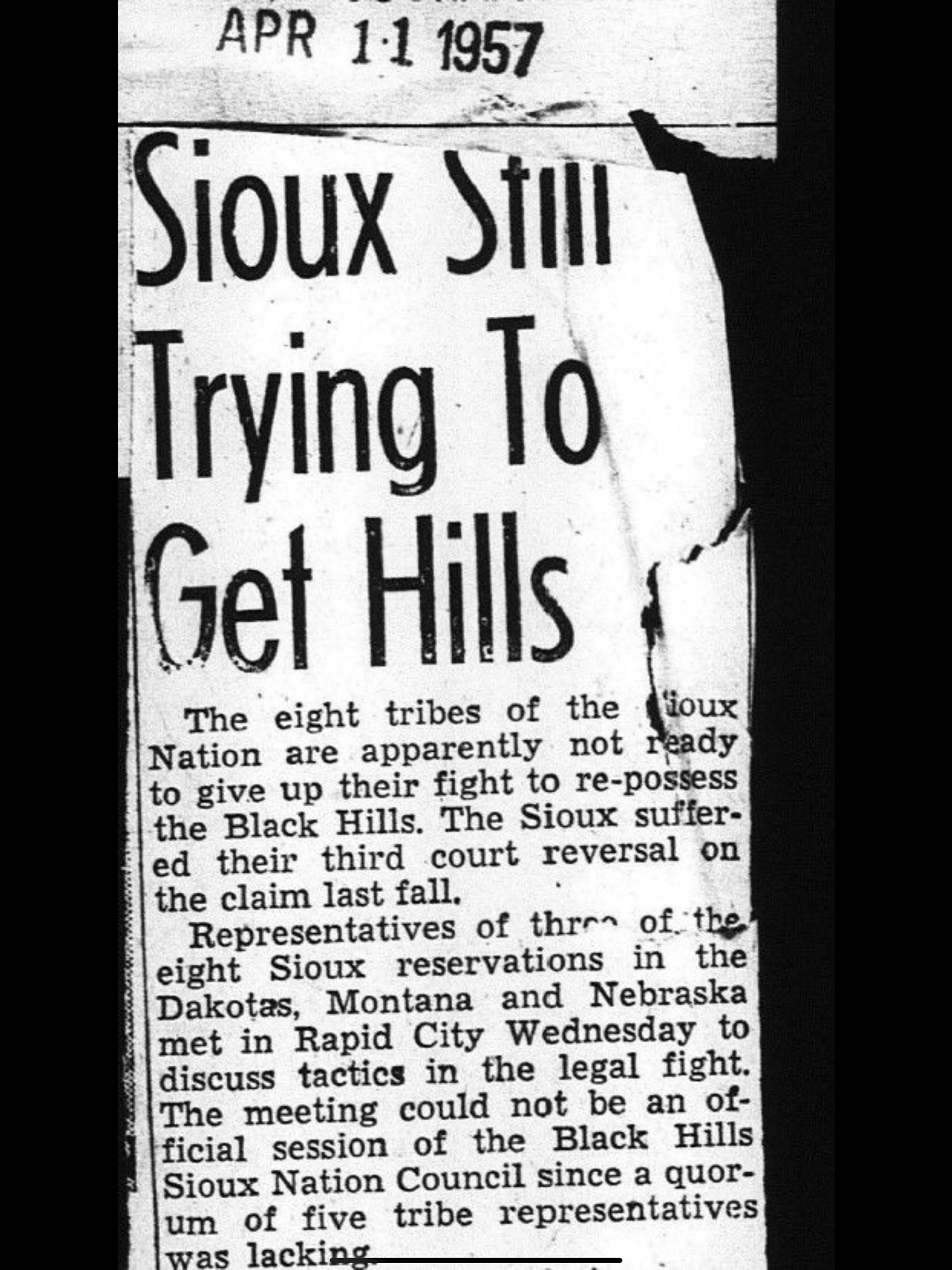
Frank Pommersheim and Bryce Drapeau have published “United States v. Sioux Nation of Indians Revisited: Justice, Repair, and Land Return” in the South Dakota Law Review. PDF
HIGHLY RECOMMENDED!! A Frank Pommersheim joint is always worth it.
The abstract:
The amazing legal journey of this case begins in 1923 and ends with a Sioux Nation of Indians “victory” in the Supreme Court in 1980. Before reaching the Supreme Court, the case was litigated four different times before the Court of Claims because of the ineffective assistance of counsel and the necessity of a congressional statute to clear away the threatening ghost of res judicata. The historical backstory begins not in 1923, but with the signing of the Fort Laramie Treaty of 1868 and the United States’ illegal taking of the sacred Black Hills in1877. And the case does not end with the Sioux “victory” before the Supreme Court and its award of “just compensation” for the illegal taking. The Sioux Nation of Indians rejected—and continues to reject—the remedy of financial compensation without an attendant search for mutual repair and a justice that includes some form of land return. Despite some modest examples of land return in other parts of Indian country, no such efforts involve the Black Hills. This article seeks to inform all, but particularly those two generations of Lakota and non-Native citizens born since 1980, that now is the time for renewed effort and commitment to realize reconciliation and a justice that includes land return. This must be done before history closes its door for a second and final time and the Black Hills will remain stranded in historical infamy. No, this article is not just another twist on classic Indian Law principles gone awry, but the first of something we might call the Historical (Trauma) Trilogy of stealing Lakota land (and breaking treaties), suppressing the teaching and learning of the Lakota language and culture, and the battering ram of boarding schools to break-up Lakota families where a core value has always been to be a “good relative.” In its own careful way, this article is also about the persistence of Lakota resistance and the hard work of restoring the (sacred) hoop of land, language, and family for these new days.
Here is “Nanaboozhoo and Derrick Bell Go for a Walk,” published in the B.U. Law Review Online, now posted on SSRN.




 Turtle Talk
You must be logged in to post a comment.