Here is the opinion in United States v. Harlan.
Eighth Circuit Affirms Indian Country Habitual DV Offender Conviction
Here is the opinion in United States v. Harlan.
Here is the opinion in United States v. Harlan.
Here:
Saginaw Cert Petition and Appendix- Filed
Questions presented:
For more than sixty years, the National Labor Relations Board correctly declined to exercise jurisdiction over tribal operations on tribal lands. But in recent years, the Board has belatedly asserted the extraordinary power to regulate the on-reservation activities of sovereign Indian tribes, precipitating a three-way circuit split in the process. Nothing in the text of the National Labor Relations Act changed in that interval; it contains no language granting the Board authority over Indian tribes. Nor has the language of various Indian treaties, like those between the Saginaw Chippewa Indian Tribe and the United States, changed; they continue to recognize the Tribe’s authority to exclude non-members. And despite the Board’s complete lack of expertise in Indian law, the Board now dictates that some tribal operations are subject to the NLRA and others are not based on its evaluation of the centrality of certain functions to tribal sovereignty and subtle differences in treaty language.
This case presents two questions, both of which have divided the courts of appeals:
(1) Does the National Labor Relations Act abrogate the inherent sovereignty of Indian tribes and thus apply to tribal operations on Indian lands?
(2) Does the National Labor Relations Act abrogate the treaty-protected rights of Indian tribes to make their own laws and establish the rules under which they permit outsiders to enter Indian lands?
Lower court materials here.
NATIONAL NATIVE AMERICAN BAR ASSOCIATION MOURNS THE PASSING OF PROFESSOR WILLIAM RICE
Phoenix, AZ—Today, the National Native American Bar Association (NNABA) pays homage to one of our greatest members, Professor G. William Rice, who walked on early yesterday morning.
Professor Rice was a member of the United Keetoowah Band of Cherokee Indians, and tenured Associate Professor at the University of Tulsa College of Law, where he taught Indian law for 21 years and co-directed the Native American Law Center since 2004.
“Professor Rice was one of the greatest Indian lawyers ever,” said NNABA President Linda Benally. “We have all stood on his shoulders for decades. We will stand on them forever.”
His accolades and honors are too numerous to mention; they include:
“Bill helped lay the foundation in the late 1970’s for the resurrection of tribal courts in Oklahoma. He helped implement modern tribal codes that have been utilized and copied throughout Oklahoma and elsewhere,” said Greg Bigler (Muscogee (Creek) Nation), Professor Rice’s former law partner and close friend. “He was also a caring mentor to countless Indian lawyers and students, and tribal leaders.”
Professor Rice held teaching positions at Cornell Law School, University of North Dakota School of Law, University of Oklahoma, and Antioch School of Law’s Indian Paralegal Program. While at North Dakota, he was the founding Director of the Northern Plains Tribal Judicial Training Institute.
Professor Rice received his J.D. from the University of Oklahoma College of Law in 1978, and B.A. in Chemistry from Phillips University in 1973. He attended the M.S. Program for Radiological Safety and Control from Lowell Technological Institute in Massachusetts, from 1973 to 1975.
“His was a wonderful adventure of life,” continued Bigler. “I do not believe he regretted any of the paths that he took.”
Here is the order in Steward v. Mescalero Apache Tribal Court (D. N.M.):
Here are the materials in Comenout v. Joseph (W.D. Wash.):
Here:
Little River Petition and Appendix COMBINED
Question presented:
Whether the National Labor Relations Board exceeded its authority by ordering an Indian tribe not to enforce a tribal labor law that governs the organizing and collective bargaining activities of tribal government employees working on tribal trust lands.
Lower court materials here.
Here are the materials in Nawls v. Shakopee Mdewakanton Sioux Community Gaming Enterprise – Mystic Lake Casino (D. Minn.):
For one of the finest oral arguments of our time, and a very good thing for National NALSA moot court competitors to hear as they prep for the competition a few weeks away, check out Bill Rice arguing before the Supreme Court, beginning at about 34:20:
Here.
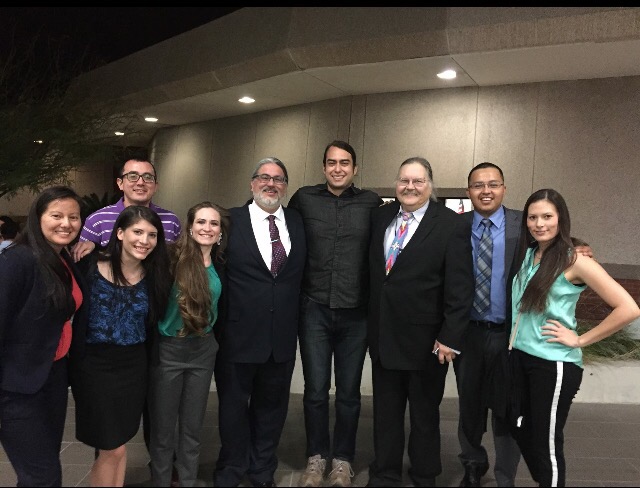
Thanks to Tamera Begay for sending this along.
 Turtle Talk
You must be logged in to post a comment.