Whether the Ninth Circuit’s mootness ruling warrants summary reversal where the panel clearly misapprehended governing law on mootness and on the authority of federal courts to order equitable relief affecting nonparties.
Came across this short note in Indian Talk, a 1973 newsletter by and about Michigan Indians and a precursor to the original Turtle Talk, referencing a federal lawsuit filed to have Michigan public law 750.160 declared unconstitutional. That law prohibited Dr. Frankenstein and others from digging up graves, but granted an exception to Indiana Jones in case he found some Indian bones:
Shay Elbaum at the Michigan law library found a 1974 law repealing the part about “aboriginal inhabitants.”
Can’t find a record of the lawsuit, however. It probably went away when the state legislature repealed the exception.
Please see the strongly worded, if misguided, commentary from Judge Leon in Solonex v. Haaland, who sees 40 years of delay on a drilling permit and calls it “Kafkaesque.”It’s hard to disagree with that sentiment — though I wish the court were more understanding that tribal and Indian efforts tostop the drilling proposal began when there were virtually no legal protections for tribes and Native citizens to utilize.It’s time to acknowledge that this drilling should never have been approved over tribal and Indian objections and the RESPECT Act takes us a long way down the road to preventing this B.S. from happening over and over again.
Here is the order in Solonex LLC v. Haaland (D.D.C.):
Kekek Jason Stark, Autumn L. Bernhardt, Monte Mills, and Jason A. Robison have published “Re-Indigenizing Yellowstone” in the Wyoming Law Review. HIGHLY RECOMMENDED.
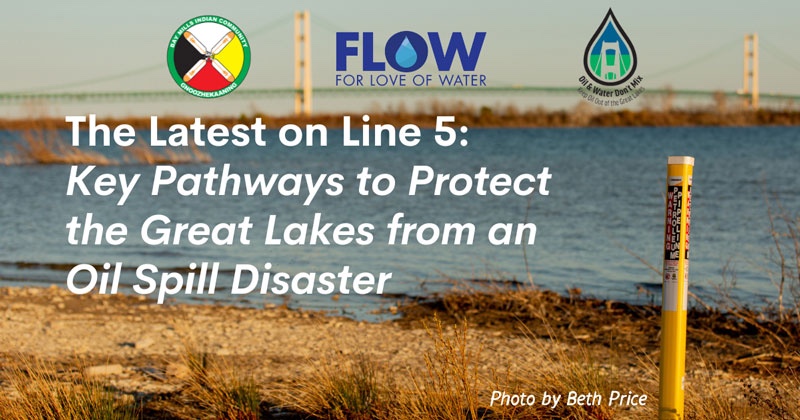
Hear about recent developments in the widespread effort to shut down Enbridge’s Line 5 in the Straits of Mackinac and stop the proposed oil tunnel. Presenters will answer questions from attendees.
Panelists
Liz Kirkwood, FLOW Executive Director – Host
Whitney Gravelle, President, Bay Mills Indian Community
Zach Welcker, FLOW Legal Director
Sean McBrearty, Campaign Coordinator, Oil & Water Don’t Mix.
This event is occurring just after the 12th anniversary of the Enbridge Line 6B Kalamazoo River oil spill disaster. At the Straits of Mackinac, Enbridge Line 5 poses a dire threat in what University of Michigan scientists called “the worst possible place for an oil spill in the Great Lakes.”




 Turtle Talk
You must be logged in to post a comment.