
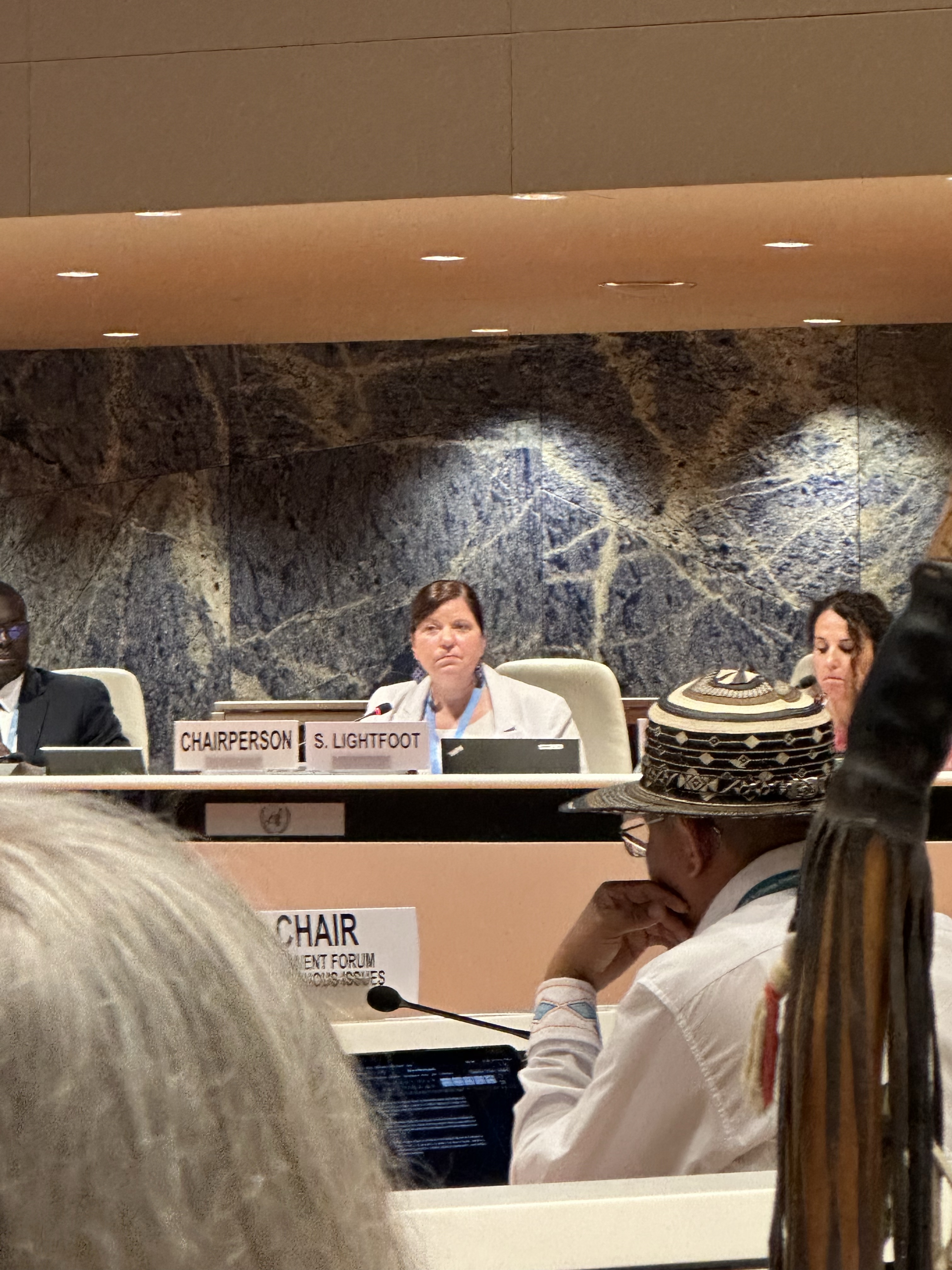
Please check out “Federal Indian Law as Method,” likely forthcoming in the University of Colorado Law Review. Here is the abstract:
This Essay is written in the shadow of a series of noxious attacks on core principles of federal Indian law, most notoriously Haaland v. Brackeen, a challenge to the constitutionality of the Indian Child Welfare Act (ICWA). The Supreme Court did not reach the merits of the equal protection challenges, but during oral argument, several judges expressed skepticism that Congressional Indian affairs enactments that grant privileges or preferences to Indian people could survive scrutiny under an equal protection analysis. Justice Kavanaugh, one of the judges most interested in the equal protection claims, wrote separately to highlight these issues, asserting that “the equal protection issue is serious.”
The parties siding with ICWA’s constitutionality argued to the Court that the Mancari case is a guide, whereas the opponents to ICWA’s constitutionality wanted to Court to ignore the case altogether. This Essay is a full-throated defense of the Mancari as a method of constitutional interpretation. Not only is the Mancari method correct, it is also the only justifiable method. This Essay proceeds with a short background on federal Indian law and its default interpretative rules. Next, the Essay surveys the application of and challenges to the Mancari method. Finally, the Essay concludes with a comparison of the methods proposed to replace or displace the Mancari method.
This Essay was prepared for the 31st Annual Rothgerber Symposium at Colorado Law School.

From U of M law school, here.
An excerpt:
ICWA was always a part of my scholarly agenda, largely because ICWA is such an important part of virtually every Native person’s personal history. My writing partner and spouse Wenona Singel can trace the removals of her ancestors from the 1830s all the way to the 1970s. Our children are the first generation of children in her family to not be removed since the 1830s. I began to focus on the constitutional defense of ICWA intensely after a 2013 Supreme Court decision, Adoptive Couple v. Baby Girl, where the Court questioned the constitutionality of the Act. Within a couple years, constitutional challenges to ICWA were swarming the courts. Occasionally joined with Singel, who was using other media to tell her family’s story, I began to write systematically on each constitutional issue in an effort to push back on the narrative that ICWA was somehow constitutionally suspect. I focused on congressional Indian affairs powers, anti-commandeering and federal preemption, equal protection, and non-delegation.
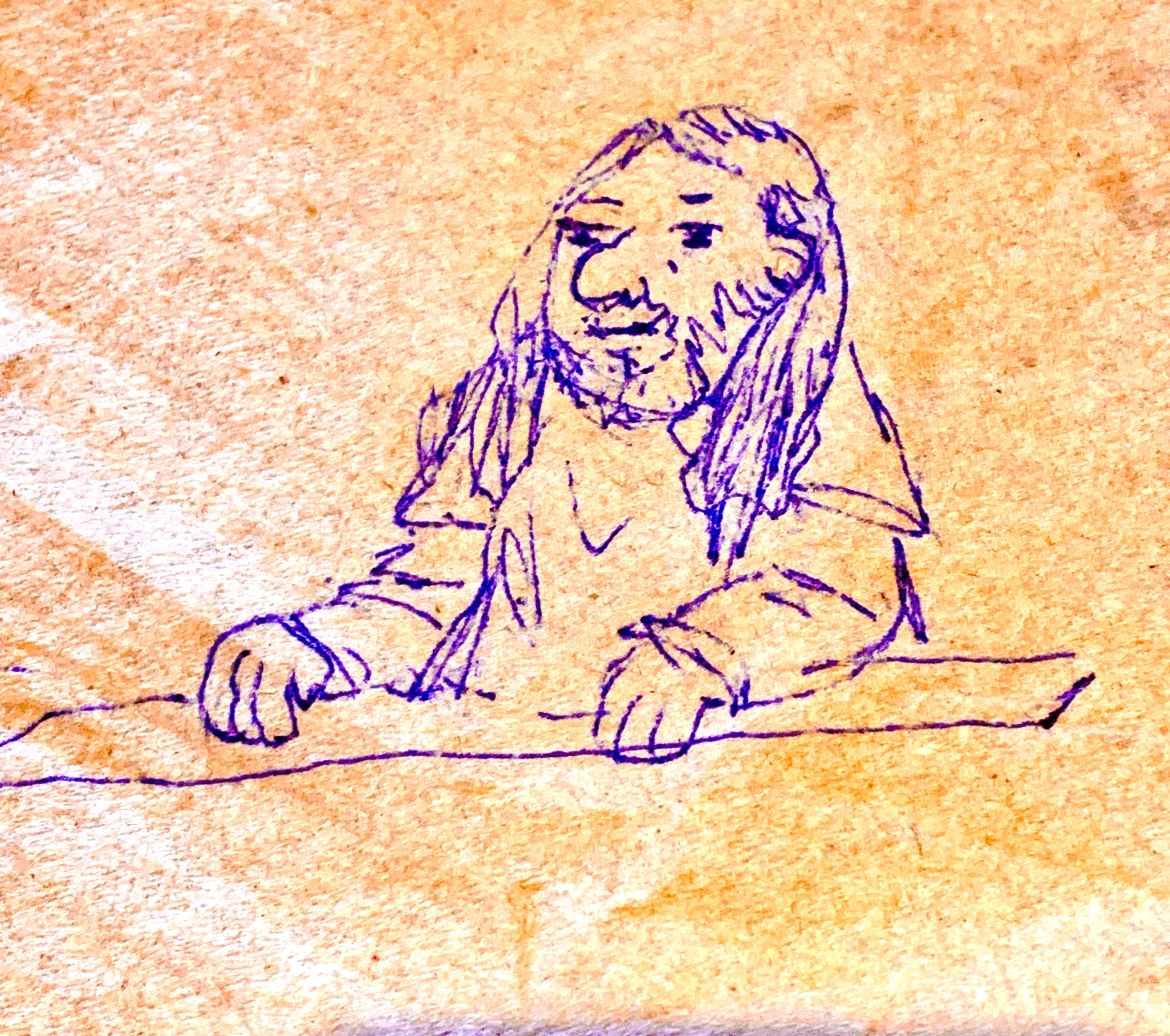
Here’s my acceptance letter:
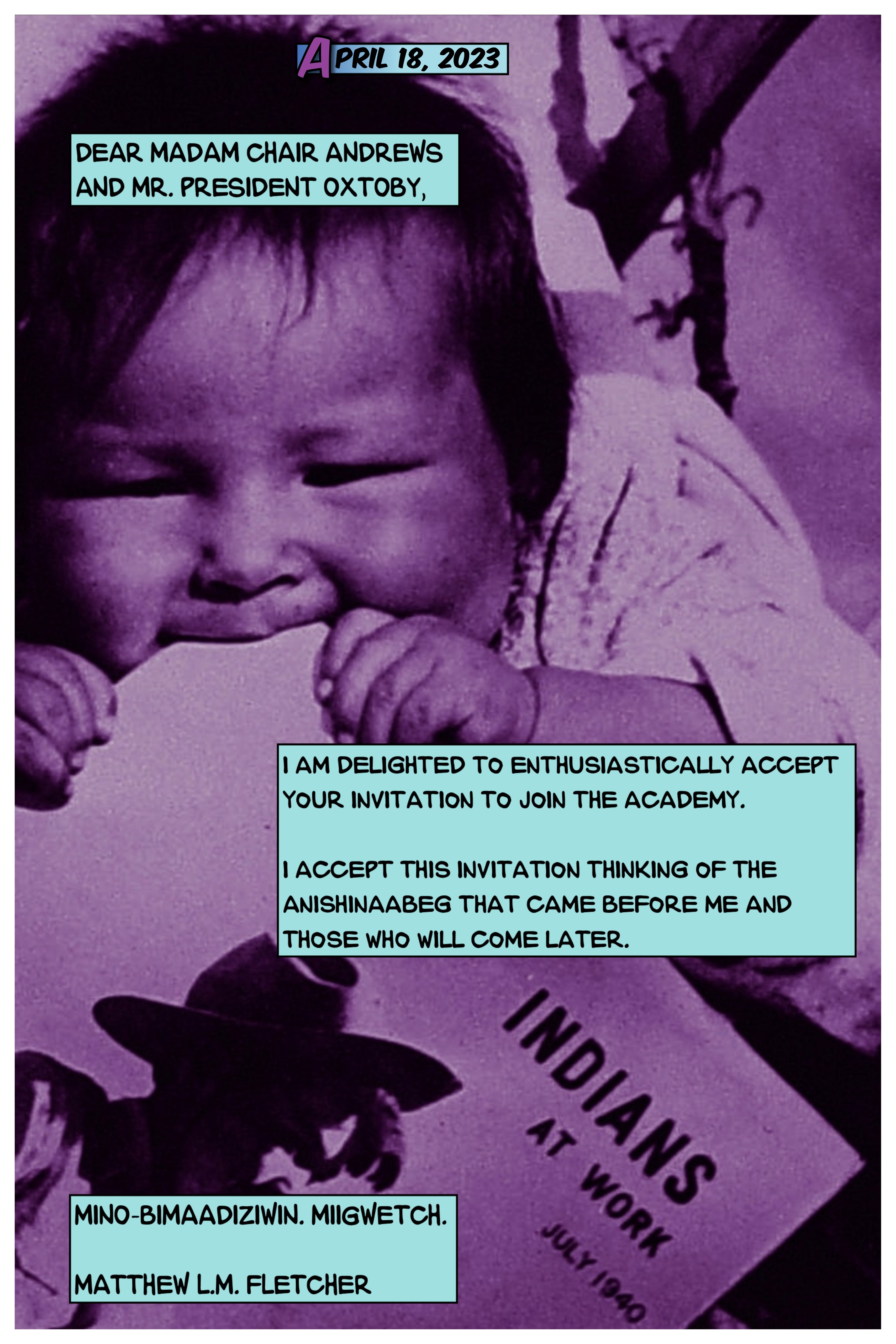
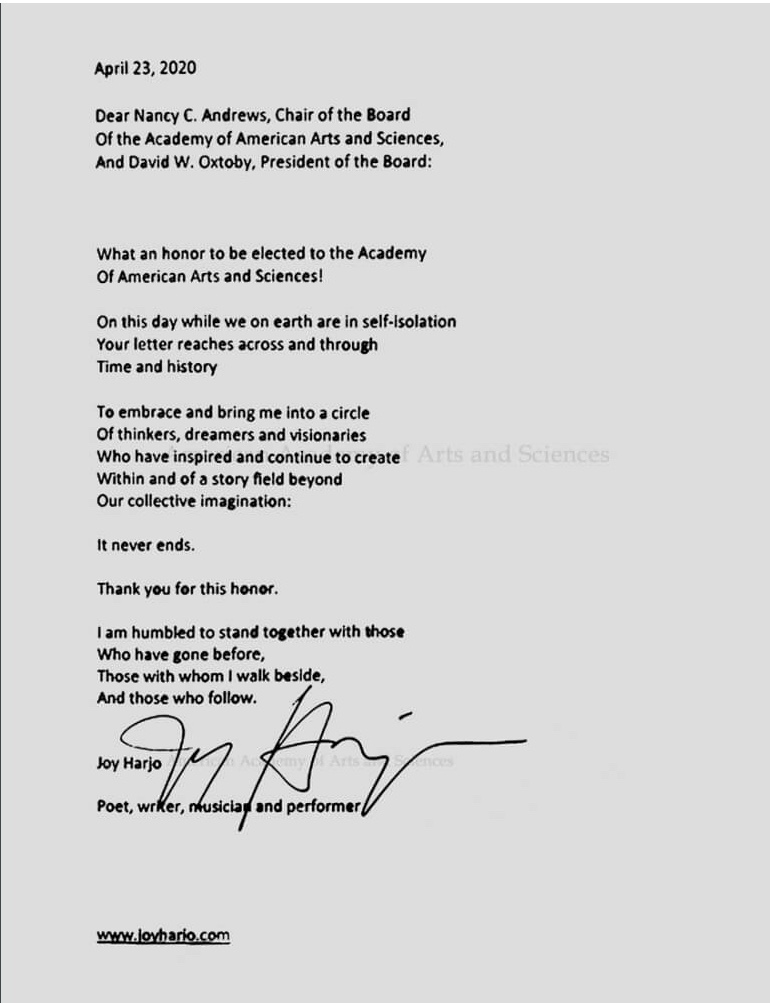
Not as cool as Joy Harjo’s letter from a few years back:
Register here.

Here.
NATIVE AMERICAN STUDIES. The Department of American Culture and the program in Native American Studies (NAS) at the University of Michigan invite applications for an open-rank tenured or tenure track position in Native American and/or other U.S.-related Indigenous Studies as part of the Provost’s Anti-Racism Hiring Initiative (ARHI).
We seek qualified scholars in all fields with either disciplinary or interdisciplinary training. The search will consider scholars whose work focuses on Indigeneity, Race, and American Belonging in the United States and those who use comparative and transnational frameworks in relation to the United States. Scholars whose expertise in Native American and Indigenous studies falls within the humanities or humanistic social sciences (including but not limited to gender & sexuality, environmental studies, history, digital studies, museum studies, visual and expressive culture, etc.) are encouraged to apply.
Applicants must demonstrate evidence of excellence in teaching and research. A Ph.D. in a relevant discipline in the arts, humanities, or social sciences is required prior to appointment. This is a university-year appointment with an expected start date of August 26, 2024.
HOW TO APPLY
Application Deadline for full consideration is August 21, 2023, 11:59 p.m., Eastern Standard Time.
Qualified persons should submit preliminary application documents as email attachments to
ac-position@umich.edu under the subject line “NAS ARHI Position.”
Please include the following components (each submitted as a separate PDF file):
Persons whose applications are selected for further review will be individually asked to provide additional documents, including but not limited to: evidence of teaching excellence, a statement of teaching philosophy and experience, a diversity statement, and a statement of current and future research plans.
Confirmation: Upon receipt of your preliminary application you can expect an email acknowledgment with a request and instructions to submit a voluntary survey to the College of Literature, Science, and the Arts.
The University of Michigan is committed to fostering and maintaining a diverse work culture that respects the rights and dignity of each individual, without regard to race, color, national origin, ancestry, religious creed, sex, gender identity, sexual orientation, gender expression, height, weight, marital status, disability, medical condition, age, or veteran status. The University of Michigan is supportive of the needs of dual career couples and is an Equal Opportunity/Affirmative Action Employer. Offers for this appointment are contingent upon a successful background screening.

 Turtle Talk
You must be logged in to post a comment.