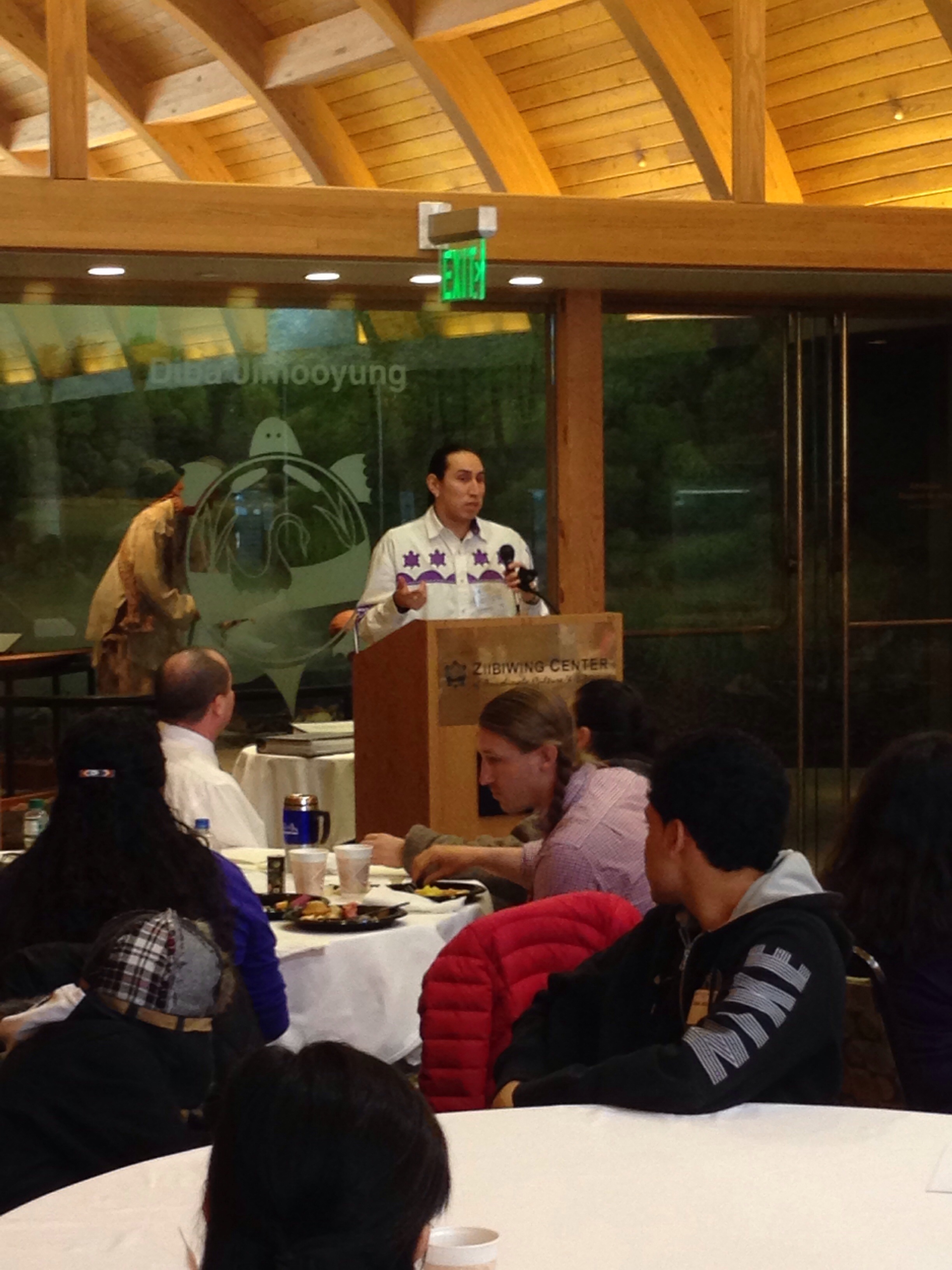
Opening keynote speaker Brandon Stevens
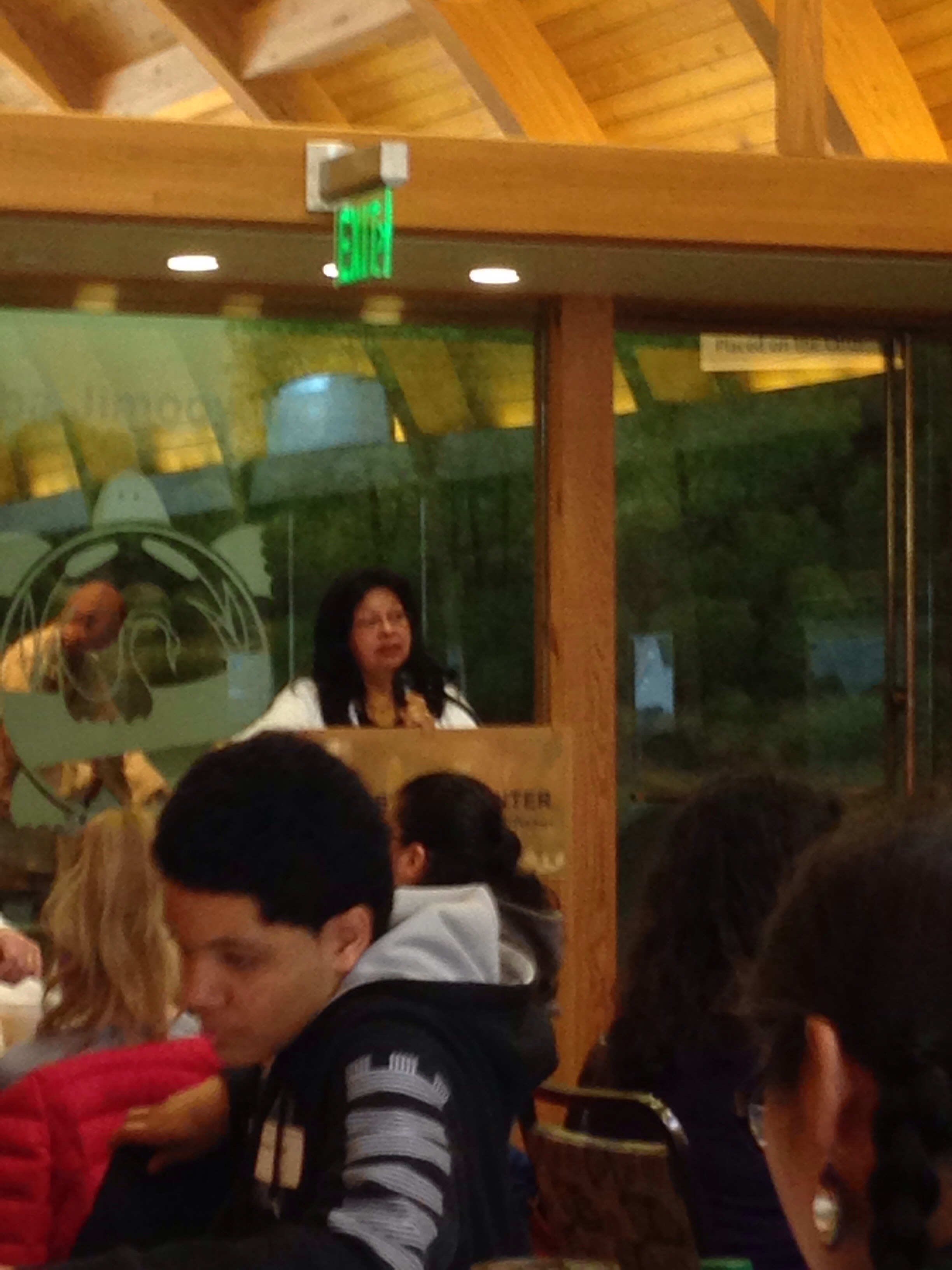
MIEC board member Rochelle Ettawageshik
Opening keynote speaker Brandon Stevens
MIEC board member Rochelle Ettawageshik
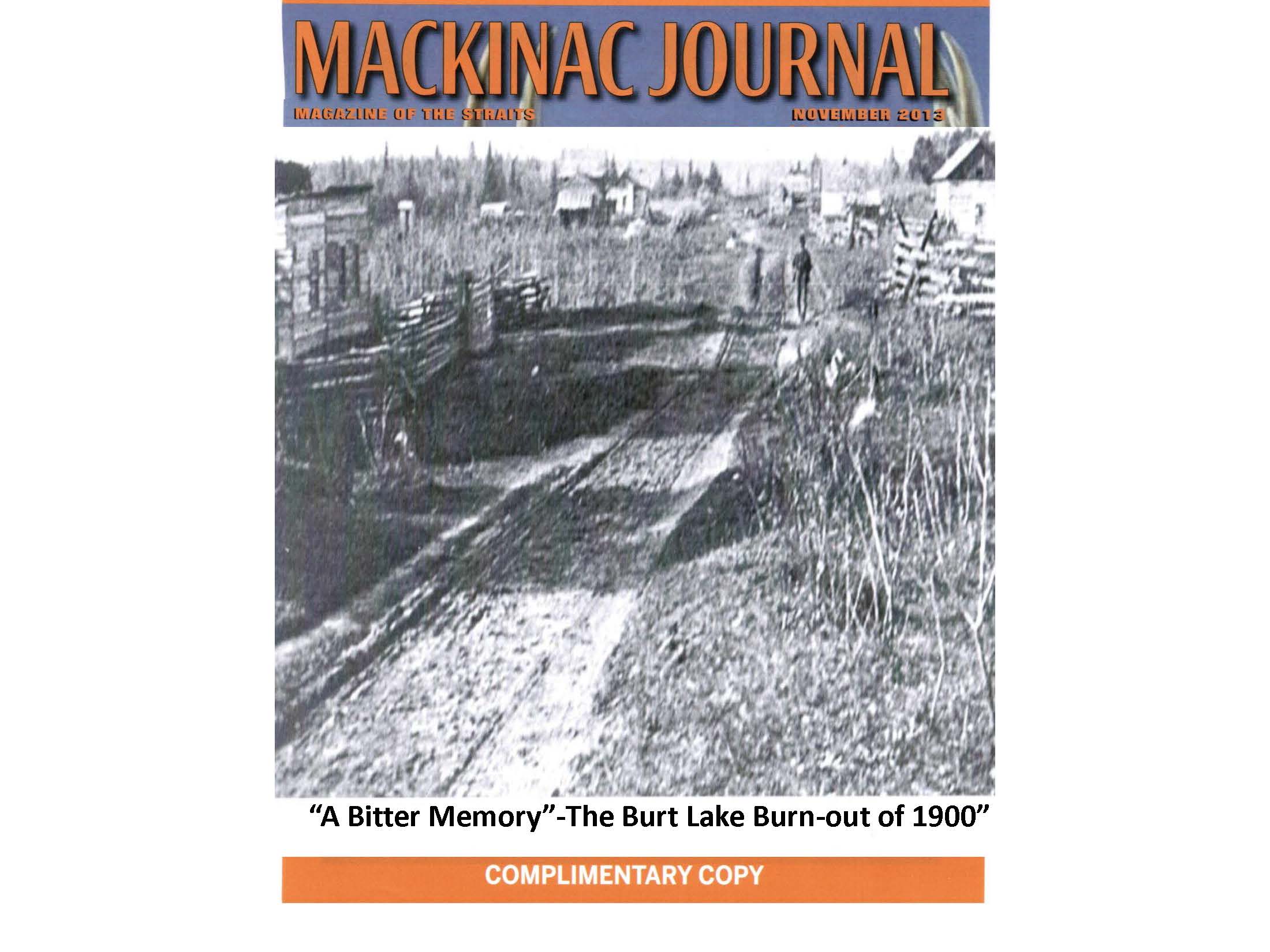
An important read for anyone in northern Michigan:
A Bitter Memory’ — The Burt Lake Burn-out of 1900
Moreover, it is a fairly direct response to the recent Michigan Historical Review article (here) that essentially argues it was perfectly legal to resort to arson to enforce a foreclosure order. Imagine if that were really true — a bank or a sheriff could simply set alight a foreclosed home, with people inside, in order to enforce a foreclosure order. Obviously not.
Here is an imaged version of article as well, with pics:
Michigan State Law Review has published several articles from its symposium on Wenona Singel’s paper “Indian Tribes and Human Rights Accountability.”
Tribal Rights, Human Rights
Kristen A. Carpenter & Angela R. Riley
2013 Mich. St. L. Rev. 293 | Download PDF
Nenabozho’s Smart Berries: Rethinking Tribal Sovereignty and Accountability
Heidi Kiiwetinepinesiik Stark
2013 Mich. St. L. Rev. 339 | Download PDF
Jurisdiction and Human Rights Accountability in Indian Country
Kirsten Matoy Carlson
2013 Mich. St. L. Rev. 355 | Download PDF
First “Review” of Scholarly Promise and Achievement
Frank Pommersheim
2013 Mich. St. L. Rev. 291 | Download PDF
Tribal Sovereignty and Human Rights
Joseph William Singer
2013 Mich. St. L. Rev. 307 | Download PDF
A Most Grievous Display of Behavior: Self-Decimation in Indian Country
David E. Wilkins
2013 Mich. St. L. Rev. 325 | Download PDF
Healing to Wellness Courts: Therapeutic Justice
Joseph Thomas Flies-Away & Carrie E. Garrow
2013 Mich. St. L. Rev. 403 | Download PDF
Pokagons Honor Co-Editor of Cohen’s Handbook
DOWAGIAC, Mich. — March 10, 2014 — The Pokagon Band of Potawatomi honored Dean Nell Jessup Newton of the Notre Dame Law School at a dinner Thursday, March 6 for her work in editing Cohen’s Handbook of Federal Indian Law, a preeminent resource used throughout Indian Country. The dinner was held at the Morris Inn on the campus of Notre Dame.
In the photos:

Jason S. Wesaw, a Pokagon artist, describes his work for Dean Newton. His pottery piece shown was commissioned to be gifted to the Dean for her important legal work with Native Americans. Wesaw also began the evening with an honor song for Dean Newton.

The group gathered after the dinner below a photo of the Notre Dame Golden Dome: left to right: Ed Williams (Pokagon Potawatomi), general counsel of the Pokagon Band, Stephen Rambeaux, court administrator of the Pokagon Tribal Court, Matt Martin (Pokagon Potawatomi), VP of security at Four Winds Casino Resort , Judy Winchester (Pokagon Potawatomi),Chairman John Warren of the Pokagon Band, Acting Treasurer Tom Topash of the Pokagon Band, Dean Newton, Michaelina Magnuson-Martin (Pokagon Potawatomi), Andrea Topash-Rios (Pokagon Potawatomi) associate professional specialist at Notre Dame, Paul Shagen (Bay Mills), associate general counsel of the Pokagon Band and adjunct law instructor at Notre Dame, Tim Sexton, associate VP of Public Affairs at Notre Dame, Jason S. Wesaw (Pokagon Potawatomi).
About The Pokagon Band of Potawatomi Indians
The Pokagon Band of Potawatomi Indians’ sovereignty was reaffirmed under legislation signed into law by President Clinton in September of 1994. The Pokagon Band is dedicated to providing community development initiatives such as housing, education, family services, medical care and cultural preservation for its approximately 4,800 citizens. The Pokagon Band’s ten county service area includes four counties in Southwestern Michigan and six in Northern Indiana. Its main administrative offices are located in Dowagiac, Mich., with a satellite office in South Bend, Ind. More information is available at www.pokagonband-nsn.gov.
Media Contacts: Paige Risser, (269)462-4283, Paige.Risser@pokagonband-nsn.gov # # #
Here:
CA6 Order Denying Reconsideration
Prior posts on the stay are here and here. Panel materials here.
Here:

Here.
RSVP here.
Department of Human Services, Native American Affairs &
Tribal Services: How We Work Together to Improve Lives
March 12th
– Stacey Tadgerson, Director of the Office of Native
American Affairs, Michigan Department of Human Services (DHS)
Congress enacted the Indian Child Welfare Act (ICWA) to eliminate the
wholesale state removal of abused/neglected Indian children from their tribes
and culture. Participants in this session will learn about the history of ICWA,
Native American Affairs, and resources available to youth in care, tribal
governments, and urban Indian organizations from the DHS that will assist
tribal youth in becoming self-sufficient while reaching for their dreams.
Baby Veronica & Inside the Michigan Indian Family
Preservation Act – April 2nd
– Kate Fort, Staff Attorney and Adjunct
Professor – MSU Indigenous Law & Policy Center
The United States Supreme Court decided only the second case on the
Indian Child Welfare Act since its passage. This presentation will give the
basic facts and holding of the case, as well as its potential implications for
ICWA cases in the future. It will also address the way the Michigan Indian
Family Preservation Act helps to limit the application of the Baby Girl case.
Making Smart Choices for Health Insurance – April 16th
–
Brenda Long, Educator – MSU Extension
To help people navigate the complex and confusing health insurance
landscape, MSU Extension is teaching people how to take control of their
health insurance situation through webinars and in-person presentations.
Those who participate will be able to analyze their insurance needs, learn
important terms and concepts, compare health insurance plans, and figure
out what fits in their budget. People will also become more confident
 Turtle Talk
You must be logged in to post a comment.