Briefs and other materials here.

Here are the materials in Cayuga Nation v. Parker (N.D. N.Y.):
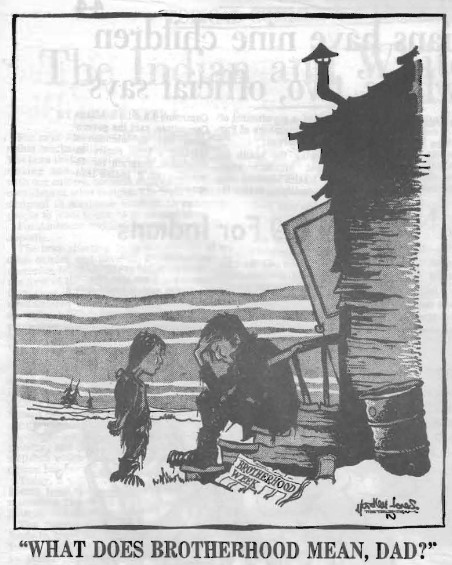
Here is the order in Minnesota Dept. of Natural Resources v. Manoomin dated March 10, 2022:
Prior post here.
Here are the materials in Rincon Mushroom Corporation of America v. Mazzetti (S.D. Cal.):
Prior post here.
Here is the opinion.
Briefs here.
An excerpt:
We begin by discussing the tribal exhaustion doctrine involved in this case. “[W]hen a federal court has subject-matter jurisdiction over a claim arising in Indian country over which a tribal forum has colorable jurisdiction, principles of comity and the federal policy of promoting tribal self-government generally require that the plaintiff fully exhaust tribal remedies before proceeding in federal court.” Restatement of the Law of Am. Indians § 59 cmt. a (Am. Law Inst., Proposed Final Draft 2021).
slip op. at 14.
Maybe a little more Restatement. . . .
Post–Santa Clara Pueblo, federal review has been limited to habeas, leaving tribal courts to adjudicate any other civil rights claims. See Restatement of the Law of Am. Indians § 16 cmt. a (“With the exception of actions for habeas corpus relief [under § 1303, ICRA’s civil rights] guarantees are enforceable exclusively in tribal courts and other tribal fora.”).
slip op. at 21.
And more. . . .
Tribal exhaustion doctrine exists to preserve tribal sovereignty and prevent the federal courts from running roughshod over tribal legal systems. See Norton, 862 F.3d at 1243; Restatement of the Law of Am. Indians § 28 cmt. a (“[A]djudication of matters impairing reservation affairs by any nontribal court . . . infringes upon tribal law-making authority, because tribal courts are best qualified to interpret and apply tribal law.”).
Slip op. at 34.
Here is the unpublished opinion in Big Horn County Electric Cooperative v. Big Man.
Briefs here.
Lower court materials here.
Here is the unpublished opinion.
Briefs are here.
Ann Tweedy has posted “Tribes, Firearm Regulation, and the Public Square,” forthcoming in the U.C. Davis Law Review, on SSRN.

Here is the abstract:
This paper explores tribal policies towards firearm regulation through four different lenses. First, tribal participation in recent state and federal legislative debates regarding firearm regulation is explored. Second, the essay examines ways that Native Americans continue to be harmed by notions of savagery, including through high rates of victimization of violent crime and high rates of police killings. Third, it explores the historical importance of firearms for many tribal cultures. Finally, tribal firearm regulations are examined, specifically in the context of laws regulating the ability to bring firearms into sensitive spaces and those relating to use of firearms in a threatening manner.
Here:
Briefs are here.
One of my favorite people, Melody McCoy, a Cherokee citizen and Michigan alum, argued for the respondents. Izhaadaa giizhigowande!
Continue reading
 Turtle Talk
You must be logged in to post a comment.