Here is the opinion in Northwestern Band of the Shoshone Nation v. Wooten.
Briefs here.
I’ve been posting and talking about this issue for a while now, and am very happy to see it highlighted in this article. The Colorado Office of Respondent Parents’ Counsel has been collecting incredibly important data (headed up by a proud MSU alum!) on what happens when foster parents intervene. I strongly encourage anyone in the position to do so to begin collecting this same data.
https://www.propublica.org/article/foster-care-intervention-adoption-colorado
Intervenors can file motions, enter evidence and call and cross-examine witnesses to argue that a child would be better off staying with them permanently, even if the birth parents — or other family members, such as grandparents — have fulfilled all their legal obligations to provide the child with a safe home. When Carter’s foster parents intervened in the hope of keeping him, they turned to the firm of Tim Eirich, a Denver adoption attorney who charges as much as $400 an hour and has almost single-handedly systematized intervention in Colorado.
***
The Trump and Biden administrations have both pressed states to keep a larger percentage of kids with birth parents or kin. Intervention, a state-level counter-trend, is supported by foster parents’ rights groups and advocates at national conservative organizations.
***
Since 2018, South Carolina’s courts and lawmakers have affirmed the right of any state resident to file to adopt any foster child, as well as the right of foster parents to intervene. In 2020, Kentucky amended its law to let foster parents intervene as legal parties in involuntary terminations of birth parents’ rights. And this year Florida passed a law saying that if birth parents move to have their child adopted, including by a biological family member, long-term foster parents can intervene to contest that outcome. Kathryn Fort, the director of the Indian Law Clinic at Michigan State University, told me that her practice has faced three sets of intervenors this year, all of them non-Native couples seeking to adopt a Native child.
Here are the materials in State of Washington v. American Tobacco Co. (Wash. Ct. App.):

Logan C. Hibbs has published “Not So Clear and Plain: Exploring the Circuit Split on the Applicability of Federal Labor & Employment Laws to Tribes” in the Oklahoma Law Review.

Here are the materials in Arocha v. Blackman (D. Mont.):
Hon. Robert J. Collins has published “Tsi?latiliwahslu∙nihe kayanlahsla? (Of the place they make matters or issues right)” in the October 2023 issue of Wisconsin Lawyer.

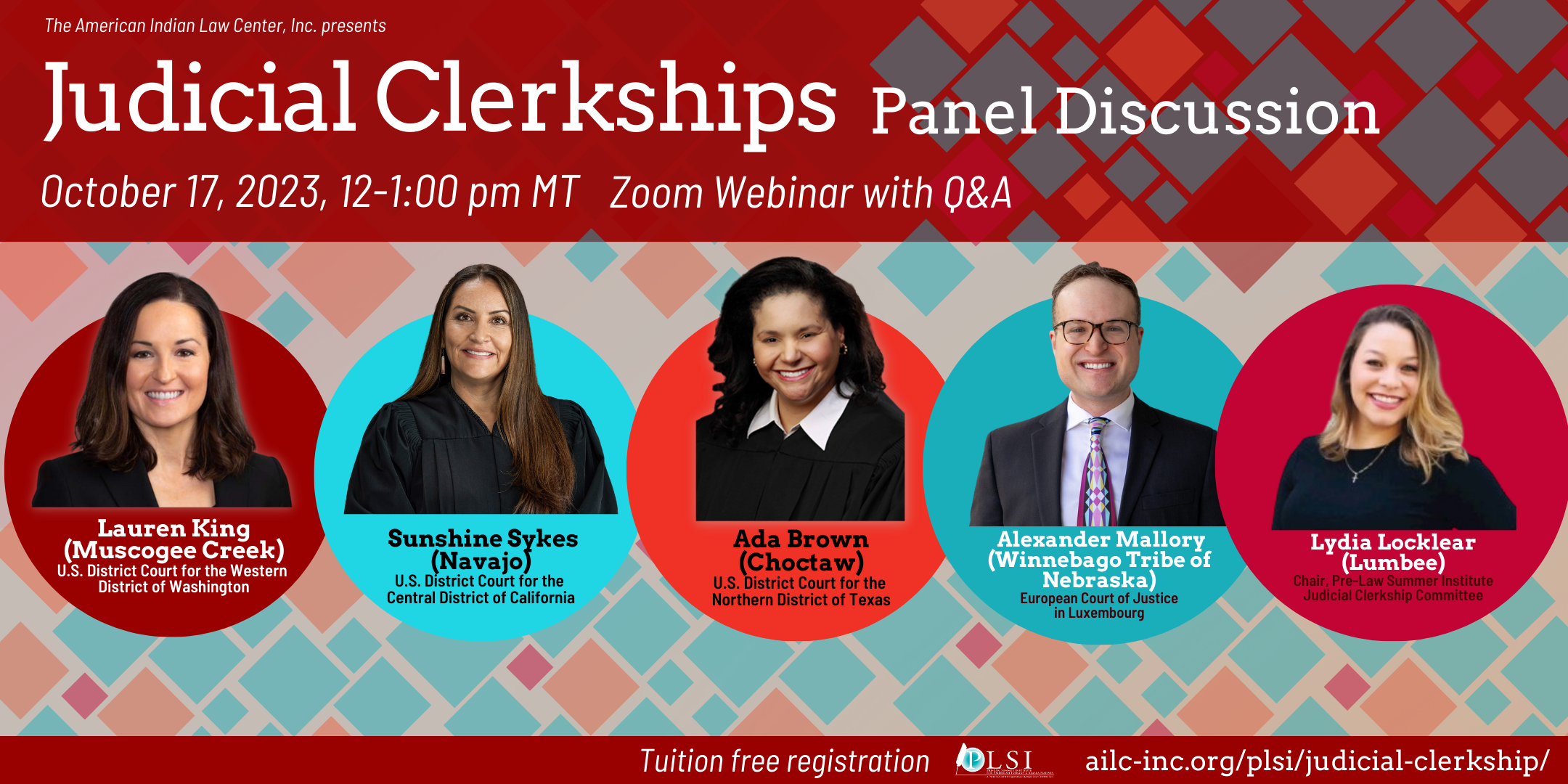
The tribal, state, and federal benches need more Native judges and judicial clerks. We encourage Native law students to join us to meet Native federal judges and learn more about their journey. Please share with NALSA groups!
Visit the website for more information about the panelists and to register.
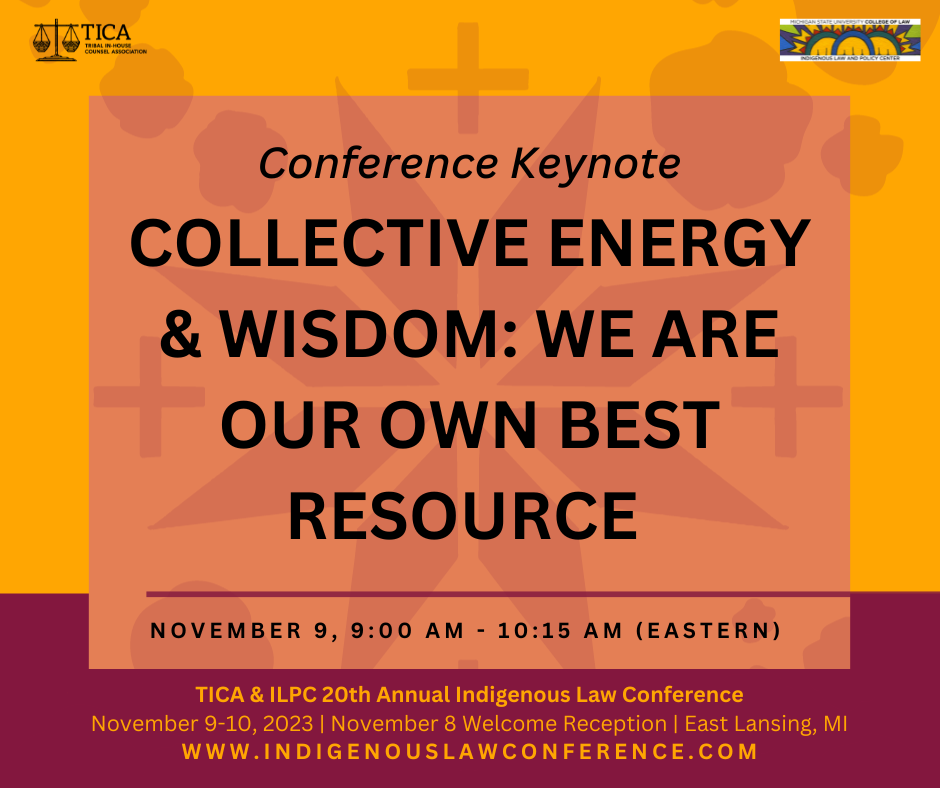
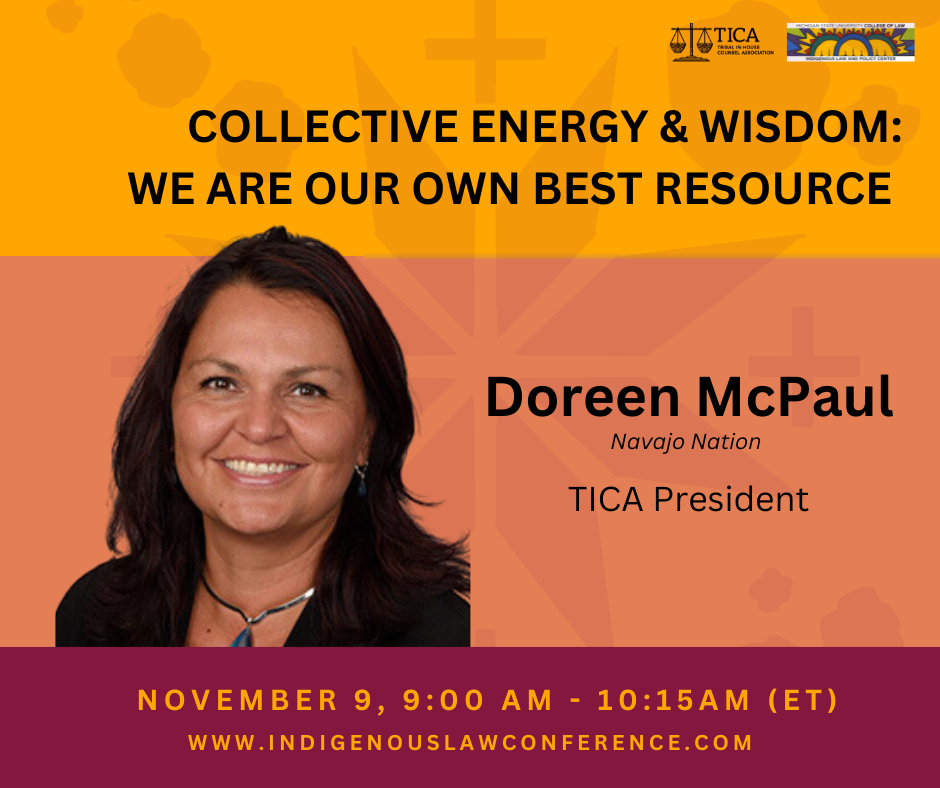
9:00 AM-10:15 AM ET | 11/9/23 | 1.25 CLE Credits
In this keynote presentation, Doreen McPaul will provide some insight about the formation and early years of the Tribal In-House Counsel Association and the organization’s path during her 10 years as TICA’s President. Drawing on her own experiences as an Indian law and tribal law practitioner, she will share some lessons learned about the importance of humanity, connection, service, wellness and more as we forward gaze to the next 10 years, both for TICA and for tribal in-house practice generally. Moderated by TICA Vice-President, Stephen Greetham.
 Turtle Talk
You must be logged in to post a comment.