First Circuit Decides Second Aquinnah Tribe Gaming Appeal

Here are the opinion and briefs in Aquinnah/Gay Head Community Association Inc. v. Wamapnoag Tribe of Gay Head (Aquinnah):

Opinion

Tribe Opening Brief

NCAI Amicus Brief

Town of Aquinnah Principal Brief

Martha’s Vineyard Amicus Brief

Tribe Reply

Tribe Response to MVC Amicus Brief

Town of Aquinnah Reply

Prior post here.

First Circuit materials in earlier appeal.

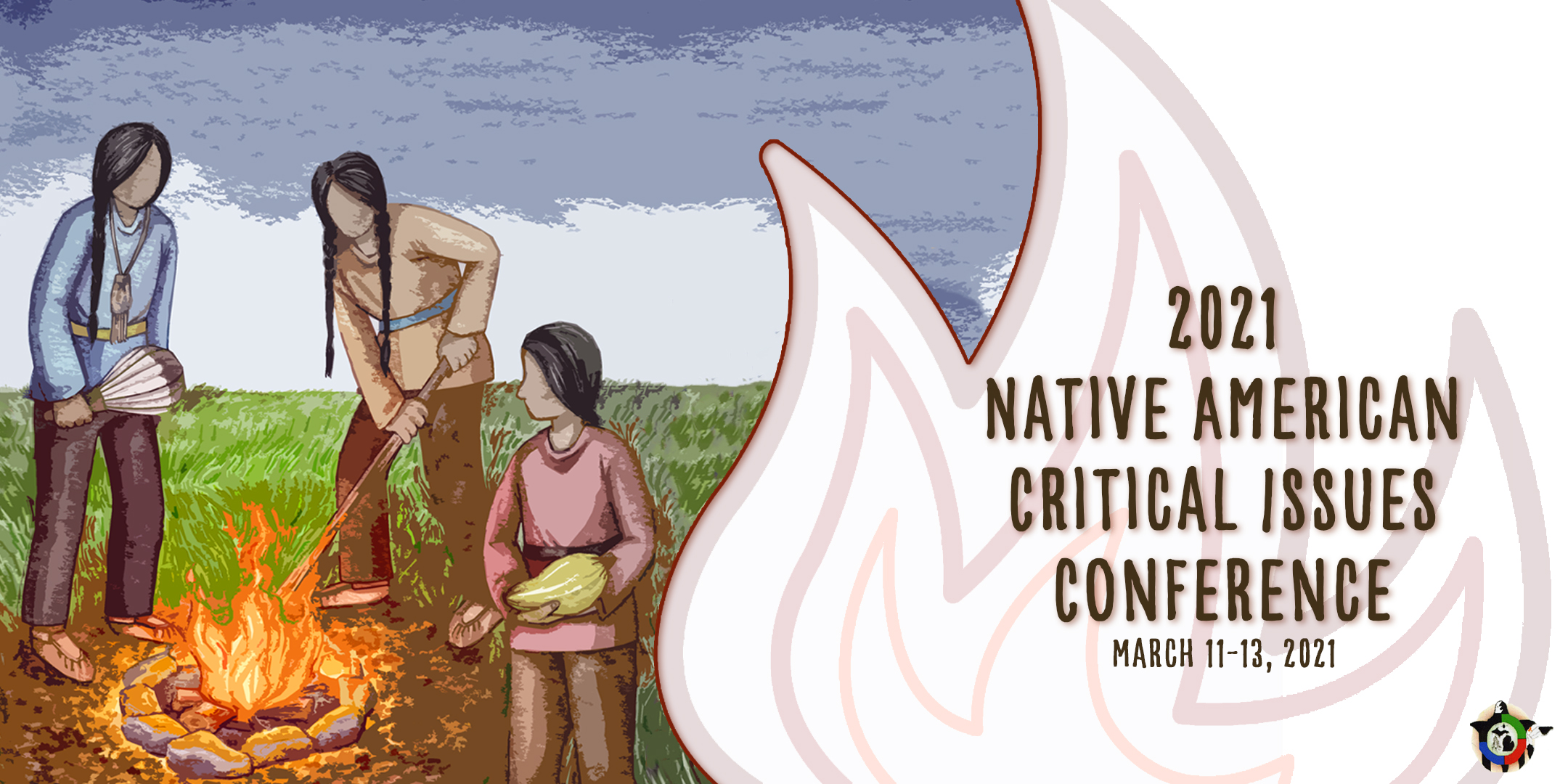
51st Annual Native American Critical Issues Conference: March 11-13

The 51st Annual Native American Critical Issues Conference

More information at miec.org/conference

March 11-13, 2021, 9-12:30pm ET on Zoom

click here to REGISTER

*there are a limited number of student registration scholarships available. Contact mreinhar@nmu.edu for more information.

Download the agenda at glance here. 

Download the save the date flyer here.

Join us for 3 conference tracks, including

  • General Track (A), for the general public
  • Youth Track (B), for young students
  • NASO Track (C), for college-aged students who may be involved in Native American Student Organizations
  • 15 Breakout sessions
  • 4 Plenary sessions
  • 2 Vendor Booth and Information Booth sessions to meet directly with vendors
  • 2 Networking CafĆ© sessions to connect with other attendees
  • Access to Zoom session recordings after the conference

Session Topics

  • Cultural Uses of Fire
  • Indigenous Foraging, Cooking, and Eating
  • Fire Ring in the Mackinac Straits
  • Ishkode: The Language of Fire
  • Fired Up: Activism in Indian Country, Past and Present
  • Tri-Lateral Indian Education Panel
  • Missing and Murdered Indigenous Women Panel
  • Rematriation and Pedagogical Reform in K-12 Systems
  • Treaty Rights and Water Habitat
  • The Impact of COVID-19 on Indian Country Keynote
  • Native American Student Organizations Meet and Greet: Our College Experience
  • Graduate School 101
  • Native Scholar Network Summit Keynote
  • Decolonizing NASO
  • and more!

Registration

Click here to register for $150 on Eventbrite and receive access to the password protected Participant Portal. The Participant Portal at miec.org contains the Zoom links needed to gain access to the conference. Registered attendees will receive the Participant Portal password by email one week prior to the event.

Seeking Artists and Informational Vendors

Vendors: Would you like to be listed as a vendor on the conference website and meet one-on-one with attendees during 2 Vendor Sessions on March 12? Contact Dr. Martin Reinhardt to request a vendor form at mreinhar@nmu.edu by Friday, March 5. Vendor fees are $50.

More information and registration at miec.org/conference

New NCJFCJ Publication on Active Efforts

Here.

Congress passed the Indian Child Welfare Act (ICWA) in 1978 to address the widespread practice of state entities removing American Indian and Alaskan Native children from their homes and families. Congress found ā€œan alarmingly high percentage of Indian families are broken up by the removal, often unwarranted, of their children from them by non-tribal public and private agencies and that a high percentage of such children are placed in non-Indian foster and adoptive homes and institutions.ā€

This publication is a companion to others developed by the National Council of Juvenile and Family Court Judges (NCJFCJ) regarding ICWA for judges, court staff, attorneys, child welfare professionals, and other stakeholders involved in child welfare cases. It focuses on the use of active efforts as an essential tool in the implementation of ICWA and as a best practice in child welfare. It is intended to provide the history behind ICWA and, in doing so, outline both the why and the how of active efforts in ICWA implementation.Ā 

Dylan Hedden-Nicely and Stacy Leeds on McGirt and the Future of Federal Indian Law

Dylan Hedden-NicelyĀ andĀ Stacy Leeds have posted “A Familiar Crossroads: McGirt v. Oklahoma and the Future of the Federal Indian Law Canon” on SSRN. The paper is forthcoming in the New Mexico Law Review.

The abstract:

Federal Indian law forms part of the bedrock of American jurisprudence. Indeed, critical parts of the pre-civil war constitutional canon were defined in federal Indian law cases that simultaneously provided legal justification for American westward expansion onto unceded Indian lands. As a result, federal Indian law makes up an inextricable part of American rule of law. Despite its importance, federal Indian law follows a long and circuitous road that requires ā€œwander[ing] the maze of Indian statutes and case law tracing back [over] 100 years.ā€ That road has long oscillated between two poles, with the Supreme Court sometimes applying foundational principles that view tribes as sovereigns ā€œretaining all their original natural rights,ā€ and at other times treating tribes as mere ā€œwards subject to a [self-imposed] guardian.ā€

Supreme Court respect for tribal sovereignty and self-determination reached its zenith in the so-called ā€œmodern eraā€ of federal Indian law, spanning from 1959 through the late 1970s. During this era, the Court tended to adhere to federal Indian jurisprudence and solidified a relatively coherent doctrine based upon the foundational principles developed in the 1830s. The late Dean David Getches described the modern era as a time that ā€œencouraged a reinvigoration of tribal governments throughout the country. During this period, tribes gained political influence and economic security as [the federal government] generally promoted a policy of tribal self-determination.ā€

The Court turned away from its foundational Indian law principles with the onset of the 1980s and the departure intensified as Chief Justice William Rehnquist was appointed chief justice in 1986. Since then, the touchstone of the Supreme Court’s federal Indian jurisprudence has been to employ a ā€œsubjectivistā€ approach whereby it ā€œgauges tribal sovereignty as a function of changing conditionsā€ā€”demographic, social, political, and economic—and the expectations of non-Indians that may be potentially by the exercise of tribal power. As a result, the Supreme Court became a strikingly hostile place for American Indian tribes as the Court became increasingly willing to divest tribes of governmental powers, not by upholding the enactments of Congress, but through its own interpretation of what tribal inherent governmental rights ought to be.

The appointment of Justice Sonia Sotomayor and, more recently, Justice Neil Gorsuch seems to have brought change to the Court’s direction in Indian law cases. Since then, cases have been consistently decided in favor of tribal litigants by reaffirming treaty rights through the application of foundational principles that focus on the plain language of treaties and the application of the Indian canons of construction. However, to be sure, even the Rehnquist Court did ā€œrecite[] and sometimes act[] upon foundation principles,ā€ but those cases were limited to situations where ā€œnon-Indian interests [were] not seriously threatened.ā€ All of Indian Country waited for, or perhaps dreaded, a true litmus test.

That test came to the Supreme Court in the form of two Indian law cases—Sharp v. Murphy and McGirt v. Oklahoma—both of which were framed by non-Indian parties to affect the interests of an estimated 1.8 million people in eastern half Oklahoma. Ready or not, Indian Country found its test case, which squarely placed the Court’s competing jurisprudential philosophies— its foundation principles versus its ā€œsubjectivistā€ approach—on a collision course.

In a powerful and uncharacteristically passionate decision, Justice Gorsuch wrote for a 5-4 majority, upholding treaty-based rights to re-recognize the historic reservation boundaries of the Muscogee (Creek) Nation, the fourth largest Indigenous nation in the United States. The decision was the fourth consecutive treaty-rights victory and seemed to solidify a shift toward a consistent approach rooted in foundational principles.

The victory was short-lived. Just weeks after the Court’s decision in McGirt, Justice Ruth Bader Ginsburg passed away, once again shifting the make-up of the United States Supreme Court. As a result, Federal Indian law once again finds itself at a crossroads. The Murphy and McGirt decisions are landmark decisions that bring change to the legal landscape of much of Oklahoma. It remains to be seen whether the perceived new Supreme Court era in Indian law is here to stay.
Highly recommended!!!

N.Y. Appellate Division Affirms Dismissal of Cayuga Suit over the T.V. Show Billions

Here is the opinion in Cayuga Nation v. Showtime Networks Inc. (N.Y. A.D.):

Cayuga Nation v Showtime Networks (2020-03854)

Lower court materials here.

Addressing Trauma in Indian Country Series by VNF on 2/24

Here.

Moderated by Laura Jones (MSU Alum) and others.

Second Circuit Decides Seneca Nation of Indians v. State of New York

Here is the opinion:

Seneca Nation v NY CA2 Opinion

Briefs.

Cherokee Nation SCT Strikes “By Blood” from Cherokee Constitution

Here is the order inĀ In Re: Effect of Cherokee Nation v. Nash and Vann v. Zinke:

SC-17-07 37-Final Order 2-22-21

Selected Briefs:

2-8-21 Motion for Final Disposition

2-18-21 Tribe Brief

2-18-21 Councilors Brief

SCOTUS Asks for Views of SG in Ysleta del Sur Pueblo Gaming Case

Here is today’s order list.

Cert stage briefs are here.

Lower court materialsĀ here.