New Scholarship on Credit Ratings and the Availability of Credit in Indian Country

Valentina P. Dimitrova-Grajzl, Peter Grajzl, A. Joseph Guse, Richard M. Todd, and Michael Williams have posted “Neighborhood Racial Characteristics, Credit History, and Bankcard Credit in Indian Country.”

The abstract:

We examine whether concerns about lenders’ discrimination based on community racial characteristics can be empirically substantiated in the context of neighborhoods on and near American Indian reservations. Drawing on a large-scale dataset consisting of individual-level credit bureau records, we find that residing in a predominantly American Indian neighborhood is ceteris paribus associated with worse bankcard credit outcomes than residing in a neighborhood where the share of American Indian residents is low. While these results are consistent with the possibility of lenders’ discrimination based on community racial characteristics, we explain why our findings should not be readily interpreted as conclusive evidence thereof. We further find that consumer’s credit history is a robust and quantitatively more important predictor of bankcard credit outcomes than racial composition of the consumer’s neighborhood, and that the consumer’s location vis-à-vis a reservation exhibits no effect on bankcard credit outcomes.

Challenge to Native Hawaiian Self-Governance Election Fails

Here are the materials in Akina v. State of Hawai’i (D. Haw.):

47-1 Motion for PI

80 State Response

83 OHA Response

91 Reply

93 US Amicus Brief

114 DCT Order

An excerpt:

Act 195 is a unique law. It is both symbolic and remarkable. It reaffirms a delegation of authority in the Admissions Act from the United States to the State of Hawaii to address conditions of Hawaii’s indigenous people. It declares that the Native Hawaiian people are Hawaii’s only “indigenous, aboriginal, maoli people.” It is meant—in limited fashion—to facilitate a possible mechanism of independent self-determination and self-governance of Hawaii’s indigenous people. It facilitates—simply by creating a Roll of qualified Native Hawaiians—a possible process for the Native Hawaiian community to determine for themselves (absent any other involvement by the State of Hawaii) what collective action, if any, might be sought by that community.
Undoubtedly there is some “state action.” But, based on the information presented at this preliminary injunction stage, Nai Aupuni’s planned election of delegates is not; Nai Aupuni’s determination of who may participate is not; the planned convention is not. And the state is not involved in whether this process is or will be “fair and inclusive” and “reflect the will of the Native Hawaiian community” for purposes of the Department of the Interior’s NPRM.
The election will not result in any state officials, law, or change in state government. The election and convention might be a step towards self-governance by Native Hawaiians, or it might accomplish nothing of substance. Even if, however, a self-proclaimed Native Hawaiian governing entity is created with a governing document or a constitution, the result would most certainly not be a state entity.
Plaintiffs have not met their burden of demonstrating that excluding them from this particular private election is unconstitutional, or will otherwise violate federal law. And that is the only question now before this court.
Plaintiffs’ Motion for Preliminary Injunction is DENIED.

Senate Committee on Indian Affairs Report on Tribal Labor Sovereignty Act

Here:

CRPT-114srpt140

D.C. Circuit Briefs in Mackinac Tribe v. Jewell

Here:

Tribe Opening Brief

US Answer Brief

Reply

Lower court briefs here.

Update in Western Sky-Related Proceedings

Here are materials in Dillon v. BMO Harris Bank NA (M.D. N.C.):

162 Dillion Motion to Compel re Generations

164 Dillon Motion to Compel

165 Bay Cities Bank Opposition

166 Generations Community FCU Opposition

170 DCT Order

An excerpt:

Using the Heldt analysis, however, Plaintiffs’ logic can be used to assert a colorable claim of tribal jurisdiction, because some of Defendants’ actions involved alleged tribal entities and/or tribal members.”). Operating against that backdrop, these courts mandated tribal exhaustion where the record did not establish (i) the nature of the payday lenders’ relationship to each other and/or the tribe; (ii) the unavailability of the specified tribal arbitral forum; and (iii) for purposes of the Western Sky agreement, (A) who constitutes an “authorized representative of the Cheyenne River Sioux Tribal Nation” and (B) whether any such authorized representative “is a JAMS or AAA arbitrator,” Heldt, 12 F. Supp. 3d at 1193 (internal quotation marks omitted).See id. at 1184-87, 1190-93; see also Brown, 84 F. Supp. 3d at 480-81 (following Heldt).

As discussed below, Dillon bases his Requests and Motions to Compel in significant part on a need to develop a factual record sufficient to overcome the concerns in the Heldt line of cases. (See, e.g., Docket Entry 162 at 1-2; Docket Entry 162-2 at 4-6.).

We posted on this Rule 19 portion of this case here.


Federal Court Dismisses Tobacco Company Claim that Feds Underestimate Indian Tobacco Sales for Purposes of Fair and Equitable Tobacco Reform Act Payments

Here are the materials in R.J. Reynolds v. Dept. of Agriculture (D. D.C.):

10 Motion to Dismiss

12 Opposition

14 Reply

21 DCT Opinion

Yale Native Study Group Overview of Dollar General v. Mississippi Choctaw Case

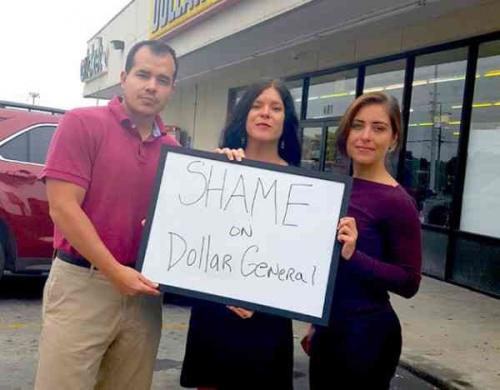
Here, “YGSNA Members Prepare Amicus Briefs for the U.S. Supreme Court, DOLLAR GENERAL CORP. vs. MISSISSIPPI BAND OF CHOCTAW INDIANS.” An excerpt:Shame on Dollar General

In 2000, the Dollar General Corporation entered into a series of agreements with the Mississippi Band Choctaw Indians to open a Dollar General store on the Tribe’s lands in Mississippi.  Numerous national chains and corporations maintain commercial establishments on tribal lands, leasing lands, facilities, and related commercial venues for their enterprises.  Such leases and agreements form contracts that are executed by both tribal and corporate attorneys.

Dollar General agreed not only to lease lands from the Tribe for its retail business but also to enter into the Tribe’s Youth Opportunity Program, which places tribal youth in working environments.  In Summer 2003, a 13-year-old entered this program and was placed within the Dollar General store under the supervision of a store manager who, the minor and his parents allege, sexually assaulted him.  Since the United States Supreme Court, in 1978, declared that Tribal Governments may no longer exercise their inherent criminal jurisdiction over Indians who commit crimes on tribal lands, the minor, his family, and the Tribe looked to the local U.S. Attorney’s Office for prosecution. The United States declined to proceed with a criminal complaint, and the minor and his parents then sued Dollar General and its employee in tribal court, seeking damages relating to the child’s injuries. The District Court and Mississippi Band of Choctaw Supreme Court both sided with the minor.

Deputy AG Vacancy With Colorado River Indian Tribes

Vacancy announcement here.

Department: Criminal Prosecution
Salary range: $65,000 to $75,000 depending on experience.
For more information/questions:

Rebecca A. Loudbear
Attorney General
Colorado River Indian Tribes
Email: rloudbear@critdoj.com
Phone: 928-669-1271

Effort to Stop Thirty Meter Telescope Project on Mauna Kea Fails

Here are the materials in Amsterdam v. State of Hawai’i (D. Haw.):

3 Motion for PI

22 Opposition

23-1 Motion to Dismiss

35 DCT Order