NMLA staff attorney position available at Native American Program in Santa Ana – deadline August 14

From New Mexico Legal Aid and the State Bar of New Mexico:

Chris Vigil will leave the Native American Program at New Mexico Legal Aid next month to accept a position working on water rights adjudications with the New Mexico Administrative Office of the Courts. It’s a great opportunity for Chris, but a loss for NMLA. We very much appreciate the great work Chris has done for our clients, and we wish him much success in his new position.

Chris’s decision means that NMLA is now seeking a staff attorney to join the Native American Program in Santa Ana. The NAP staff attorney will handle cases and matters involving federal Indian law and Indian tribal law issues, including representation of low income individuals in tribal and Pueblo courts.  In addition, the staff attorney may be required to handle poverty law issues involving consumer and family law issues in forums other than tribal court and to conduct outreach in tribal and Pueblo communities.  The attorney will also be active in relevant bar and community activities.

The Native American Program does creative, challenging and complex work in a context of rich cultures and diverse client communities. We are looking for highly motivated candidates who are passionate and strongly committed to helping NMLA better serve our Native American communities, including development of effective team strategies to handle complex advocacy and extended representation cases.

Requirements:  Experience with Native American legal issues and communities, especially New Mexico tribal and Pueblo communities, will be highly preferred. At least two years’ experience in handling criminal defense cases, especially those arising in tribal or Pueblo courts, will be highly preferred. Must be willing to travel. Candidates must possess excellent written and oral communication skills, the ability to manage multiple tasks, and ability to manage a significant caseload and build collaborative relationships within the staff and the community.  Proficiency in relevant Native American languages is a plus.

Send a current resume and a letter of interest explaining what you would like to accomplish if you are selected for this position to:  jobs@nmlegalaid.org

Salary:  DOE, NMLA is an EEO Employer.

Deadline:  August 14, 2015.

Salaita Academic Freedom Case Partially Survives Motion to Dismiss

Memorandum Opinion and Order Here

Taking the facts in the Complaint as true, Defendants actions were far from routine — they were unprecedented. At a minimum, the University’s conduct here was not routine in relation to the other professors who were all appointed summarily and without individual consideration. The Complaint alleges that never before has the Board or University singled out a professor for similar treatment in response to extramural speech on a matter of public concern. The only difference between Dr. Salaita and the other 120 professors who were treated differently appears to be Dr. Salaita’s tweets. This increases the plausibility of Dr. Salaita’s conspiracy claim generally and his specific claim that he was being punished for his speech.

Reminder: AALS Indian Nations & Indigenous Peoples Call for Papers on Same-Sex Marriage & LGBT Families

The deadline is coming up 9/1. Please submit if you have a qualifying research project and also feel free to share widely:

The Indian Nations and Indigenous Peoples Section of the American Association of Law Schools (AALS) invites paper proposals on the following topic. How do Indian Tribes, First Nations, and other Indigenous Peoples regulate same-sex marriage, same-sex relationships, and adoption and foster parenting by same-sex couples and LGBT individuals? What role does evidence of Tribal culture and tradition, if any, play in these decisions? Additionally, what are the processes by which Tribes change their laws with respect to same-sex relationships? More broadly, we are interested in the ways in which Tribes, First Nations and other Indigenous Peoples regulate sexuality and family structure.

Please send proposals of 500 to 1000 words summarizing a paper or work-in-progress you would present on an AALS panel on these issues. The selected panelists will be invited to present their work in a joint program of the Indian Nations and Indigenous Peoples and the Law and Anthropology Section, which will be co-sponsored by the Family Law Section. The Program will be held at the AALS Annual Meeting, January 6-10, 2016. Selected papers will be published in the William Mitchell Law Review. Please submit your proposal on or before September 1, 2015 to Michalyn Steele, Chair-Elect, at steelem@law.byu.edu. Questions can also be directed to Ann Tweedy, Chair.

MGM Resorts Sues Connecticut over New Tribal Gaming Act

The complaint, filed in federal district court in Connecticut on August 4, is here: 273548545-MGM-v-Malloy Complaint.

The state law, signed by the Governor on June 19, 2015, is here.

From the complaint:

MGM seeks to have the Act declared invalid and enjoined on two principle bases:

a. The Act violates the Equal Protection Clause because it is a race-based set-aside in favor of the two Preferred Tribes at the expense of all other tribes, races, and entities; and

b. The Act violates the dormant Commerce Clause because it discriminates on its face in favor of the two in-state Preferred Tribes at the expense of out-of-state competitors, all of whom are barred from attempting to develop a casino gaming facility in Connecticut.

EPA Announces Proposed Interpretive Rule for Tribal Treatment as State (TAS) status under the Clean Water Act

The proposed rule would streamline the TAS process for many tribes seeking eligibility to administer water quality standards and other Clean Water Act programs.

See the Federal Register announcement here.  The deadline for comments is October 6, 2015.

From the announcement:

The effect of this proposal would be to relieve tribes of the need to demonstrate their inherent authority when they apply for TAS to administer CWA regulatory programs. In particular, this proposal would eliminate any need to demonstrate that the applicant tribe retains inherent authority to regulate the conduct of nonmembers of the tribe on fee lands under the test established by the Supreme Court in Montana. Instead, applicant tribes would be able to rely on the congressional delegation of authority in section 518 as the source of their authority to regulate their entire reservations under the CWA, without distinguishing among various categories of on-reservation land. As EPA explained in connection with the CAA, such a territorial approach that treats Indian reservations uniformly promotes rational, sound management of environmental resources that might be subjected to mobile pollutants that disperse over wide areas without regard to land ownership. See 59 FR at 43959. As specifically recognized by the district court in Montana v. EPA, the same holds true for regulation under the CWA. Montana, 941 F. Supp. at 952.

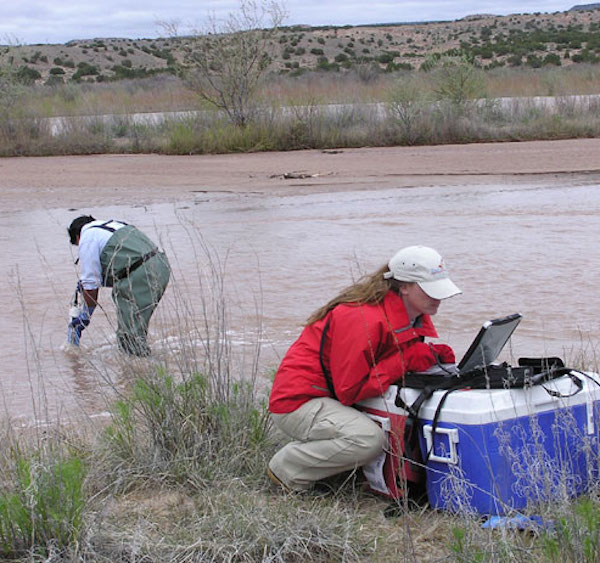
Pueblo of Santa Ana members measure water quality under the tribe's extensive water-monitoring program, recently certified as autonomous under the Clean Air Act by the U.S. Environmental Protection Agency. Read more at http://indiancountrytodaymedianetwork.com/2015/07/22/santa-ana-pueblo-get-epa-certified-administer-clean-water-act-tribal-land-161159
Pueblo of Santa Ana members measure water quality under the tribe’s extensive water-monitoring program, recently certified as autonomous under the Clean Air Act by the U.S. Environmental Protection Agency.
Read more at http://indiancountrytodaymedianetwork.com/2015/07/22/santa-ana-pueblo-get-epa-certified-administer-clean-water-act-tribal-land-161159

New Scholarship on the Economic Impact of IGRA

Randall K. Q. Akee, Katherine A. Spilde, and Jonathan B. Taylor have published “The Indian Gaming Regulatory Act and Its Effects on American Indian Economic Development” in the Journal of Economic Perspectives.

Here is the abstract:

The Indian Gaming Regulatory Act (IGRA), passed by the US Congress in 1988, was a watershed in the history of policymaking directed toward reservation-resident American Indians. IGRA set the stage for tribal government-owned gaming facilities. It also shaped how this new industry would develop and how tribal governments would invest gaming revenues. Since then, Indian gaming has approached commercial, state-licensed gaming in total revenues. Gaming operations have had a far-reaching and transformative effect on American Indian reservations and their economies. Specifically, Indian gaming has allowed marked improvements in several important dimensions of reservation life. For the first time, some tribal governments have moved to fiscal independence. Native nations have invested gaming revenues in their economies and societies, often with dramatic effect.

PDF.

First GTB Chair Walks On

Here is “Ardith ‘Dodie’ Harris Died Aug. 1, 2015.”

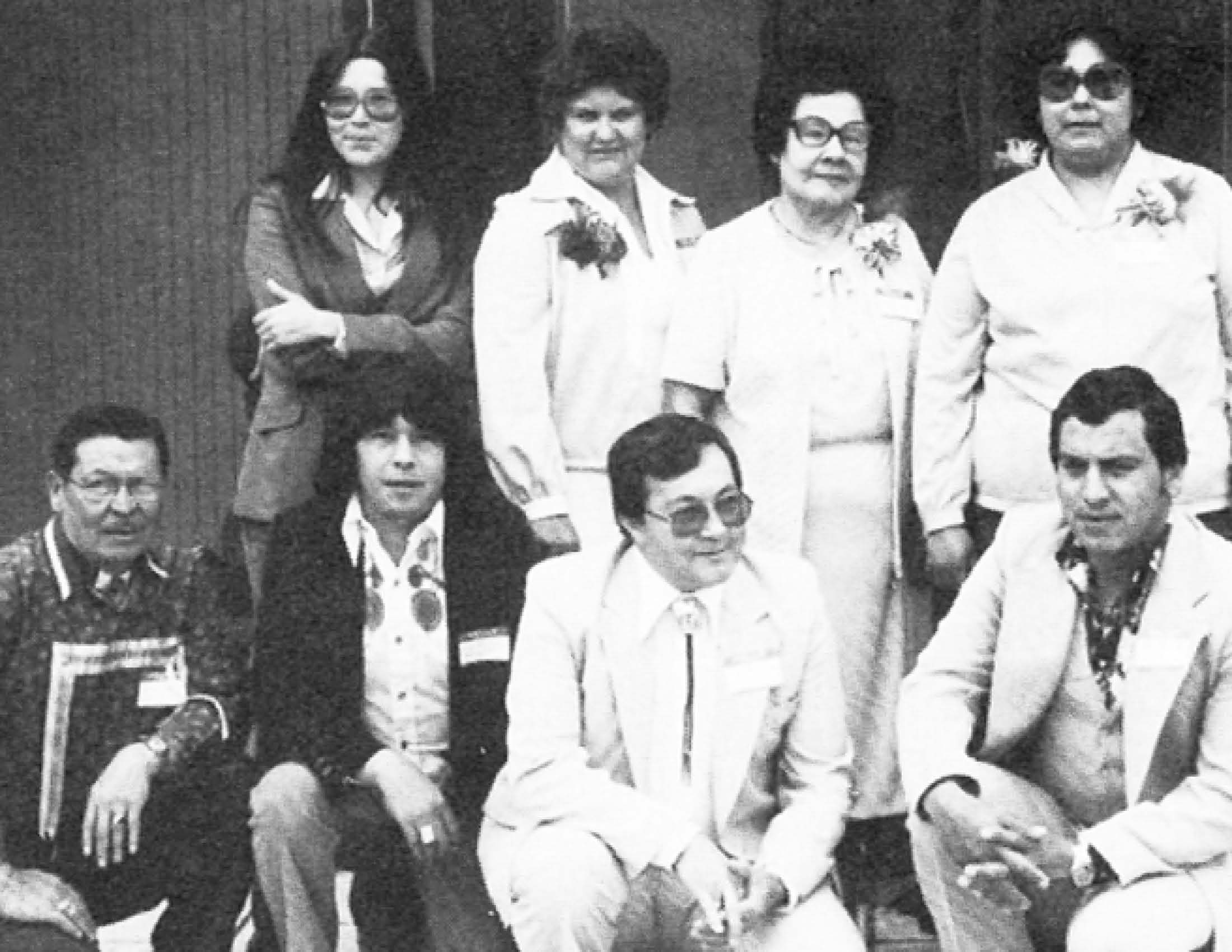
Dodie lived an incredible life, leading the charge to federal recognition, leading the tribe as chair and as councilor, testifying before Congress and in federal court. Sad time.

She’s in the upper right — The First Council after Recognition:

First Council

The Judges’ Page Devotes Issue to the Topic of Tribal Issues in Dependency Court

The Judges’ Page, a newsletter published by the National CASA Association and the National Council of Juvenile and Family Court Judges, has just released the summer 2015 issue.  The entire issue is devoted to the theme Tribal Issues in Dependency Court.

The newsletter is available here.

From Judge Dean Lewis (ret):

The National Council of Juvenile and Family Court Judges (NCJFCJ) and the National CASA Association are partners in publishing The Judges’ Page. Both organizations are deeply committed to effective court advocacy for American Indian and Alaska Native children and families involved in dependency court proceedings. This issue of The Judges’ Page addresses the importance of compliance with the Indian Child Welfare Act of 1978 (ICWA) from the legal as well as the cultural perspective. The issue provides effective educational tools for ICWA implementation and offers examples of collaborations between state and tribal courts.

Readers should be aware that the Bureau of Indian Affairs (BIA) issued updated Guidelines for State Courts and Agencies in Indian Child Custody Proceeding effective February 25, 2015. The updated Guidelines are intended to promote compliance with ICWA’s stated goals and to provide best practices for ICWA compliance by state courts and child welfare agencies. In addition, on March 20, 2015, the Bureau of Indian Affairs proposed Regulations for State Courts and Agencies in Indian Child Custody Proceedings. Recently, Congress passed two bills to help protect Native American Children: The Native American Children’s Safety Act and the Alyce Spotted Bear and Walter Soboleff Commission on Native Children Act. The Executive branch and the Congress are to be commended for their efforts to clarify the original intent of the ICWA, and to promote the health, safety, and well-being of Native Children.

The NCJFCJ Tribal Caucus identified key topics of concern to be addressed in this issue of The Judges’ Page. Our thanks to Victoria Sweet, Program Attorney at NCJFCJ, for seeking input from the Caucus and securing numerous articles for this issue. Donna Goldsmith was tasked with developing a primer for judges and advocates on key issues for implementation of the ICWA, and we appreciate her undertaking that project. Our thanks also to Judge Len Edwards and Jennifer Walter of the Center for Families, Children & the Courts of the Judicial Council of California for securing and writing articles that exhibit the remarkable best practices instituted throughout that state. And, to all of the authors who volunteered their time to contribute to this issue, thank you.

Articles in This Issue

Judge William A. Thorne, Jr. (ret), describes the background that led to the adoption of the Indian Child Welfare Act and its relevance to treatment of all children impacted by the child welfare process.

Donna Goldsmith, JD, informs readers of the ICWA legal requirements and provides a primer of how to proceed in ICWA cases utilizing the provisions of the BIA updated Guidelines for State Courts and Agencies in Indian Child Custody.

Victoria Sweet, JD, gives an overview of the updated BIA Guidelines for State Courts and Agencies in Indian Child Custody Proceedings and proposed Regulations for State Courts and Agencies in Indian Child Custody Proceedings.

Mary Beth Jager, MSW, Rachel Rose Starks, MA, Adrian T. Smith, JD, MSW, and Miriam Jorgensen, PhD, collaborated to share the history of tribal child welfare systems and lawmaking which have been recognized by the ICWA as the governance
mechanism by which a tribe establishes and implements jurisdiction for the wellbeing of Indian children.

Judge Leonard Edwards (ret.) discusses the ICWA active efforts requirement and distinguishes active efforts from reasonable efforts.

Victoria Sweet, JD, describes the commitment of NCJFCJ to implementation of the ICWA. She introduces readers to NCJFCJ publications and includes the recommendation of NCJFCJ that state court judges apply the recently revised Bureau of Indian Affairs ICWA Guidelines.

Paige Beard, Director of Program Development at the National CASA Association, provides background on the National CASA Association’s commitment to training and supporting CASA volunteers who serve Indian
children through Tribal Courts and Dual State Court/Tribal Court Programs.

Judge Korey Wahwassuck reports on how the joint tribal-state jurisdiction in Itasca County, MN, has proven effective in promoting lifetime healing while protecting public safety, and how this model can be used as a tool for reducing the number of children in out-of-home placement, as well as speeding reunification.

The California Judicial Council established a Tribal/State Projects Unit in 2009 as part of the Center for Families, Children & the Courts. This unit staffs the California Tribal Court-State Court Forum (forum), which was formed in 2010. Judges and staff share their perspectives on their collaborative work locally and statewide through the forum.

Judge Leonard Edwards (ret.) discusses the ICWA active efforts requirement and distinguishes active efforts from reasonable efforts.

Justice Jill Elizabeth Tompkins reviews the provisions of the ICWA and the updated Guidelines for State Courts and Agencies in Indian Child Custody Proceedings provisions regarding transfer of an Indian child’s case from a state court to a tribal court from the perspective of the tribal court.

Jack Trope, JD, and Sarah L. Kastelic, PhD, set out the ICWA placement preferences. They explain the limitation on the “good cause” exception as established in the updated Guidelines for State Courts and Agencies in Indian Child Custody Proceedings.

Claire Chiamulera of the ABA Center on Children and the Law shares her recommendations in “Best Practice for Native American and All Families” reprinted from Child Law Practice.

Kathryn E. Fort, JD, offers insight and best practices on ICWA cases involving military families.

Jessica Jorgensen, JD, offers her perspective on the issue of “good cause” to deviate from ICWA placement preferences.
Web Resources is an article that provides readers with the websites of organizations that produce educational materials on the ICWA as well as resources and assistance in implementation of the ICWA.
DOJ ENRD Indian Resources Section Attorney Job Posting

Here.

The description:

The Indian Resources Section, U.S. Department of Justice, Environment and Natural Resources Division (ENRD) is seeking an experienced attorney for the position of Trial Attorney in Washington, DC. ENRD seeks to attract, retain, and promote individuals of exceptional ability and talent from all walks of life. The work environment and atmosphere are open, diverse, collegial and inclusive. ENRD places a high value on and fosters a work environment where people of all backgrounds, physical abilities, sexual orientations and experiences may reach their full potential.

The Indian Resources Section represents the United States in its trust capacity in litigation pending in federal and state courts for the benefit of Indian tribes and individual Indians. These suits include seeking to establish tribal water rights, protecting treaty hunting and fishing rights, remedying trespasses on tribal lands, and establishing reservation boundaries and rights to land. The Indian Resources Section also defends the United States in legal challenges to agency programs designed to further tribal sovereignty, such as the Department of the Interior’s program for acquisition of trust land for tribes. The litigation handled by the Indian Resources Section is of vital interest to Indian tribes and often addresses issues of first impression.

Goshen, IN Schools Drop R-Name Nickname

Here are several news stories, some detailing the involvement of the Pokagon Band of Potawatomi Indians:

Redskins mascot no more in Goshen: School board votes 5-2 to drop name

THE END OF GOSHEN ‘REDSKINS’: So, where do we go from here?”

“Goshen Redskins mascot to be retired Jan. 1, 2016”