Here is the opinion in Halverson v. Burgum.
Briefs:

Here are the materials in WPX Energy Williston LLC v. Fettig (D.N.D.):
1-8 MHA Nation Supreme Court Decision
8 Fettig Answer + Counterclaim
13 Motion to Dismiss Counterclaim
Prior post here.

Here are the materials so far in Shade v. Dept. of the Interior (D. Alaska):
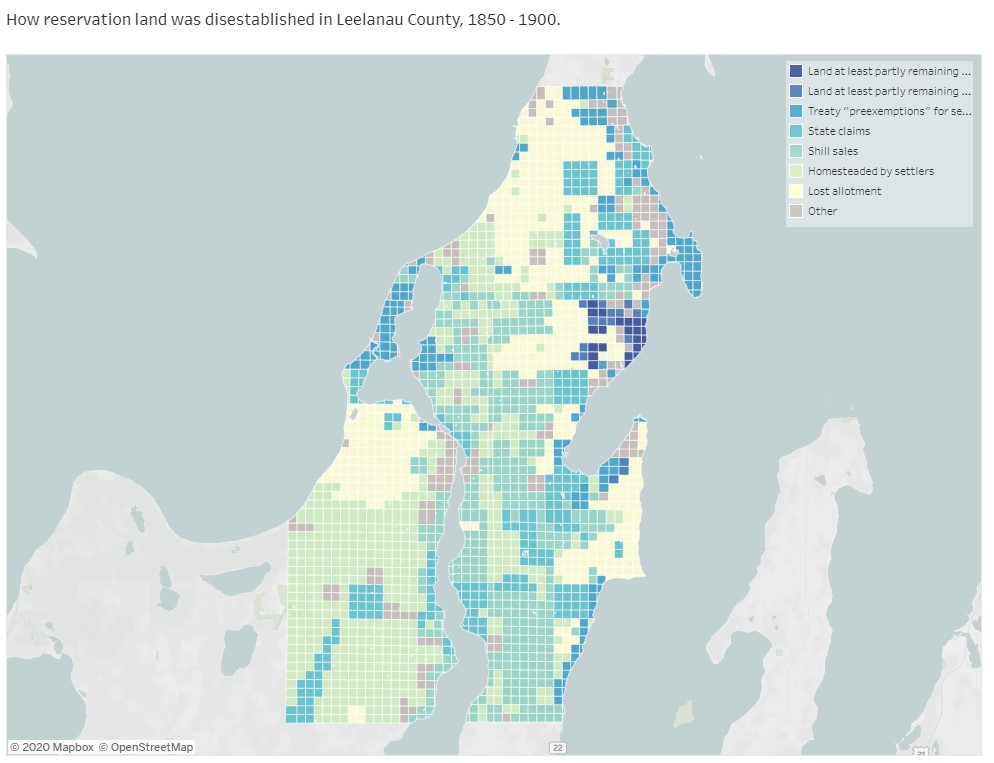
From the Traverse City Record-Eagle, here is “STOLEN: Grand Traverse Band seeks its day in court for theft of reservation lands.“
Here are the updated materials in Confederated Salish and Kootenai Tribes v. Lake County Board of Commissioners (D. Mont.):
89 Lundeen Response to CSKT MSJ
93 Tribe Reply in Support of MSJ
96 CSKT Response to Defs’ MSJs
100 County Reply in Support of MSJ
Prior post here.
Here are the materials in the matter of Navajo Nation et al v. Rael et al, 16-cv-00888 (D. N.M. 2016):
Here are the materials in Chickasaw Nation v. Dept. of Interior (W.D. Okla.):
254 Tribes Motion for Summary J
Here is the relevant statute authorizing (or mandating) the sale of the resource, as reproduced in the court’s order. Judge for yourself:
That when allotments as provided by this and other Acts of Congress have been made to all members and freedmen of the Choctaw, Chickasaw, Cherokee, Creek, and Seminole tribes, the residue of lands in each of said nations not reserved or otherwise disposed of shall be sold by the Secretary … under rules and regulations to be prescribed by him and the proceeds of such sales deposited in the United States Treasury to the credit of the respective tribes. . . . The Secretary … is hereby authorized to sell, whenever in his judgment it may be desirable, any of the unallotted land in the Choctaw and Chickasaw Nations, which is not principally valuable for mining, agricultural, or timber purposes, in tracts of not exceeding six hundred and forty acres to any one person, for a fair and reasonable price, not less than the present appraised value. . . . Provided further, That agricultural lands shall be sold in tracts of not exceeding one hundred and sixty acres to any one person.
[In re the article posted here.] I am tribal attorney for Samish, which is mentioned prominently in the article. The family, which is Samish, has approached the Samish Tribal Council a number of times, asking the Samish Tribe to undertake the project. Recently the family approached the Samish Tribal Council again, now under the auspices of a California casino developer, raising the proposal again. The Samish Tribe has repeatedly declined the family’s request to pursue this project in Bremerton. Bremerton is not within or near the traditional territory of the Samish Tribe, and the land in question has never been under the governmental jurisdiction of the Samish Tribe. The nearest tribe is the Suquamish Tribe, which likely has the strongest claim to this area. The Samish Tribe has informed the Suquamish Tribe that it is not part of this project and has no interest in being associated with it in any shape or form.
This is a difficult issue for Samish because as a tribe re-recognized under the Federal Acknowledgment Regulations, Samish has encountered great difficulty in opening its own gaming operation in its territory. Samish was opposed in re-recognition by neighboring tribes – Swinomish, Lummi, Upper Skagit and Tulalip, and those tribes continue to oppose any proposed land into trust and gaming operation by Samish. The neighboring tribe, Swinomish, through their Chairman, Brian Cladoosby, has raised the Carcieri decision against Samish, including for gaming. While an alternative opportunity to pursue gaming farther away might be appealing, the Samish Tribe has always done the right thing and declined any offer to intrude on the territory or interests of another tribe. Craig Dorsay
Here’s an interesting article about a family’s attempt to develop a casino on an allotment they own off-reservation in Bremerton, Washington. The allotment was originally issued to a Quinault tribal member but her descendants, who currently own it, are Samish.
 Turtle Talk
You must be logged in to post a comment.