Here are the materials in Yurok Tribe v. City of Trinidad (N.D. Cal.):
Complaint here.


For the first time, the Three Fires Confederacy joined the annual Mackinac Bridge Walk on Labor Day, recasting it as an assertion of Anishinaabe presence and responsibility at the Straits. About 1,000 Native participants gathered at sunrise for water ceremonies on both shores, then walked behind water protectors and eagle staffs to meet over the water. Organizers emphasized that the gathering wasn’t merely a demonstration against Line 5, but a ceremony affirming that the Straits remain Anishinaabe homelands.
Odawa, Ojibwe, and Potawatomi people appeared collectively as the Three Fires Confederacy, a living regional institution carrying responsibilities to the waters, future generations, and more-than-human relatives. The Confederacy called for Line 5’s decommissioning based on treaty rights, the rights of nature, and protection of the public good.
Additional Resources
Native News Online’s report includes photographs and statements from organizers.
ICWA litigation and scholarship understandably focus heavily on getting jurisdiction into Tribal hands, emphasizing notice, intervention, transfer, exclusive jurisdiction, placement, termination, and adoption. But jurisdiction is just the beginning. Once the Tribe is the responsible government, does the rest of the administrative state actually recognize that authority? Who receives federal benefits on the child’s behalf? Who manages the child’s assets? Who can consent to services? And when a Tribal guardianship order reaches a federal or state administrative system, does that system recognize it? Ultimately, getting jurisdiction is necessary but not sufficient.
Treasury’s implementation of the new “Trump Accounts” provides a small but useful data point. A child welfare agency of a state, territorial, or Tribal government that is the legal guardian of an eligible child may elect to open the child’s account. The IRS further says its Office of Governmental Liaison will work directly with the relevant Tribal agency and coordinate with the IRS Office of Indian Tribal Governments in assisting Tribal child welfare agencies. For Native children in Tribal foster care, the interesting question is therefore not simply who fills out a federal form, but whether the administrative machinery downstream of a Tribal jurisdictional determination actually treats the Tribe as the government exercising legal authority over the child.
Treasury itself recognizes the issue. Its Dear Tribal Leader Letter says Tribes may have “distinct laws and guardianship structures” that should inform implementation, and it asks Tribal leaders and Tribal child welfare representatives for feedback on how the department can assist Tribes with understanding the filing requirements to open up this initiative to Tribal foster youth. Feedback is specifically requested for the below questions:
Treasury will hold a Tribal listening session on September 18 at 1:00 p.m. EDT, with written comments due October 23 at 11:59 p.m. Alaska time. The session offers a concrete opportunity to identify whether this particular system recognizes Tribal guardianship cleanly in practice, and where the problems may arise.
Additional resources
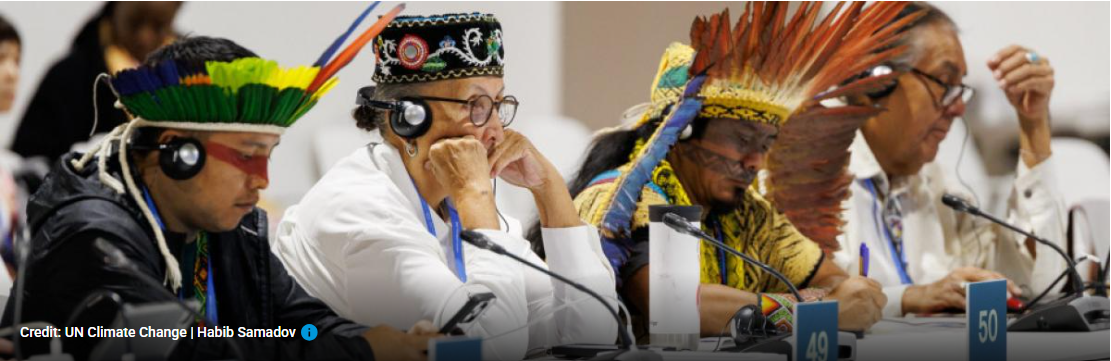
The UN climate process is seeking input on what its Local Communities and Indigenous Peoples Platform should do next.
Indigenous Peoples, Tribal governments, local communities, and other stakeholders may submit proposed activities and thematic priorities for the LCIPP’s 2028–2031 workplan by September 30. Comments will be considered by the Facilitative Working Group at its 16th meeting (FWG 16) in November 2026 in Antalya, Turkey.
Some questions commenters might address include:
Organizations with UNFCCC observer status submit through their designated contacts; those without observer status may send comments directly to submission-info@unfccc.int.
A separate November 1 deadline invites views on the LCIPP’s impact to date. The official two-page submission guide is here.
The current workplan of the LCIPP can be accessed here: https://lcipp.unfccc.int/sites/default/files/2024-12/Baku_Workplan_of_the_Local_Communities_and_Indigenous_Peoples_Platform.pdf
EPA and the Army Corps have supplemented their proposed WOTUS rule with alternatives that could sharply reduce federal protection for Tribal waters in a prepublication document shared at the link above.
The agencies are now considering limiting “relatively permanent” waters to those flowing virtually year-round and requiring wetlands to contain perennial surface water continuously connected to another jurisdictional water, a standard they acknowledge would exclude most intermittent streams and a majority of currently jurisdictional adjacent wetlands, with especially significant effects in the arid West.
The proposal would result in significant implications for Tribes, since most eligible Tribes lack TAS authority to administer Clean Water Act programs, many lack resources to build equivalent Tribal programs, and pollution may originate in adjacent jurisdictions. In other words, the federalism premise that another sovereign can simply regulate waters abandoned by the federal government often fails in Indian country. The Tribal regulatory gap would effectively be made more consequential under this proposed substantially narrower federal rule. Tribes may request government-to-government consultation at CWAwotus@epa.gov once the supplemental notice is published in the Federal Register, opening the 30-day comment period.
From the supplemental notice of proposed rulemaking:
The agencies acknowledge that because they generally implement Clean Water Act programs on Tribal lands, a reduced scope of Federal jurisdiction as a result of the Sackett decision will affect Tribes differently than it will affect States. Currently, of the Tribes that are eligible, most have not received treatment in a manner similar to a State (TAS) status to administer Clean Water Act regulatory programs. While some Tribes have established Tribal water programs under Tribal law or have the authority to establish Tribal programs under Tribal law, many Tribes are still building capacity and may lack resources to create a Tribal water program under Tribal law, to administer a program, or to expand programs that currently exist.
Therefore, Tribes may disproportionately rely on the Federal Government for water program implementation and enforcement of water quality violations. Tribes may also be affected by pollution from adjacent jurisdictions. Many Tribes are located in the arid West, where there are fewer waters that may meet the relatively permanent standard. Nonetheless, the proposed rule, as supplemented by this notice, preserves Tribal authority to choose whether to include waters that are not covered under the Clean Water Act under Tribal laws and regulations. Any decision by the Tribes to protect beyond the limits of the Clean Water Act is not compelled by the statute or by this proposed rule, as supplemented.
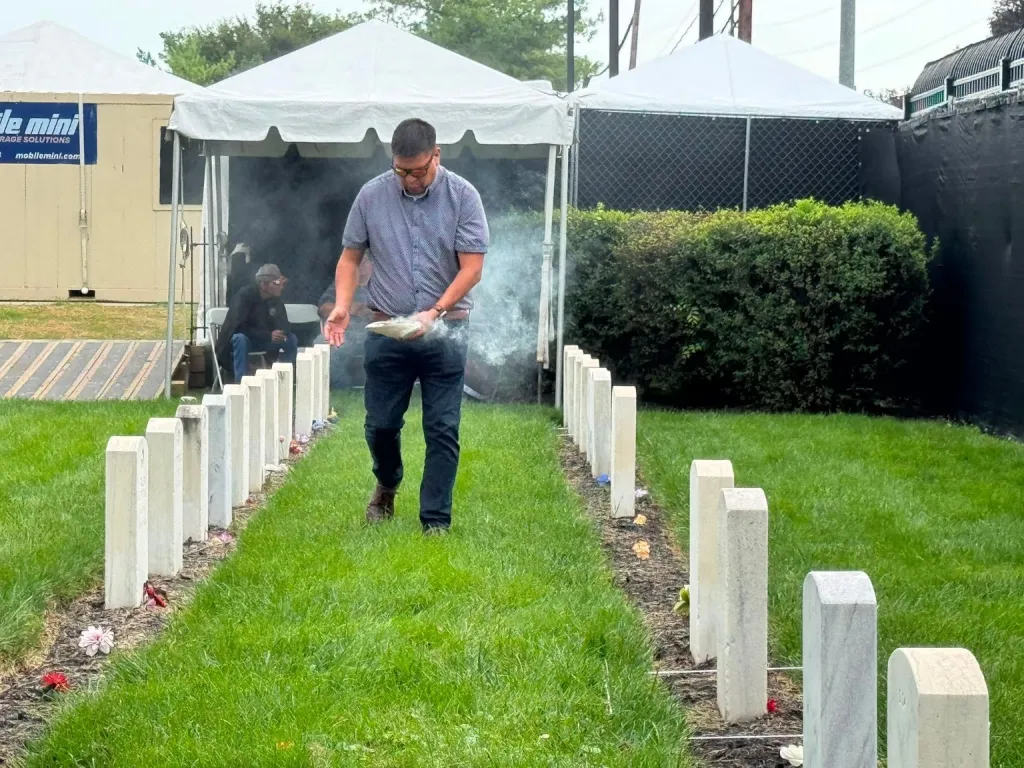
The Fort Peck Journal has provided community-centered coverage of the return of three Fort Peck children who were sent to the Carlisle Indian Industrial School together in 1890 and died there.
Louis H. Montclair’s coverage documents how the Fort Peck community has prepared to bring the children home through family participation, an awareness walk across the reservation, the Orange Flag Project, community prayers, and ceremony.
Peter Howe and Richard Morgan Disinterred at Carlisle; Christine Redstone Next by Louis H. Montclair for Fort Peck Journal, Sept. 1, 2026
After More Than a Century, Fort Peck Children Are Coming Home From Carlisle by Louis H. Montclair for Fort Peck Journal, September 1, 2026
From a Phone Screen to Carlisle: How the Orange Flag Project Took on a Life of Its Own by Louis H. Montclair for Fort Peck Journal, September 1, 2026
Here are the new materials in Cow Creek Band of Umpqua Indians v. Dept. of the Interior (D.D.C.):
Prior post here.

Here are the materials in Luger v. United States (Fed. Cl.):
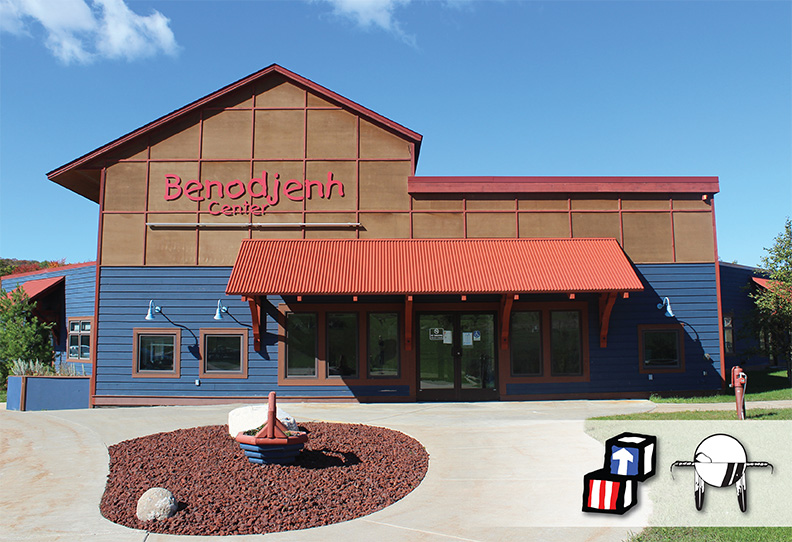
More than 9,200 comments were submitted on the Administration for Children and Families’ proposed Head Start rewrite by September 6, 2026. 46 of them discussed Tribal programs, Tribal languages, Indigenous children, or other Tribal concerns. But none could be verified from the public record as having been submitted by a Tribe, Tribal organization, or Tribal Head Start provider.
That may soon change. The Office of Head Start has scheduled a virtual Tribal consultation specifically on the proposed rule for September 16, 2026, from 1:00 to 4:00 p.m. ET. Tribal leaders and their representatives may provide testimony regarding the proposed changes and their implications for American Indian and Alaska Native Head Start programs, children, families, and communities. Testimony will be included in the proposed rule’s public comment record unless the Tribe or individual providing it requests otherwise.
A signed letter authorizing a representative to speak for a Tribe is due September 11. Written testimony may be submitted to AIANHeadStart@acf.hhs.gov through October 6. Registration and additional information are available here.
As of September 6, therefore, the publicly visible docket contained other people’s descriptions of Tribal interests, but no identifiable submission from the Tribal governments and providers that operate the affected programs. The September 16 consultation offers an important opportunity to change that record.
The Office of Head Start also conducted its regularly scheduled Tribal Head Start consultation on June 18, 2026 before this proposed rule was published. ACF’s preamble says the proposal reflects feedback received over time from Head Start leadership, “including Tribal leaders,” but it doesn’t identify the Tribal leaders consulted about these particular changes or explain how their views shaped the proposal.
What ACF is Proposing
ACF’s proposed rule, Reducing Federal Burden for Head Start Programs, would replace much of the existing Head Start Program Performance Standards with a substantially shorter set of regulations. Among other changes, the proposal would:
Some provisions recognize Tribal circumstances or preserve existing Tribal flexibility. But the rule as a whole would apply to Tribal Head Start programs, not just the provisions that specifically reference Tribal Head Start. The Tribal language exception and the operation of Tribal Head Start programs in general should be considered together with the 5% administrative cost cap, elimination of federal standards, and changes to health, staffing, eligibility, governance, and home visiting requirements.
The proposal also raises a distinct jurisdictional question. ACF frequently presents deregulation as a choice between federal requirements and state or local control. Tribal Head Start programs don’t always fit that binary. If a federal regulatory standard disappears and particular Tribal Head Start program is not subject to state child care licensing, what becomes the governing minimum? Does Tribal law control? Does the proposed rule consistently recognize Tribal licensing and regulatory authority? Or does it create uncertainty for Tribes where the federal government claims to be creating flexibility?
What Other Commenters are Saying about Tribal Head Start Programs
I reviewed the 9,233 public submissions included in a regulations.gov bulk download that I obtained on September 6. I identified 46 comments that expressly discussed Tribal, American Indian, Alaska Native, Indigenous, reservation, or Tribal-program concerns.
Those comments repeatedly raised several issues:
One unidentified commenter asked how Tribal child care subsidy payments would be included, noting that Tribal subsidy rates were even lower than state rates.
These comments recognize many important problems. What they generally can’t supply is evidence that Tribes possess that establish the scale, operation, and legal significance of these problems.
Tribal interests are not absent from the docket. But as of September 6, identifiable Tribally authored comments, and the financial, governmental, cultural, and operational evidence that Tribes themselves are uniquely positioned to provide, was absent.
What the Record Still Needs
Tribal governments, Tribal organizations, and Tribal Head Start providers are uniquely positioned to tell ACF:
The existing comments frequently address Tribal programs, but the docket still needs evidence from the Tribal governments and providers that operate them.
Comments are due October 6, 2026. The public docket is available here.
A note on method: This review covers the 9,233 public submissions included in a regulations.gov bulk download obtained September 6, 2026, covering comments submitted in response to ACF-2026-0595-0001 and ACF-2026-0595-0002. The bulk download includes a Government Agency Type field that lets a submitter self-identify as a federal, state, local, or Tribal government; none of the 9,233 submissions had this field populated as Tribal, or, in fact, populated at all, for any government type. 46 submissions expressly addressed Tribal, American Indian, Alaska Native, Indigenous, reservation, or Tribal program issues, based on a keyword search of the comment text included in that download. That search could not reach the substance of 4,678 submissions, just over half the docket, whose comment field contains only a placeholder (“See Attached”) pointing to an attachment file not included in the bulk download; those attachments were not separately reviewed. No submission could be verified from the available metadata, comment text, or the Government Agency Type field as filed by a Tribe, Tribal organization, or Tribal Head Start provider, but that finding necessarily reflects only the roughly half of the docket whose substance was available for review. A Tribal government, organization, or provider could be among the submissions whose content appears solely in an unreviewed attachment. This review also predates the Tribal consultation scheduled for September 16; testimony from that consultation will become part of the public comment record unless its inclusion is declined.
 Turtle Talk
You must be logged in to post a comment.