Here are the materials in Red Lake Band of Chippewa Indians v. Dept. of Health and Human Services (D.D.C.):
13-1 federal Motion to Dismiss
14-1 Red Lake Motion for Summary J
Here are the materials in Red Lake Band of Chippewa Indians v. Dept. of Health and Human Services (D.D.C.):
13-1 federal Motion to Dismiss
14-1 Red Lake Motion for Summary J
Daniel B. Rice has posted “Civil Duties and Public Change,” forthcoming in the California Law Review, on SSRN.
Here is the abstract:
What duties do Americans owe the state? Today, this question seems almost incomprehensible. Compulsions in the common interest are received coolly in our rights-obsessed culture, and the Supreme Court has never announced a framework for identifying the burdens of citizenship. Yet the concept of civic duty has played a central role in America’s constitutional tradition. From shoveling snow to repairing roads to fighting overseas, private individuals have long been forced to serve the public in ways menial and profound. Strangely, the discourse of obligation that legitimated numerous compulsions has largely faded from professional view. Judges’ mawkish tributes to liberty pay no heed to the magnitude of state-ordered servitude.
This collective forgetting has not eliminated the need to reason about civic duties, however. Courts continue to review compulsions grounded in contested visions of social obligation. In ruling on the Affordable Care Act’s individual mandate, for example, the Supreme Court seriously impeded Congress from implementing novel conceptions of civic duty. This hostility closely tracks a leading scholarly account of civic duties as fixed by historical tradition. According to this narrative, living Americans are powerless to alter the basic obligations of citizenship.
This Article corrects the historical record by documenting how civic duties have developed over time. The evidence reveals that these obligations are constantly in motion; society has constructed, reshaped, and discarded them in decades-long struggles over the meaning of freedom. Put simply, the duties of citizenship are not fixed features of our constitutional order. They are necessarily—and properly—responsive to moral and cultural change. These findings undercut the Court’s use of rigid historical methodologies for reviewing laws that tacitly presume the existence of duties owed to the public. Most prominently, abortion restrictions compel women to continue their pregnancies in service of state-defined goals. And a panoramic view of civic duties casts new light on congressional efforts to preserve Indian tribes as flourishing governments. The federal Indian Child Welfare Act draws conceptual support from compulsory education and military conscription, both of which have long prioritized communal survival over individual choice.

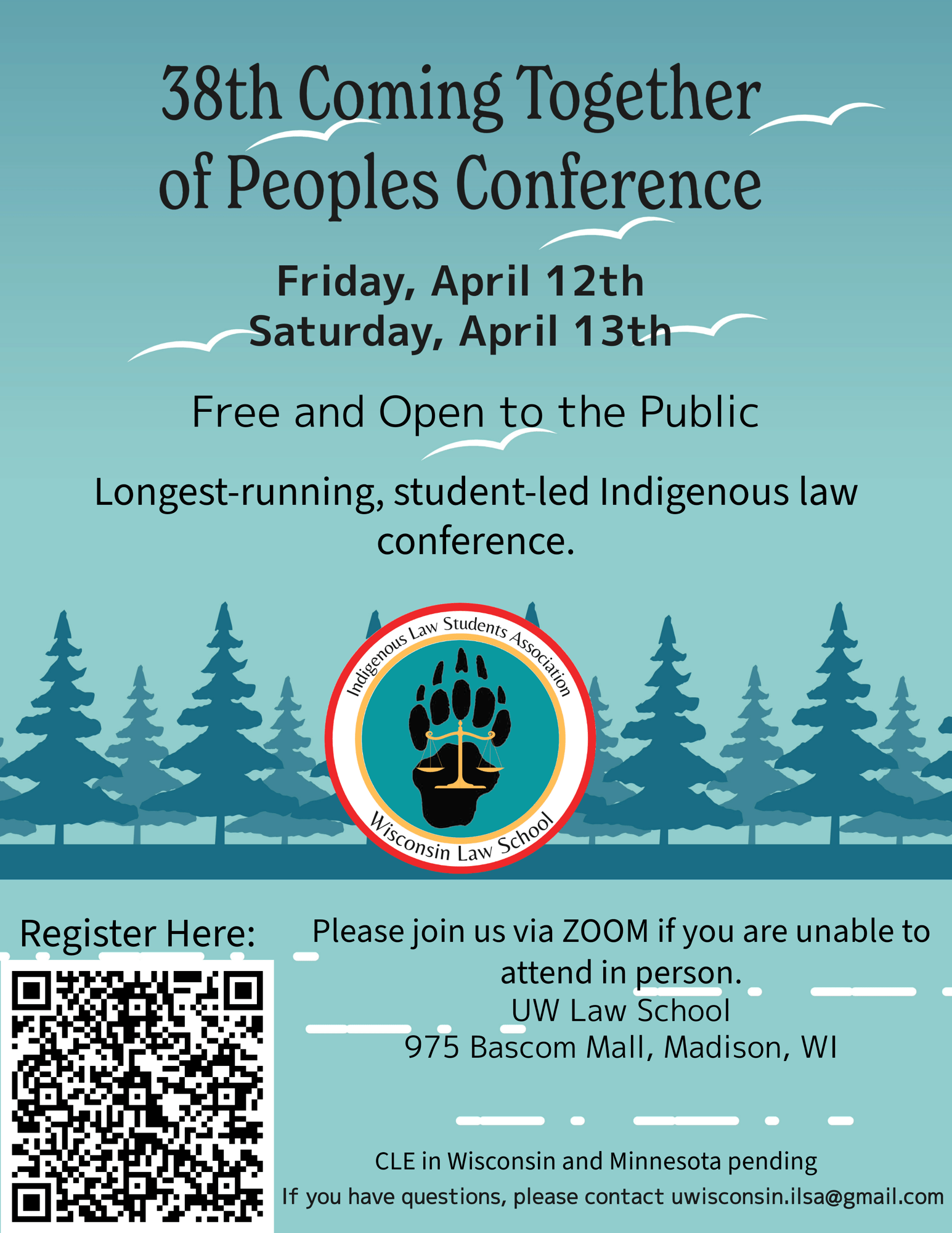
Attend the 38th Coming Together of Peoples Conference (CTOPC) on Friday, April 12th or Saturday, April 13th, 2024!
You can attend via Zoom or in-person at the UW Law School (975 Bascom Mall, Madison, WI 53706).
We will cover many Indigenous Law topics, including Tribal data sovereignty, publication of Tribal codes and cases, interdisciplinary research in Federal Indian Law, and much more! Be on the lookout for more information about the panels and our program release!
If you are interested, please fill out this registration form (full link below). Feel free to share this registration link and Info Poster with other attorneys, professionals, and students that may be interested.
REGISTRATION LINK: https://docs.google.com/forms/d/e/1FAIpQLSdCAOUKpW9N9NNCZdoXgQu_qqMM2AywvOxgPh4U4zD-6yNvwA/viewform?usp=sf_link
Yaw^ko,
The Indigenous Law Student Association at UW Law School


Live on Instagram!

Here is the complaint in Spotted Hawk Development LLC v. Three Affiliated Tribes of the Fort Berthold Reservation (D.N.D.):

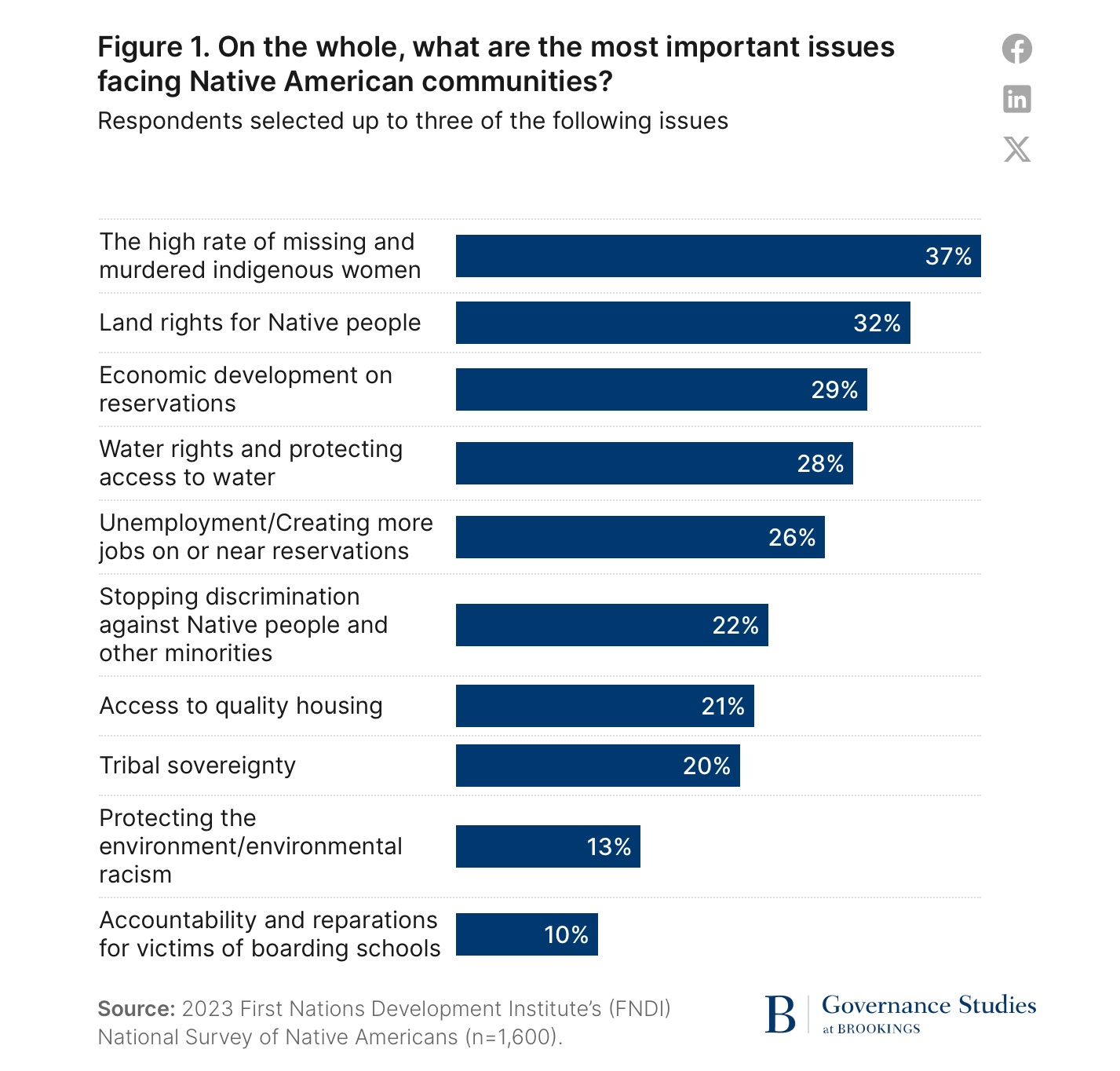
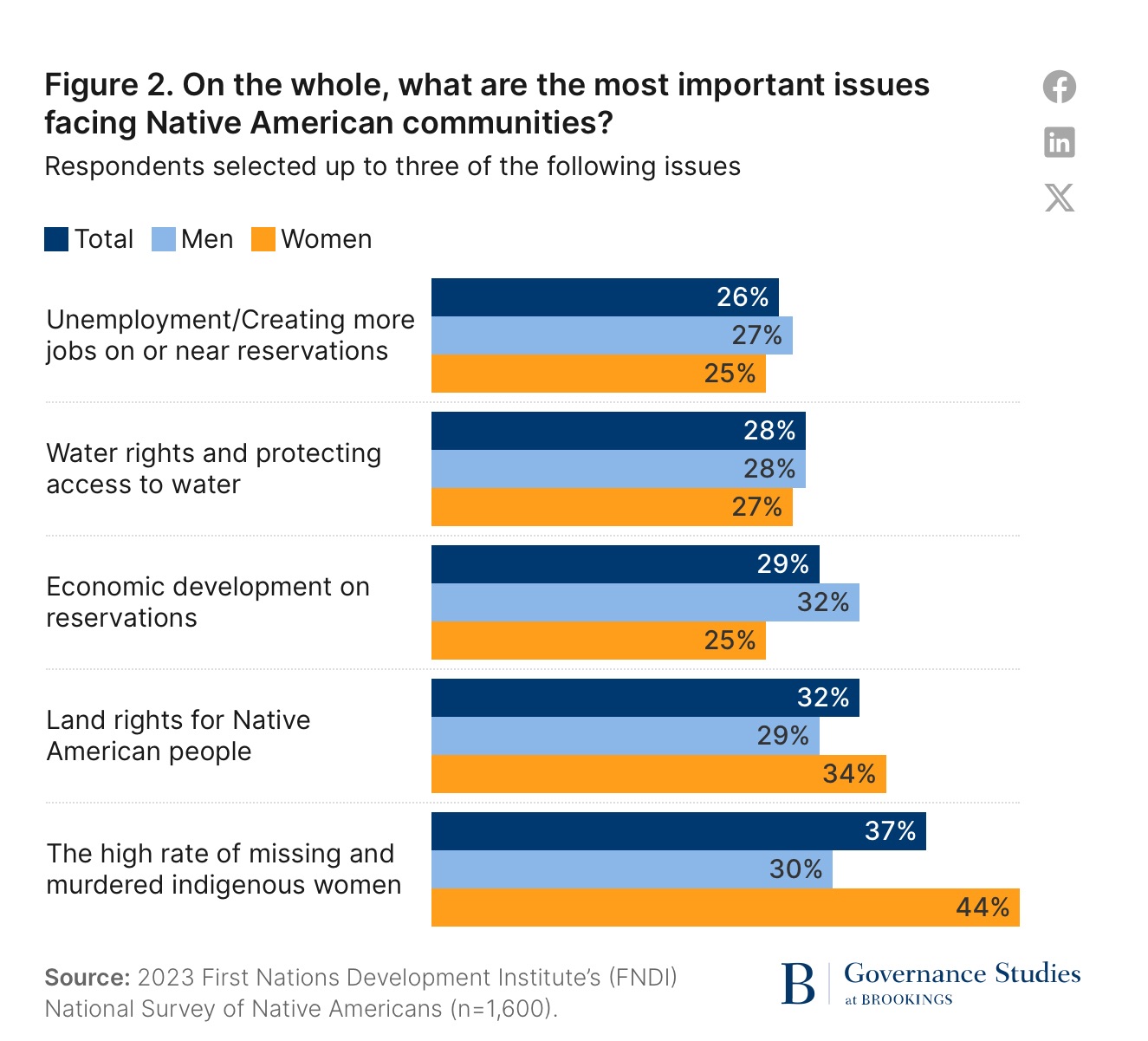
Gabriel R. Sanchez, A-dae Romero-Briones, and Raymond Foxworth have published “Murdered and missing women is the top issue facing Native American communities heading into the 2024 elections.”
Here is the decision — In the Matter of the September 29, 2022, Approval of Howard Bros. Inc.’s Application of Septage on the Plummer 7 Lot, in the Town of Lac du Flambeau, County of Vilas, State of Wisconsin:

 Turtle Talk
You must be logged in to post a comment.