Here.
High Country News: “The legacy of colonialism on public lands created the Mauna Kea conflict”
Here.
Here.
Tageant v. Ashby (state court tort suit removed to federal court)
1-0.-7-12-19-notice-of-removal-to-federal-court.pdf
6.-7-17-19-defendant-michael-ashbys-motion-for-certification-of-employment.pdf
14.-8-5-19-united-states-opposition-to-defendants-motion-for-certification-of-federal-employment.pdf
16.-8-9-19-defendant-mike-ashbys-reply-in-support-of-motion-for-certification-of-employment.pdf
Adams v. Elfo (federal court habeas corpus suit)
6.-8-13-19-amended-petition-for-writ-of-habeas-corpus.pdf
Adams v. Dodge (state court tort suit)
8-13-19-first-amended-complaint.pdf
Doucette v. Zinke (federal APA suit)

Please download our Call for Submissions!
Deadline: September 13, 2019
Please contact the Submissions Manager prior to making an oral submission, or to submit written work: submissions.ilj@utoronto.ca
If someone you know would like to receive future calls for submissions, please signup here! You may unsubscribe from our list using the link at the bottom of this email.
Sincerely,
Olivia Hodson and Daniel Diamond
Editors-in-Chief
The Indigenous Law Journal
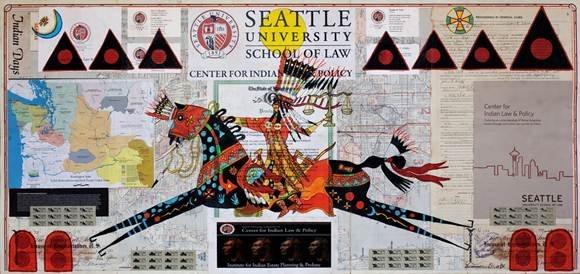
The American Indian Law Journal, published by the Seattle University School of Law, serves as a vital online resource providing high quality articles on issues relevant to Indian law practitioners and scholars across the country. The American Indian Law Journal accepts articles and abstracts on Indian Law for consideration from students, practitioners, tribal members, and law school faculty members.
The American Indian Law Journal is currently
accepting submissions for potential publication
in the fall 2019 issue.
Submission Deadline:
Fall issue September 15, 2019
Article submissions are accepted through Scholastica, BePress, and AILJ@seattleu.edu. The editing process for publication begins soon after these deadlines for each respective issue. The American Indian Law Journal respectfully requests that authors please use footnotes rather than endnotes. All footnotes must conform to the 20th edition of The Bluebook.
For more information or to submit an article, please contact Phoebe Millsap, Content Editor, millsapp@seattleu.edu.
Here is the complaint in MGM Resorts Global Development LLC v. Dept. of Interior (D.D.C.):
Here is the complaint in Native Village of Eklutna v. Dept. of Interior (D.D.C.):
Here are the materials in Yankton Sioux Tribe v. Bernhardt (D.D.C.):
69 Herman Law Motion to Intervene
Here is the opinion.
An excerpt:
We grant in part the petitions for review because the Order does not justify the Commission’s determination that it was not in the public interest to require review of small cell deployments. In particular, the Commission failed to justify its confidence that small cell deployments pose little to no cognizable religious, cultural, or environmental risk, particularly given the vast number of proposed deployments and the reality that the Order will principally affect small cells that require new construction. The Commission accordingly did not, pursuant to its public interest authority, 47 U.S.C. § 319(d), adequately address possible harms of deregulation and benefits of environmental and historic-preservation review. The Order’s deregulation of small cells is thus arbitrary and capricious. We do not reach the alternative objections to the elimination of review on small cell construction. We deny the petitions for review on the remaining grounds.
Prior post here.
Here is the opinion. An excerpt:
This appeal presents the question of whether the grant of federal question jurisdiction in 28 U.S.C. § 1331 encompasses an action to recognize and enforce a tribal court’s award against nonmembers of the tribe. The district court concluded that the action, filed by an Indian tribe seeking to enforce a tribal court judgment against nonmembers, did not present a federal question and dismissed it based on a lack of subject matter jurisdiction. Inherent in the recognition of a tribal court’s judgment against a nonmember is a question regarding the extent of the powers reserved to the tribe under federal law. As in previous decisions involving the application of tribal law to nonmembers, we hold that actions seeking to enforce a tribal judgment against nonmembers raise a substantial question of federal law. We accordingly reverse the district court’s order dismissing the case for lack of subject of matter jurisdiction.
Briefs and lower court materials here.
 Turtle Talk
You must be logged in to post a comment.