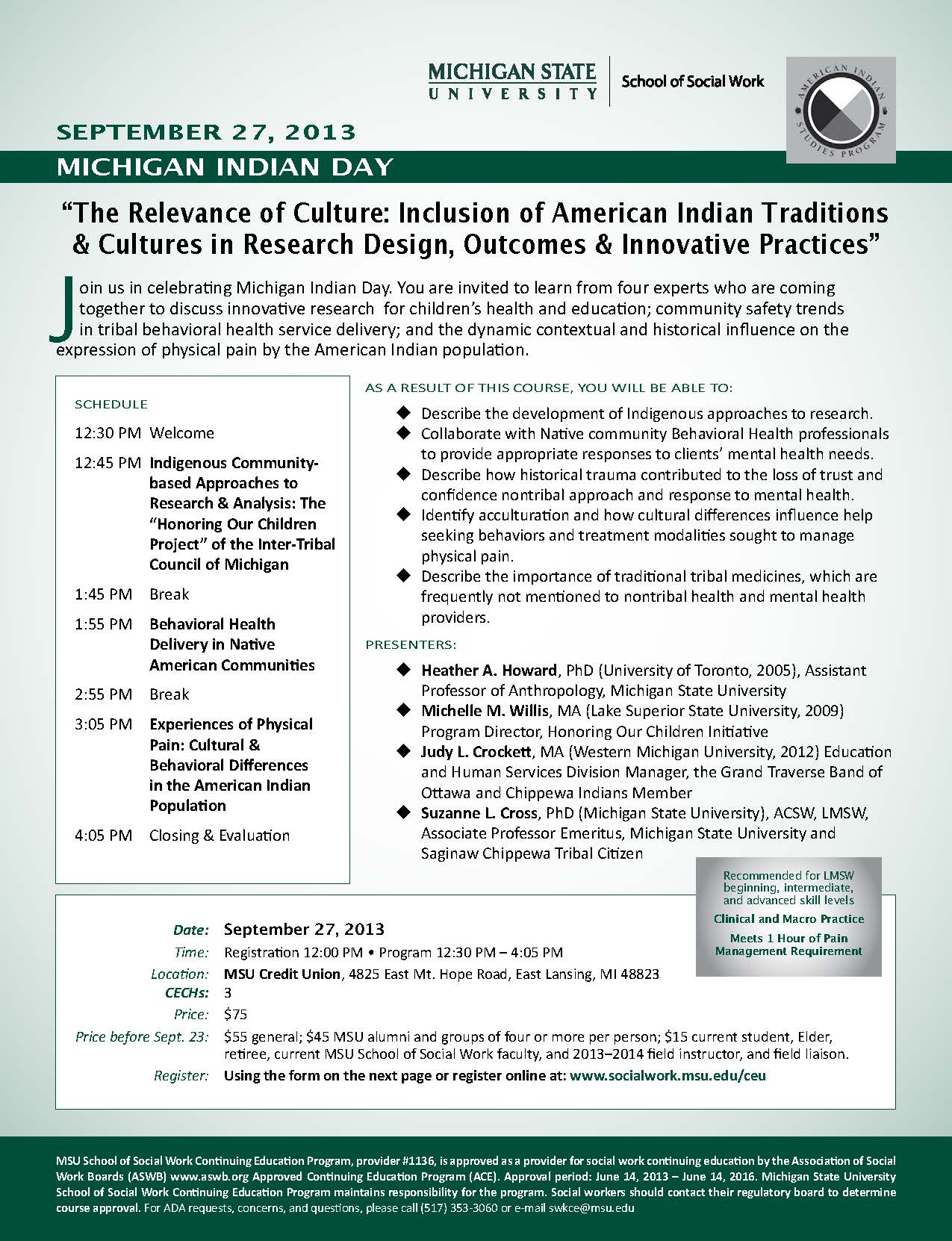
Here is the flyer:

Here:
Petition for review briefs here.
Arizona COA materials here and here.
Trial court materials here:
Here are the materials in Pueblo of Jemez v. United States (D. N.M.):
Jemez v USA Memorandum Opinion and Order
An excerpt:
Plaintiff brought this action pursuant to the Quiet Title Act, 28 U.S.C. §2409A, seeking a judgment that it has the exclusive right to use, occupy, and possess the lands of the Valles Caldera National Preserve pursuant to its continuing aboriginal title to such lands. (Doc. 1). Defendant moves to dismiss for lack of jurisdiction and failure to state a claim. (Doc. 14). Plaintiff opposes the motion and requests oral argument. (Doc. 18). The Court finds that oral argument is unnecessary as the Indian Claims Commission Act (ICCA), formerly codified at 25 U.S.C. §§ 70 to 70n-2, divests this Court of jurisdiction over Plaintiff’s claim.
Briefs are here.
Here are the materials in Pueblo of Santa Ana v. Nash (D. N.M.):
52 — Pueblo Motion for Summary J
63 — Pueblo Reply to Judge Nash
An excerpt:
Specifically, the Court hereby enters a declaration that the Indian Gaming Regulatory Act, 25 U.S.C. § 2701, et seq. (“IGRA”) does not authorize an allocation of jurisdiction from tribal court to state court over a personal injury claim arising from the allegedly negligent serving of alcohol on Indian land, and further that the New Mexico State District Court does not have jurisdiction in the case of Gina Mendoza, Michael Hart and Dominic Montoya v. Tamaya Enterprises, Inc., d/b/a Santa Ana Star Casino, CIV 2007-005711 (“underlying state court litigation”).
Prior federal court order and materials here.
Here.
Cheryl L. Daytec has published “Fraternal Twins with Different Mothers: Explaining Differences between Self-Determination and Self-Government Using the Indian Tribal Sovereignty Model as Context” in the Minnesota Journal of International Law; also on SSRN.
Here is the abstract:
There are various legislative and judicial rhetorical flourishes on the sovereignty of at least 565 federally recognized American Indian tribes in the United States. Several legislative enactments, executive orders, policy statements, and federal opinions textually recognize the right of American Indians to self-determination. However, self-determination with its entitlements under international law particularly the International Covenant on Civil and Political Rights is not equivalent to tribal self-determination or sovereignty expressed in the United States statutes, policy statements, and judicial decisions.
The negative vote of the United States on the United Nations Declaration on the Rights of Indigenous Peoples (UNDRIP), despite the presence of a plenitude of federal policy statements and laws using the term self-determination, surfaced the fact that indigenous self-determination under international law is the same as self-determination under federal Indian policies. Despite claims that Indian tribes are a third form of government in the United States aside from the federal and state governments with a nation-to-nation relationship with Washington, the words ‘sovereignty’ and ‘self-determination’ affirmed in laws, policies, and jurisprudence of the United States are in reality substitutes for participation in decision-making processes at the minimum or self-government or autonomy at the maximum. In Montana v. United States and its derivative cases, it is asseverated that the exercise of inherent tribal sovereignty is limited to what is necessary for self-government or to control internal relations, and this has been re-echoed in Montana’s derivative cases.
While sharing the same gene pool, self-determination and self-government or autonomy do not have identical DNA. This paper advances four reasons: First, self-determination is an inherent right, whereas self-government is a grant. Clearly, the Supreme Court has since abandoned the doctrine that Indian tribes possessed inherent rights of sovereignty which they may exercise unless curtailed by a treaty or by Congress. Lone Wolf v. Hitcock, Oliphant v. Suquamish Indian Tribe and their derivative cases stand for the doctrine that Indian tribes may exercise only those powers federally granted unto them via the exercise of congressional plenary power. Second, self-determination is explicitly recognized under international law as a right of peoples, with the status of a jus cogens norm. Although self-government is the political aspect of self-determination, it is not – by itself – the self-determination which States are obliged to recognize as a right of peoples within their polities. In fact, the term does not appear in any of the provisions of the ICCPR. It is a gift that that flows from the liberality of the grantor. Third, self-government is a democratic entitlement to participate in the processes of the majority who rule the democratic space, which can operate against self-determination. Self-determination on the other hand is the shelter of indigenous peoples from the rule of the majority which might harm their interest as minorities. In the United States, self-determination policies are profuse with Indian participation in planning of policies but ultimately decisions are made by the federal government acting for the majority that rules. Fourth, self-government does not necessary entitle the self-governing entity sovereignty over natural resources whereas self-determination protects the people’s right to its natural resources. Indian tribes are not actually owners of their ancestral lands. The United States is, and they are mere usufructuaries. Exercising plenary powers, the government may sell or condemn tribal lands in favor of outsiders.
Here:
Payday Financial Supplemental Brief
Federal Trade Commission Amicus Brief
Gavin Clarkson Amicus Brief [CA7 Order Denying Clarkson Motion: out of time]
Payday Financial Brief in Response to Amici TK
Prior briefs here, with supplemental briefing order.
Here is the complaint in Blackfeet Housing v. United States (D. Mont.):
An excerpt:
9. During the winter of 2011, the Blackfeet Indian Reservation had significant snowfall. The streets in Browning were covered with snow, and huge snow banks were created from plowing. In June of 2011, Browning also had significant rainfall. Given the unusual amount of precipitation, Blackfeet Housing had many rental units with a significant amount of water in the basements. In order to address the magnitude of this problem, Blackfeet Housing sent an engineer to look at the homes and determine the reason for the flooded crawl spaces. He discovered that the storm drains were clogged, the water had nowhere to go, and as a result, the water was backing up into the homes. The water in some of the homes filled the entire crawl space. The result was significant damage to the structure of the unit.
10. Each year after the snow melt and spring storm, the neighborhood flooding will continue to increase in frequency, duration, and intensity until storm drain systems are cleaned and repaired.11. The storm drain and catch basic cleaning and repair is now well beyond the scope of routine maintenance.
12. Repair of residence flood damages is well beyond the scope of routine Blackfeet Housing house maintenance.
Here is the complaint in Grand Traverse Band of Ottawa and Chippewa Indians v. United States (D. D.C.):
Here is the opinion in Sheffer v. Buffalo Run Casino.
From the court’s syllabus:
Charles Sheffer, Jennifer Sheffer, and their minor son, J.S., were injured when their 18-wheeler tractor trailer collided with a rental vehicle leased to William Garris and driven by David Billups, both employees of Carolina Forge Company, L.L.C. Plaintiffs sued Carolina Forge on theories of respondeat superior and negligent entrustment. They also sued the Buffalo Run Casino, the Peoria Tribe of Indians of Oklahoma, and PTE, Inc. for dram-shop liability. The trial court granted summary judgment in favor of Carolina Forge, finding as a matter of law Carolina Forge was not liable for its employees’ actions under a theory of respondeat superior and did not negligently entrust the rental vehicle to its employees. The trial court also dismissed, sua sponte, the Buffalo Run Casino, PTE, Inc., and the Peoria Tribe of Indians of Oklahoma, determining that injunctions issued by the Honorable Lee R. West in the Western District of Oklahoma in Case No. 10-CV-00050-W and Case No. 10-CV-01339-W, prohibited suit for any tort claims against a tribe or a tribal entity. Plaintiffs appealed both orders, and we retained the appeals. In Sheffer v. Carolina Forge Co., 2013 OK 48, 306 P.3d 544, we reversed the trial court’s grant of summary judgment to Carolina Forge and found issues of material fact precluded summary judgment on both the respondeat superior and negligent entrustment claims. In the present case, we find the Peoria Tribe is immune from suit in state court for compact-based tort claims because Oklahoma state courts are not courts of competent jurisdiction as the term is used in the model gaming compact. We also hold that because Congress has not expressly abrogated tribal immunity from private, state court dram-shop claims and because the Peoria Tribe and its entities did not expressly waive their sovereign immunity by applying for and receiving a liquor license from the State of Oklahoma, the tribe is immune from dram-shop liability in state court. The trial court’s dismissal of the Peoria Tribe and its entities is affirmed.


You must be logged in to post a comment.