Here.

Here.
Background materials on the case here.
SCOTUSBlog preview (by Fletcher): “In sequel to McGirt, justices will again review scope of state prosecutorial power in Indian country“
Atlantic (by Rebecca Nagle and Allison Herrera): “Where Is Oklahoma Getting Its Numbers From in Its Supreme Court Case?“
NonDoc: “SCOTUS to hear state’s McGirt challenge in Oklahoma v. Castro-Huerta“
Boston Review (by Mary Kathryn Nagle and Emma Lower): “What Will It Take to End Violence Against Native Women?“

Supreme Court Merits Briefs:
Merits Stage Amicus Briefs Supporting Petitioner:
Oklahoma DAs and Sheriffs Amicus Brief
States Amicus Brief Supporting Oklahoma
Merits Stage Amicus Briefs Supporting Respondent:
Peace Commission Treaty Tribes Amicus Brief
Cert stage materials in Oklahoma v. Castro-Huerta:
Oklahoma DAs Association Amicus Brief.pdf
Oklahoma Environmental Federation Amicus.PDF
Cherokee Nation Amicus Brief.pdf
Chickasaw and Choctaw Amicus.pdf
Lower court materials:
Castro-Huerta Brief on Reservation Disestablishment.pdf
State Brief on Concurrent Jurisdiction.pdf
Castro-Huerta Response Brief on Concurrent Jurisdiction.pdf
Oklahoma District Court Opinion.pdf
Castro-Huerta Petition in Error
Castro-Huerta Motion to Issue Mandate
Also, the plea agreement in United States v. Castro-Huerta (N.D. Okla.):
Here are the materials in Hooper v. City of Tulsa (N.D. Okla.):
1-1 Tulsa Municipal Court Order

Here is the petition in Scudero v. Alaska:
Questions presented:
1. Can the State of Alaska by criminal prosecution and threat of fine and incarceration prohibit Alaska Native members of the Metlakatla Indian Community and Tribe and the Tsimshian Nation, who have vested broad off-reservation, aboriginal, treaty, presidential proclamation, and congressional legislature enacted, and granted, fishing rights, from harvesting fish in their traditional Pacific Ocean fishing waters, and Annette Islands Reserve related waters, which fishing is essential to their culture, heritage, and lifestyle, and vital to the very purpose for which the Reserve was established and dedicated, under the guise of “conservation necessity” by criminally banning those natives who are “un-permitted” i.e., do not have State of Alaska “limited entry permits,” which permits are bought and sold for many tens of thousands of dollars and well beyond the financial resources and means of most natives, and which permits were issued in a restricted and “qualifying fashion” that discriminates against those Metlakatla Natives?
2. Should this Court act as the United States Supreme Court did on two (2) prior occasions in Alaska Pacific Fisheries Company v. United States, 248 U.S. 78, 39 S.Ct.40, 63 L.Ed. 138 (1918) and Metlakatla Indian Community v. Egan, 369 U.S. 45, 82 S.Ct. 552, 7 L.Ed. 262 (1962), to protect the rights of the Tsimshian Nation members of the Metlakatla Indian Community and Tribe as to the Annette Islands Reserve, as to vested fishing rights relating to the Reserve, or allow the State of Alaska and the Alaska Supreme Court to abrogate and extinguish those aboriginal, treaty, presidential proclamation, and congressional legislation and grant rights [which abrogation involves native fishing rights that evolve from the Russian Treaty of Succession of 1867 (Alaska Acquisition Treaty) and subsequent federal legislation including the Alaska Statehood Act, (72 Stat. 339) Public Law 85-508, 85th Congress, H.R. 7999, July 7, 1958, the Alaska Native Claims Settlement Act (“ANCSA,” 43 U.S.C. § 1601 et. seq.), and violation of the duties and obligations of the State of Alaska thereunder], with devastating impacts on the Metlakatlans and their thousands of years of culture tradition and heritage under the guise of the misapplied “conservation necessity principle,” where said misapplication is discriminatory against the Tsimshian Metlakatla Tribe and natives such as John Albert Scudero, Jr. and there will be no real impact on the Alaska limited entry fishing program or the fisheries of Alaska if the natives’ vested rights are honored?
3. Can the State of Alaska by such criminal prosecution abolish those Alaska Natives’ fishing rights when allowing the small number of Metlakatlans to exercise their rights will in reality have little impact on the State of Alaska Limited Entry Fisheries Program, or salmon fisheries; although such discriminatory ban and prohibition and criminal prosecution abrogates and emasculates those vested fishing rights and destroys the basic purpose for which the Reserve was established by presidential proclamation and congressional action, as a reserve for the Alaska Natives to enjoy and practice their historical and traditional fish harvesting lifestyle, as opposed to an agrarian lifestyle which was and is not possible on the Reserve; or does the State of Alaska have to honor those vested rights of the Alaska Natives, Metlakatlans, as the Courts have held as to vested native fishing rights and allow them to fish on equal footing and par with non-native fishers, merely perhaps equally subject to true conservation regulatory measures as to “manner and means,” and “seasons” of harvest and not subject to a criminal prosecution impressed discriminatory total ban on un-permitted natives so exercising their vested fishing rights?
Lower court materials here.

Here is the settlement agreement in Hardy v. City of Nome:
Here is an opinion piece by the plaintiff, “I fought for justice for 5 years after I was sexually assaulted. The work isn’t finished.“
Here.
An excerpt:
Expanding special criminal jurisdiction of Tribal courts to cover non-Native perpetrators of sexual assault, child abuse, stalking, sex trafficking, and assaults on tribal law enforcement officers on tribal lands; and supporting the development of a pilot project to enhance access to safety for survivors in Alaska Native villages.
Section 903 of H.R. 1602 (which is what I assume Congress adopted) includes the additional crimes that Indian tribes may not prosecute against non-Indians:
Continue readingHere are the materials in United States v. Begay (D. Minn.):

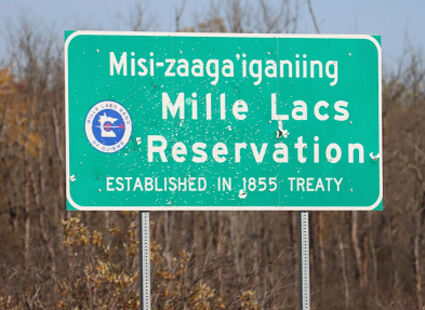
Here is the opinion in Mille Lacs Band of Chippewa Indians v. County of Mille Lacs (D. Minn.):
Briefs here.
 Turtle Talk
You must be logged in to post a comment.