Here:

Here.
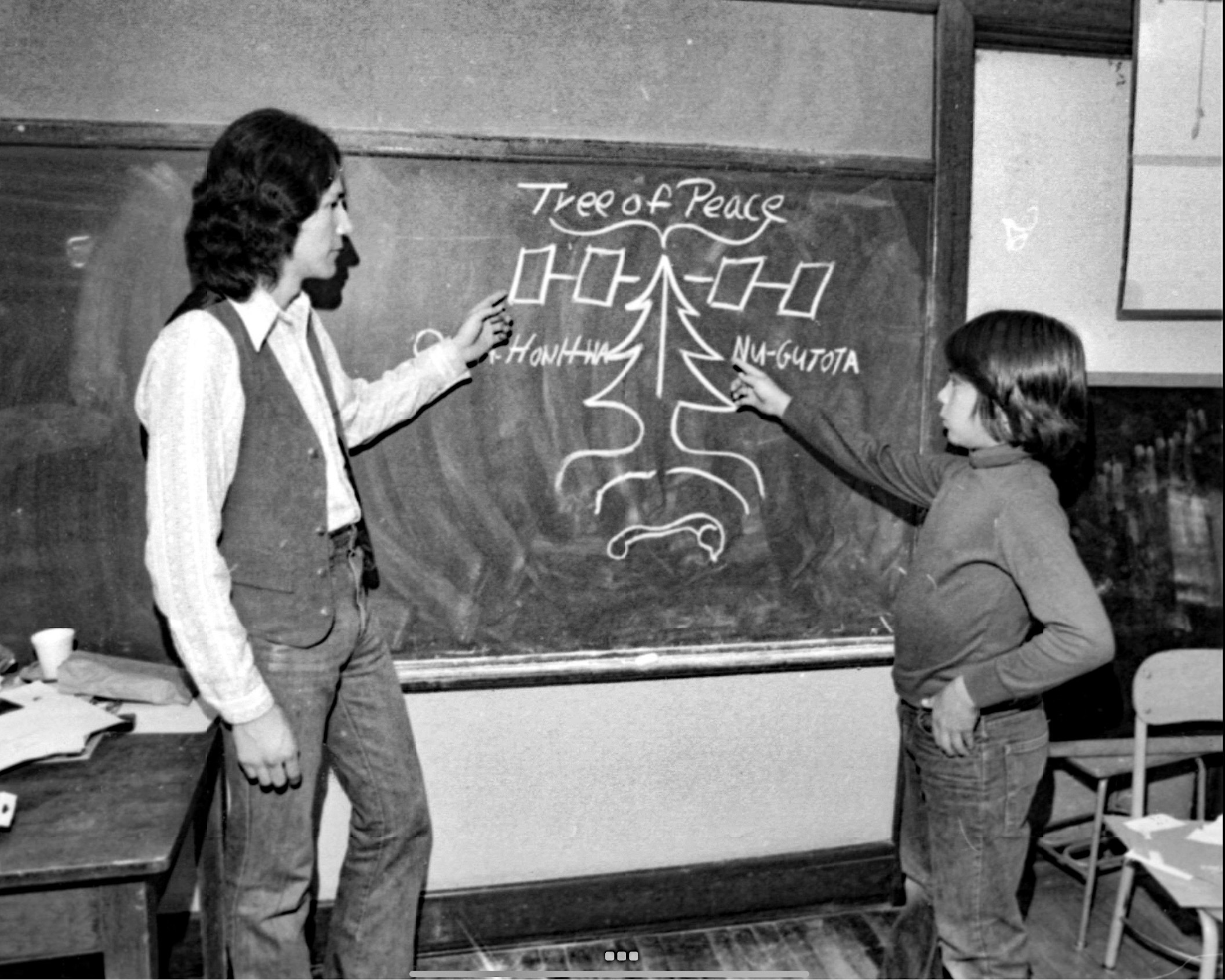
Here (zoom webinar link here):

Fletcher and Singel will discuss their forthcoming paper, “Lawyering the Indian Child Welfare Act.”
Here are the updated materials in Kewadin Casinos Gaming Authority v. Draganchuk (W.D. Mich.):
Prior post here.
Law360 reports the state court held the tribe in contempt for failure to respond to discovery requests. Everyone’s got a litigation strategy, I guess. You can watch the hearing below.
Here are the materials so far in Kewadin Casinos Gaming Authority v. Draganchuk (W.D. Mich.):
1-6 State Court Motion for Contempt
1-7 State Court Hearing Transcript on Motion to Dismiss
1-8 State Court Motion to Compel
1-9 State Court Denying Summary Disposition for Kewadin
1-10 State Court Order Denying Motion to Dismiss by Kewadin
1-11 State Court Order re Discovery Motion
1-12 State Court Order to Show Cause
1-13 State Court Motion to Dismiss
1-14 State Court Response to Discovery Motion

Prior federal court suit here.
Last Friday’s D.C. Circuit opinion explains one of the many reasons the Lansing casino project died.
Here is the opinion in Sault Ste. Marie Tribe of Chippewa Indians v. Haaland.
Briefs here.
For commentary on legal analysis by reading the dictionary, see Joseph Kimball’s work on the Michigan Supreme Court’s use of dictionaries.

Traverse City Record-Eagle notice here. From the statement issued by Michigan Indian Legal Services:
| Jim Keedy was living proof of how fine a person can be. He was an excellent boss to the people and programs in his charge and a devoted husband to his wife, Cathy. He was also a good friend to many and a great colleague. The character of his life might be summed up in a few words: sincere, earnest, loyal. Jim was a long-time poverty law attorney and was dedicated to the ideal of accessible legal aid, developing extensive outreach programs for Native rural communities in remote areas. He was also passionate about the importance of children being able to remain in their families and was an early champion for parents under the Indian Child Welfare Act and the Michigan Indian Family Preservation Act. Under Jim’s leadership, MILS provided assistance to 5 tribes obtaining federal recognition – the government-to-government relationship that allows for tribes to be able to successfully provide for their communities. He also believed in responsible government and was a champion for the individuals facing the weight of the system on them in tribal court cases. We will long remember Jim’s tenacity, and ability to meet difficult challenges. Jim was a brilliant and visionary leader who achieved recognition for his work in the underserved Native American communities. Jim was the proud recipient of State Bar of Michigan American Indian Law Section’s Tecuseh Peacekeeping Award in 2004; the State Court Administrative Office (SCAO) Foster Care Review Board’s Parent Attorney of the Year in 2018; the National Legal Aid and Defender Association’s Pierce-Hickerson Award also in 2018; and the Michigan State Bar Foundation’s Access to Justice Award in 2020. As Executive Director at Michigan Indian Legal Services for over 30 years, Jim led his staff in such a way that he exemplified leadership. He gave inspiration to his team and others he worked with. The Jim we remember was always courteous, kind, and generous. He had a beautiful smile, a sense of humor, and a gentle demeanor. Jim was a genuinely wonderful individual—one we will miss greatly. As an attorney, Jim worked with passion, integrity, and honor. By his death, all the people who knew him will miss a brilliant individual with a rare friendliness and charm of personality. Our sorrow is slightly lessened with the comforting thought that we had the privilege of knowing him. Baa Maa Pii, Jim. |
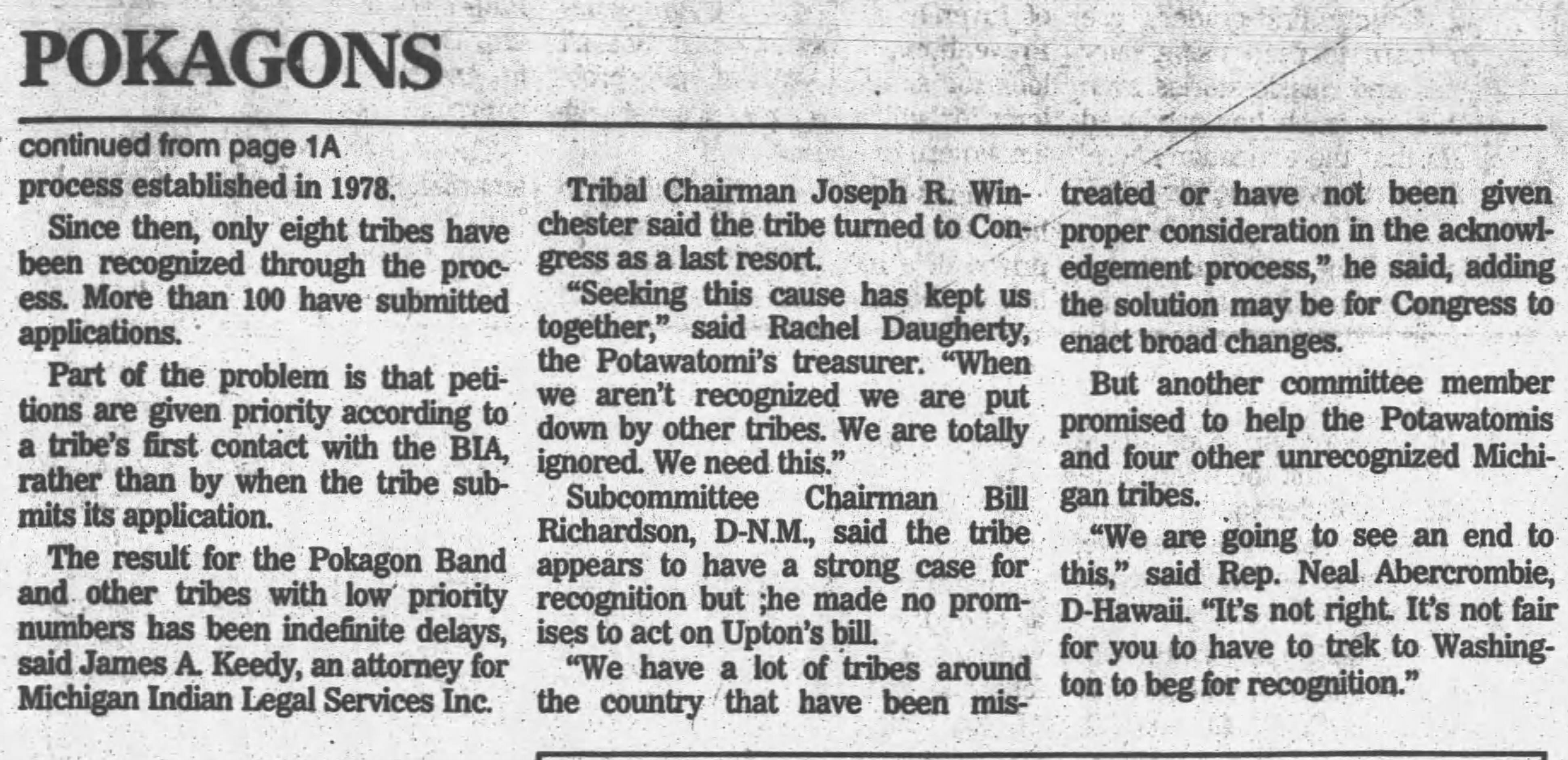
Jim was a well-known figure in Michigan Indian country. I first became aware of him when he worked on the federal recognition for the Pokagon Band of Potawatomi Indians. He testified before Congress in 1993 and 1994 in support:

Here are the materials in United States v. Johnson:

The Michigan Indian Land Claims Settlement Act of 1997 took some time to get past Congress after the Indian Claims Commission judgment came out in 1972. Here is some of that history told in the pages of the original Turtle Talk newsletter and its precursor, Indian Talk of Southern Michigan.


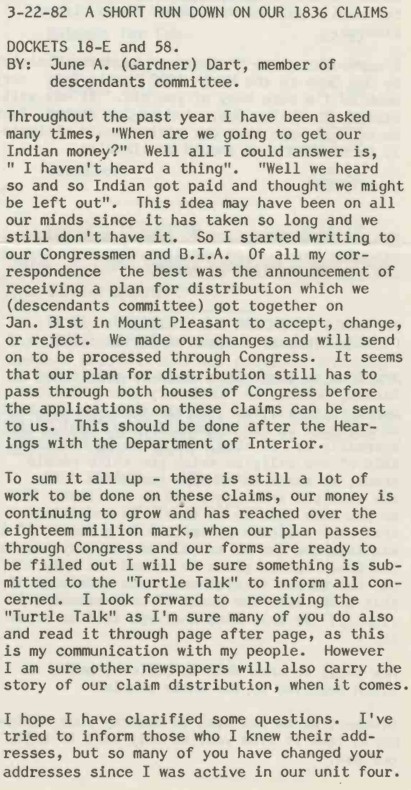

Here are the materials in Cavazos v. Haaland (D.D.C.):
18-2 Saginaw Chippewa Motion to Intervene
21 Cavazos Motion for Summary Judgment
26 Saginaw Chippewa Cross Motion for Summary
29 Federal Cross Motion for Summary
40-1 Cavazos Proposed Surreply
An excerpt:
This administrative law case centers on a U.S. Department of the Interior’s (“Interior”) decision (“AS-IA Decision”), after an informal adjudication, to decline to intervene in tribal disenrollment proceedings by the Saginaw Chippewa Indian Tribe of Michigan (“Tribe”). Plaintiffs are former members of the Tribe who have since been disenrolled by Tribal leadership. Plaintiffs charge that a federal statute particular to the Tribe, the Judgment Funds Act, PL 99-346, 100 Stat. 674 (1986) (“JFA”), required Interior to intervene in and put a stop to Tribal disenrollment proceedings. In their only claim before the Court, Plaintiffs argue that Interior’s inaction was arbitrary and/or capricious within the meaning of the Administrative Procedures Act, 5 U.S.C. §§ 500 et seq. (“APA”). As a remedy, Plaintiffs seek not just a remand back to the agency, but an order from this Court mandating Interior’s intervention to reverse the Tribe’s disenrollment proceedings.
In support thereof, Plaintiffs focus primarily on statutory provisions in the JFA governing (1) antidiscrimination against tribal members enrolled after the JFA’s enactment and (2) Interior’s supervision of the JFA. Ultimately, the Court agrees with Interior that the plain meaning of the JFA: (1) does not classify disenrollment as discrimination and (2) grants Interior broad discretion to intervene in Tribal disputes related to the JFA. However, the Court holds that Interior incorrectly read the JFA to bar discrimination only against enrolled members of the Tribe. Because the JFA also bars the Tribe from discriminating against disenrolled members in access to benefits and services funded by the JFA, the Court shall remand the matter to Interior to reconsider whether it should exercise its discretionary authority to intervene in the alleged inequitable provision of such benefits and services.
Prior post here.
 Turtle Talk
You must be logged in to post a comment.