Here are the pleadings in Penobscot Nation v. Schneider (D. Me.):
138 Intervenors Motion to Exclude
139 Penobscot Response to NPDES Permittees
We posted the first amended complaint here.
Here are the pleadings in Penobscot Nation v. Schneider (D. Me.):
138 Intervenors Motion to Exclude
139 Penobscot Response to NPDES Permittees
We posted the first amended complaint here.
Here are the materials in Turunen v. Michigan Department of Natural Resources (W.D. Mich.):
The claim survived an earlier motion to dismiss here.
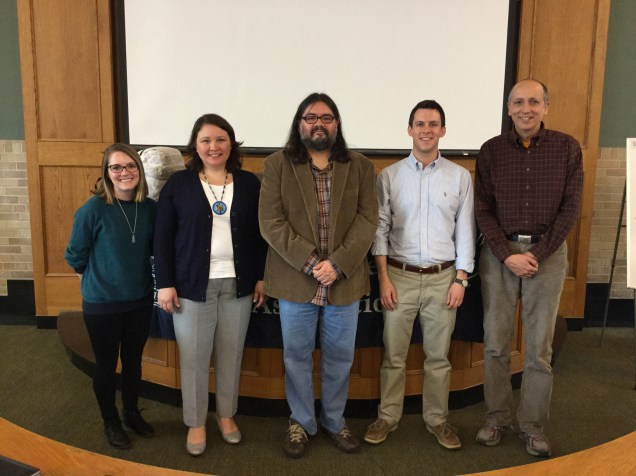
Colin Kavanaugh

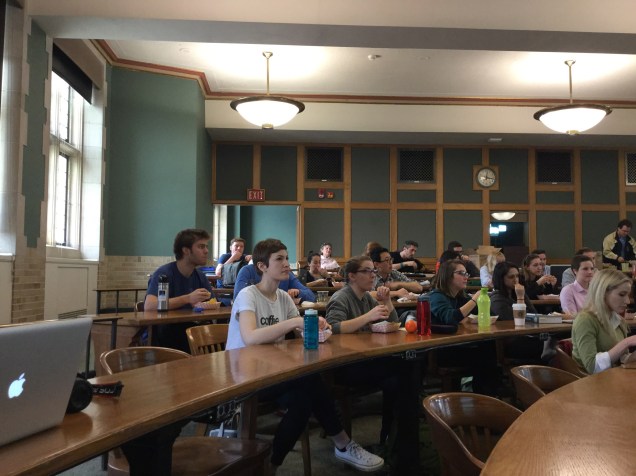
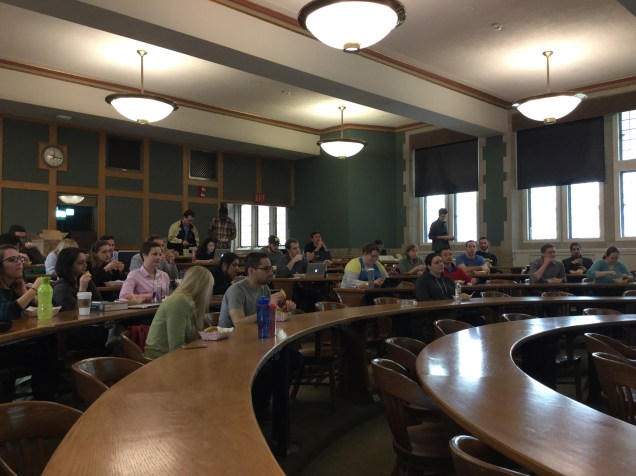
The Michigan law school community
Here are the materials in Bellfy v. Creagh (W.D. Mich.):
An excerpt:
This matter is before the Court on Plaintiffs’ ex parte Motion for Temporary Restraining Order (docket # 2), filed today. Plaintiffs seek to “enjoin Defendant, or other State of Michigan officers, employees, agencies, subdivisions, successors, or assigns” from approving a proposed sale of State land in the Upper Peninsula. (docket # 2.) Plaintiffs contend that the sale would impair their rights under the 1836 Treaty of Washington and in a 2007 Consent Decree reaffirming those rights. The Consent Decree is the subject of another case in this District, United States of America v. State of Michigan, et al., No. 2:73-CV-26 (W.D. Mich. November 2, 2007) (consent decree, docket # 1799), currently assigned to Chief Judge Paul Maloney. The Consent Decree not only addresses substantive rights of the parties, but also describes detailed alternative dispute resolution procedures. (docket # 1799, pp. 62-67.) The nature of the claim Plaintiffs are attempting to assert pro se appear to touch on both procedural and substantive provisions of the Consent Decree.
From long-time Grand Traverse Band counsel Bill Rastetter on the passing of Judge Enslen:
Writing this helps me to reflect upon not just Richard Enslen but also the two other Western District judges appointed by Jimmy Carter — all of whom made major rulings for Grand Traverse Band. (There’s a story there, if I ever could find the time; I’d start the story by talking with Dean Robb who was in the group of lawyers picked by the two Democratic Senators who came up with a list of possible nominees, including “progressives” who never would be considered in the present climate.) Those three were Richard Enslen, Douglas Hillman, and Benjamin Gibson. In retrospect, each individual evidenced concern for the plight of the less advantaged, the powerless within our society; and GTB’s victories might not have occurred if they had not been on the bench.
Gibson left Michigan long before retirement age, but not before he granted GTB its first victory in the modern (restored) era: Leelanau Indians, Inc. and Grand Traverse Band of Ottawa and Chippewa Indians v. U.S. Department of Housing and Urban Development (W.D. Mich. File No. G 80-526): 502 F.Supp. 741 (W.D. Mich. 1980).
Hillman? Well, there’s the major case [Grand Traverse Band of Ottawa and Chippewa Indians v. U.S. Attorney for the Western District of Michigan, et al. (W.D. Mich. File No. 1:96-CV-466): 198 F.Supp.2d 920 (W.D. Mich. 2002), and 46 F.Supp.2d 689 (W.D. Mich. 1999), aff’d. 369 F.3d 960 (6th Cir. 2004)] which easily could have been resolved differently if another judge had been assigned that case.*
And Enslen. Even before the “treaty-fishing” cases, he granted the judgment declaring that GTB controlled the Peshawbestown lands. [Grand Traverse Band of Ottawa and Chippewa Indians v. Leelanau County and Leelanau Indians, Inc. (W.D. Mich. File No. G 83-834)] Attached is his unpublished opinion; it’s the only time my proposed findings and conclusions have been adopted verbatim (without even being retyped). And he was assigned the GTB v. BIA case [Grand Traverse Band of Ottawa and Chippewa Indians v. Bureau of Indian Affairs, et al. (W.D. Mich. File No. G 85-382)], by which we (with his help/not so subtle messages to DOJ that he’d grant preliminary injunction for us if …) held them (the Reagan administration DOI political operatives) at bay until Buddy Raphael negotiated the “compromise” membership provisions. Both the 1985 and 2000 consent decrees were the result of his commitment to ADR (and at various times he forcefully let lawyers for state/”sports” groups know that they really didn’t want to give him a chance to rule for the Tribes); likewise, he allowed the Tribes plenty of maneuvering room leading up to the 2007 “inland” consent decree. Also his July 15, 1986 opinion/order in which he fashioned a remedy in GTB’s favor when the other COTFMA Tribes (BMIC & SSM) decided they could distribute 1985 CD funds by majority vote (subsequently there have been equal 1/3 and then 1/5 distributions of appropriated funds above each Tribe’s base). Finally, of course, is GTB’s “access” case now in the textbooks: Grand Traverse Band of Ottawa and Chippewa Indians v. Director, Michigan Department of Natural Resources, et al. (W.D. Mich. File No. 1:94-CV-707): 971 F.Supp. 282 (1995), aff’d. 141 F.3d 635 (6th Cir. 1998), cert. denied 454 U.S. 1124, 102 S.Ct. 971 (1998).
____________________
* Here is an article that appeared later in the New Yorker, written by his niece about his mother. I was struck by the passage on the last page. Here was a man who rose to the top of a prestigious G.R. law firm, probably relatively conservative albeit a Democrat in conservative G.R. and (I think) a labor lawyer, but I’m not aware of any indication that he was champion of the downtrodden. Perhaps his mother instilled a sense of (in)justice, and when the opportunity presented itself he saved the day for the Indian Tribes. [United States v. Bay Mills Indian Community, et al. (W.D. Mich. File No. M 85-335): 692 F. Supp. 777 (W.D. Mich. 1988), vacated 727 F. Supp. 1110 (W.D. Mich. 1989)] GTB gets no credit for Judge Hillman’s decision not to enjoin the Tribes’ casino gaming, yet it was our separate brief (and affidavits of Buddy Raphael and Barry Burtt) that argued Rule 65 equitable considerations weighed against the injunction requested by DOJ.
There is the potential for an enormous amount of chaos for both US v. Washington and for any Indian tribe with extant treaty rights based on the arguments going on here now. Most notably, several tribes (Quinault, Quileute, and Hoh) are claiming that the Sherrill-based equitable defenses may apply in some way to Indian treaty claims.
I find this personally horrifying and disturbing — that any tribe would claim that Sherrill and its Second Circuit progeny apply to treaty rights. Sherrill is a statute-based claim, and so are the Second Circuit cases that purport to follow its reasoning. Treaty rights are an entirely different genre.
I sincerely hope the U.S. v. Washington tribes will opt-out of federal litigation — with its potential to undercut treaty rights for tribes all over the country — and move toward an inter-tribal treaty. There is at least one proposal on the table, and tribal leaders and tribal constituents should act quickly to adopt it. These inter-tribal disputes are doing nothing now but threatening to make bad law for everyone.
Luckily, Judge Martinez did not hold that equitable defenses apply here, but who knows what will happen in the Ninth Circuit and beyond.
Here are the new materials in subproceeding 09-01 of United States v. Washington (No. 70-9213) (W.D. Wash.):
248 Makah Motion for Summary J on Equitable Defenses
251 Quinault and Quileute Motion for Summary J
267 Quinault and Quileute Response to 248 Motion
274 Makah Reply in Support of 248 Motion
275 Interested Tribes Response to 251 – Equitable Defenses
279 Quileute and Quinault Reply in Support of 251
281 Quileute and Quinault Reply in Support of 251
283 Quileute and Quinault Motion to Define Burden of Proof
284 Interested Tribes Response to 283 — Burden of Proof
285 US Response to 283 — Burden of Proof
286 Upper Skagit Tribe Response to 283 — Burden of Proof
287 Makah Response to 283 — Burden of Proof
288 State of Washington Response to 283 — Burden of Proof
289 Quileute and Quinault Reply to 284 in Support of 283
290 Quileute and Quinault Reply in Support of 283
304 DCT on Motions for Summary J
Materials in a related pending Ninth Circuit matter in subproceeding 09-01 are here.
Here is the opinion in Save Mille Lacs Sportsfishing v. Minnesota Dept. of Natural Resources:
Here:
Question presented:
Whether federal courts called upon to enforce Indian treaty protections in tribal challenges to State regulation may enter judgment against the Indian Tribe without considering evidence and entering findings of fact on the Indians’ understanding of the United States’ treaty promises.
Lower court materials here.
Here is the opinion in United States v. Brown.
An excerpt:
Appellees Michael Brown, Jerry Reyes, Marc Lyons, and Frederick Tibbetts were indicted under the Lacey Act which makes it unlawful to “sell . . . any fish . . . taken, possessed, transported, or sold in violation of . . . any Indian tribal law.” 16 U.S.C. § 3372(a)(1). The indictments alleged that appellees had netted fish for commercial purposes within the boundaries of the Leech Lake Reservation in violation of the Leech Lake Conservation Code, then sold the fish. Appellees are Chippewa Indians, and they moved to dismiss the indictments on the ground that their prosecution violates fishing rights reserved under the 1837 Treaty between the United States and the Chippewa. The district court granted the motions to dismiss. The 1 United States appeals, arguing that its application of the Lacey Act did not infringe on appellees’ fishing rights. We affirm.
Briefs:
 Turtle Talk
You must be logged in to post a comment.