Here are the briefs in United States v. Laskey:

Here are the briefs in United States v. Laskey:


Virjinya Torrez (Cherokee Nation of Oklahoma), Assistant Attorney General, Pascua Yaqui Tribe
TJ McReynolds (Pueblo de San Ildefonso), Senior Counsel, Kewenvoyouma Law, PLLC
Harrison W. Rice (Sac & Fox Nation of Oklahoma), Assistant Attorney General, Tohono O’odham Nation
The Objective of this presentation is for attorneys to better understand how both the Oath of Admission to the Bar and the Lawyer’s Creed of Professionalism overlap and extend beyond the values and requirements of a respective State’s Rules of Professional Conduct.
1. Maintaining objectivity for effective assessment of the impact actions have on clients, others and the legal system.
2. Competent client representation includes maintaining reasonable expectations through candid and objective advice, clear communication to clients.
3. Acting with courtesy and civility.
4. Advancing legitimate client interests can be accomplished through expeditious and cost-effective handling of all legal matters while maintaining respect, courtesy, and fairness.
5. To act and speak honestly and respectfully in both personal and professional life, honoring the court and legal system, diligently advocating for clients, and protecting the integrity of the legal profession.
Here.
Tentative Agenda
Noon to 1 p.m.: The Impacts of the Brackeen Decision Moving Forward –
1 to 2 p.m.: How the Brackeen Decision and the Recently Passed Montana ICWA Statute Will Impact Practitioners in Montana.
Speakers
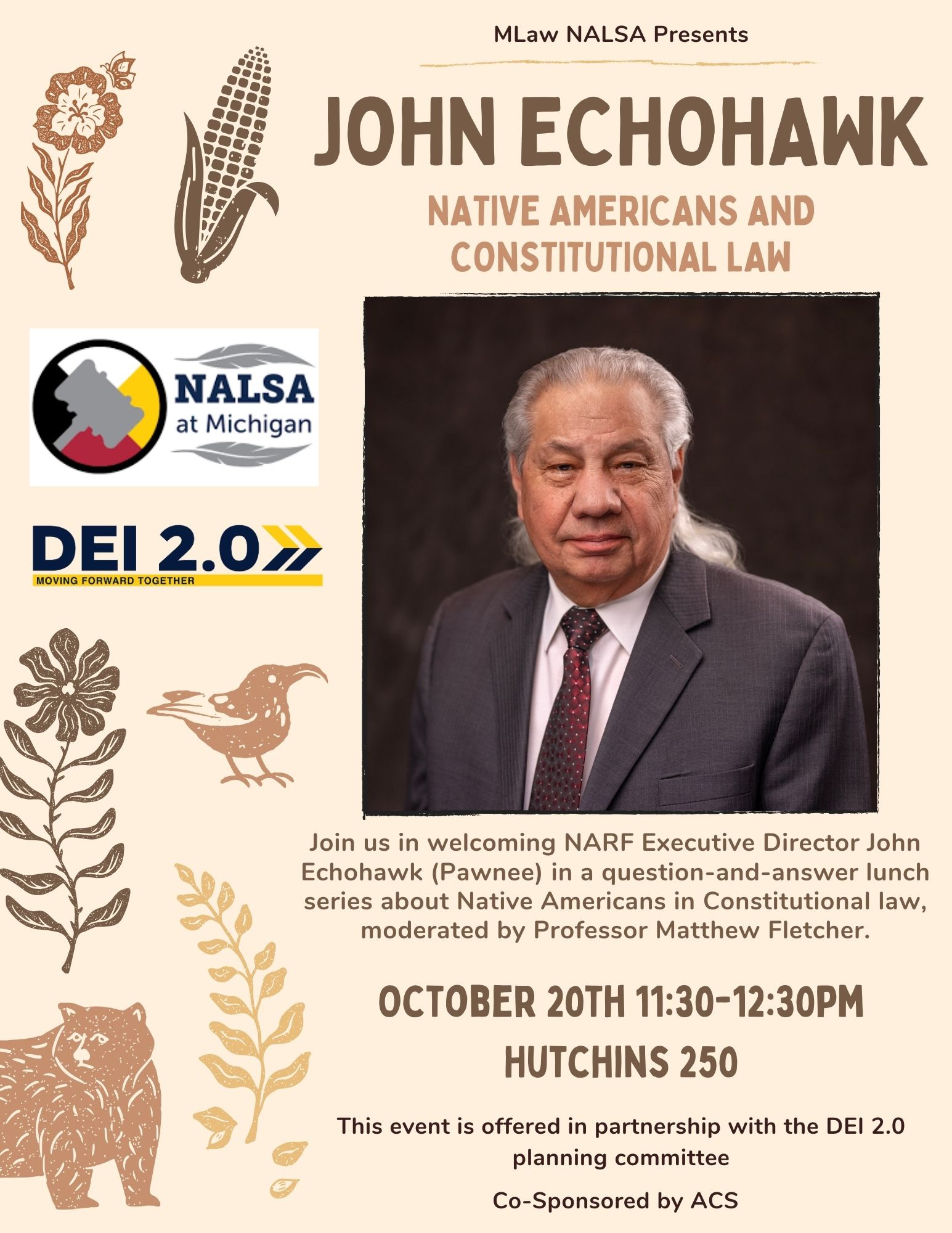
Professor Matthew Fletcher: Harry Burns Hutchins Collegiate Professor of Law the University of Michigan Law School
Kimberly Cluff: California Tribal Family Coalition
Kelly Driscoll: Montana Office of the State Public Defender, Missoula
April Olson: Rothstein Donatelli, Tempe, Arizona

Here:

I’ve been posting and talking about this issue for a while now, and am very happy to see it highlighted in this article. The Colorado Office of Respondent Parents’ Counsel has been collecting incredibly important data (headed up by a proud MSU alum!) on what happens when foster parents intervene. I strongly encourage anyone in the position to do so to begin collecting this same data.
https://www.propublica.org/article/foster-care-intervention-adoption-colorado
Intervenors can file motions, enter evidence and call and cross-examine witnesses to argue that a child would be better off staying with them permanently, even if the birth parents — or other family members, such as grandparents — have fulfilled all their legal obligations to provide the child with a safe home. When Carter’s foster parents intervened in the hope of keeping him, they turned to the firm of Tim Eirich, a Denver adoption attorney who charges as much as $400 an hour and has almost single-handedly systematized intervention in Colorado.
***
The Trump and Biden administrations have both pressed states to keep a larger percentage of kids with birth parents or kin. Intervention, a state-level counter-trend, is supported by foster parents’ rights groups and advocates at national conservative organizations.
***
Since 2018, South Carolina’s courts and lawmakers have affirmed the right of any state resident to file to adopt any foster child, as well as the right of foster parents to intervene. In 2020, Kentucky amended its law to let foster parents intervene as legal parties in involuntary terminations of birth parents’ rights. And this year Florida passed a law saying that if birth parents move to have their child adopted, including by a biological family member, long-term foster parents can intervene to contest that outcome. Kathryn Fort, the director of the Indian Law Clinic at Michigan State University, told me that her practice has faced three sets of intervenors this year, all of them non-Native couples seeking to adopt a Native child.
Here are the materials in State of Washington v. American Tobacco Co. (Wash. Ct. App.):

 Turtle Talk
You must be logged in to post a comment.