Here:
Cert petition and other materials here.
Vanessa Racehorse and Anna Hohag have posted “Achieving Climate Justice Through Land Back: An Overview of Tribal Dispossession, Land Return Efforts, and Practical Mechanisms for #LandBack,” published in the Colorado Environmental Law Journal.
Here is the abstract:
Due to the increasing pressures of the climate change crisis, federal and state governments are beginning to acknowledge that Indigenous-led stewardship and control over Tribal aboriginal homelands is a crucial component of addressing climate change. In the United States, Tribal nations have a long history of responsible land stewardship, with environmental conservation and respect for the world’s biodiversity being an inextricable piece of Tribal customs, traditions, and knowledge. This Article strives to pay due respect to traditional land stewardship and its important role in the past, present, and future.
Part I of this Article starts with an overview of the history of forcible dispossession of Native American land, and provides initial thoughts on the myriad of meanings that the expression “Land Back” can hold. The United States has a long history of forcibly removing Native American Tribes from their ancestral homelands and relocating them to smaller plots of land, with some estimates indicating Tribal nations ultimately lost 98.9 percent of their aboriginal homelands post-contact. Part II will discuss how this change in land tenure and land use can be linked to climate change, with Indigenous communities often at the frontline of climate change events. Additionally, areas predominantly occupied by Indigenous peoples are frequently more prone to experience extreme weather conditions, such as extreme heat, drought, greater wildfire risks, and extreme flooding, the latter of which has caused the relocation of some coastal Indigenous communities.
Although modern Indian land use is manifold, traditional Indigenous stewardship is rooted in careful management of the ecosystem. Indigenous peoples across the globe remain the stewards and protectors of most of the world’s biodiversity, while standing at the forefront of the opposition to extractive industries. According to a report conducted by the Indigenous Environmental Network, Indigenous-led movements in resistance to oil and gas projects have stopped or delayed greenhouse gas emission equal to nearly one-quarter of the annual total U.S and Canadian emissions. The leadership demonstrated by Indigenous peoples to combat the climate crisis is indicative of the cultural value system that justifies land restitution.
Parts III, IV, and V of this Article explore the efforts being made on the federal, state, and Tribal level to return land to its original caretakers and discusses practical ways that Tribal governments and organizations are achieving Land Back through mutual goals of conservation and repatriation. While the preferred method used by the federal and state governments and their respective agencies has been to extend opportunities for Tribal co-management, this is not enough to curb the urgency of the impending climate disaster, the effects of which have been, and will continue to be, felt first and foremost by Indigenous peoples. It is time for Land Back. There is no clearer argument for Land Back than to prevent irreparable harm to the planet—a cause that is unquestionably in the greatest good for all people.

Here is the amended complaint in Grand Traverse Band of Ottawa and Chippewa Indians v. Burnette Foods Inc. (W.D. Mich.):

On Friday, August 11, 2023, United States District Judge David Nuffer of the United States District Court of the District of Utah granted motions to dismiss the cases challenging the Bears Ears National Monument designation.
Here is the Order:
Previous post with briefs here and here.
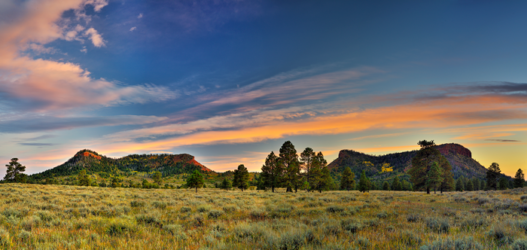
Bears Ears at Sunset. Photo credit: Tim Peterson.
Kevin Washburn has posted “The March of Co-Management — The Biden-Harris Administration’s Expanding Work with Tribes” on SSRN.
Here is the abstract:
In response to a request from the Foundation of Natural Resources and Environmental Law for a description of the Biden-Harris Administration’s efforts to increase the role of tribal communities in federal land management, this essay provides a variety of ways that the Biden-Harris Administration has worked to provide a stronger relationship between the federal government and tribal governments. These efforts include historic appointments of Native Americans to significant positions, especially in the areas governing natural resources in the federal government. It also includes better processes for incorporating traditional ecological knowledge into decision making, enhancing efforts at tribal consultation, and dramatically increased appropriations for tribal governments. The essay also explains how tribes fit within broader administration priorities, such as the American the Beautiful initiative to conserve 30 percent of American land by 2030, and the Justice 40 initiative, providing 40 percent of federally-appropriated funds invested in support of the clean energy transition to communities burdened by traditional energy infrastructure.
Here is the complaint in Fond du Lac Band of Lake Superior Chippewa v. The 3M Company (D.S.C.):
Here is the unpublished opinion in Western Watersheds Project v. McCullough. And same for the Bartell Ranch/Burns Paiute case.
Selected briefs:
Lower court materials here.


 Turtle Talk
You must be logged in to post a comment.