Here:
Great Lakes Fish and Wildlife Commission Job Posting
Here:
Here:
Here.
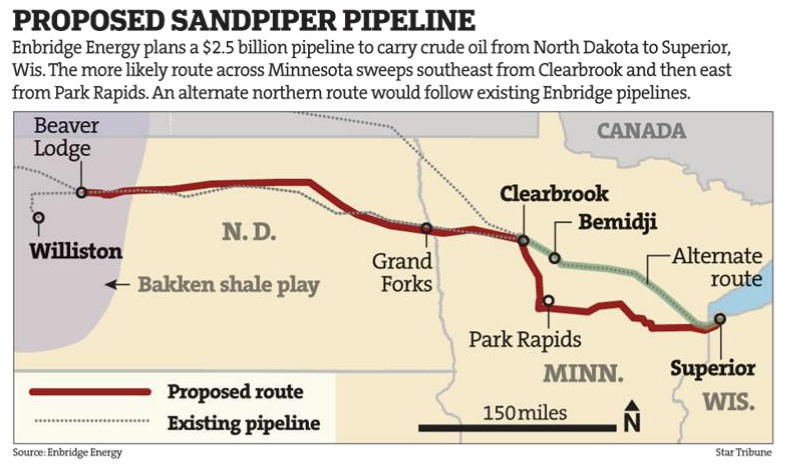
Attorneys for the company contend that the commission has no business
deciding the meaning of federal treaties. Even so, much of the two-hour discussion before Judge Eric Lipman focused on 10 treaties signed between 1825 and 1864 by Minnesota Indian tribes.
“It would represent a dramatic departure from the commission’s precedent and would significantly impact not just pipeline projects but all large energy projects sited in northern Minnesota,” said Christine Brusven, an attorney for the Calgary-based pipeline company that’s proposing to build the 610-mile pipeline to carry North Dakota oil.
Headed for the courts?
Lipman, who is overseeing the regulatory review of the pipeline, is expected to rule on the treaty rights question, but the final decision rests with the Public Utilities Commission. The issue ultimately could land in federal court.
H/T Jean O’Brien
Here.
Preface
Goals and objectives
The research goals were to assess and describe characteristics of a multi-cultural fishery co-management arrangement of state and tribal organizations in Michigan in order to provide information and recommendations to enhance the institutional
relationship. Information was collected through interview data and quantitative analysis of agency work plans of the Bay Mills Indian Community, Grand Traverse Band of Ottawa and Chippewa Indians, Little River Band of Ottawa Indians, Little Traverse Bay Bands of Odawa Indians, Sault Ste. Marie Tribe of Chippewa Indians and the State of Michigan.
Objectives Included:
1. Determine extent of agency understanding for each other’s management priorities and knowledge systems used for guiding fishery management decisions and how they may influence views on the value of science in fishery management, and
suggest strategies for navigating multi-cultural institution building (Chapter 2).
2. Present how different participant values and perspectives shape priorities of biological assessments and restoration activities, identify and assess common and exclusive priorities and develop recommendations for collaboration (Chapter 3).
3. Describes how agency participants value collaboration, what barriers exist for successful collaboration and how an ideal relationship could be formed and function (Chapter 4).
April 17, 11:30 am – 12:30 pm, Hamline University School of Law will host a law student training event. The students will learn about administrative processes related to proposed oil pipelines, specifically focusing on the ones slated to run through Minnesota.
From the press release:
Honor the Earth, a Native-led environmental organization, has joined with a coalition of related organizations to protect Minnesota’s wild rice stands. The group is participating in the Minnesota Public Utilities Commission (“PUC”) and administrative processes regarding two proposed oil pipelines threatening some of the most significant wild rice stands in the state. To advance those efforts, Winona LaDuke of Honor the Earth and her team of legal allies will train Minnesota environmental law students on April 17th. Hamline University School of Law will host the event from 11:30 am to 12:30 pm which will also be available statewide via webcast. Environmental law students from all four Minnesota law schools (University of Minnesota, William Mitchell, Hamline, and St. Thomas) will be reviewing the legal and administrative cases.
Press interviews will also be offered from 10:30 am – 11:25 am in the Moot Court Room.
Further information on the pipelines and efforts to propose alternative routes can be found in the press release:
News coverage here.
Here is the minute order:
MINUTE ORDER: The hearing set to take place on April 28, 2014, is RESCHEDULED to take place on Monday, May 5, 2014 at 9:30 a.m. in Courtroom 25A before Judge Thomas F. Hogan. Signed by Judge Thomas F. Hogan on April 2, 2014. (lctfh2)
The Oregon Law Review has published New Ways to Fulfill Old Promises: Native American Hunting and Fishing Rights as Intangible Cultural Property.
Here is an excerpt:
Current law and policy in the United States has failed to develop a framework that accounts for the unique nature of intangible cultural heritage. Therefore, intangible cultural heritage, such as Native American hunting and fishing rights, lacks adequate protection. However, international laws—such as the United Nations Declaration on the Rights of Indigenous Peoples, and the United Nations Educational, Scientific, and Cultural Organization (UNESCO) Convention for the Safeguarding of Intangible Cultural Heritage—can help United States lawmakers develop a framework that recognizes Native American hunting and fishing rights as intangible cultural heritage, and adequately protects them as such.
Here is the article titled “The Fight for Wisconsin’s Soul” by Dan Kaufman.
 Turtle Talk
You must be logged in to post a comment.