Metlakatla Prevails in Ninth Circuit on Fishing Rights

Here is the opinion in Metlakatla Indian Community v. Dunleavy.

Briefs are here.

Lower court materials here.

Washington Federal Court Keeps Muckleshoot Out as Party in Duwamish Recognition Suit

Here are the materials in Duwamish Tribe v. Haaland (W.D. Wash.):

14 Muckleshoot Motion to Intervene

18 Duwamish Opposition

20 Interior Opposition

21 Reply

26 DCT Order

Complaint here.

Bad River Wins Trespass Claim against Enbridge

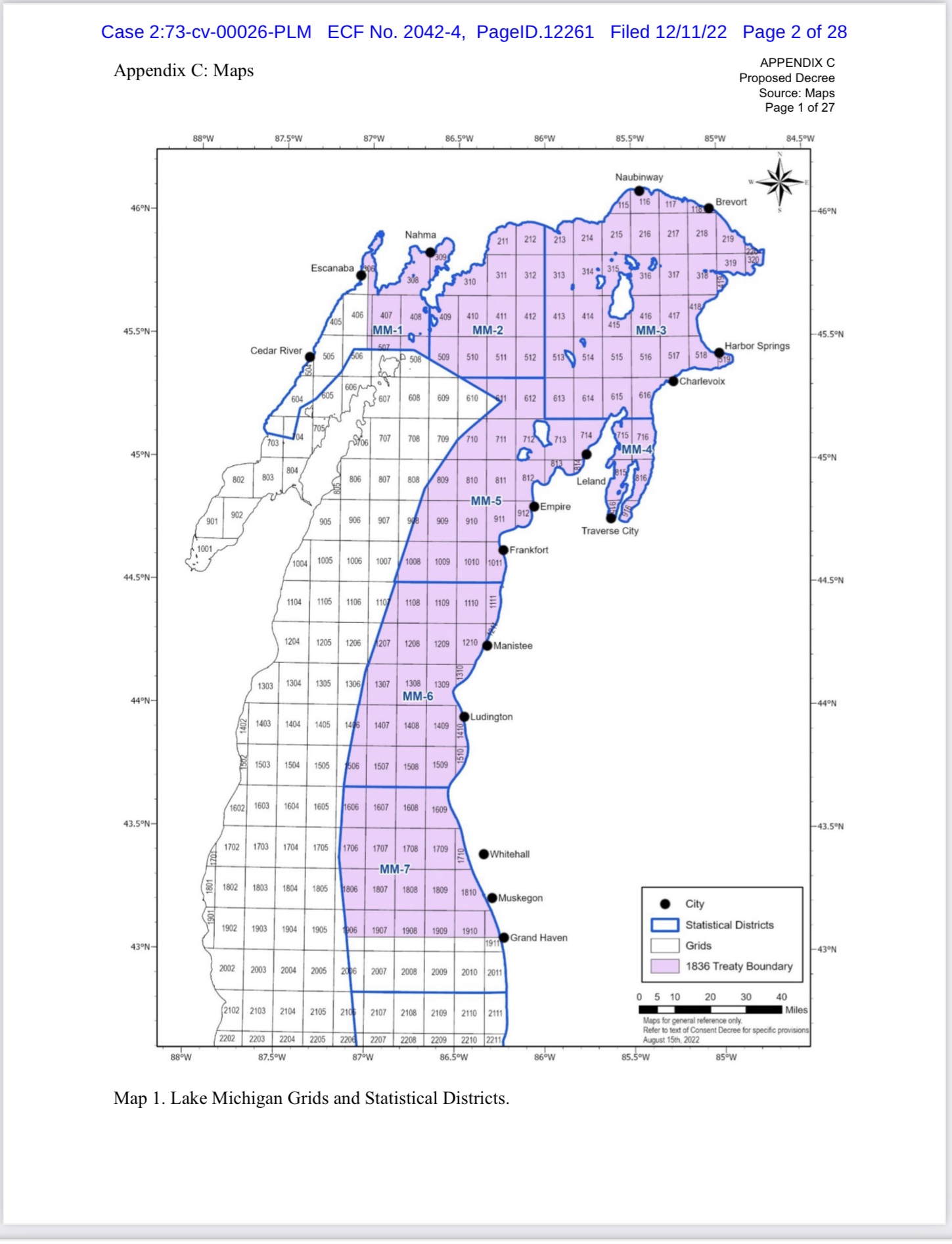
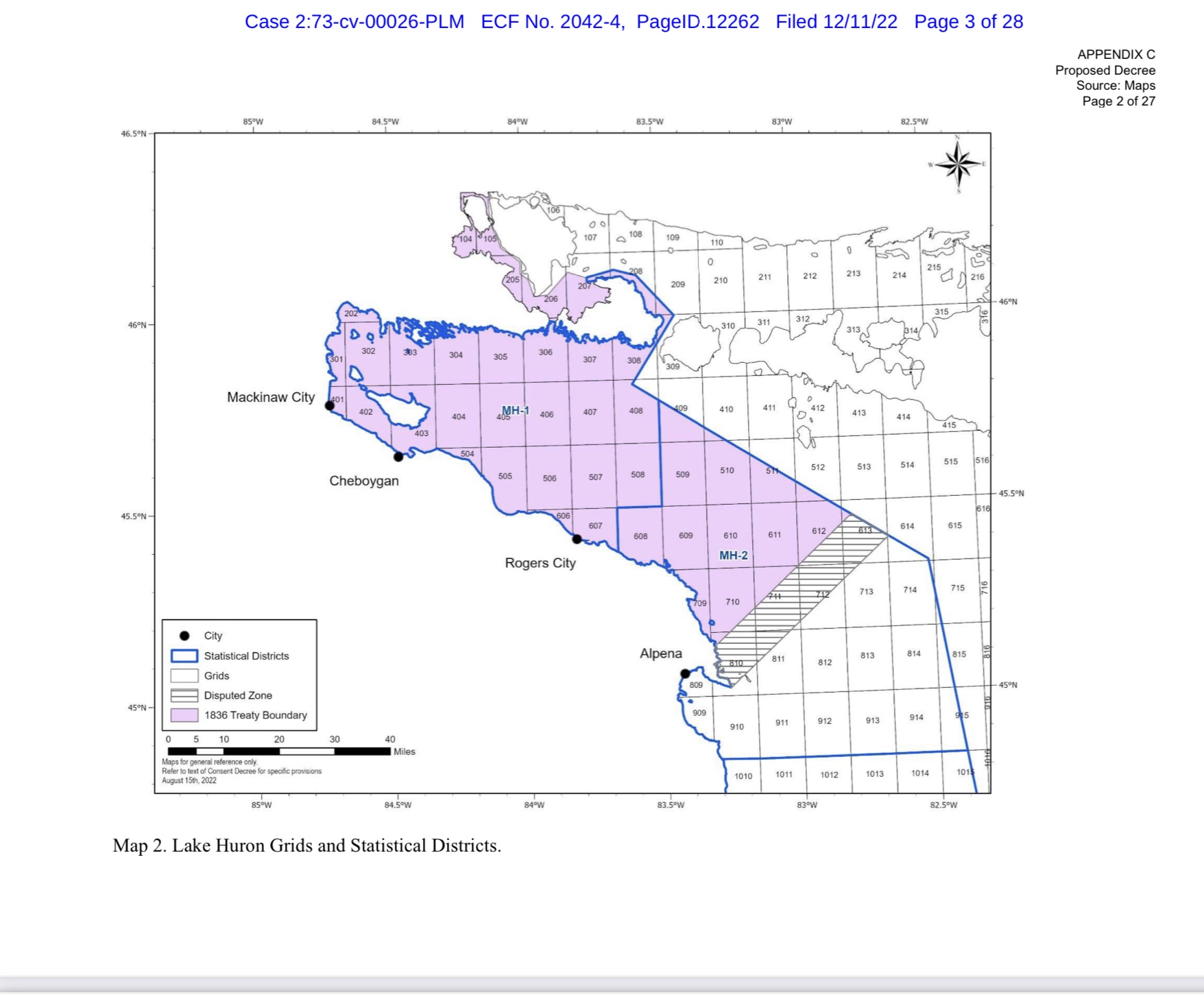
Here is the order in Bad River Band of Lake Superior Tribe of Chippewa Indians v. Enbridge Evil Energy Co. Inc. (W.D. Wis.):

Will post briefs tomorrow. Some of them are already here.

Not exactly Lake Superior but close enough.

207 Enbridge Opposition

231 Enbridge Memorandum in Support of 230

256 Bad River Reply

286 Bad River Opposition

295 Great Lakes Business Network Amicus Brief

323 Enbridge Reply

Robin Kundis Craig on Tribal Water Rights and Tribal Health

Robin Kundis Craig has posted “Tribal Water Rights and Tribal Health: The Klamath Tribes and the Navajo Nation During the COVID-19 Pandemic” on SSRN. The paper is forthcoming in the St. Louis University Journal of Health Law & Policy.

The abstract:

Public health measures to combat COVID-19, especially in the first year before vaccines became widely available, required individuals to be able to access fresh water while remaining isolated from most of their fellow human beings. For the approximately 500,000 households in the United States and over two million Americans who lacked access to reliable indoor running water, these COVID-19 measures presented a considerable added challenge on top of the existing risks to their health from an insecure water supply.

Many of these people were Native Americans, whose Tribes often lack fully adjudicated, quantified, and deliverable rights to fresh water. To highlight the critical role that water rights played in Tribes’ capacities to cope with the pandemic, this essay compares the Klamath Tribes in Oregon, who after 40 years of litigation have fairly securely established themselves as the senior water rights holders in the Klamath River Basin, to the Diné (Navajo Nation), whose reservation—the largest in the United States—covers well over 27,500 square miles of Arizona, Utah, and New Mexico but largely lacks quantified water rights or the means to deliver water to households. While access to water was not the sole factor in these two Tribes’ vastly different experiences with COVID-19, it was an important one, underscoring the need for states and the federal government to stop procrastinating in actualizing the water rights for Tribes that have been legally recognized since 1908.

Assessing Water Budget for Navajo Nation by NASA Goddard Photo and Video is licensed under CC-BY 2.0

Maryland Federal Court Dismisses RICO Action against MHA Nation Officials

Here are the materials in Manago v. Cane Bay Partners VI LLLP (D. Md.):

90 Motion to Dismiss — Personal Jurisdiction

90-1 Memorandum

91 Motion to Dismiss — 12b6

91-1 Memorandum

99 Response to 91

100 Response to 90

103 Reply in Support of 90

104 Reply in Support of 91

106-1 LCO Complaint

111 DCT Order

Former MHA Nation chairs . . . .

John LaVelle on the History of Indian Country and Reservation Boundaries Cases, Part 1

John P. LaVelle has published the provocatively titled “Of Reservation Boundary Lines and Judicial Battle Lines, Part 1 – Reservation Diminishment/Disestablishment Cases from 1962 to 1975: The Indian Law Justice Files, Episode 1” in the UCLA Indigenous Peoples Journal of Law, Culture, and Resistance.

Abstract:

This Article is the first of a two-part investigation into the Indian law doctrine of reservation diminishment/disestablishment, examining Supreme Court decisions in this area in light of insights gathered from the collected papers of individual Justices archived at the Library of Congress and various university libraries. The Article first addresses Seymour v. Superintendent (1962) and Mattz v. Arnett (1973), observing that these first two diminishment/disestablishment cases are modern applications of basic, longstanding principles of Indian law which are highly protective of Indigenous people’s rights and tribal sovereignty. The Article then examines in detail DeCoteau v. District County Court, the anomalous 1975 decision in which the Supreme Court held that an 1889 land-sale agreement between the United States and the Sisseton-Wahpeton Dakota Indians, which Congress ratified in 1891, had abolished the boundaries of the Lake Traverse Reservation in South Dakota and North Dakota, a reservation that had been established as the Indians’ “permanent reservation” home in an 1867 treaty. The Article critiques DeCoteau in view of the historical context of the 1862 U.S.-Dakota War, an explosive conflict that resulted in the forced removal of the Dakota people from their reservation and aboriginal homelands in Minnesota and the abrogation of all U.S.-Dakota treaties, including treaty rights that guaranteed annual payments essential for the Indians’ subsistence and survival. The Article brings into view the full scope of the negotiations between the Sisseton- Wahpeton people and U.S. commissioners in 1889, demonstrating that the Dakota people never consented to any reduction or elimination of reservation boundaries when they agreed, under desperate circumstances, to sell to the United States the unallotted lands within the reservation. The Article further surveys additional evidence, unaddressed by the Supreme Court, regarding the 1891 Act’s legislative history, including numerous congressional debates and provisions of reports of the Senate and House of Representatives, as well as evidence from Executive Branch sources, which collectively show that the 1891 Act did not shrink or terminate the reservation. The Article posits that DeCoteau, which scholars recognize as having initiated a “magic language” mode of analysis in the reservation diminishment/disestablishment area, cannot be reconciled with fundamental principles of Indian law. Finally, the Article inspects and discusses documents from the archived papers of the Justices who took part in DeCoteau, unraveling clues that may help account for the Supreme Court’s aberrant decision.

Cherokee Trust Breach Suit Update

Here are the materials so far in Cherokee Nation v. Dept. of the Interior (D.D.C.):

1 Complaint

34-1 Motion to Dismiss

39 Opposition

41 Reply

42 DCT Order Denying Motion to Dismiss

54-1 Federal Motion to Dismiss

55-1 Federal Motion for Protective Order

60 Cherokee Opposition to Motion to Dismiss

85 DCT Order Re Protective Order

88-1 Cherokee Motion for Summary J

96-1 Federal Cross-Motion

97 Federal Cross-Motion

98 Cherokee Motion for Summary J

99 Cherokee Reply in Support of MSJ

Cert Stage Materials in Lopez v. Quaempts

Here:

Questions presented:

  1. Whether this Court, to allow for more complete state court tort remedies against individual tribal employees, as indicated in Lewis v. Clarke, 137 S. Ct. 1285 (2017), should clarify existing tribal sovereign immunity law to allow tort vic- tims to sue a tribe based on vicarious lia- bility when a tribe ratifies individual tribal employees’ actions giving rise to the state tort claims.
  2. Whether the lower court’s refusal to rec- ognize a tribe’s ratification of tribal em- ployees’ allegedly tortious acts, as an express waiver of sovereign immunity im- permissibly interferes with states’ rights to award remedies to tort victims.

Lower court materials here.

Goony

Muscogee (Creek) Nation SCT Orders Remand in Speedy Trial Appeal after Defendant Held for 248 Days

Here is the opinion in Vandecar v. Muscogee (Creek) Nation:

Suit Filed to Challenge Montana Human Rights Commission’s Power to Enforce State Law Protections of Anti-Vaxxers in Indian Country

Here is the complaint in Glacier County Regional Port Authority v. Esau (D.Mont.):