Here are the materials (so far) in Muscogee (Creek) Nation v. City of Henryetta (E.D. Okla.):

Here are the materials (so far) in Muscogee (Creek) Nation v. City of Henryetta (E.D. Okla.):
Kekek Stark has posted “The Utmost Rights and Interests of the Indians: Tribal Law Interpretations of the Indian Civil Rights Act” on SSRN.
Highly recommended.
Here is the abstract:
It has been more than fifty years since Congress enacted the Indian Civil Right Act (hereinafter “ICRA”) and more than forty years since the United States Supreme Court in Martinez articulated that the tribal courts are the proper forum for the adjudication of ICRA claims. In the decades since, tribal courts have developed a rich body of intertribal common law pertaining to the implementation of the ICRA. This comes after over a century of assimilative policies in which the federal government attempted to eradicate native culture and traditions and subjected Indians to the deprivation of individual rights by federal and state judicial systems.So how are tribes doing in the implementation of the ICRA? Specifically, how are tribal courts balancing the promotion of tribal sovereignty with the protection of individual rights? Does the ICRA establish a mandate to tribal governments to assume and require judicial review of any allegedly illegal action by a tribal government? Can a Tribe accused of violating these primary rights also be the judge of its own actions and at same the time comply with federal law? This article will examine these questions in detail. In doing so, Part I provides a brief introduction. Part II details the implementation of individual rights protections prior to the enactment of the ICRA. Part III provides an overview of the passage of the ICRA. Part IV examines federal court encroachment into tribal court determinations of individual rights protections. Part V provides an overview of the ruling in Martinez. Part VI details tribal court interpretations of the ICRA associated with tribal sovereign immunity, tribal council actions, equal protection, due process, and criminal protections. Part VII concludes by offering recommendations for tribal courts in their ongoing review of the ICRA.
Here:
SELF-DETERMINATION IN THE IMPLEMENTATION OF TREATY RESERVED RIGHTS
Kekek Jason Stark
Don’t Throw the Book: Customary Tribal Laws Can Heal Rather Than Punish Addiction
Coleman Griffith

Here is the brief in Churchill Downs Technology Initiatives Co. v. Michigan Gaming Control Board:
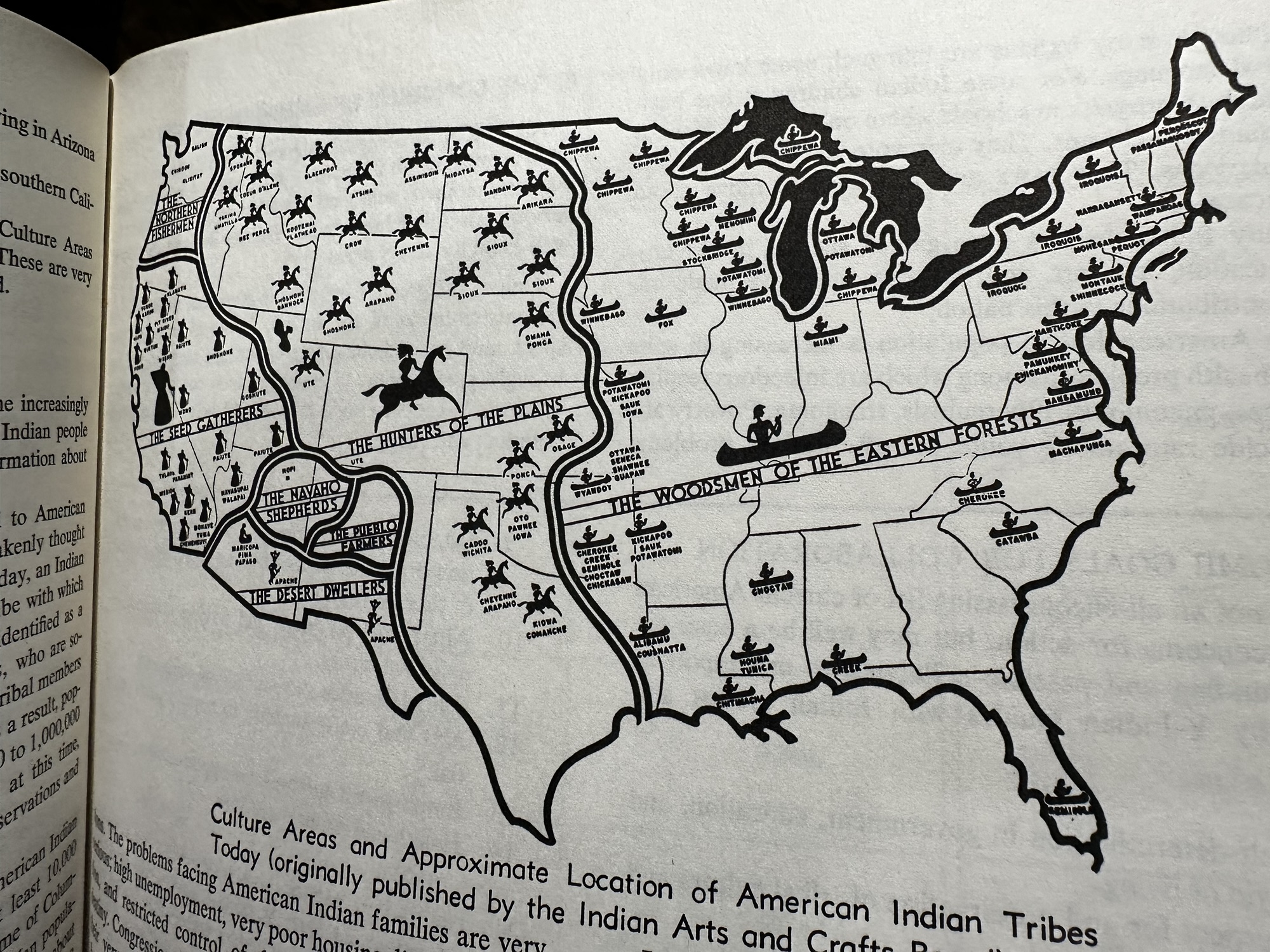
Erica Liu has published “The Cartographic Court” in the NYU Law Review.
Here is the abstract:
Over the past few decades, the Supreme Court of the United States has adopted an exceedingly narrow view of tribal civil jurisdiction, establishing doctrines that restrict the circumstances in which Native Nations can exercise their regulatory and adjudicative powers. While most scholarship in federal Indian law has assessed this judicial trend towards tribal disempowerment by focusing on the Court’s treatment of tribal sovereignty, this Note centers the Court’s manipulation of tribal territory. It argues that the Court has constructed three territorial incongruities—non-Indian fee lands, public access, and loss of “Indian” character—to justify the disallowance of tribal authority over significant portions of tribal reservations. In so doing, the Court relies on a spatial imaginary of territorial sovereignty, or the notion that sovereign power must be commensurate with sovereign domain, to present certain spaces as falling outside of a Native Nation’s territory and, accordingly, as beyond the reach of its jurisdictional power.
By illuminating the spatial imagination of the Supreme Court, this Note identifies a key practice employed by the Court that is central to empires past and present— cartography. The Court superimposes its own imagined legal geography upon the preexisting system of territorial division, redrawing the jurisdictional boundaries that separate states and Native Nations. This practice of spatial manipulation is cartographic in that it allows the Court to determine and limit the territory of tribal rule; to expand the areal authority of state jurisdiction; and to project its particular vision of reservation lands—a vision defined by notions of ownership, accessibility, and character—upon Indian country. These cartographic tactics of territorial acquisition and control are in direct furtherance of the American colonial project. They fragment tribal regulatory regimes, reify Indigenous life, and transfer congressional power to the Court to diminish tribal reservations. These practices of fragmentation, reification, and de facto diminishment are continuations of the repudiated but never-undone federal policy of allotment, although the main perpetrator is now the Court rather than Congress.
By turning to critical legal geography and theories of space and power, this Note reveals a Supreme Court that is highly imaginative, overtly spatial, and problematically cartographic in nature, engaged in a project of colonial expansion across its tribal civil jurisdiction cases.

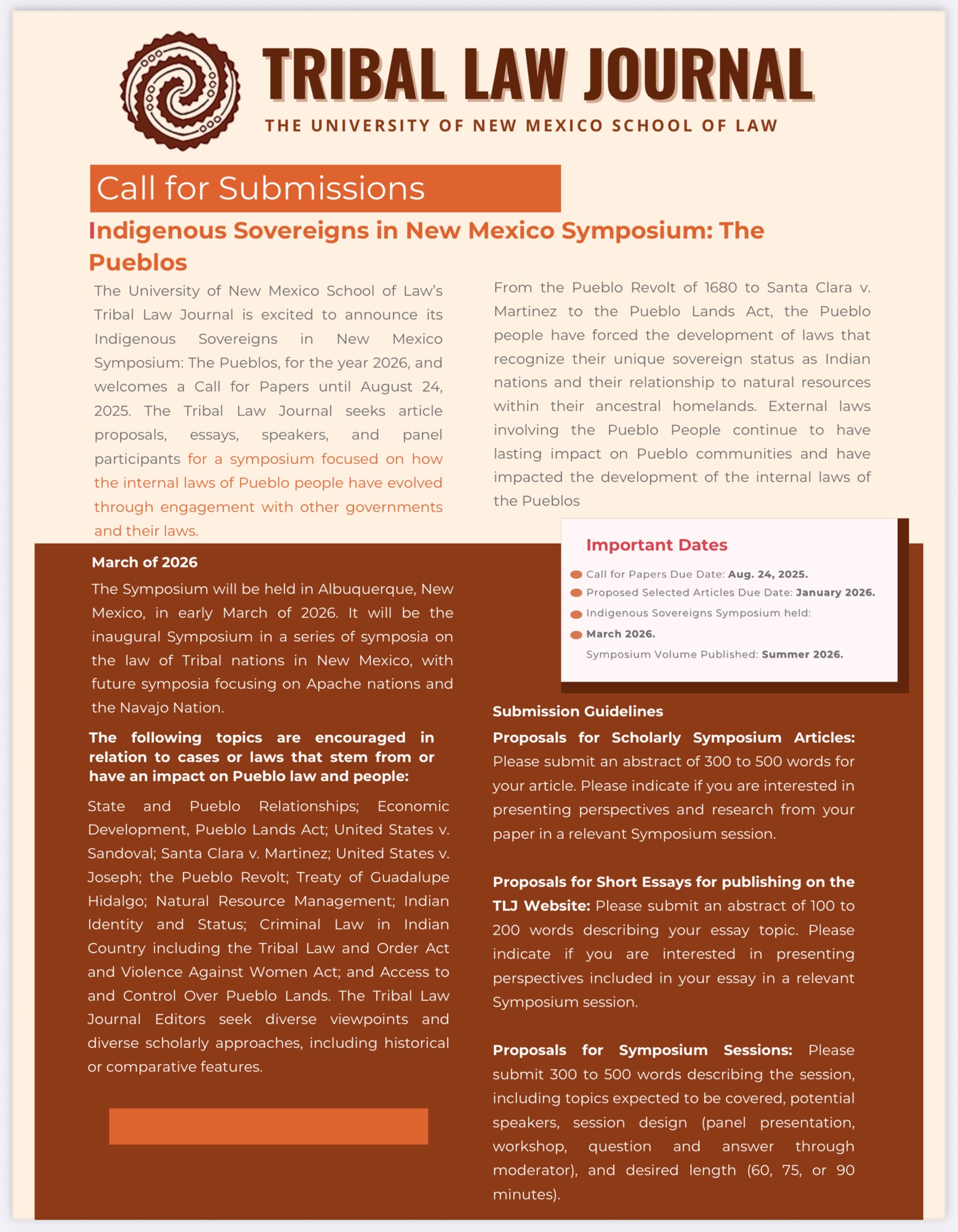
This August, the Native American Law Center (NALC) will hold its first CLE dedicated to drafting, revising and/or amending tribal codes.
The workshop — led by Professor Eric Eberhard, Associate Director of the NALC, alongside NALC Fellow Avey Menard — will provide focused instruction on legislative drafting techniques that focus on the specifics of tribal codes, including their intersection with federal laws, such as the Indian Civil Rights Act, VAWA and federal environmental statutes and their relationship to tribal courts and other governmental forums.
This two-day intensive workshop will provide you with opportunities to draft an amendment to existing law as well as a standalone piece of legislation of your own choosing within a workshop environment. Professor Eberhard and Fellow Menard will be available to review, comment on and discuss all drafts.
The program will only be offered live, and we anticipate 11.75 MCLE credit hours for those who attend the program. Registration costs $275 and attendance is limited to 15 participants. Make sure to reserve your seat now at the link below!

This August, the Native American Law Center (NALC) will hold its first CLE dedicated to drafting, revising and/or amending tribal codes.
The workshop — led by Professor Eric Eberhard, Associate Director of the NALC, alongside NALC Fellow Avey Menard — will provide focused instruction on legislative drafting techniques that focus on the specifics of tribal codes, including their intersection with federal laws, such as the Indian Civil Rights Act, VAWA and federal environmental statutes and their relationship to tribal courts and other governmental forums.
This two-day intensive workshop will provide you with opportunities to draft an amendment to existing law as well as a standalone piece of legislation of your own choosing within a workshop environment. Professor Eberhard and Fellow Menard will be available to review, comment on and discuss all drafts.
The program will only be offered live, and we anticipate 11.75 MCLE credit hours for those who attend the program. Registration costs $275 and attendance is limited to 15 participants. Make sure to reserve your seat now at the link below!
The early 1950s featured truly awful federal leadership in Indian affairs, with Dillon Myer serving as Commissioner and Oscar Chapman as Interior Secretary. The leadership of the American Association on Indian Affairs wanted to produce a high-profile “bill of particulars” that would condemn the government’s terminationist actions. Other national activists resisted, worrying that direct political attacks on Interior Department leaders would backfire. While they debated, Felix Cohen wrote a 34 page memorandum detailing federal abuses, a paper he would shape into his classic Yale Law Journal article, The Erosion of Indian Rights, 1950-1953: A Case Study in Bureaucracy.
Here is the bill of particulars:




 Turtle Talk
You must be logged in to post a comment.