Here are the new materials in Pechanga Band of Indians v. Kennedy (C.D. Cal.):
Prior post here.
Here are the new materials in Pechanga Band of Indians v. Kennedy (C.D. Cal.):
Prior post here.
Here is the complaint in Utu Utu Gwaitu Paiute Tribe of the Benton Paiute Reservation v. Dept. of the Interior (E.D. Cal.):
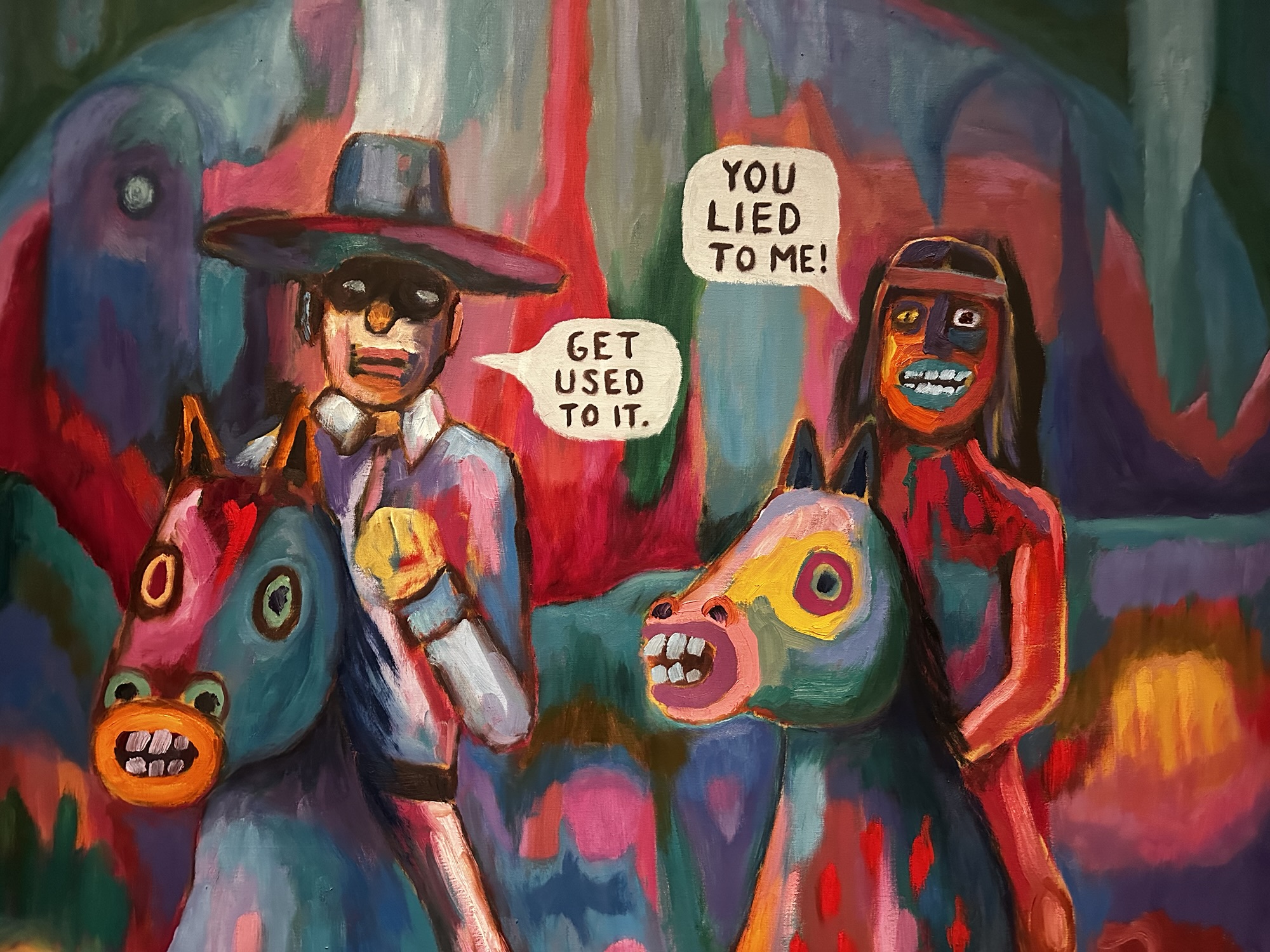
Jason Robison has published “Tripartite Water Sovereignty” in the Yale Law Journal.
Here is the abstract:
Former U.S. Supreme Court Justice Felix Frankfurter and former Harvard Law School Dean James M. Landis published in 1925 the seminal work on the U.S. Constitution’s Compact Clause. Their article focused on cosovereignty within the United States, but only in a binary sense. While indelibly shaping interstate and federal-state relations, North America’s original sovereigns—Native nations—were not visible within this influential piece. So, too, with the approximately two dozen compacts later formed to apportion water from rivers running across and along state lines, agreements that acknowledged Native nations and their water rights only at the margins, if at all. Revisiting Frankfurter and Landis’s pivotal piece one century later, this Article urges advocates and scholars to look beyond the binary conception of cosovereignty apparent in that piece and entrenched in the suite of compacts created in its wake. Tracking Native nations’ growing calls for inclusion in transboundary water management, the Article contends that these cosovereigns must be respected as what they are—sovereigns—and afforded opportunities for direct representation on compact commissions beside their state and federal counterparts. The Article outlines several ways to achieve this indigenization and, ultimately, move from binary to tripartite water cosovereignty.
Here is the opinion in Trump v. Barbara.
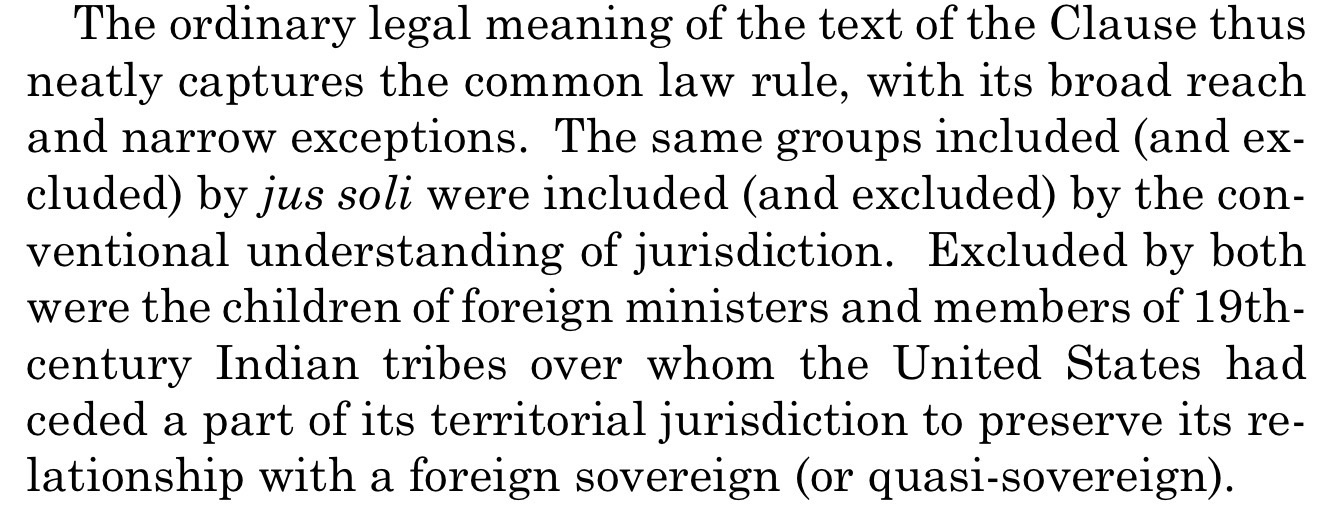
One excerpt, suggesting Indians are like diplomats, what I’ve been saying all along, dammit:
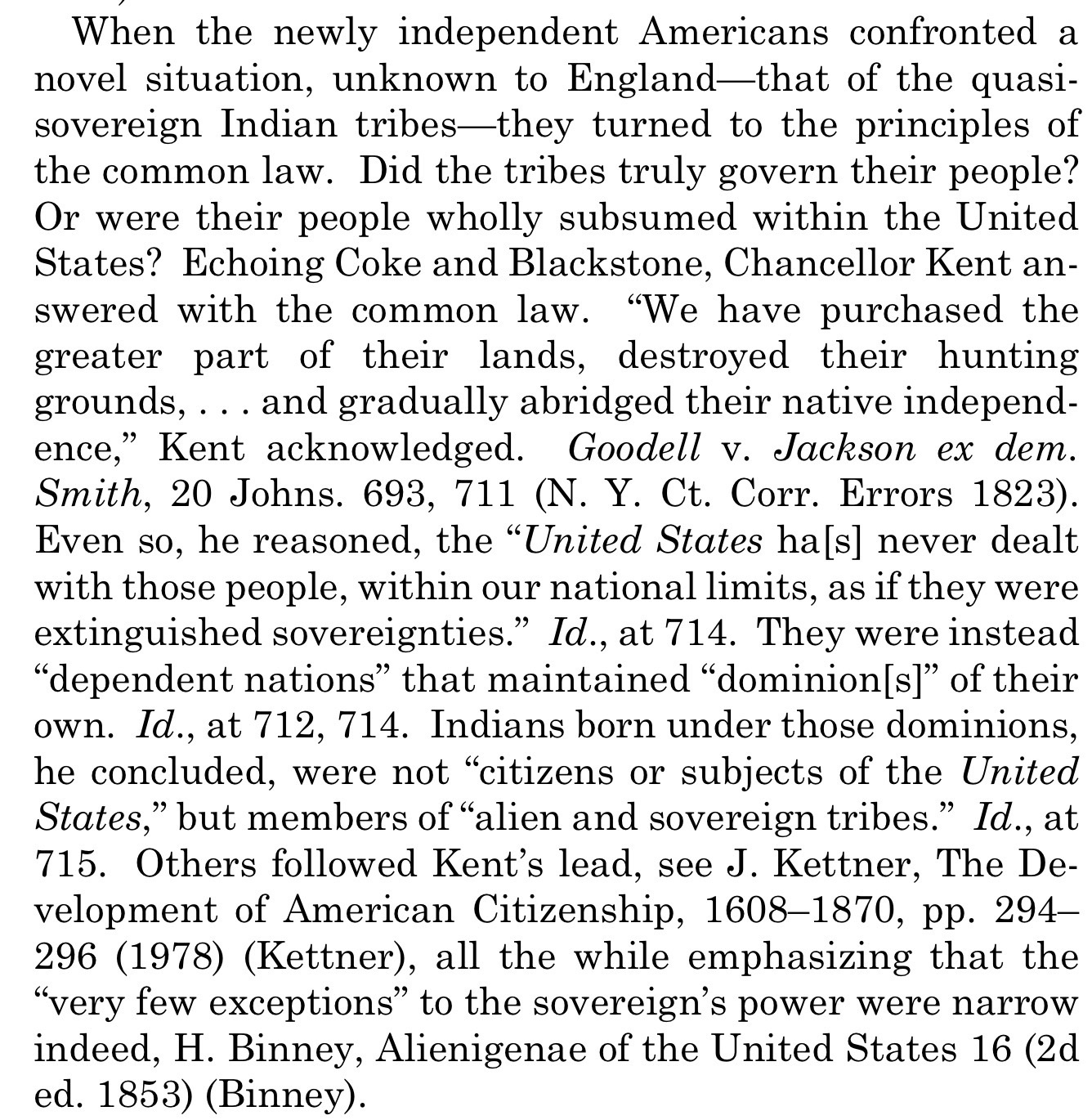
Another, more explicitly, on Indians as diplomats:
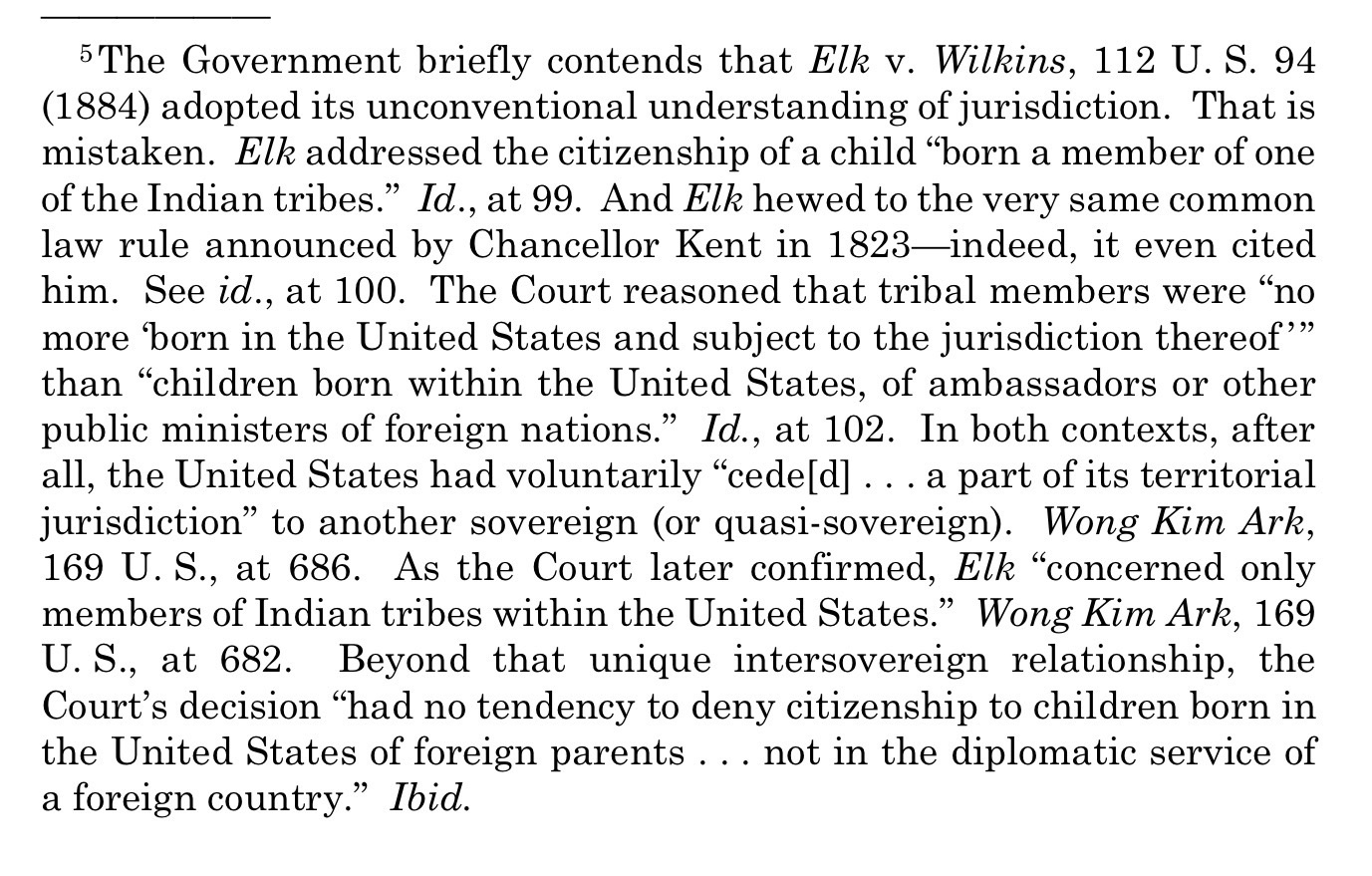
Another on the government’s ridiculousness re: Elk v. Wilkins:
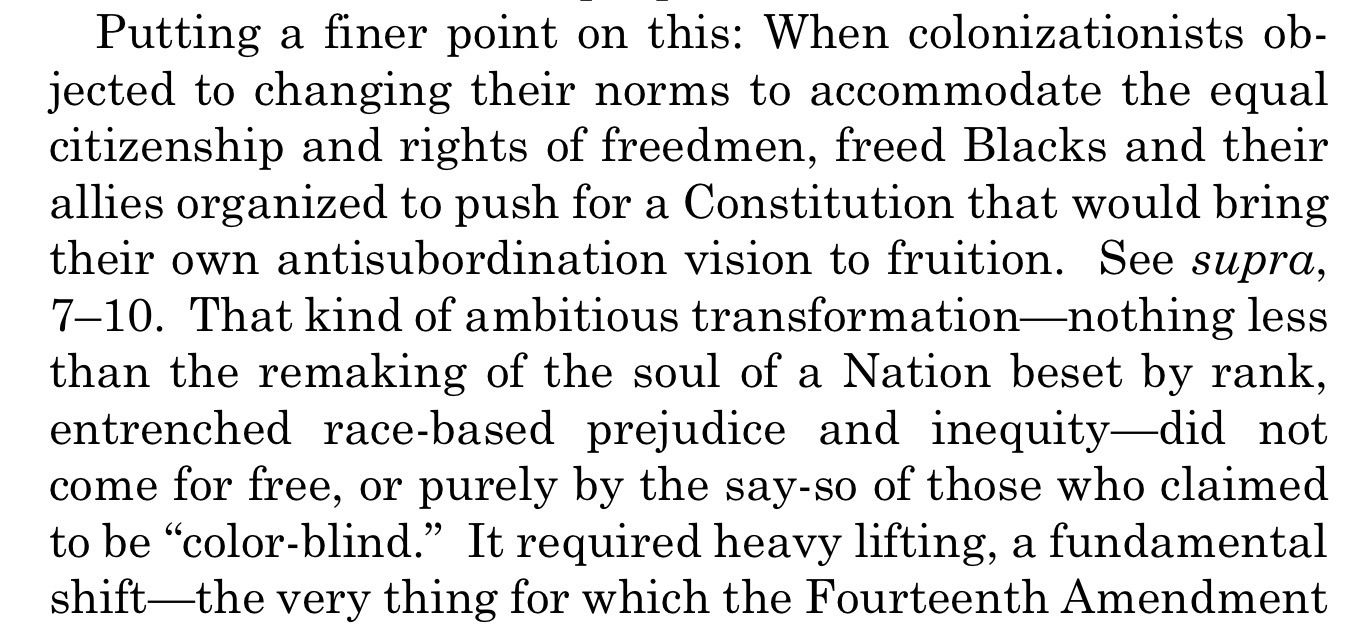
From Justice Jackson’s concurrence, the only intellectually honest opinion from this rat’s nest of white supremacy:
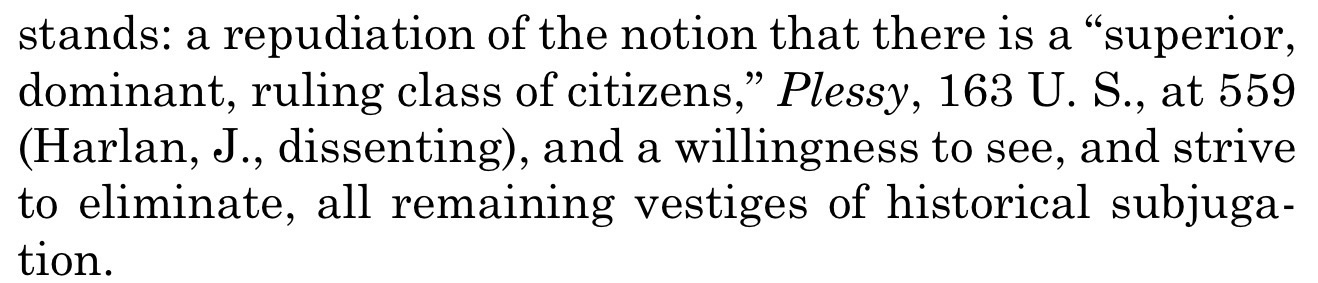
On why birthright citizenship is an issue in 2026:
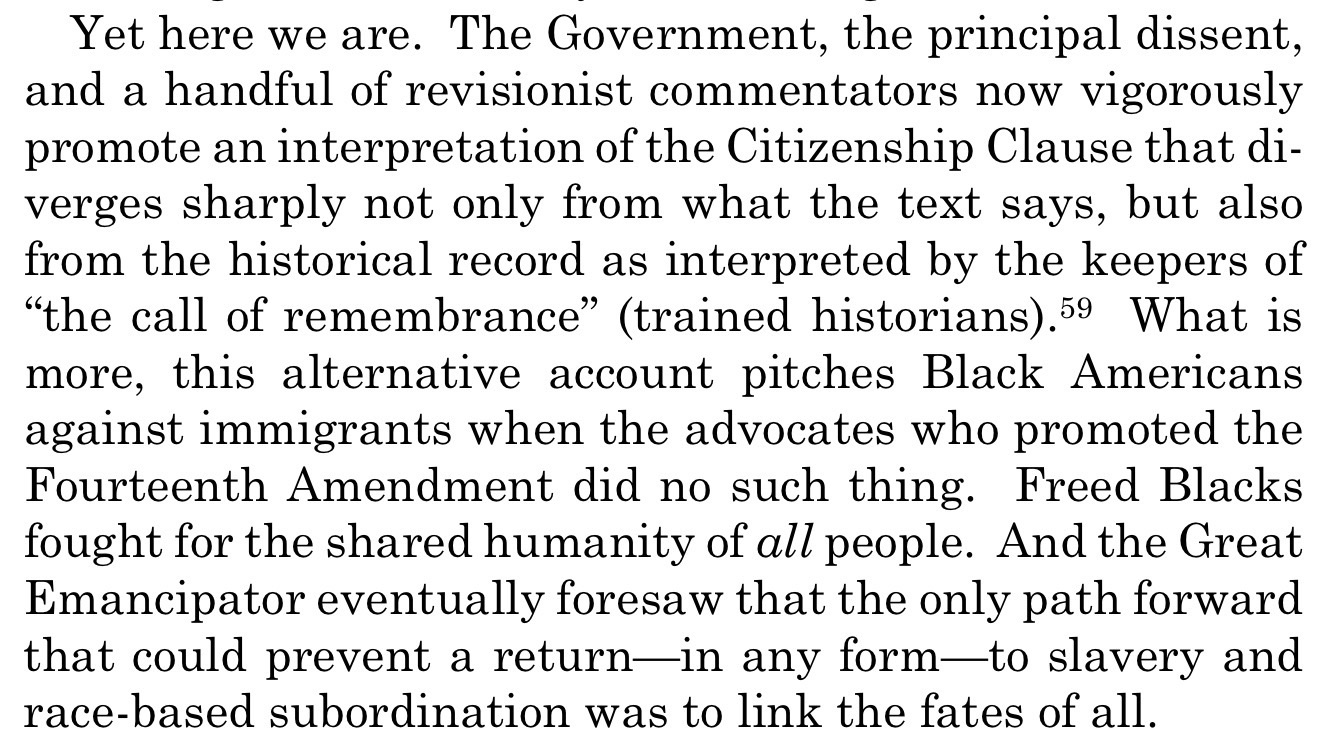
On the Indian Citizenship Act:

The possible seeds for an undoing of the contemptible Elk v. Wilkins decision, which also rested on Dred Scott:
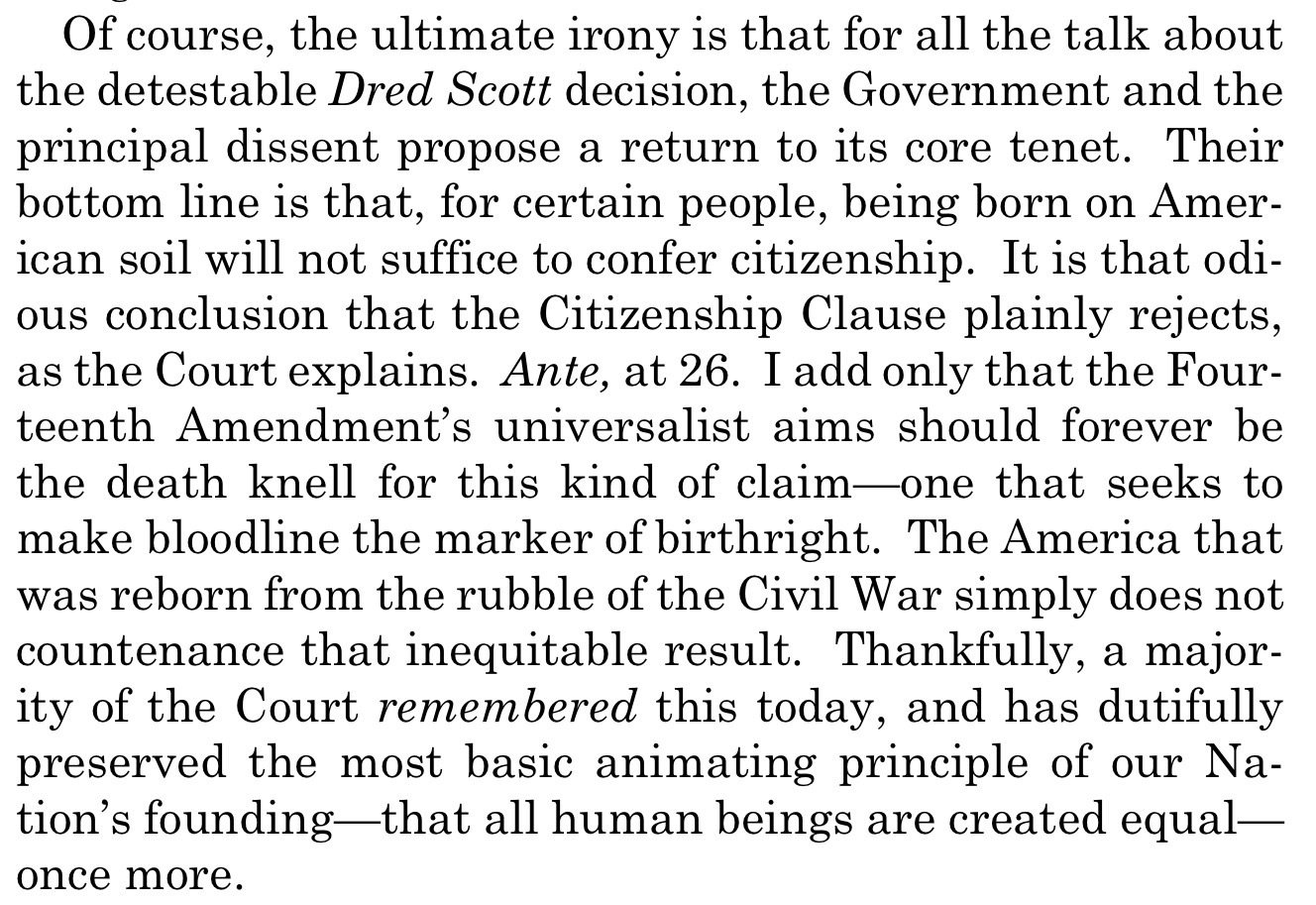
Justice Thomas’ dissent (the principal dissent) waxed on and on about “tribal Indians,” leading (I suggest) to at least two conclusions: (1) the United States does not have the power to tax “tribal Indians”; (2) the right of tribal self-government derives from international customary law (here comes UNDRIP!); and (3) Elk is wrong:

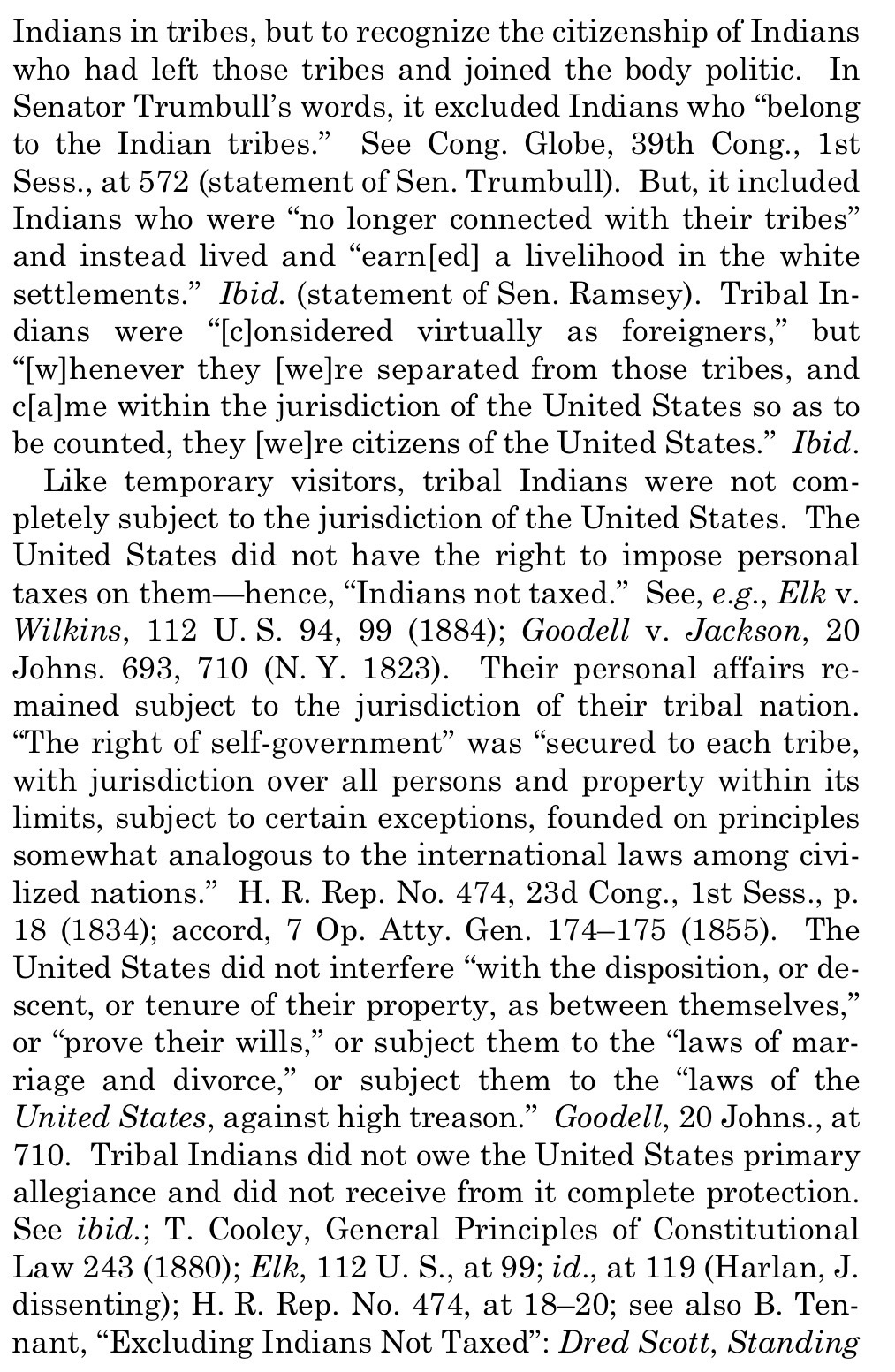
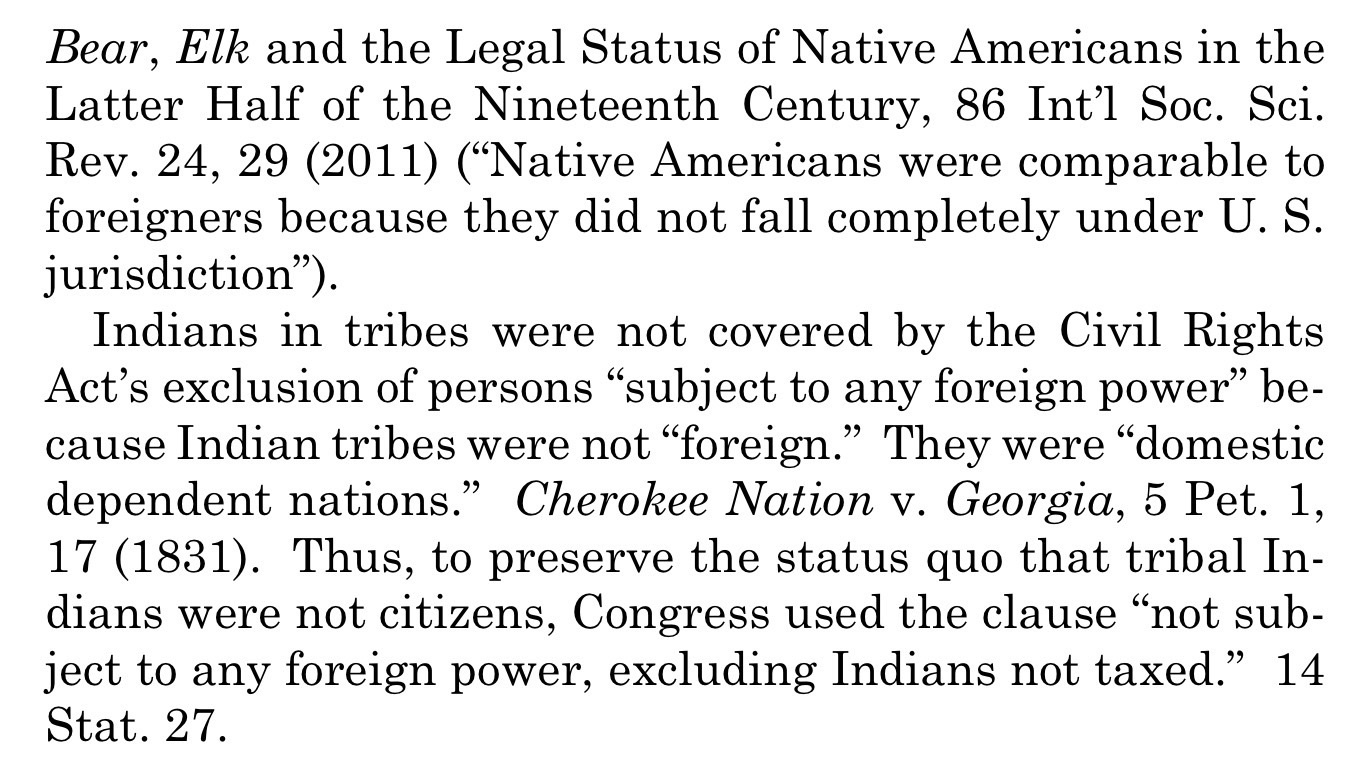
More Elk is wrong fodder:
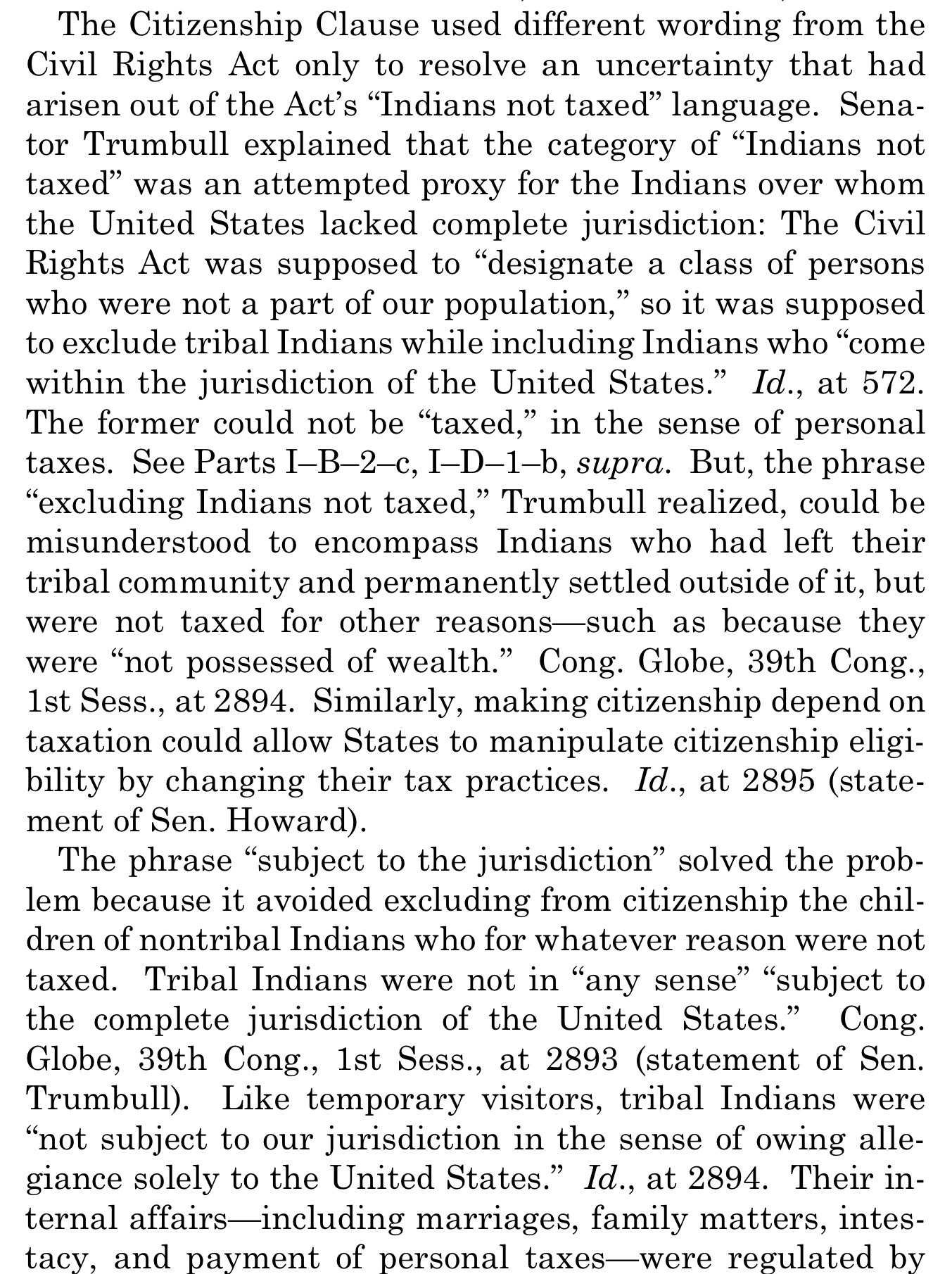

More on Elk, though in reliance this time:
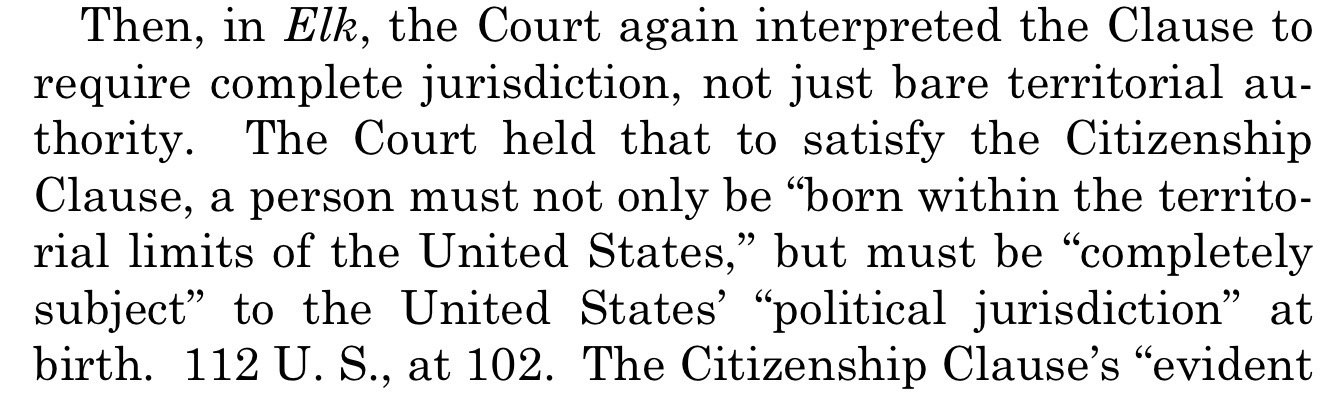
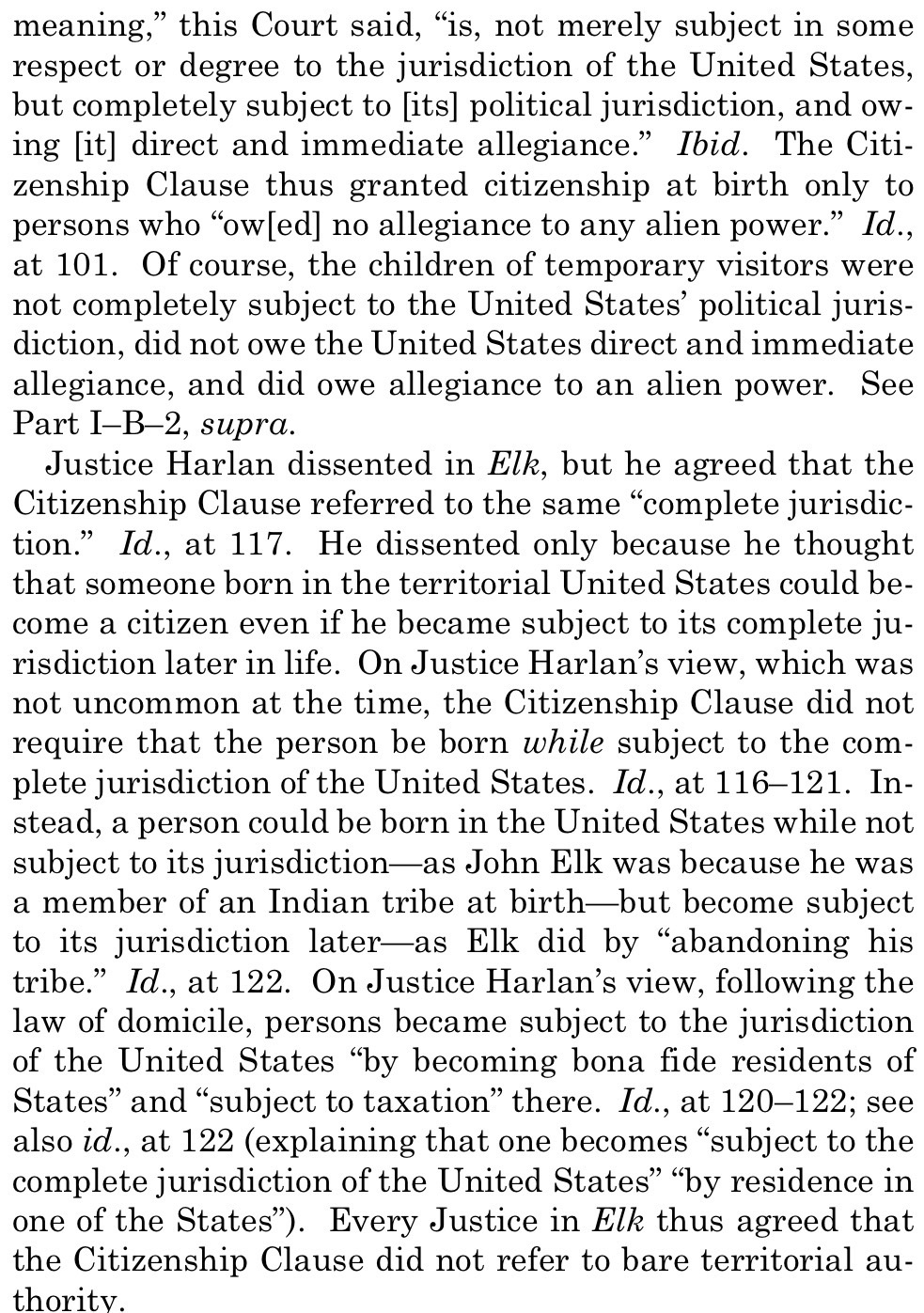
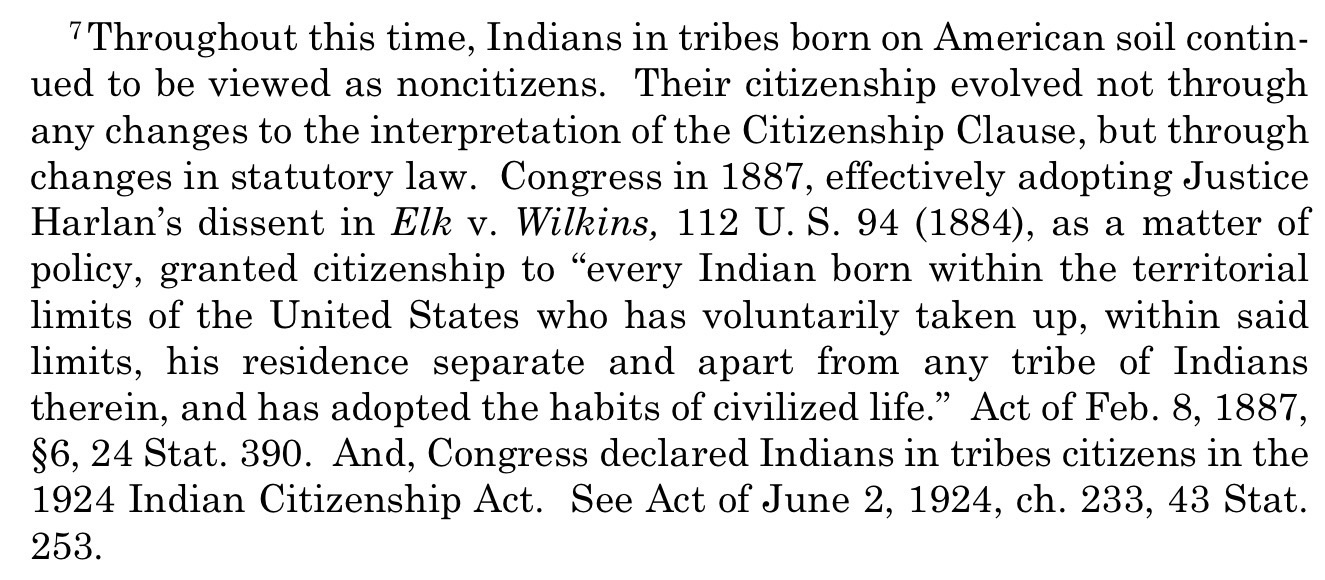
On the Indian Citizenship Act:
Wha?? China is less or equally alien than the Cherokee Nation?

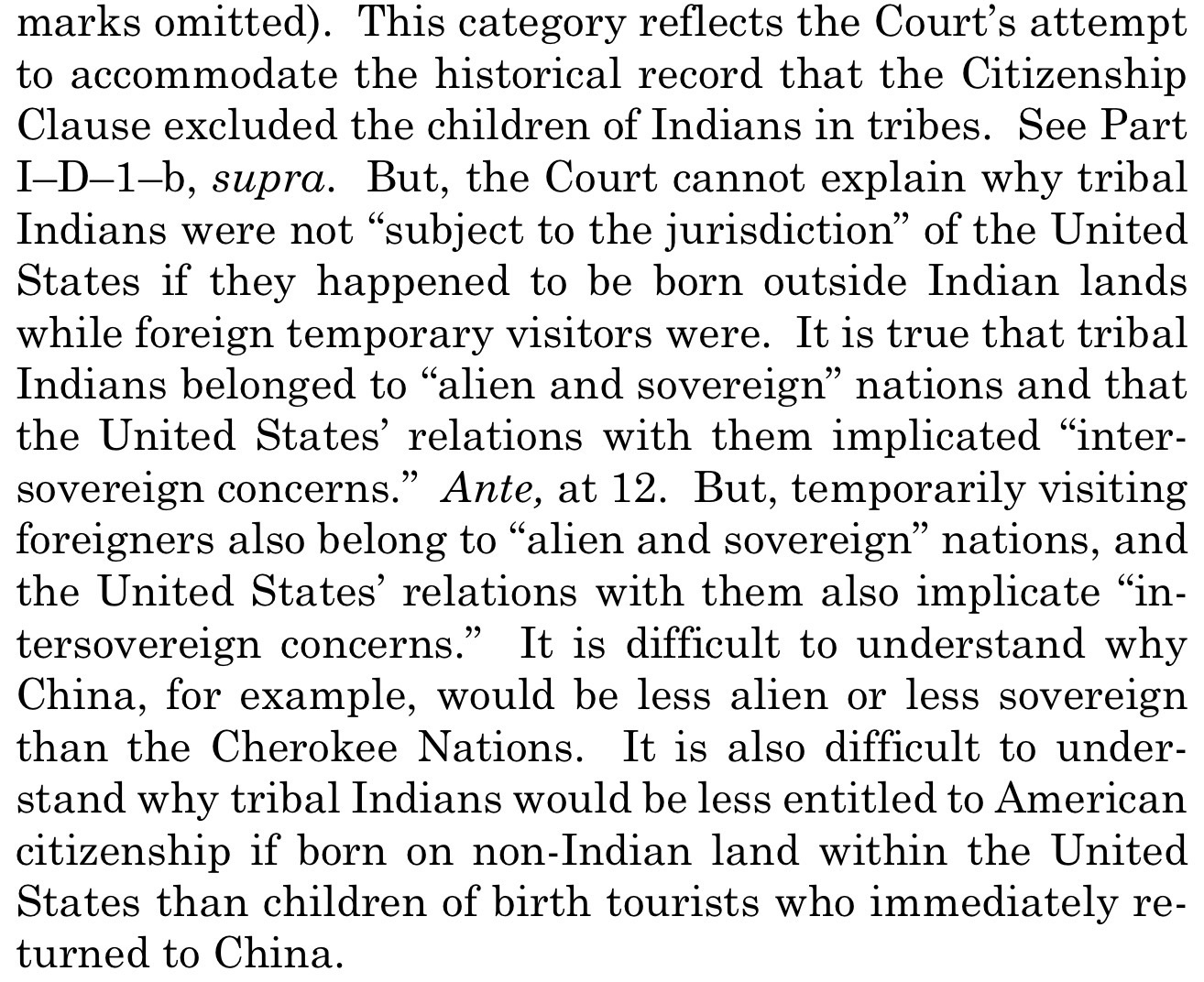
“Tribal Indians” in same category as diplomats and “hostile alien occupiers” — this is getting weird:
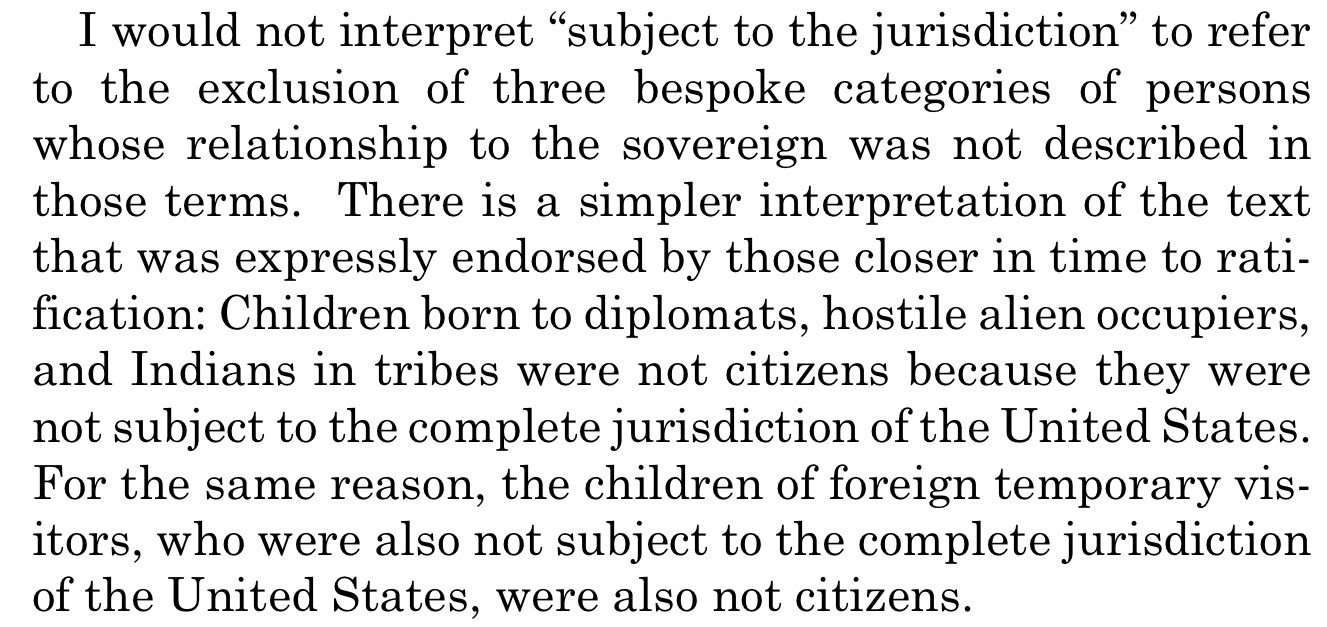
Nothing from me on Kavanaugh or Alito, who don’t merit attention.
Here are the new materials in Farella Braun + Martel LLP v. Guidiville Rancheria of California (N.D. Cal.):
Prior post here.
Here:
 Turtle Talk
You must be logged in to post a comment.