Meghan Gupta on History and Tradition in Federal Indian Law

Meghanlata Gupta has published “‘In Keeping with the Constitution’s Original Design”: History and Tradition in Federal Indian Law” in the Public Land & Resources Law Review.

HIGHLY RECOMMENDED!

Here is the abstract:

This Article examines the Supreme Court’s use of history and tradition in federal Indian law. In recent years, the Court has increasingly relied on Founding-era practices and historical traditions to determine constitutional meaning in areas such as firearm regulation, substantive due process, and religious liberty. At the same time, while the Founding-era record contains substantial evidence that Native nations were understood and treated as independent, sovereign political communities, this evidence has not yet been fully incorporated into the Supreme Court’s Indian law jurisprudence. Examining decisions from Oliphant to Castro-Huerta, this Article describes the Court’s approaches to historical analysis in Indian law cases and identifies areas where deeper engagement with the historical record could inform the doctrine. By centering Indian law within the broader history-and-tradition framework, this Article argues that more consistent applications of history support the robust conception of tribal sovereignty contemplated at the Founding.
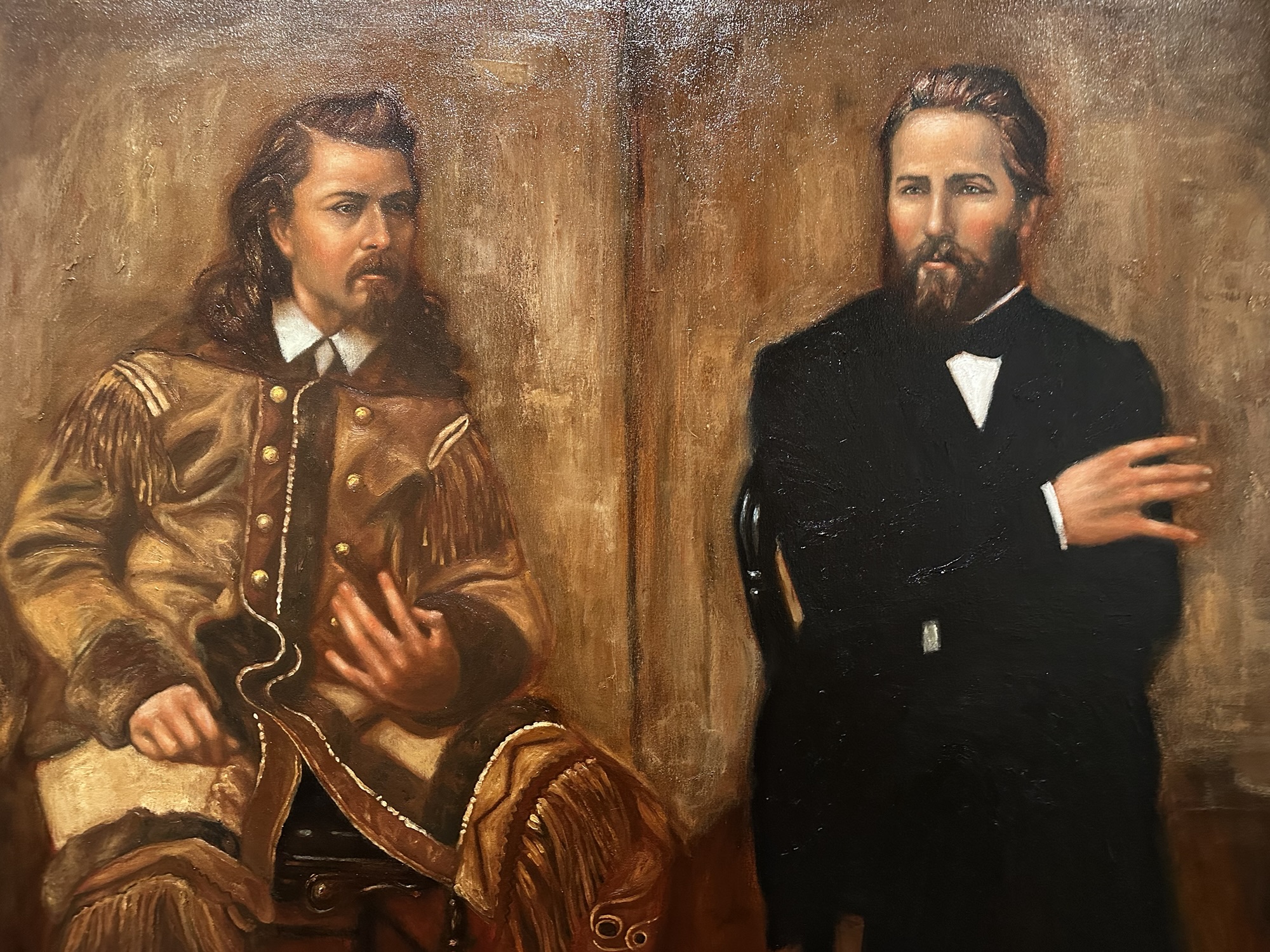
Buffalo Bill and Herman Melville flashing west coast gang signs— Ray Martin Abeyta

DOJ Hiring in the Tribal Resources Section

Here:

One or more positions may be filled in either Washington DC or Denver. The first cut-off date for referral of applicants will be 7/27/2026. The second cut-off date will be on the closing date of 8/17/2026.

The Tribal Resource Section (TRS) litigates to uphold and fulfill the United States’ trust responsibility to the nation’s 575 federally recognized Indian tribes. This includes defending the decisions of the Department of the Interior and other federal agencies under the Administrative Procedure Act in furtherance of tribal interests, as well as bringing civil affirmative actions to protect tribal lands, rights, resources, and jurisdiction. This litigation furthers the United States’ government-to-government relationships with tribal nations and generally promotes tribal sovereignty, protects tribal land bases, and ensures legal rights guaranteed by treaties and other reserved rights, such as water rights, reservation boundaries, hunting and fishing rights, and federal and tribal jurisdiction. The litigation handled by the Section is of vital interest to Indian tribes and often addresses issues of first impression.

Consistent with the Tribal Resources Section’s practice, the individual selected will be responsible for handling a range of matters, including some of the most complex and important cases currently arising in this area of the law. This position will allow the individual to utilize his or her superior legal research, writing, and oral advocacy skills in all aspects of negotiation, motions practice, and trial.

Wilton Rancheria Files Cert Petition in Labor Dispute

Here is the petition in Wilton Rancheria v. UNITE HERE:

Question presented:

Notwithstanding the deference afforded to arbitration awards, arbitrators lack the power to facially invalidate federal and state statutes. Similarly, courts defer to Tribal interpretation of Tribal law, as a critical element of longstanding policies upholding and safeguarding Tribal sovereignty. Does an arbitrator exceed his authority when he facially invalidates a duly-enacted Tribal law, especially when a court would not do so and when he would not be permitted to invalidate a duly-enacted federal or state statute?

Lower court materials here. Ninth Circuit unpublished opinion here.

Diego Rivera at the Detroit Institute of Art

Eighth Circuit Rejects Lower Brule Sioux Effort to Avoid School Funding Debt to Interior

Here is the opinion in Lower Brule Sioux Tribe v. Dept. of the Interior.

Briefs:

Lower court materials here.

Fordham Law Review Symposium Save the Date: “The Unfinished American Revolution: Territories, Tribes, and the Meaning of Independence” (Oct. 8-9, 2026)

Here:

Thursday – Friday, October 8 – 9, 2026

Thursday, October 8 | 1 – 5 p.m.

Friday, October 9 | 8 a.m. – 5 p.m.

In-Person and on Zoom

Fordham Law School

150 West 62nd Street

New York, NY 10023

CLE credit will be available.

About the Program

As the United States marks the 250th anniversary of the Declaration of Independence, this groundbreaking symposium reexamines the promises—and unfinished work—of the American Revolution. Bringing together leading scholars, judges, practitioners, and advocates, The Unfinished American Revolution explores how the principles of equality, self-government, and consent of the governed have shaped—and often failed to shape—the constitutional relationship between the United States, Native nations, and U.S. territories.

Timed to coincide with the 125th anniversary of the Insular Cases and the 175th anniversary of the Indian Appropriations Act, the symposium will examine the enduring legacies of territorial governance, federal Indian law, and plenary power. Through interdisciplinary panels and forward-looking discussions, participants will confront some of the most pressing constitutional questions of our time: Who belongs within the American constitutional community? What does self-determination mean in the twenty-first century? And what would it take to finally fulfill the promises of 1776 for all peoples under U.S. sovereignty?

Kindly register here

Prairie Band Potawatomi Sues to Stop Kansas Lottery on Indian Lands

Here is the complaint in Prairie Band Potawatomi Nation v. Durrell (D. Kan.):

New Scholarship on Wild Horses on Federal and Indian Lands

Elaina Erola has published “Wild and Untamed: The Problem of Wild Horses on Federal and Indian Lands” in the Journal of Environmental Law and Litigation.

Here is the abstract:

The management of wild horses in the American West has long been framed as a question of animal welfare, environmental stewardship, and federal land management. Missing from this discourse, however, is the disproportionate burden that unmanaged wild horse populations impose on Tribal Nations. This Article argues that the United States has failed to fulfill its trust responsibilities to federally recognized Tribes by inadequately addressing wild horse overpopulation on Indian lands, resulting in significant ecological degradation, resource depletion, and economic harm.

Drawing on historical accounts, federal statutes, agency practices, and case studies from the Navajo Nation, Blackfeet Nation, Wind River Reservation, Yakama Nation, Ute Indian Tribe, and others, this Article examines how federal wild horse policies have produced consequences that extend beyond Bureau of Land Management jurisdiction. While federal agencies devote substantial resources to managing wild horses on public lands, Tribal governments are often left to confront similar or greater population pressures with limited funding, uncertain jurisdictional authority, and inadequate federal support.

The Article situates these challenges within the broader framework of the federal trust responsibility, arguing that Indian lands, water resources, forage, wildlife habitat, and culturally significant plant species constitute trust assets deserving protection. Relying on trust doctrine jurisprudence, including United States v. Mitchell (“Mitchell II”), the Article contends that the federal government’s failure to address unmanaged horse populations on Tribal lands may constitute a breach of its fiduciary obligations. Finally, it explores potential legal and policy solutions, including expanded funding through self-determination contracts, enhanced consultation and co-management mechanisms, and greater recognition of Tribal authority to determine the legal status and management of wild horses within their territories.

By reframing wild horse overpopulation as both a tribal sovereignty issue and a trust responsibility issue, this Article highlights an overlooked dimension of federal Indian law and environmental governance and calls for a more equitable allocation of resources and decision-making authority to Tribal Nations.

New Scholarship on Interior’s Foot Dragging on Implementation of the Indian Trust Asset Reform Act of 2016

Thomas Stratmann has posted “Ten Years, Three Tribes” on the Rules and Results substack.

Here is an excerpt:

The Tulalip Tribes have been a fishing people for as long as anyone remembers. Their reservation runs 22,000 acres along the eastern shore of Puget Sound, 35 miles north of Seattle. The waters at the edge of the reservation, where the tide goes out and exposes the mudflats, are where shellfish grow, and salmon come to spawn. In an 1855 treaty, the United States agreed that those waters would always belong to the Tribes. The treaty remains in force today.

Today, 73 private docks and 124 private mooring buoys cover the Tulalip shoreline. Many were built without tribal permission. Tulalip’s own Natural Resources Department documents the consequences: water quality has fallen, salmon populations have fallen, and shellfish beds have closed.

In 2019, Tulalip asked the federal government for the authority to manage their own shoreline. The federal government said no.

In 2023, they asked again. The federal government said no.