Here (PDF):

Here (PDF):
Jeanette Wolfley has posted “You Gotta Fight for the Right to Vote: Enfranchising Native American Voters,” forthcoming in the University of Pennsylvania Journal of Constitutional Law.
Here is the abstract:
Five decades ago, the Congress passed the Voting Rights Act of 1965. Since its passage, the Voting Right Act has created the opportunity to vote for many racial and language minorities across the country, and has survived many challenges until 2013. The U.S. Supreme Court issued two decisions involving voting rights in its 2012-2013 term. On June 25, 2013, in Shelby County v. Holder, a divided Supreme Court struck down Section 4 – a key provision of the 1965 Voting Right Act (VRA) – as unconstitutional. On June 17, 2013, one week before the Shelby County decision, the Court decided another voting rights challenge. In Arizona v. Inter Tribal Council of Arizona, Inc., the Court held that the federal National Voter Registration Act of 1993 (NVRA) preempted Arizona’s requirement that voters provide proof of citizenship in order to register to vote. Certainly, this decision was not as symbolic as Shelby County, but nonetheless is significant for minority voters and voters in general. In the aftermath of Shelby County, many voting rights litigators and scholars are contemplating what the case means for the future of Black and Latino minority voting rights across the country. To date, however, scholars’ and practitioners’ reaction to and focus on the Shelby County decision has not considered or identified its impact on Indian voters or reservation residents. Accordingly, this Article seeks to fill the void by examining the Shelby County and Inter Tribal Council decisions and provides some insight and effective responses with regard to their impacts on Native American voters across Indian country.
Here are the materials in Liberty v. Jewell (D. Mont.):
Here:
The report of the decision in Meyer & Assocs. v. Coushatta Tribe of Louisiana I is here:
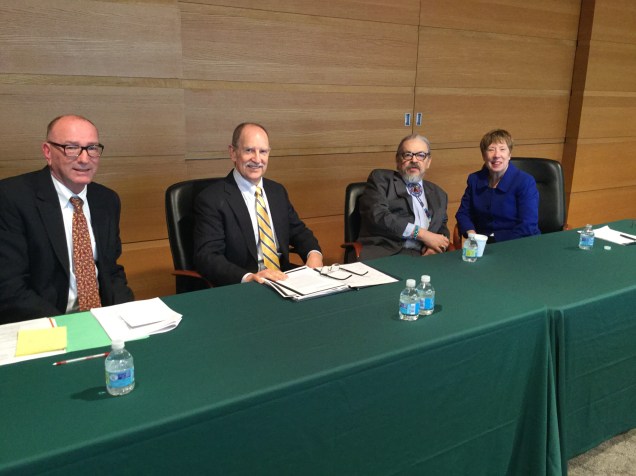
Chris Coppin, Tom Gede, Sam Deloria, and Dean Nell Newton
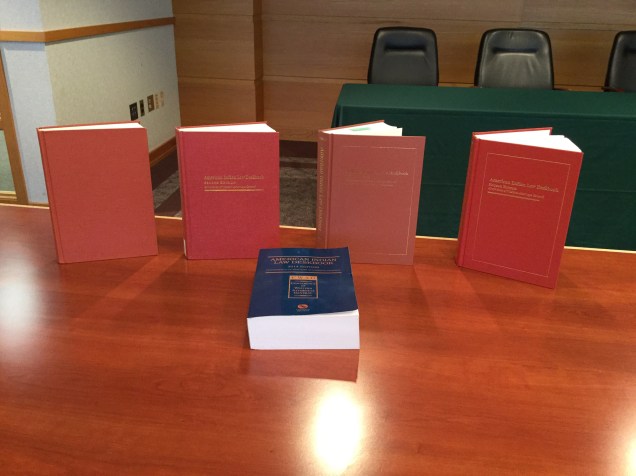
Deskbook of American Indian Law
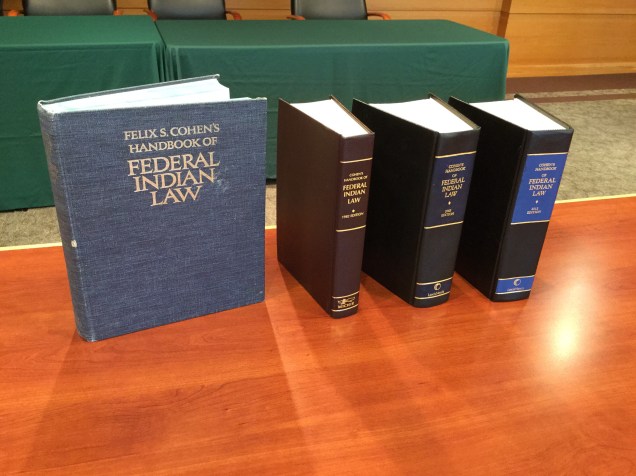
Cohen Handbook of Federal Indian Law
Dean Joan Howarth
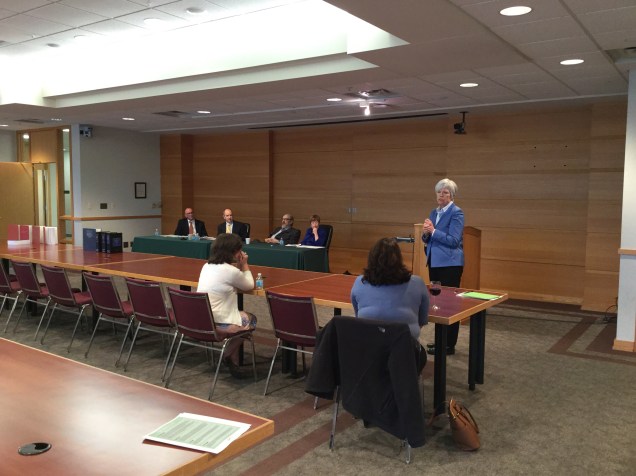
MSU NALSA early birds
Brian Upton, an MSU alum, has published “Returning to a Tribal Self-Governance Partnership at the National Bison Range Complex: Historical, Legal, and Global Perspectives” (PDF) in the Public Land & Resources Law Review.
An excerpt:
The National Bison Range (Range) is an unforgettable place for many reasons. Home to its namesake bison as well as to a variety of other wildlife, it is one of the nation’s premier wildlife refuges. Established over one hundred years ago in western Montana, it was among the first such refuges in the country—predating the present-day National Wildlife Refuge System (Refuge System) of which it is now a part. The Range is further distinguished by its location in the center of the Flathead Indian Reservation (Flathead Reservation), where the spectacular scenery includes mountain ranges in every direction. The Range bison descend largely from wild bison that had been saved by members of the Confederated Salish and Kootenai Tribes (CSKT) at a time when the animals were on the verge of extinction.
The annual Indian Law issue of the Federal Lawyer — which includes an article on Native veterans-active duty servicemembers by Kate Fort and Peter Vicaire — is here:


More details about the burnout here.
Here:
Environmental Groups Opening Brief
A second appeal involving the Hopi Tribe’s challenge has been severed from this consolidated appeal:
 Turtle Talk
You must be logged in to post a comment.