Here are the materials in Shoshone-Bannock Tribes v. Daniel-Davis (D. Idaho):
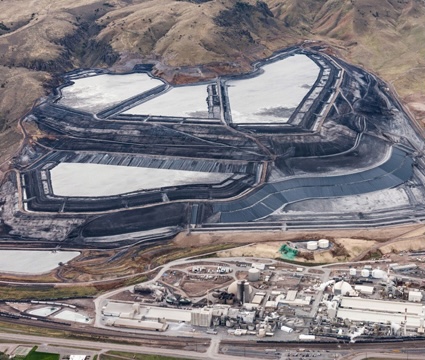
Here are the materials in Shoshone-Bannock Tribes v. Daniel-Davis (D. Idaho):
Here:

Questions presented:
Lower court materials here.
Monte Mills and Martin Nie have posted “Bridges to a New Era: A Report on the Past, Present, and Potential Future of Tribal Co-Management on Federal Public Lands” on SSRN.
Here is the abstract:
Deep ancestral and traditional connections tie many Native Nations to the federal government’s public lands. The removal of these lands from indigenous control, their acquisition by the federal government, and the federal government’s approach to their management are largely premised upon the erasure or marginalization of those connections. Both physically and legally, Indian tribes have been removed from the landscapes they occupied since time immemorial. Rather than centering, honoring, and using those connections, the current discussion of tribal co-management of federal public lands is mostly bereft of this full legal and historical context.
Compounding these limitations is the considerable discretion enabled by the applicable legal framework and exercised by public land management agencies. This discretion is most often used in ways that place Indian tribes in a reactive and defensive position. Furthermore, in exercising that discretion, federal public land management agencies regularly disassociate their land management activities from their interactions with tribes, viewing the former as a priority and the latter as an additional burden or only ancillary to their mission. In order to reconnect the management of public lands to the broader legal and historical context, these agencies must be compelled—through statute or Executive action—to work with tribes on a co management basis, in the same manner as they are compelled to fulfill their other obligations and priorities in managing and protecting the lands for which they are responsible.
Furthermore, federal public land law generally provides to state governments and private interests broad powers and authorities not yet extended to Indian tribes. The intergovernmental dimensions of federal public lands management must more fully recognize the federal government’s fiduciary obligations to Indian tribes and include sovereign tribal governments. The common tools used in “cooperative federalism” can help inform the design of tribal co-management legislation and/or rulemaking.

Here are the materials in Sauk-Suiattle Indian Tribe v. City of Seattle (Wash. Ct. App.):
Here are the materials so far in Fond du Lac Band of Lake Superior Chippewa v. Cummins (D. Minn.):

Helia Bidad has published “The Power of Tribal Courts in Ongoing Environmental-Tort Litigation” in the Yale Law Journal. Here is the abstract:
Cities, counties, and states across the country are bringing environmental and climate tort suits to hold environmental tortfeasors accountable. These cases are commonly brought in state and federal court, but the possibility of bringing these suits in tribal courts has largely been left out of the discussion. In the wake of attacks on tribal sovereignty in the form of tribal jurisdiction stripping, this Essay uses an original empirical analysis of 308 cases to understand the circumstances in which tribal-court jurisdiction currently exists for tribal members to sue nonmembers for environmental torts in tribal court. This Essay makes recommendations for how to strategically bring these suits and highlights important considerations for tribal sovereignty.
Here is the complaint in Buena Vista Rancheria of the Me-Wuk Indians v. Pacific Coast Building Products Inc. (E.D. Cal.):

Repealing the 2020 Alaska Roadless Rule, which exempted the Tongass from roadless protections, will return the inventoried roadless areas of the forest to management under the 2001 Roadless Rule, which prohibits road construction, reconstruction, and timber harvest in inventoried roadless areas, with limited exceptions. USDA determined that the underlying goals and purposes of the 2001 Roadless Rule continue to be a critical part of conserving the many resources of the Tongass, especially when it comes to the values that roadless areas represent for local, rural communities, Alaska Native peoples, and the economy of Southeast Alaska.
WaPo coverage here: https://www.washingtonpost.com/climate-environment/2023/01/25/tongass-forest-protections-alaska-biden/
“The Tongass Roadless Rule is important to everyone,” said Joel Jackson, president of the Organized Village of Kake, which sits on the forest edge on an island south of the capital, Juneau.
“The old-growth timber is a carbon sink, one of the best in the world,” Jackson said in a statement. “It’s important to OUR WAY OF LIFE — the streams, salmon, deer, and all the forest animals and plants.”
Tribal leaders and Native organizers made a huge push to get these protections back in place. According to the press release, the Administration received more than 112,000 comments during this rulemaking (that is a *lot* of comments), a majority of which were in support of this change.
 Turtle Talk
You must be logged in to post a comment.