Patty Ferguson-Bohnee on Indian Voting Rights in Arizona

Patty Ferguson-Bohnee has posted “The History of Indian Voting Rights in Arizona: Overcoming Decades of Voter Suppression,” which she published in the Arizona State Law Journal. Here is the abstract:

Native Americans “have experienced a long history of disenfranchisement as a matter of law and of practice.” This comes from a complicated and contradictory history of laws and policy that has recognized tribes as separate sovereigns, reduced tribal status to that of domestic dependent nations, sought to remove, relocate, or assimilate tribal citizens, terminated numerous indigenous nations, and has now moved to a policy of tribal self-government. Unfortunately, the right to vote for Arizona’s first people has only recently been achieved, and there are continuing threats to the electoral franchise.

Voter suppression has been used to discourage or prevent Indian people from voting in Arizona. Voter qualifications such as literacy tests were used to prevent Indians from participating in elections for approximately fifty years. Once Native Americans started voting, redistricting and vote dilution were used to reduce the effectiveness of the Native vote.

This article will review the history of Indian voting rights in Arizona. The author begins by reviewing the history of Native American voting rights and the history of voting discrimination against Native Americans in Arizona. The Voting Rights Act turned the corner for Native people to participate in the state and federal election processes. The article then discusses the current challenges faced by Native American voters and specifically discuss the voter ID law passed in 2004. The voter ID law is a roadblock that impedes full participation by all Arizona Indians. The last part of the article focuses on strategies to protect Indian voting rights. Notwithstanding the Supreme Court’s invalidation of the Section 5 coverage formula in Shelby County, tribes should consider proactive measures to ensure that tribal citizens can participate in elections.

Highly recommended.
New on the TT Bookshelf: John Low’s New Book on the Pokagon Band and the City of Chicago

Low Book

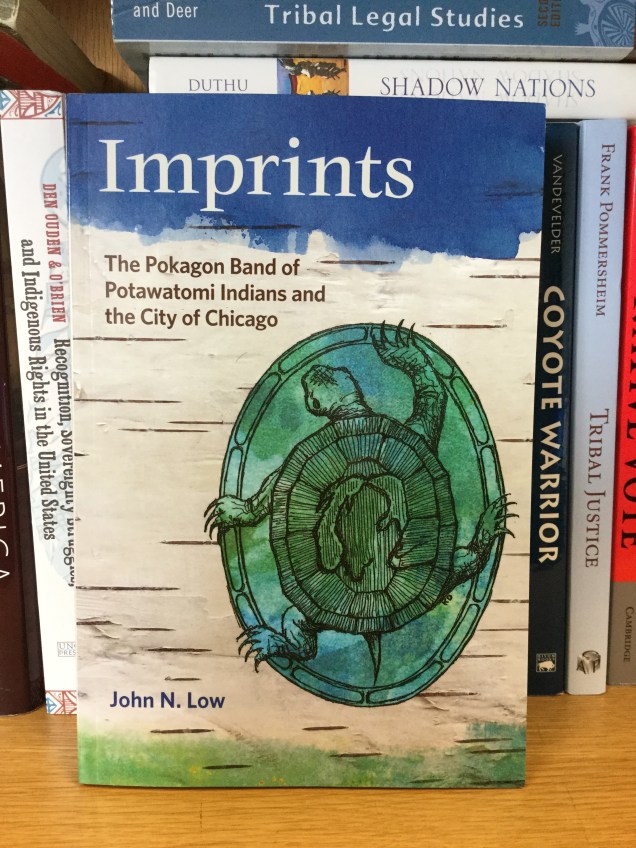
John Low has published “Imprints: The Pokagon Band of Potawatomi Indians and the City of Chicago” with Michigan State University Press (book page here).

From the website:

Imprints: The Pokagon Band of Potawatomi Indians and the City of Chicago
The Pokagon Band of Potawatomi Indians has been a part of Chicago since its founding. In very public expressions of indigeneity, they have refused to hide in plain sight or assimilate. Instead, throughout the city’s history, the Pokagon Potawatomi Indians have openly and aggressively expressed their refusal to be marginalized or forgotten—and in doing so, they have contributed to the fabric and history of the city.

Imprints: The Pokagon Band of Potawatomi Indians and the City of Chicago examines the ways some Pokagon Potawatomi tribal members have maintained a distinct Native identity, their rejection of assimilation into the mainstream, and their desire for inclusion in the larger contemporary society without forfeiting their “Indianness.” Mindful that contact is never a one-way street, Low also examines the ways in which experiences in Chicago have influenced the Pokagon Potawatomi. Imprints continues the recent scholarship on the urban Indian experience before as well as after World War II.

“Chemawa Indian School unmarked graves”

From aljazeera here.

Nebraska v. Parker Background Materials

Here are the materials we’ve collected on Nebraska v. Parker.

Supreme Court Merits Briefs

Nebraska Opening Brief

Omaha Tribal Council Brief

US Brief

Merits Stage Amicus Briefs

Village of Hobart Amicus Brief

NCAI Amicus Brief

Scholars Brief

Cert Stage Briefs

State of Nebraska v Parker cert petition

United States Cert Opp Brief

Eighth Circuit Materials

CA8 Opinion

Nebraska Opening Brief

Tribe Brief

US Brief

Nebraska Reply Brief

District Court Materials

The 2nd amended complaint is here: Complaint

The tribal motion to dismiss is here: Motion to Dismiss

The opposition is here: Opposition to Motion to Dismiss

The reply is here: Reply Brief

The court’s stay order and opinion is here: DCT Order Denying Motion to Dismiss

DCT Order Granting Nebraska Motion to Intervene

Nebraska Motion to Intervene

Opposition to Motion to Intervene

Nebraska Reply in Support of Motion to Intervene

118 Village of Pender Brief

114 Omaha Tribe Brief

127 Federal Brief

126 Nebraska Brief

134 Nebraska Response

135 US Response

136 Village of Pender Response

138 Omaha Tribe Response

140 Opinion

Tribal Court

Village of Pender v Morris — Omaha Tribal Court

“Native American culture feels effects of boarding schools decades after system closed”

Here, from the Grand Traverse Record-Eagle.

Seattle U. School of Law Field Trip to the Elwha River

IMG_0851

IMG_0859

IMG_0972

IMG_0980

IMG_0850

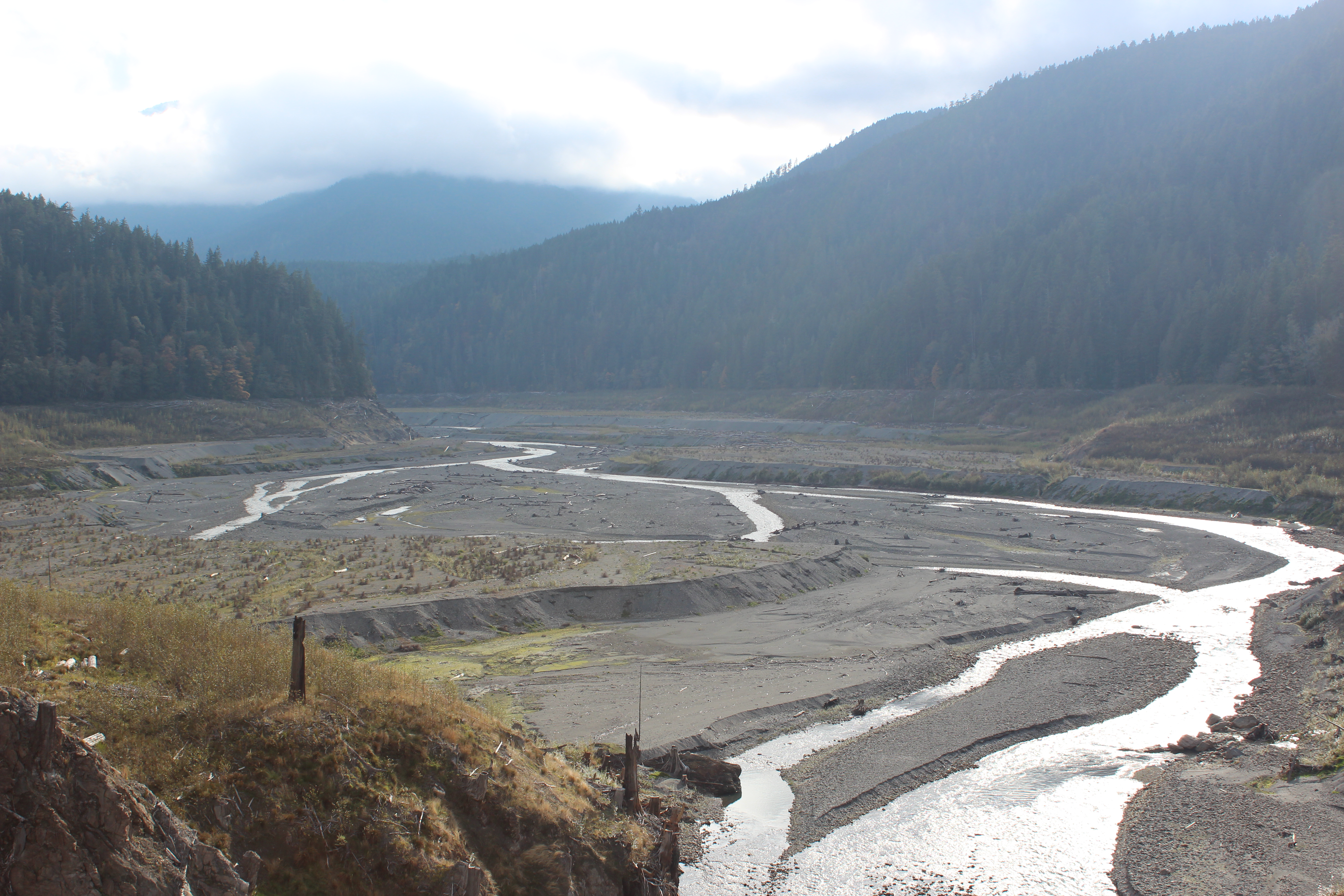
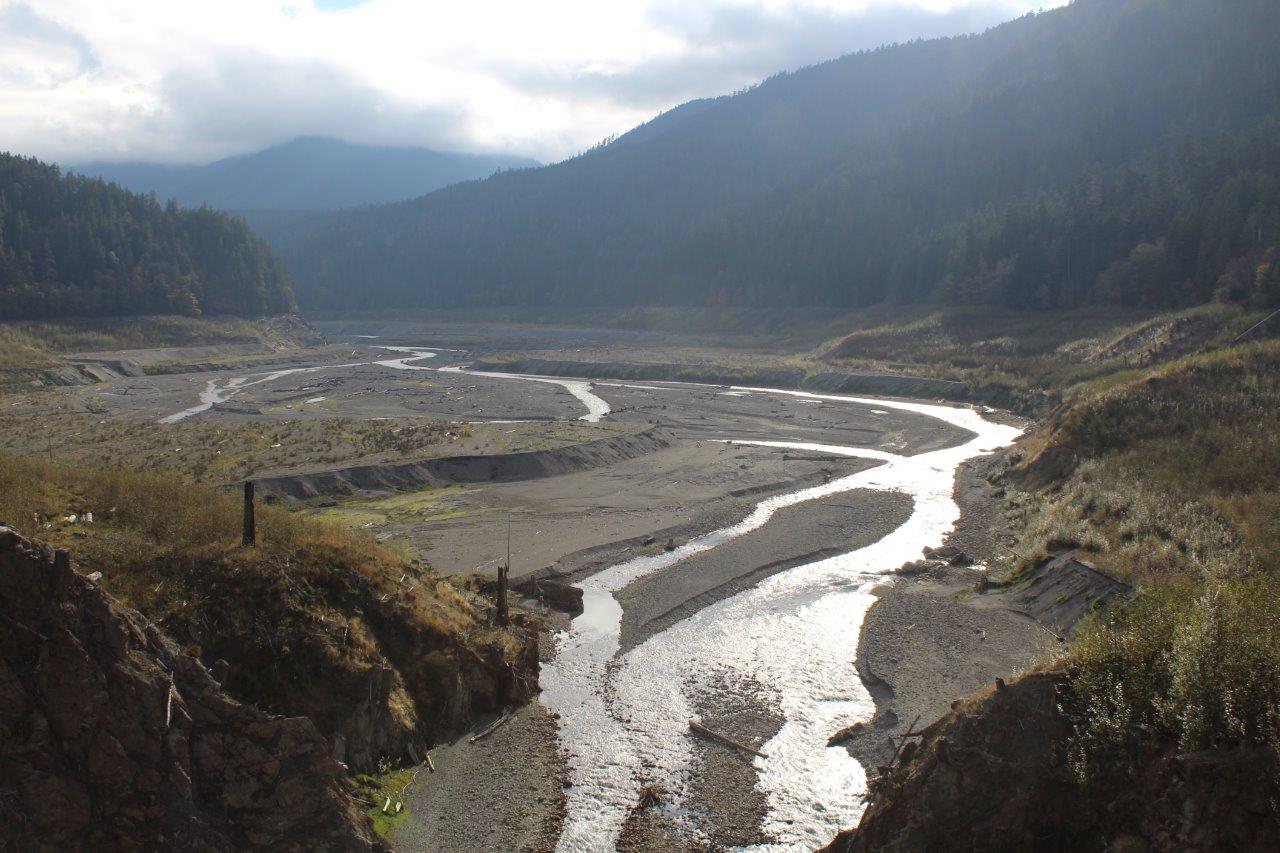
Here are some pictures from Sunday’s Seattle U. field trip to view the progress of the Elwha River’s restoration. The trip was led by Robert Elofson, Director of the River Restoration Project for the Lower Elwha Tribe. It was part of a class on the restoration of the River after the removal of the two dams, which is taught by Professors Catherine O’Neill and Eric Eberhard. What lucky students to have the chance to examine the mechanics of a tribal triumph like this one and then to see the on-the-ground evidence firsthand!

Alanis Obomsawin’s film “Trick or Treaty” now available for rental

This is an incredible film about the treatment of treaties and Native peoples in Canada. It’s now available for rental from Canada’s National Film Board. I saw it at the NAISA conference this June and highly recommend it. It is extremely sad and disturbing at times but also incredibly inspiring.

Documentary on French v. Starr — Dispute over Tribal Jurisdiction at Colorado River Indian Reservation

Here is a documentary on CRIT’s eviction of squatters on the California side of its reservation. http://www.cctv-america.com/2015/05/08/the-guardians-of-the-mojave-desert. This issue was the subject of the lawsuit in French v. Starr which Turtle Talk covered. This documentary provides readers with the context behind that lawsuit

New York Bar Journal Article: “The Dutch, Munsees, and the Purchase of Manhattan Island from Opening Statements—Law, Jurisprudence, and the History of Dutch New York”

The Dutch, Munsees, and the Purchase of Manhattan Island
from Opening Statements—Law, Jurisprudence, and the History of Dutch New York
by Paul Otto
Edited by Albert M. Rosenblatt and Julia C. Rosenblatt

PDF here:

Otto Journal January 2015

Yale Law Journal Article: “Beyond the Indian Commerce Clause”`

Gregory Ablavsky has published “Beyond the Indian Commerce Clause” (PDF) in the Yale Law Journal.

Here is the abstract:

The Supreme Court has described the Indian Commerce Clause as the primary constitutional basis for federal exclusive and plenary power over Indian affairs. Recently, Justice Clarence Thomas, citing current scholarship, has argued that the Clause’s original understanding does not support this authority, with radical implications for current doctrine.

This Article uses unexamined historical sources to question this debate’s fundamental premise. It argues that the Indian Commerce Clause, open-ended when written, was a minor component of eighteenth-century constitutional thought. This Article instead posits alternate sources for federal authority over Indian affairs, drawing particularly on the Washington Administration. Asserting federal power against the states, the Administration embraced a holistic constitutional reading akin to present-day field preemption. With respect to authority over Indians, the Administration, through law-of-nations interpretations, asserted ultimate U.S. sovereignty over tribes, while acknowledging Native autonomy beyond these limitations. Yet these supposedly narrow legal principles ultimately formed the basis for the later elaboration of plenary power over tribes.

On the one hand, this history provides a more solid foundation for doctrinal principles derided as incoherent. On the other hand, it suggests more cabined federal authority over Indians. Ultimately, the Article demonstrates the value of more historically grounded reconstructions of constitutional understandings.