Here are the materials in Cedar Band of Paiutes v. Department of Housing and Urban Development (D. Utah):
trust relationship
“Waters of the United States” Comments by Michigan Tribal Interests
CORA, GTB, and Bay Mills comments on EPA’s proposal to change the definition of “Waters of the United States.”
Fletcher Testimony on the RESPECT Act before the House Indigenous Peoples Subcommittee
Worth a look, most especially for Dylan Minor’s excellent artistic rendering of the treaty cessions by Michigan Indian nations (skip ahead to page 15); available on SSRN here.
It was cherry blossom time, too!
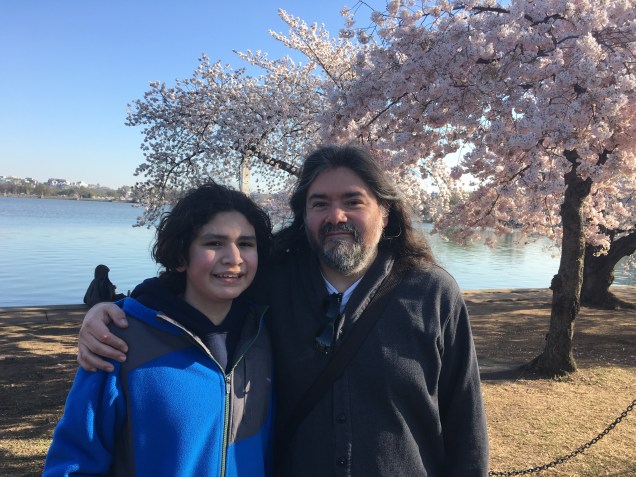
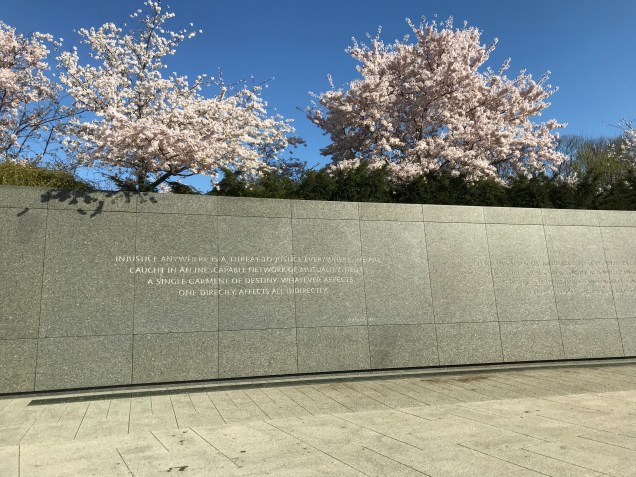
And on the way over, we happened by the Japanese Internment Memorial, noting that the federal government placed many of the concentration camps on Indian reservations: Continue reading
Narragansett NHPA Consultation Suit
Here is the complaint Narragansett Indian Tribe v. Federal Highway Administration (D.R.I.):
An excerpt:
The Tribe brings this action to challenge the termination of a programmatic agreement(“PA”) entered into pursuant to the regulations of the National Historic Preservation Act (“NHPA”). The termination of the PA occurred after substantial construction had taken place on the project for which the PA was meant to address and resolve the adverse effects of the project on historic properties to the signatories’ satisfaction. The termination of the PA after substantial work had been performed on the project, and the subsequent final decision of the Federal Highway Association (“FHWA”) was arbitrary and capricious.
Tribal Amicus Brief in Texas v. United States [ACA Appeal in Fifth Circuit]
Cross-Motions for Summary Judgment Denied in Seminole/IHS Dispute
Here are the materials in Seminole Tribe of Florida v. Azar (D.D.C.):
Complaint here.
SCOTUS Decides Sturgeon v. Frost II
Materials here.
Update — footnote 2 of the majority:
As noted earlier, the Ninth Circuit has held in three cases—the so called Katie John trilogy—that the term “public lands,” when used in ANILCA’s subsistence-fishing provisions, encompasses navigable waters like the Nation River. See Alaska v. Babbitt, 72 F. 3d 698 (1995); John v. United States, 247 F. 3d 1032 (2001) (en banc); John v. United States, 720 F. 3d 1214 (2013); supra, at 12. Those provisions are not at issue in this case, and we therefore do not disturb the Ninth Circuit’s holdings that the Park Service may regulate subsistence fishing on navigable waters. See generally Brief for State of Alaska as Amicus Curiae 29–35 (arguing that this case does not implicate those decisions); Brief for Ahtna, Inc., as Amicus Curiae 30–36 (same).
Fletcher: “Law, Politics, and the Constitution”
Here, on SSRN.
The abstract:
The question whether Congress may create legal classifications based on Indian status under the Fifth Amendment’s Due Process Clause is now reaching a critical point. Critics claim the Constitution allows no room to create race or ancestry based legal classifications. The critics are wrong.
When it comes to Indian affairs, the Constitution is not colorblind. Textually, I argue, the Indian Commerce Clause and Indians Not Taxed Clause serve as express authorization for Congress to create legal classifications based on Indian race and ancestry, so long as those classifications are not arbitrary, as the Supreme Court stated a century ago in United States v. Sandoval and more recently in Morton v. Mancari.
Should the Supreme Court reconsider those holdings, I suggest there are significant structural reasons why the judiciary should refrain from applying strict scrutiny review of Congressional legal classifications. The reasons are rooted in the political question doctrine and the institutional incapacity of the judiciary. Who is an Indian is a deeply fraught question to which judges have no special institutional capacity to assess.
D.C. District Court Transfers MHA Nation Suit against BLM Drilling Permit Approvals to North Dakota
Here are the materials in Mandan Hidatsa and Arikara Nation v. Dept. of Interior (D.D.C.):
10 Slawson Motion to Intervene
18 Slawson Motion to Transfer Case to DND
GAO Report: “Interior Should Address Factors Hindering Tribal Administration of Federal Programs”
Here.
 Turtle Talk
You must be logged in to post a comment.