Cert Petition in Seneca Nation Citizen’s Treaty-Based Tax Immunity Claim

Here is the petition in Perkins v. Commissioner of Internal Revenue:

Perkins v. Commissioner Cert Petition

Question presented:

This Court is presented with a question of first impression, as to the taxability of income derived from the sale of sand and gravel, mined from treatyprotected land by an enrolled member of the Seneca Nation of Indians (ā€œSeneca Nationā€). Upon the granting of certiorari, the Court will examine the language in two federal treaties, promising not to disturb the ā€œfree use and enjoymentā€ of lands by the Seneca Nation and ā€œtheir Indian friends residing thereon and united with them,ā€ and protecting these lands ā€œfrom all taxesā€ for any purpose. Treaty with the Six Nations (ā€œCanandaigua Treatyā€), art. III, Nov. 11, 1794, 7 Stat. 45; Treaty with the Senecas (ā€œ1842 Treatyā€), art. 9th, May 20, 1842, 7 Stat. 590. Congress has explicitly stated the Internal Revenue Code ā€œshall be applied to any taxpayer with due regard to any treaty obligation of the United States which applies to such taxpayer.ā€ 26 U.S.C.A. § 894 (a)(1)(West).

The question presented is whether the United States Court of Appeals and the United States Tax Court have given ā€œdue regardsā€ to the treaty obligations of the United States by finding these treaties had no textual support for an exemption from federal income tax applicable to an enrolled Seneca member whose income is derived from the
lands of the Seneca Nation. Perkins v. Comm’r, 970 F.3d 148, 162-67 (2d. Cir. 2020).

Lower court materials here.

UPDATE (5/1/21):
Starna Amicus Brief

Commissioner BIO

Reply

The Brackeen Decision [ICWA] is Out and it is 325 Pages Long

All I can say is to remember when they split evenly, it affirms the district court decision, not the earlier 5th Circuit decision. Beyond that, I’m still trying to figure it out.

Judge Costa’s concurrence/dissent does a lot to explain the implications of the holding. You may want to start on page 306 (!).

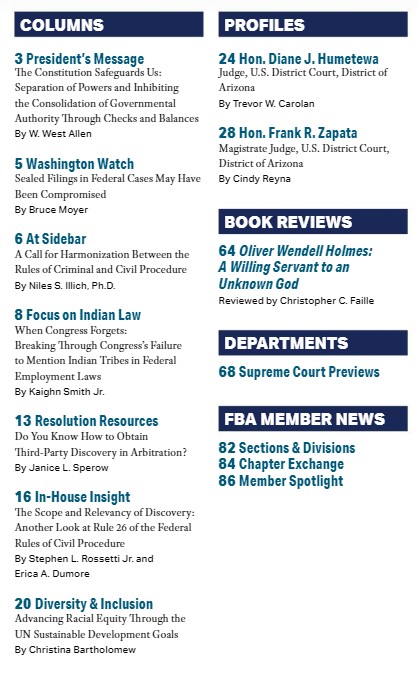
2021 Federal Lawyer Article Spotlight: Out of State Legal Representation in ICWA Cases

So happy to see April Olson’s article on the issue of legal representation for tribes in out of state cases. This is easily the top question I get–both from lawyers nervous about intervening out of state and also from lawyers trying to find pro hac partners. Get your state to pass a pro hac vice exception. It makes a huge difference–in 2020 alone the Indian Law Clinic saved over $500 in appellate pro hac fees due to these rules, but it makes an even bigger difference at the trial level so tribes can avoid appeals in the first place.

Read April’s article, then figure out how to get your state on board if they aren’t already. Today I’m specifically looking at Oklahoma ($350 in pro hac fees plus a complicated process via the state bar, so another $100 in expedited good standing certificate requests and overnight mailing).

All the ICWA pro hac rules are collected here.

The Regulatory Review [Penn.] Series: “Native Peoples, Tribal Sovereignty, and Regulation”

Here.

The description:

For the first time in U.S. history, a Native American will leadĀ a cabinet-level department in the U.S. federal government. Secretary of the Interior Debra Haaland nowĀ headsĀ the federal agency primarily responsible forĀ coordinatingĀ the U.S. government’s complex regulatory relationships with Native Nations.

These relationships are predicated on tribal sovereignty—tribes’ inherent authority to ā€œmakeĀ their own laws and be governed by them.ā€ Accordingly, the United States isĀ obligatedĀ to promote tribal self-determination and tribes’ ability to provide for the health and welfare of tribal citizens within tribal lands. Yet despite its formal recognition of a certain degree of Native sovereignty, the federal government has alsoĀ exercisedĀ significant control over tribal peoples and lands. Throughout U.S. history, federal administrative bodies, such as theĀ U.S. Department of the Interior, have often failed toĀ upholdĀ the promises and obligations of sovereignty adequately.

In this series of essays, scholars and practitioners explore some of the most pressing regulatory issues affecting how Native American communities experience government and law, as well as how existing systems of power ignore and exclude Native peoples and governments.

The Regulatory ReviewĀ is thrilled to feature this series of essays highlighting the effects that regulation has on Native individuals and communities. The series’ contributors include:Ā Maggie Blackhawk, University of Pennsylvania Law School;Ā Emily deLisle, University of Pennsylvania Law School;Ā Katherine Florey, University of California, Davis School of Law;Ā Dylan R. Hedden-Nicely, University of Idaho College of Law;Ā Hillary M. Hoffmann, Vermont Law School;Ā Aila Hoss, University of Tulsa College of Law;Ā Sarah E. Krakoff, University of Colorado Law School;Ā Elizabeth Kronk Warner, University of Utah S.J. Quinney College of Law;Ā Sarah RoubidouxĀ Lawson, Schwabe, Williamson & Wyatt PC;Ā Robert J. Miller, Arizona State University Sandra Day O’Connor College of Law;Ā Ā Monte Mills, University of Montana Alexander Blewett III School of Law;Ā Megan Powell, First American Title Insurance Company;Ā Ā Ezra Rosser, American University Washington College of Law;Ā Joe Sexton, Galanda Broadman PLLC;Ā Judith A. Shapiro, Big Fire Law & Policy Group;Ā Ā Jessica A. Shoemaker, University of Nebraska College of Law; andĀ Ann E. Tweedy, University of South Dakota School of Law.

US DOJ Journal of Federal Law and Practice: New Issue on MMIP

Here: “March – Missing or Murdered Indigenous Persons: Legal, Prosecution, Advocacy and Healthcare.”

Previous issue here.

SCOTUS Denies Cert in Yakama v. Yakima County Criminal Jurisdiction Dispute

Here is today’s order list.

Cert stage briefs and links to lower court materials here.

Active Efforts Case out of Alaska Supreme Court

OCS correctly points out that ā€œinadequate efforts in one period of state involvement do not render the entirety of [its] efforts inadequate, even when that period lasts for a matter of months.ā€28Ā And the superiorĀ courtĀ correctly found that OCS had made active efforts to reunify Clark and his children during the first two years of the case. But OCS’s failure to make adequate efforts in this case encompassed the subsequent two years, fully half of the time that the case was open. And its failure during that two year time period was extreme: OCS did not even attempt to contact Clark for a year and a half, and may have gone even longer without doing so if Clark had not initiated contact himself. OCS’s failure to make active efforts in the second two years of the case was so egregious that the efforts during the earlier period cannot make up for it. Because OCS’s efforts to reunite Clark with his family following his consent to guardianship were minimal at best, we reverse the superiorĀ court’sĀ finding that OCS met the active efforts requirement.

Clark J. v. Dep’t of Health & Soc. Servs., Off. of Children’s Servs., No. S-17797, 2021 WL 1232066, at *7 (Alaska Apr. 2, 2021)

Oklahoma Court of Criminal Appeals Decision on Cherokee Nation Reservation

Here are the available materials in Spears v. State of Oklahoma:

Court of Appeals Opinion

Spears Brief

State Brief

Oklahoma Court of Criminal Appeals Decision on Seminole Reservation

Here are the materials in Grayson v. State of Oklahoma:

Court of Appeals Opinion

District Court Opinion

Grayson Brief

State Brief